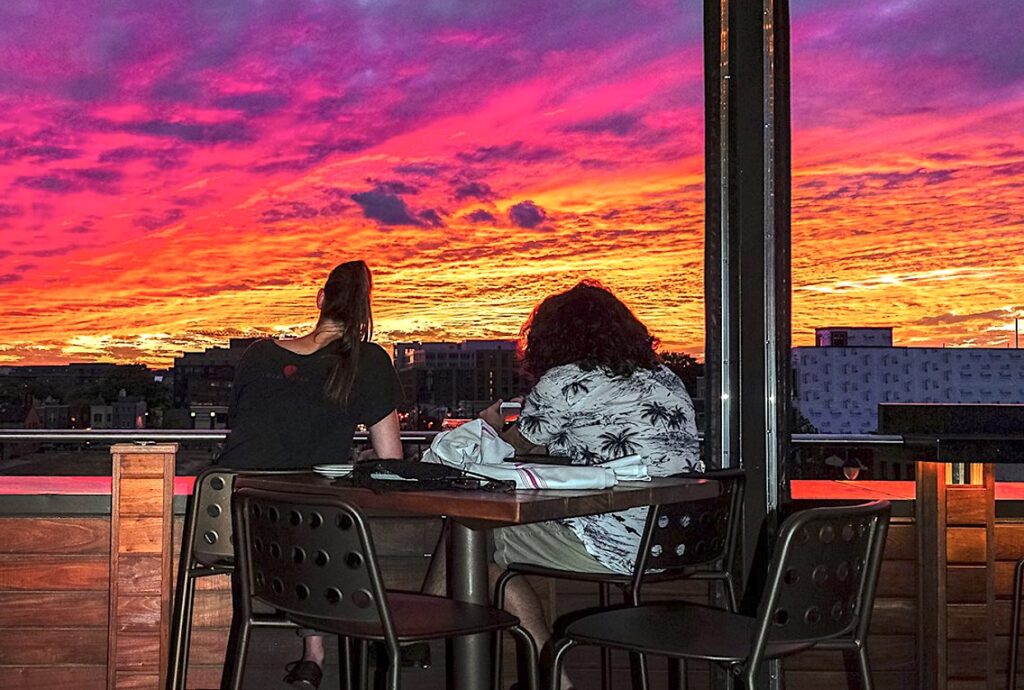
Donald “Clay” Clay, an Air Force veteran, was enjoying his stogie while chit chatting with friends, watching boats slipping by. On every weekday afternoon when the weather is fine, he and a half dozen of his perennial friends such as Robert “Bleu” Jones and Kimo Tavares gather at the Slip Inn to chill, booze up and snack on the crowd-favorite George wings. No one knows for sure why they call them George, but rumor is one of the cooks from the earliest days in the 80s came up with the secret breading.
The Tiki bar and restaurant wasn’t located in the Navy Yard, Old Town Alexandria or the National Harbor — places packed with tourists. Instead it was tucked away at the edge of Joint Base Anacostia Bolling, a well-kept secret amongst retirees. That’s why Clay, Bleu and a handful of old timers made it a daily ritual when the clouds are clear and the skies are blue.
And the weather forecast for the next three days was bright and promising. There was a ton of activity as military personnel and their families kicked off the glorious weekend with Country Western Night featuring a local, up-and-coming talent.
Sara Gray is a singer, song-writer from Indian Head, MD., just down the beaten river in Southern Maryland. The first time she sang in public was at the age of three on a cruise ship — from the soundtrack of the Teenage Mutant Ninja Turtles. She watched her father sing in his local band, then started performing at church and has rendered the National Anthem at various community events. At 16, she wrote her first song and her budding repertoire focuses on country and classic rock. For the last year, her schedule has been in high demand, opening for country stars such as Toby Keith, Dierks Bentley, the Zac Brown Band and Luke Bryan and performing all over the DMV.
Sara Gray covering”Cowboy Take Me Away”Sara Gray loves audience participation
“I’m so happy to be on the stage where I feel right at home. I love getting the crowd involved, clapping, dancing and singing along. They inspire me.”
Justin Voskuil bartending at the Slip Inn Tiki BarSara Gray singing her original “One of A Kind”
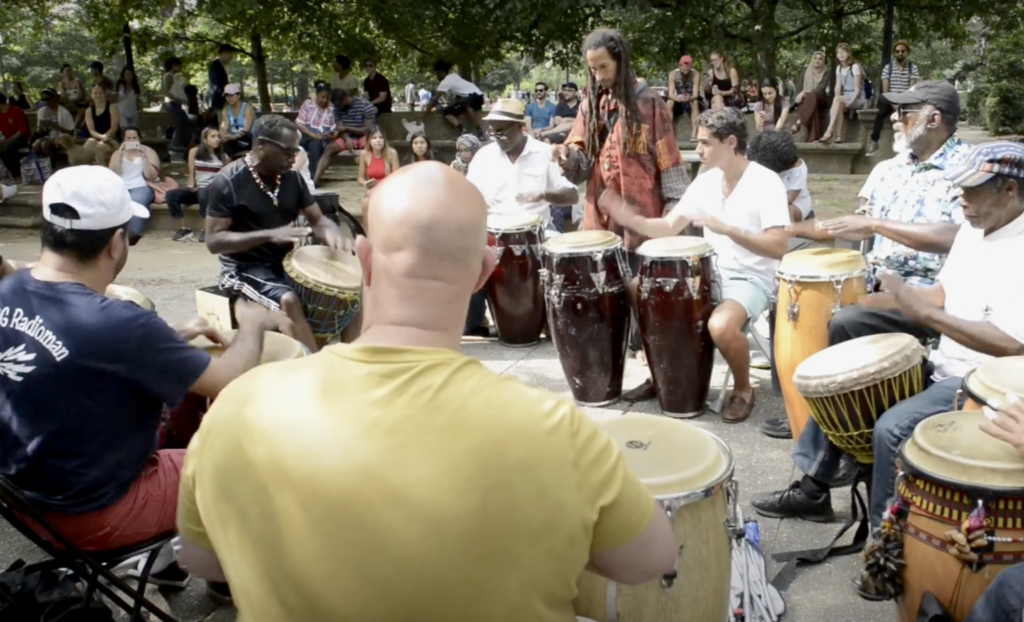
As I walked Georgia towards the park on Meridian Hill, we could hear the sound of the drums reverberating louder and louder embracing body and soul.
We passed a 13-basin cascade fountain at the bottom of the park, then climbed up the staircase. Once we arrived at the upper garden, we were mesmerized by an energetic group of drummers gathered loosely around a tight circle. There was a broad range of musicians with instruments of all shapes and sizes, such as cowbells, wooden sticks, gourd rattle, and egg shakers weaving West African rhythms together like an elaborate African tribal dress.
It was a kaleidoscope of drummers, dancers, acrobats, and artists. Nearby, merchants set up shop by the equestrian statue of Joan of Arc riding into battle. Hippie chicks with locs selling cannabis-infused baked goods. Yogis communed in restorative meditation. Friends and family held light conversation, listening, reflecting, collaborating, relaxing. People riding bikes, flipping skateboards, walking dogs – plenty of action to keep Georgia enthralled.
The drum circle originated during the civil rights movement in the 1960s as a celebration of black liberation. On February 12, 1965, the day that Malcolm X was assassinated, drummers joined in the park to memorialize him, and since then the kaleidoscope of drummers, dancers, jugglers, acrobats, and artists has been called the Malcolm X Park Drum Circle. Today, drumming has provided a way for Black Washingtonians to connect with African culture. And for White Washingtonians, a way to embrace the long history of the Civil Rights struggle in the city.
Sonia was happy to see Georgia, and my Pitbull Lab mix was thrilled to greet her, frantically wagging her tail and giving her bestie a long, wet, sloppy embrace.
Georgia smooching Sonia
I couldn’t help but move to the beat as I felt the rhythm of the drums reverberate down my spine “So many different people from different backgrounds and walks of life coming together on a Sunday afternoon to unite as one.”
Sonia moved fluidly, her arms emulating undulating waves of the ocean. “Absolutely…Drumming is uplifting for me. It’s great for my heart… it’s a wonderful art form. I’m in my joyous place.”
“This is why I love D.C. It’s such a diverse city effusing boundless energy.”
“Yes, and I do love going for a stroll with your mutt.” Or was it the other way around?
Georgia enjoyed taking Sonia for high-energy walks along the (National) Mall, where she always led the way, chasing squirrels and interacting with anyone that passed by. And, of course, Apollo loved interacting with others, too both but preferred to have Sonia for himself.
“Wish I could take Georgia camping to Great Falls.”
“You’re more than welcome to pick her up anytime. But Apollo might get a tad bit jealous.”
“But I live so far away in Bowie (M.D.).”
“Then you should stay at my house. I’ve got a spare room in the basement.”
“I will never live in Anacostia; it’s an art and craft desert there.”
“Maybe in the past, but the talent stream is rising. Young people are moving in droves, and there’s a big art movement afoot.”
“But isn’t it dangerous? Has anything bad ever happened to you?”
“Yes, I was mugged in 2008. I was stepping from my car when I saw a guy walking in front of my house. I gave him eye contact and said, ‘Hi.’ The next thing I know, he put a pistol behind my head and followed me inside my house where he grabbed my laptop and both my house and car keys.”
“Wow! Did he ever come back?”
“Thankfully, I never saw him again.”
“Surprised you didn’t move out?”
“Though it was unfortunate, I condemn the act, but not the person.”
“So, if you saw him again, what would you do?”
“I would say ‘Hi’ again and ask him how he’s doing. Tell him I forgive him and ask how I can help. People are building bridges in my neighborhood now and in areas east of the Anacostia River. We’re products of circumstances and history. And the same problems that exist in Anacostia apply everywhere. My community is a place where people are reaching out, and it shows the possibility of change and a beacon of hope.”
“That’s the most beautiful thing I’ve heard you say.”
“Well, I didn’t say it. I credit Arthur Magee from Belfast, Northern Ireland.”
Since we brought Georgia to Meridian Hill Park last week, it was Apollo’s turn for a night out.
April 14, 2012:
A little after 9 pm the following Friday, Sonia and I walked into a run-down building on Shannon Place S.E. called the Lightbox.
Sonia had low expectations, but she was blown away by the vibrant atmosphere upon entry. There was live music, dancing, performance art on display, a Busboys and Poets pop-up restaurant, and a tight-knit community in an old police storage warehouse. Just like in Meridian Hill Park, the beat and rhythm of the music were entertaining and stimulating.
“Lumen8, what an interesting title.”
“It’s quite symbolic. Lumen is a measure of light equal to one candle’s intensity. The number 8 represents Ward 8, the city’s poorest and most deprived ward. But phonetically, it also brings to mind ‘illuminate.’ Based on other all-night arts events throughout the country.”
Anacostia may have a bad reputation, and the residents long to shed our rugged image. Some people across the river treat us like we’re second-class citizens. But we’re no different than anyone else. We enjoy quality art and music, and on April 14, the community brought that talent across the river to Ward 8.
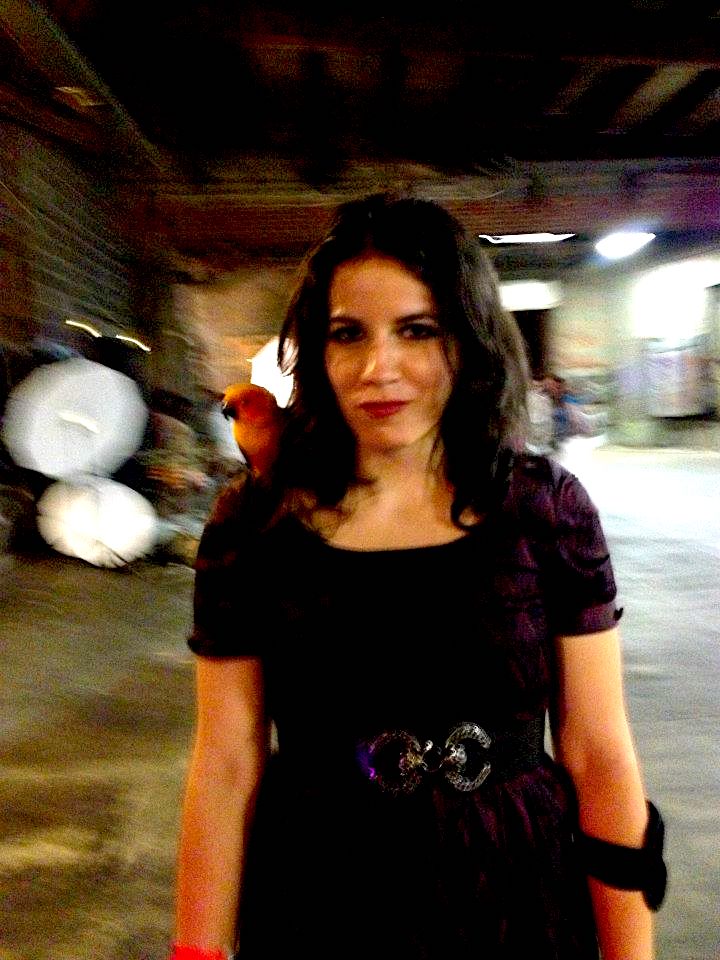
And Apollo, as usual, served as the friendly ambassador flying around the warehouse, uniting people together like birds of a feather.
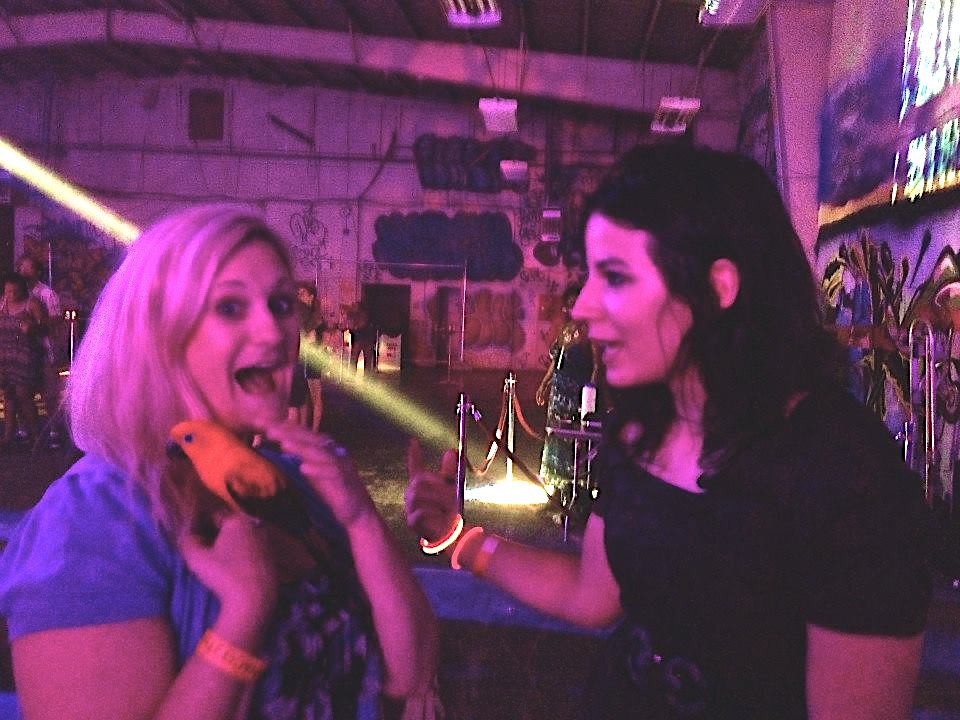
I was on the way to the cash bar to grab some rum punch when a high-pitched shriek startled me. I turned around to see Apollo had jumped on Sonia’s friend, Warrie.
“I knew I would be hit on tonight, but I wasn’t expecting to be dive-bombed by a parrot.”
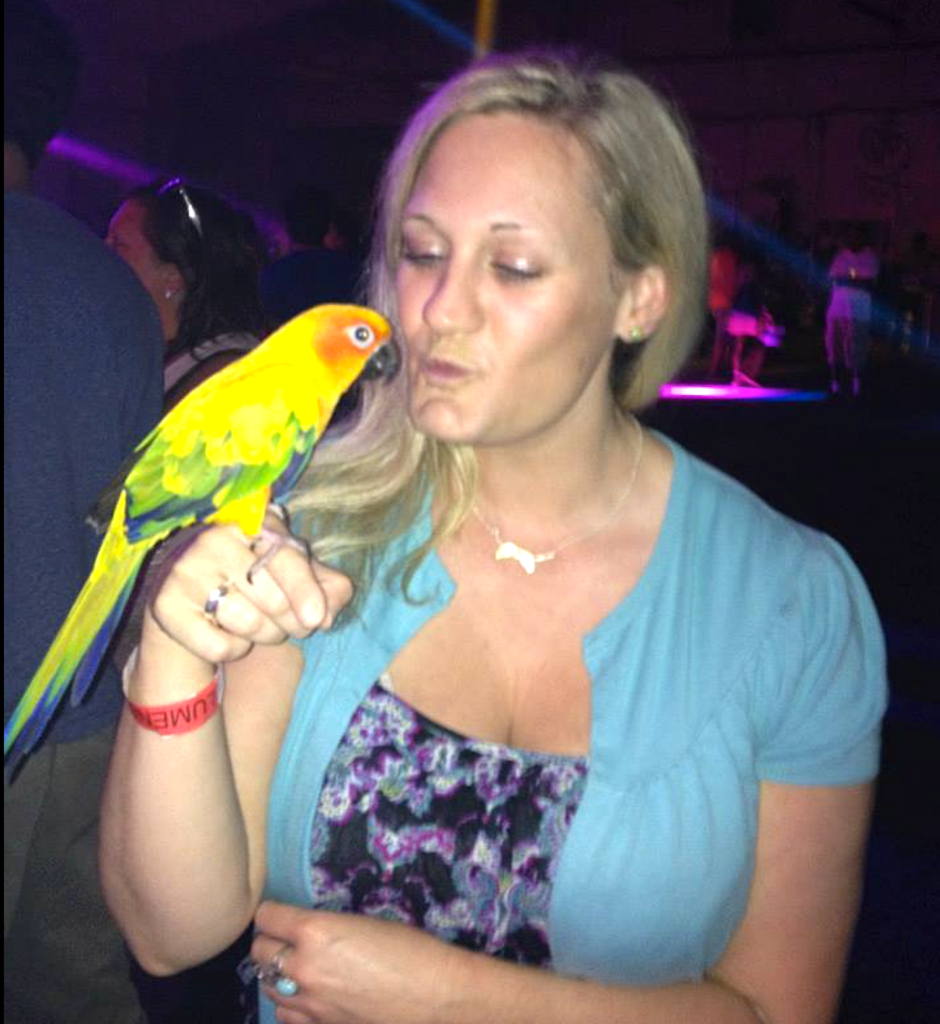
“My apologies, Apollo only picks the prettiest girls. And no offense Sonia, I think he prefers blondes.”
When I returned with the drinks, Apollo had already started to cozy up with Warrie, who was in the midst of deep conversations with Sonia.
“I moved from Virginia Beach to D.C. on a whim four years ago, and it was one of the best decisions I’ve made in my life. I still remember wise words from a friend, when I said, ‘I never would’ve chosen it.’ And he said, ‘Well, it chose you.’”
Sonia took a swallow of her punch and winced “So happy you found your happy place.”
I nodded with a smile then took a big gulp — the pineapple juice and grenadine tasted so sweet and rewarding “Housing is exorbitant here, but there are great deals to be had east of the River.”
Warrie carefully nursed her drink keeping a distance from Apollo’s cunning beak. “Hopefully, Lumen8 can attract different people to cross the bridge and realize that Anacostia is not so scary after all.”
Two Blondes enjoying each other’s company
I wholeheartedly nodded in agreement. “So what do you do for a living?”
Despite her best attempts to hold him back, Apollo had managed to steal a quick kiss from her. “I’m a dental hygenist.”
“Be careful he loves to peck between your teeth for food — he works better than dental floss. And what do you like to do for fun?”
“I love attending concerts and dancing my heart out. I never feel so full of life as when I’m spinning on a dance floor.”
“Well, tonight is your lucky night. Apollo loves to bust a move. How ’bout you Sonia. What type of art do you participate in?”
“I teach yoga. I play the violin, and I enjoy belly dancing.”
“Geez. Belly dancing? What’s the appeal?”
“It’s an ancient art form that crosses many boundaries. Come to my gig next month, and you’ll see it first hand.”
Tel’ Veh, a Turkish restaurant on the cutting edge of the Mount Vernon Triangle, was popular with guests due to its exotic, Mediterranean cuisine and generous happy hour specials. The taverna was contemporary but not overdone. Unlike other restaurants closer to the Verizon Center hub, it was graced with colossal, beautifully curved windows and tall ceilings adorned by a centerpiece chandelier. Tonight the venue was filled with revelers swaying to the harmony from a Turkish guitar and a lively street drummer. Together they formed a melodic duet deriving their rich tunes from the romantic Balkan peninsular. But the acoustics and drums were not what the packed crowds came to exuberate.
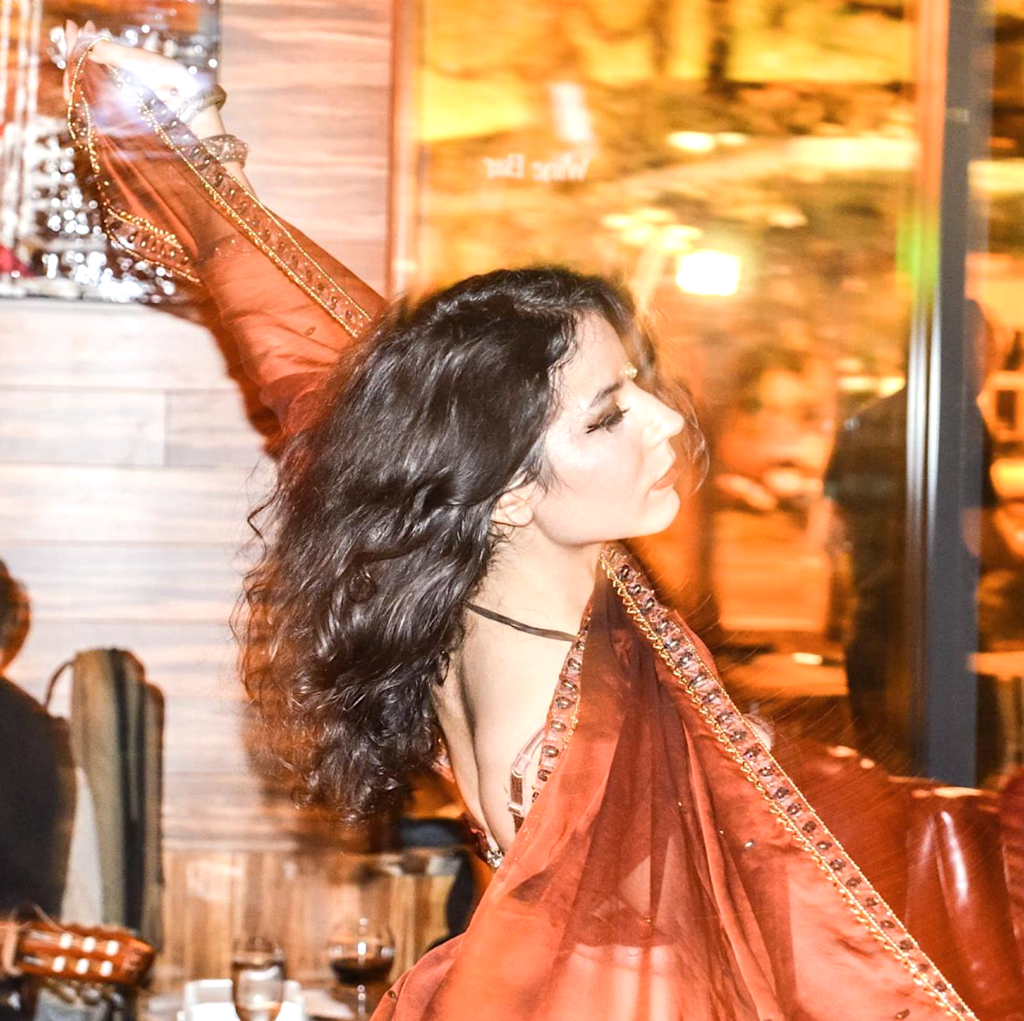
Sonia belly dancing — Courtesy of Chai Dynasty
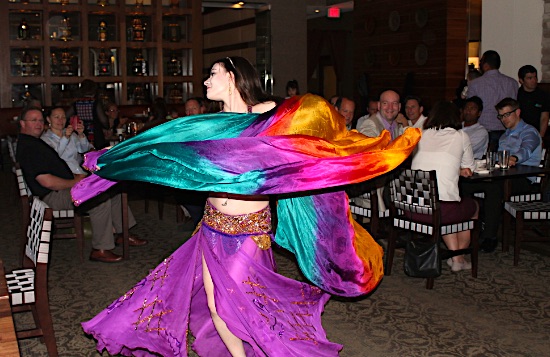
The graceful Sonia was gyrating in the center of the spacious dining room, skillfully spinning while tossing her shiny veil over her voluptuous shoulders. Through her dramatic hip movements and sensuous shimmies, her sinuous flow evoked mystery and artistry.
The guests cheered enthusiastically, adoring every detail of her choreography, chanting and clapping with each hypnotic movement. After a tireless hour-long performance to the high-tempo music, Sonia could walk on water, and the crowds responded enthusiastically. Sonia graciously thanked everyone in the audience, then gestured for me to come over.
“Emir, this is Chito. He does photography and websites. He manages this cool, jazzy site that will feature your kebabs and mimosas. You guys should talk.”
Needless to say, the owner was very thankful for Sonia’s performance. She had agreed to waive her fee and only work for a large tab. And he was inclined to pay back the favor by hiring me to redesign their site. I was now starting to move beyond Chinatown and was grateful to Sonia and Suzannah for providing me with solid leads and Apollo for introducing me to new friends. I hoped there would be many more belly dancing performances in the future. I hoped there would be many more belly dancing shows in the future.
On November 11, 2013, Super Typhoon Haiyan slammed into the Philippines causing massive loss of life and a trail of destruction in its wake. Battering the archipelago with wind gusts of up to 168 mph, it was the deadliest cyclone on record. I, along with my expanding network of Fil-Am friends watched in horror as the island nation struggled to bury the dead and deliver food, water, and medicine to the suffering.
So I was encouraged with hope when I got a call from my veteran friend, Kim “Dancing Queen,” a self-proclaimed musical arts fanatic, foodie and lover of anything Asian, particularly Cantonese.
“Have you ever visited Medaterra in Woodley Park?”
“Afraid not. I normally stay close to downtown. I don’t venture that far north on Connecticut Ave.”
“Well can you please reach out to the owner, Angela? She wants to host a fundraiser for the Philippines typhoon relief, and I thought you would be the perfect choice to spearhead it.”
“I’m deeply honored that you would help out. I will contact her first thing.”
Angela was happy that I agreed to spearhead a fundraiser. “Post an ad on Facebook. Let them know that 50% of proceeds of food and drink will be donated to AMCROSS.”
Angela and I also reached out to all the Filipino-American groups as well to a vast variety of meetups in the area, and we were delighted that over 100 people came to dine and donate money. By the end of the night, we had raised $1,200 for the American Red Cross, and Angela Aly was thrilled. “The event was enormous, and you executed like a champ.”
“My heartfelt thanks to you for offering your space and amazing specials. I appreciate Kim for reaching out to me and my gratitude for everyone who showed up and provided unconditional support.”
“Yes, the donations will help tremendously and we’ll keep praying for the victims for basic supplies, comfort, and healing.”
“Without a doubt. Say, so how’s your cafe doing? Do you get a lot of foot traffic at lunch and after work?”
“Some, but the young folks prefer to hang out on U St, H St, and 14th St nowadays.”
“Well, lemme see how I can help you. We’re pretty skilled at leveraging social media so we can place butts in seats for those strolling casually down Connecticut Ave.”
The following week, I pitched camp at the Mediterranean bistro taking pictures of dishes and featuring them on the website. In my free time, I would ride my pedicab through Woodley Park, picking up riders who didn’t want to walk the half-mile uphill from the Metro to the Smithsonian Zoo. Connecticut Ave is lined with restaurants and sidewalk cafes and there was plenty of foot traffic after work and on weekends.
I also took the opportunity to visit neighboring restaurants in the rustic enclave including the Lebanese Taverna, Open City, and the Afghan Grill. Woodley Park was a small village bounded by Rock Creek Park and the zoo. But it was an international hamlet with ethnic cuisines from all corners of the world.
The Lebanese Taverna serves classic, Mediterranean cuisine in a modern, contemporary setting. In 1976, Tanios and Marie Abi-Najm boarded a cargo ship in the dead of night with their five children to escape the civil war in Lebanon. After working at local restaurants for three years, they saved enough money to purchase the Athenian Taverna in the Westover neighborhood in Arlington, VA. They made a modification in the sign to read Lebanese Taverna and the rest is history. Today, the business has bloomed to six restaurants, four cafes, and a market and deli.
The chicken shawarma was roasting on the pit with onions and cherry tomatoes embedded in between slices to give it a juicy flavor. As the inverted cone of meat turned slowly on the rotisserie, the chef deftly sliced thin shavings from the outer layer to make the crowd favorite, doner kebab.
At the bar, a stylishly chic couple started off with the bread – a football-shaped pita of hot, chewy goodness which they dipped in hummus with the right amount of tahini and olive oil.
Then as an appetizer, they ordered shawarma sliders with hot slices of lamb stuffed inside a soft pillow of bread.
The entree was braised lamb shank with white wine, the tender chunks were falling off the bone. They made room for dessert — baklava, phyllo dough stacked with honey, and pistachios to cap off a perfect meal.
I sat at the bar and ordered an Almaza, a mild and smooth Pilsner brewed and bottled in Lebanon.
[ Image: Screen Shot 2022-02-05 at 1.33.17 AM.png ]
Lebanese Taverna bar
I visited the manager, Charlie Ayoub. “What’s RUNINOut, and how do I know you’re some fly-by-night operation.”
“Well, we have hundreds of thousands of users in the D.C. area and we were just selected ‘Best of D.C.’ in the Readers’ poll.”
“How good are you with managing events?”
“Well, we just organized a fundraiser at Medaterra across the street and raised $1,200.”
“Alrighty, hot shot. Let’s see if you can arrange an Arabian nights themed party for us.”
I looked at Charlie wide-eyed and baffled. Did he want fire dancers, sword jugglers, snake handlers? Perhaps I could ask some of the folks from the drum circle in Meridian Hill Park to participate. We can set up henna art and have tarot card readings. Maybe I’ll bring Apollo and have him fly to different customers and eat their pita bread dipped in olive oil.
“Oh certainly, Charlie, there’s no event no matter how wild or exotic that I can’t handle.”
“Super, traditional Arab folk music with Raqs Baladi please.”
I immediately called Sonia Herrero.
“Raqs Baladi—that’s Egyptian belly dancing,” she informed me with a chuckle.
“Well can you help out a hopeless fellow? I’ll let you take Georgia out for a hike.”
“Would love to, but I just started a new job at the Department of Education, so I can’t commit right now.” However, I would love to see Apollo.”
“Cool, let’s make a date to go biking, and he’ll tag along.”
“Nope, busy.”
“Well, we got the EU Embassy Run in May, and all the Embassies love to see Apollo.”
Next, I called Angela and briefed her on my meeting with Charlie.
“Don’t stress out. I’ve got the perfect solution for you.”
She wrote down a name and number on the back of the menu. “Asala, call her, see if she’s available.”
I dialed the number with trepidation.
“Hello, who’s this?”
“Umm, this is Angela’s friend from the Medeterra. Do you know anything about an Arabian Nights performance at the Lebanese Taverna?”
“Wait, are you the fella riding the pedicab up and down H St during the summer Fest?
“Yes, the one with the squawking parrot that matches the color of your veil.”
“Certainly, I would be happy to dance at your event. As long as you’re able to make the arrangements behind the scenes.”
Raqs Baladi is an Egyptian dance that originated several hundred years ago performed by ordinary countrymen and women during gatherings and celebrations. Women moved core body parts like the spine, abdomen, pelvis, and legs helping them to develop core strength and a healthy reproductive system. People were enthralled by seeing the women move their hips, so the dance took off, spreading all across the middle-east and into India.
Jennie “Asala El Masri” discovered belly dancing in 2003 after enduring a knee injury from high school sports. Belly dancing served as an excellent therapy as she developed her core. Today she still loves sports but has found that dancing feeds her passion for movement and music. Her performances remain in high demand, and she has performed for a wide range of venues including festivals and embassies.
It was definitely my responsibility to market the event to bring a decent turnout. Asala didn’t dance for free, and it was my job to bring in enough revenue to ensure her happiness. I, on the other hand, worked for a pat on the back and an open tab. The golden Almaza pilsners were refreshing and crisp and they always paired nicely with shawarmas and doner kebobs — I ate like a sultan and drank like a commodore.
And when the lights dimmed, and the majestic mejance chimed, Asala emerged from behind the red curtains, moving deftly like an eloquent diva. Her giant wings made for a truly dramatic entrance eliciting accolades from the enthralled guests. Each instrumental note hummed in unison with the elegant strides of her toned core and her undulating belly.
We continued every Thursday night in April, hoping the word would spread quickly and her magical allure would entire millenials in droves. Her costume was consistently glamorous and her choreography flawless. And with the succulent Lebanese cuisine and Charlie’s hospitality — I felt sure we had all the right components for a huge hit.
True to form, she readily got diners to rise on their feet and celebrate this ancient art form from Mesopotamia. And Asala interacted remarkably well, displaying her elegant smile and keeping the audience entertained and captivated with a sensation of enigma and glamour.
Perhaps there was no other night where her prowess was on display than on April 13. If no courageous soul rose to the floor, Asala would pick an innocent victim. From the corner of her eye, she saw a nice gentleman smiling and seemingly enjoying himself. So she went over to tie her veil around his head, only to notice that he was wearing a priest uniform. Charlie gasped. Asala glanced over and caught his expression and dreaded catching his wrath after the show. Surprisingly, everyone else seemed to get a kick out the entrapment and many thought that she had planned it out from the beginning.
All the online reviews for the food, service and performance were glowing, but sadly, the attendance continued to be sparse. Very few mainstream Washingtonians were fans of this exotic art or were willing to drive up to sleepy hollow to participate. Instead, they congregated at the more popular hub: H Street, 14th Street, Adams Morgan, and Dupont Circle at the hip hop lounges swaying to the familiar beat of go-go, funk and R&B.
My immediate reaction was to call Jackie Woodbury for another lifeline. Maybe Wayne Manigo could infuse the show with light-hearted laughter. We even discussed having Asala dance to classic rock — an idea that was immediately shot down by Charlie. But if we didn’t draw a large enough crowd, he would be scrap the rest of the shows.
There were two milestones I needed to achieve in order to complete my MBA — a new venture capstone project and a study abroad trip to compare and contrast cultures, business practices, and management styles.
In the spring semester of 2012, I enrolled in a six-week course entitled Engaging Diaspora Communities for International Business and Development. It was taught by Dr. Liesl Riddle, the associate dean of GW’s School of Business who has written extensively about diasporas and international entrepreneurship.
The course studied the diaspora communities in the US and abroad and their motivations for sending remittances to their home countries to spur growth and prosperity. A vast majority of the diaspora who return to Ethiopia are starting businesses and creating jobs. The class culminated with a week-long trip to Ethiopia to take what we learned and apply it firsthand.
There are an estimated 2.5 million Ethiopians living outside of Ethiopia. Many of them live in Washington, DC, so this particular diaspora was the perfect one to focus on.
“I want you all to contemplate what you expect Ethiopia to be like, compared to what we observed once we are actually in the country,” said Dean Riddle.
The GWU MBA class departed from Dulles excited about the adventures ahead. When they arrived at Addis Ababa 14 hours later, they were sleep-deprived and jet-lagged but enlivened nonetheless. Situated in the Horn of Africa, Ethiopia is a rugged, landlocked country and the cradle of humanity where Homo Sapiens first walked on two legs. It is the “Land of Origins”…of humanity, language, and of course one of life’s greatest pleasures – coffee arabica.
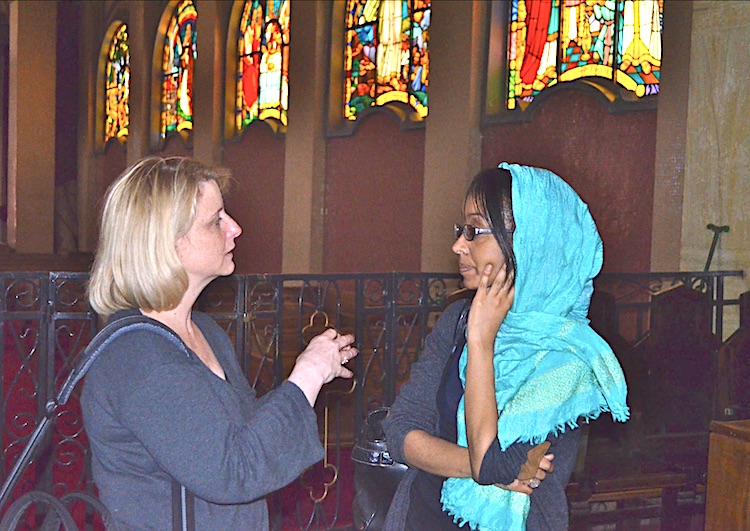
Since it was too early to check into our suites, Dean Riddle arranged for us to do some sightseeing. Our first stop was the Holy Trinity Cathedral, a product of the colonial period imbued with rich history and majestic architecture.
Many tourists who visit Washington, DC yearn to visit the Smithsonian Natural History Museum to ogle at the Hope Diamond. Likewise, an obligatory stop in Addis Ababa is the National Museum of Ethiopia to admire the Lucy fossil. She is 3.2 million years old, and the most famous early human ancestor because she walked upright. Unfortunately, the bones we saw were not the real Lucy, but plaster replicas. The original skeleton is displayed at the Cleveland Museum of Natural History. Ironically, it was offered to the Smithsonian in D.C., but turned down due to a resolution that early human fossils should be stored in the country of origin and to make displays in other countries with fossil replicas. It’s like traveling 7,000 miles to meet a fairy tale luminary, only to find out she’s half the world away on a sabbatical. But real Lucy or not, we were ready to do some slumbering as we finally headed to the hotel.
On the way to the Ramada we were greeted by the impressive stone monument of the Lion of Judah roaring over the city, a crown jewel of the infamous Haile Selassie.
Finally, at the lodge, I took a long shower and squeezed in a power nap, but by nightfall, we had to gather up for our first guest speaker – Addis Alemayehou, a serial entrepreneur who returned to his roots and has become a household name in Addis. He founded 251 Communications which has grown into one of the leading PR and communication firms in the country.
“I started my entrepreneurship endeavor here when the war between Ethiopia and Eritrea was just coming to an end and the economy at the time was in shambles,” Addis said. “I lost my iPod and missed having my playlist with all my favorite songs, and realized that there were many people who also enjoyed Western music. So I started the first English Speaking FM Radio station in Addis. A good business is always one that finds a need in society and fills that void.”
“Are there lots of opportunities here for startups?” my classmate, Marilu Ortega asked.
“Business in Ethiopia flourishes out of sheer need. If you were to spend a week in this country, carrying a notepad and writing down everything you wished you had but didn’t, you would finish the week with at least 35 promising ideas.
“How is the labor market here?” Erin Dahan asked.
“Steadily improving every year. Wages are low and there’s lots of talent here. Foreigners are investing and diasporans are returning and creating millions of jobs every year.”
The next day, we met one of those diasporans who had contributed enormously to the job market. Daniel Gad immigrated to the US after school in search of better career opportunities. After serving as an executive for AT&T for 20 years and building a nest egg, he decided to return home. When he met with the Chamber of Commerce to see where he should invest, they steered him to the field of agriculture. Daniel deep-dived in the industry and discovered that flowers are a multi-billion dollar export business. He then created a 28-hectare rose farm called Metrolux Flowers which he successfully exited. He now manages and operates Omega Farms, a leading vegetable production farm that produces and sells high-value vegetables to the EU. He is currently collaborating with PepsiCo on a partnership called EthioPEA aimed at chickpea production which would hire over 10,000 farmers. Daniel Gad is undoubted “mining gold from the dirt.”
* * *
One industry that is facing a difficult time getting diasporans to return is the medical field.
“There are more Ethiopian doctors working in Washington, DC than in Ethiopia,” said Dr. Asfaw Atnafu, a professor of radiology at Addis Ababa University and the Head of Telemedicine at the Black Lion Hospital
One issue that Dean Riddle taught us in class is the concept of “brain drain”. In Ethiopia, many students leave the country to study medicine, but the vast majority do not return. Dr. Atnafu who studied medicine abroad was given a very lucrative offer to practice medicine in the UK. It seemed obvious for him to accept it. But one day, his mentor saved a very well-known British official who was suffering from a severe brain injury. The surgery was such a success that he was interviewed by the BBC. They asked him why he was returning to his homeland. The doctor said that Ethiopia would be safer now because they would now have one neurosurgeon. That one sentence changed Dr. Atnafu’s perspective, so he decided also to return.
Ethiopia is one of the fastest-growing countries in Africa with more than 104 million people. The country has made significant health care gains lately, such as lowering infant mortality, but more work needs to be done — particularly in rural areas. Healthcare, something that many Americans take for granted is a precious resource in many Third World countries and needs to be drastically improved and will be key to boosting economic growth.
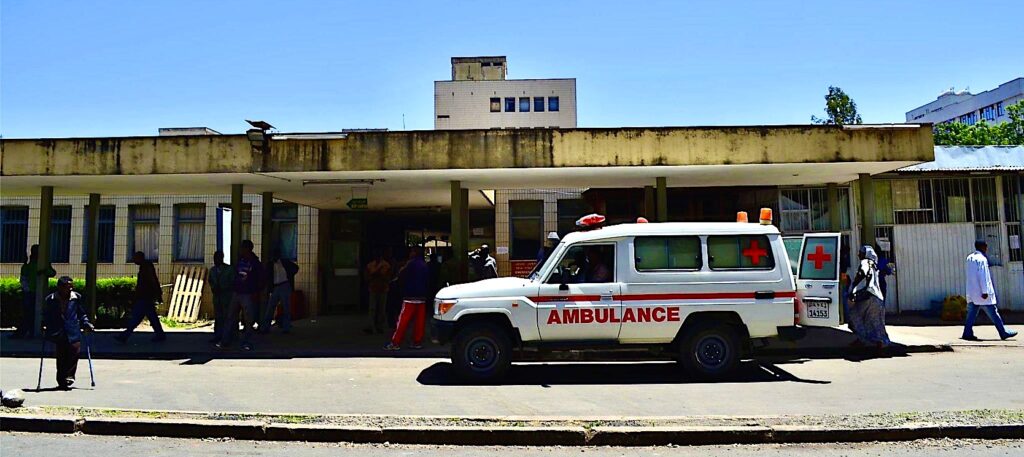
Black Lion Hospital
Dr. Atnafu was not focused as much on remittances as he was on the social and educational aspects that diasporans can have on Ethiopia. That was why he’s big on telemedicine. Much of the engagement he facilitated was through knowledge sharing and training conducted virtually. In addition to receiving input from diasporans abroad, the medical community in Ethiopia can contribute to the medical dialogue by sharing their own experiences.
I wish my former boss, Admiral Robinson had an opportunity to meet with Dr. Atnafu. As the Surgeon General, responsible for seeing healthcare for the Navy and Marine Corps throughout the world, he was a big proponent of telemedicine and would have loved sharing information with Ethiopia on how to make healthcare available to everyone.
* * *
We also met with Dan Rosenthal, the Commercial Officer at the U.S. Embassy. Ethiopia is a state-run economy and with the government overseeing the development, there is a lot of red tape. Thankfully, the country is starting to privatize and is looking for foreign investors to improve the quality of life for Ethiopians.
“The five sectors that are the most important for the future are Telecommunication, Agriculture, Manufacturing, and Power. These industries will create the maximum number of jobs leading the country to a dynamic future.”
“What are some of the major draws for international investors?” I asked.
“Duty-free imports of capital equipment, tax exemptions, cheap electricity, a thriving local airline with a large international footprint, and duty-free access to the US market through the African Growth and Opportunity Act. But probably the most attractive is low wages — the country wants to keep its wages low to attract investment for its manufacturing industry.”
“But low wages will barely lift workers out of poverty, and once workers gain skills, they will leave their jobs to seek higher-paying jobs, resulting in high attrition and higher training costs.”
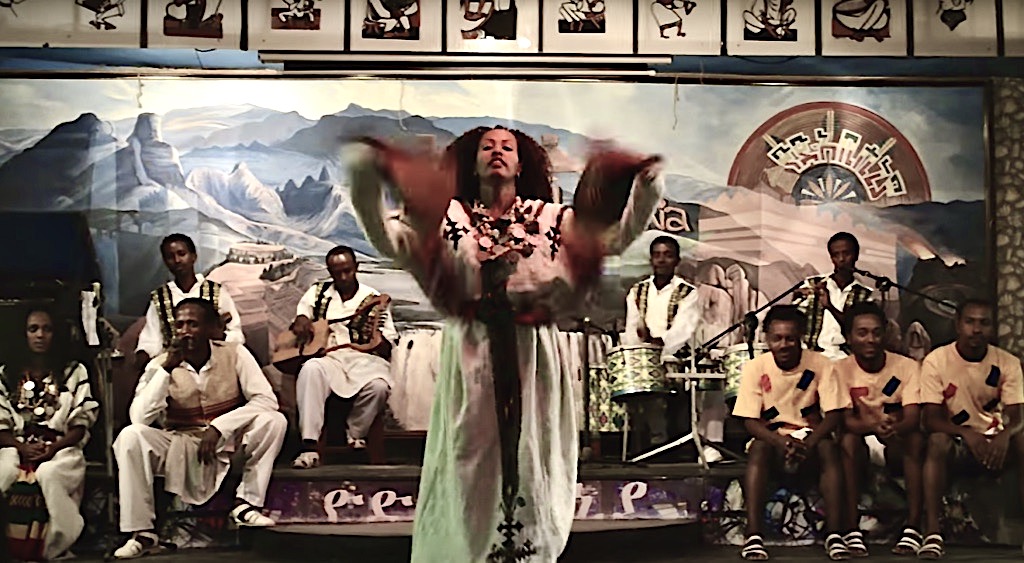
The field trip wasn’t all meetings and business attire. We also went to enjoy the food and culture. And Dean Riddle recommended we visit the 2000 Habesha Cultural Restaurant. At first glance, the restaurant offering a buffet of traditional food and a stage show of dancing and singing looked like another tourist trap. But you cannot judge a venue by its clientele.
2000 Habesha Cultural Restaurant
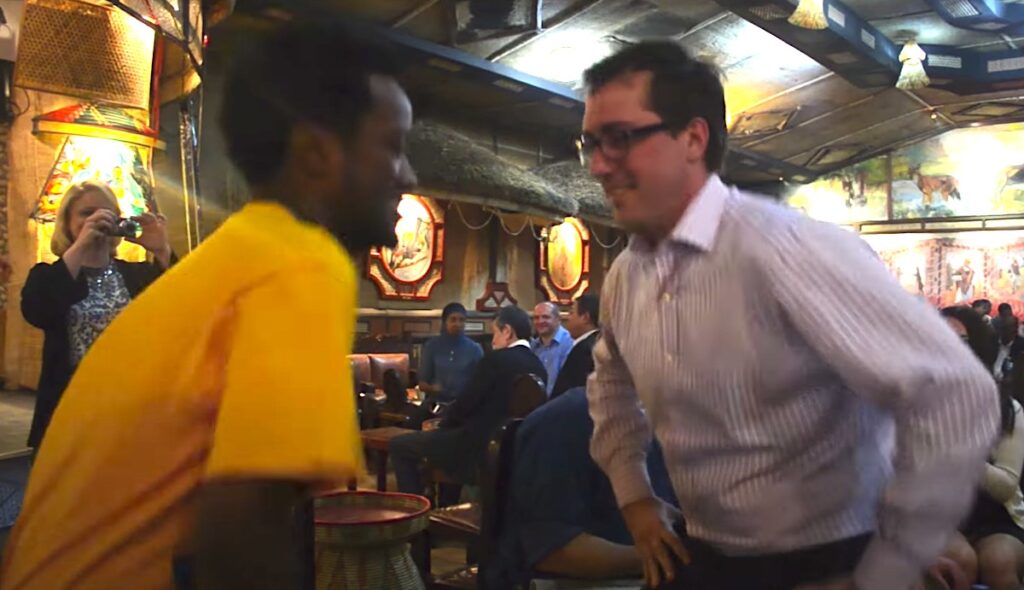
We loaded up with large platters of injera and wot and sat up front to enjoy the festive performances. The veggie-friendly dishes were anything but boring. The healthy portions included ruby beets, lentils, salad, carrots, green beans, and chickpeas and were flavored with garlic, paprika, and rosemary. After a few glasses of honey wine and bottles of St George beer, a couple of brave souls sauntered on stage and performed the Eskita (traditional dance moving the shoulders).
The next day, Dean Riddle and several of my classmates visited the Boston Day Spa nearby. They had a relaxing time to refresh and detox until one or two of them accidentally imbibed on the tap water that was served to them and immediately realized they weren’t in Boston USA. Ethiopia has made impressive progress over the past 10 years on improving water quality, but the water supply is still very contaminated and should not be drunk. Needless to say, a couple of them caught gastroenteritis and had to rest at the hotel to recuperate.
At this trailblazing spa, we got to meet with Tadiwos Belete, a diasporan who trained as a hairstylist and attended cosmetology school in Boston. When the Derg regime overthrew the Ethiopian monarchy in 1974 and established a brutal dictatorship, Tadiwos, at the age of 15 decided to flee on his own to Sudan. There he was even paid by farmers to scare off birds feeding on crops. After a few years of roaming about, he applied for refugee status in the U.S. and moved to Boston where he worked odd jobs until he decided to become a hairstylist.
Boston Day Spa
After saving money, Tadiwos wanted to open up a salon in the city’s poshest neighborhood, but nobody wanted to rent to an unestablished immigrant. He decided to reach out to the owner of a building on Newbury St by inviting him for dinner at a nearby Ethiopian restaurant to get acquainted. The owner was sold by his negotiating skills, and in 1998, Tadiwos opened up his first hair salon called Konjo (beautiful in Amharic).
It wasn’t long before Tadiwos started to feel a longing to return to his homeland. He developed the idea of starting a luxury spa, hair salon, and hairdresser training school in Addis Ababa. But he didn’t have the funding. He asked nearly every customer who got a haircut from him to partner with him and invest in his country. After asking nearly a thousand people, one Taiwanese woman reluctantly agreed to come in as a silent investor. Tadiwos built an office block on crumbling, dilapidated Africa St, where many had not dared to set foot. His relatives thought he was crazy, but he wouldn’t be deterred.
Nine years later, business is through the roof, and his brilliant idea has spurred dozens of other spas to sprout all over the city. Tadiwos has also embarked on a development boom, opening up a restaurant and a wine bar downtown along with two luxury resorts a couple of hours from the hub. In all, he employs over 1,500 people spurring the economy. We had the opportunity to visit Tadiowos’ Kuriftu Resort, a 28-room tourist retreat in Bahir Dar, at the source of the Blue Nile river. It’s an amazing place with great food, hookah, and a splendid lake where you can go on a relaxing boat ride. And like Boston Spa, they have a massage, steam, and sauna to top off a very relaxing retreat from the city. Just remember not to drink the water.
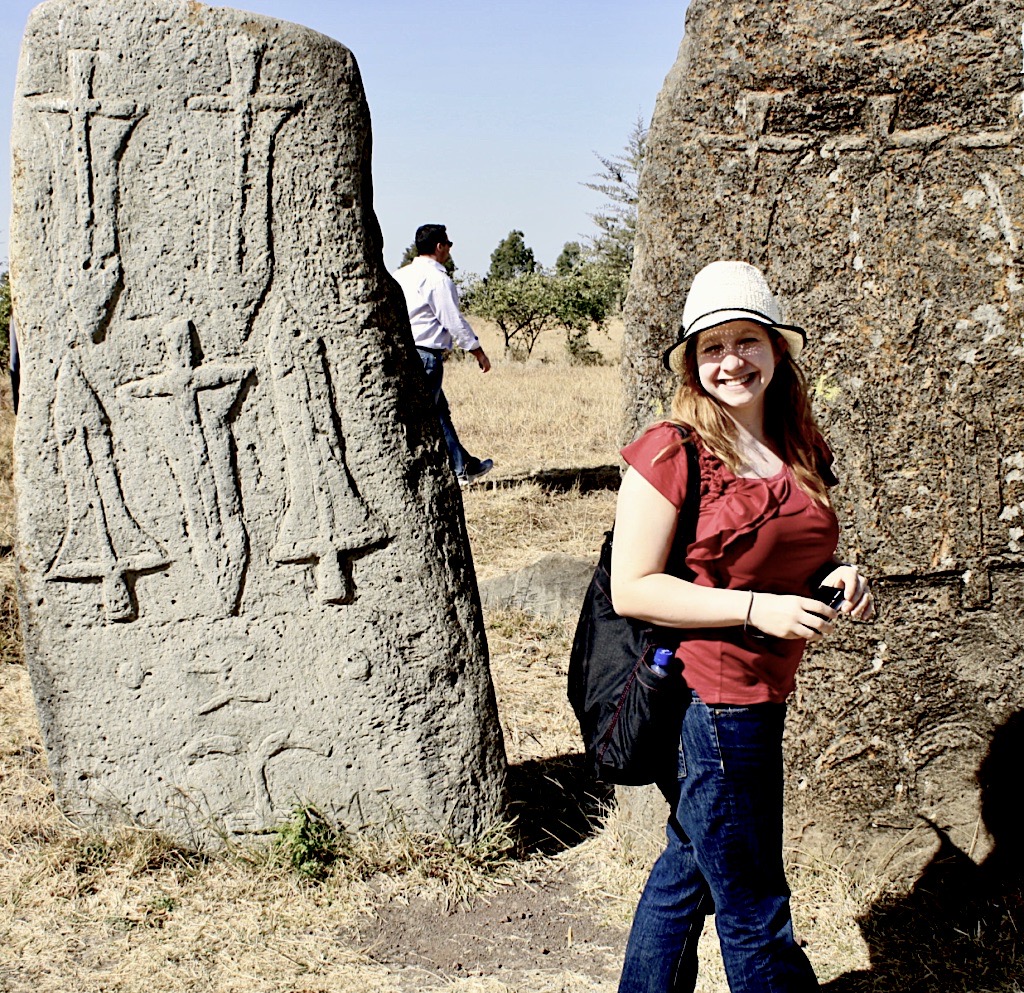
On the way back to the city, we stopped at the legendary Tiya Stelae, an archaeological site containing 36 enigmatic monuments. Each obelisk-shaped stone is engraved with primitive, clear images of swords, shapes, and figurines. To date, no one has been able to determine the age or the purpose of these carvings. One reason why they call Ethiopia a “Land of Mystery.”
legendary Tiya Stelae
Finally, we got to visit the Commodities Exchange, established just four years prior. The country’s two major goods exports are not surprisingly coffee (29%) and cut flowers (14%).
Ethiopia is also a land of rich opportunities for investors, from all over the world. That is why it is projected to be Africa’s fastest-growing economy, and perhaps one of the fastest globally. Labor is fairly inexpensive and highly skilled and the country has made huge investments in infrastructure and manufacturing. The government is making reforms to unleash the private sector and has wholeheartedly embraced the diaspora for impactful development projects. Returning diaspora also share invaluable skills, education, and experiences they acquired from the West. In order for the motherland to optimize development and job growth, she must continue to forge lasting, meaningful ties with this salient community, translating into sustained, measured growth in the years ahead.
But the road to investment is a rocky one. Diasporans are facing a huge information gap in the current market and steep odds that they will reach their lofty goals. That’s why it’s highly imperative that they conduct proper research and fully understand the industry and the market in which they are operating in. They need to be savvy innovators and shrewd negotiators in a volatile and intransigent market. What I found noteworthy was the resourcefulness and resilience of the diaspora community. Through grit and resilience, many persevered and ultimately made a significant difference for their country and citizens.
On the final day of our journey, I sat down with my friends to discuss what we learned.
Rasheida Knight was really smitten with Addis Alemayehou. Addis has been able to achieve massive success because he was innovative. Most people who lose an item of value like an iPod would regard it as a setback. Addis viewed it as an opportunity to fill a void. He reflected on how important his playlist of Western music was to him and realized that there were many Ethiopians that felt the same way. He conducted a target market analysis to understand the size and scope of the audience and researched what was needed to launch the first private English-speaking radio station, Afro-FM. He not only tried to understand how people work, but he also wanted to understand how things work. And in so doing, he documented everything.
“If you were to spend a week in Ethiopia and write down everything you wished you had but didn’t, you would come up with tons of innovative ideas.”
Marilu Ortega enjoyed her time at the spa and was thus impressed with the innovativeness of Tadiwos Belete who thoroughly researched the local market and felt that a day spa business could thrive there. People thought he was crazy, but he understood the potential customer base and was confident that the salon would be a huge success.
But Tadiwos didn’t have the funds or resources to make all this happen. He was an effective negotiator beginning in his Boston, MA. days when he skillfully convinced a building owner to lease him space to open his first hair salon to when he convinced one of his customers to invest in his business venture abroad. Without his ability to listen, communicate and persuade, Boston Day Spa would never have been built.
Tadiwos Belete
Erin Dahan was impressed with Tadiwos’ resourcefulness. At the age of 15 and living in a Sudanese refugee camp, he was able to survive and find a way to show his usefulness to farmers and work with the Catholic Church to immigrate to the U.S. He lived in Boston for 20 years and through resourcefulness and grit, managed to save money and learn an important skill that led him to build his luxury spa business franchise.
Brady Shannon also enjoyed hearing about the resourcefulness of Daniel Gad. After living in the U.S. for 20 years, he was shocked when the Chamber of Commerce recommended that he invest in flowers. To be successful in agriculture one has to be highly resourceful. For one, the country did not have access to modern farming equipment. They still used pitchforks and plowed with donkeys. Daniel eventually sold MetroLux Flowers and started a new business in horticulture called Omega Farms. He did a lot of research and observed how his farmers harvested chickpeas. He then realized that by being more resourceful and making small improvements in their handling processes, his farmers would be able to increase production by 30%.
“I like to use the analogy of gold in the dirt,” said Daniel Gad. Ethiopia has a lot of dirt. The key is to find out how to get gold out of it.”
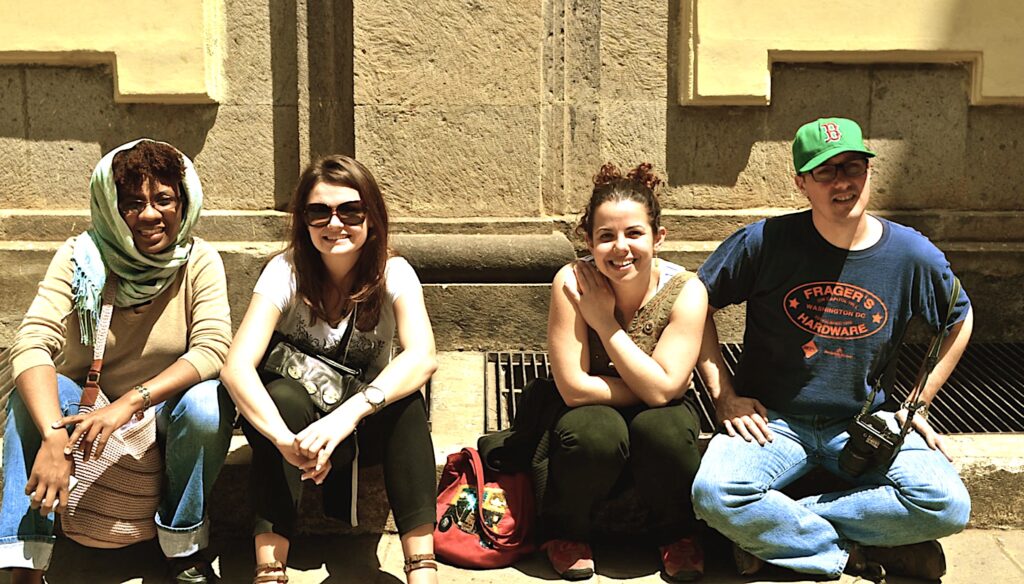
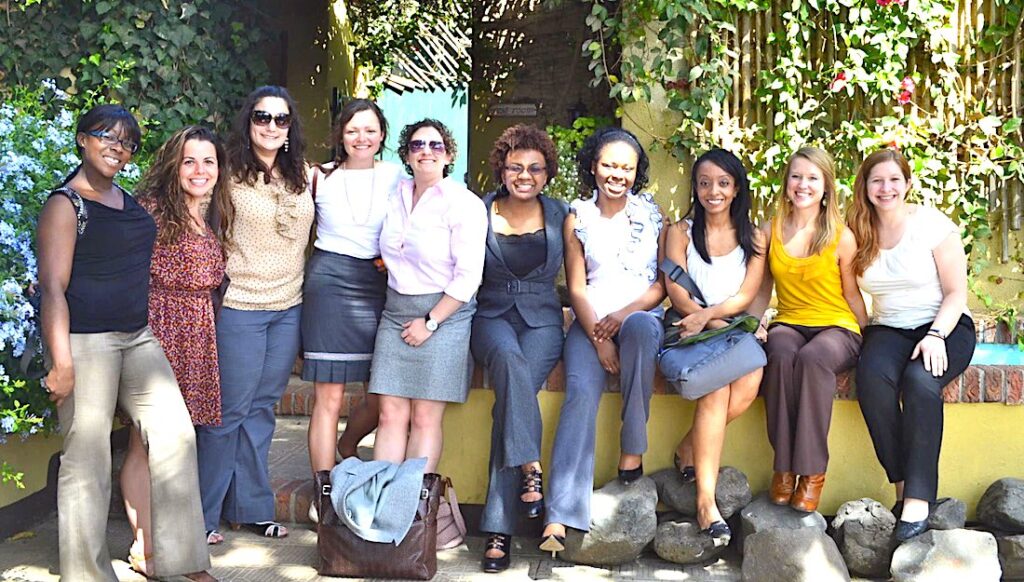
Rashida, Marilu, Erin & Brady
Marilu sympathized with the huge healthcare challenges the country faces. “Their resourcefulness in utilizing telemedicine is both novel and remarkable,” she said. “Dr. Atnafu has made huge sacrifices and has done a remarkable job.”
All the entrepreneurs we met, made bold decisions and took huge steps to start their businesses in a very risky and volatile environment. There was a huge information gap, and they faced steep odds against reaching their lofty goals. When faced with challenges, some of them had to take a step back or make a drastic course change, but they always kept their eyes focused on their goal and navigated towards it.
Even 10 years later, I remain inspired by the group’s resourcefulness, their deep understanding of the current market, their ability to broker and negotiate, their willingness to adopt innovation, and their courage to take the next step.
I was driving back from Front Royal, VA, the gateway to the Shenandoah National Park, when I got an unexpected call from a long-time restaurateur friend.
“Manuel, it’s great to hear from you. How’s the Iguina family?”
“Wife and kids are fine. We’re launching a new restaurant theme on H Street.”
“Really, Latin, Puerto Rican?”
“Neither one, I just got hired as the Director of Operations by Ben’s Chili Bowl.”
“Wow, chili and half-smokes – a local legacy. Congrats!”
“Yes, it’s a true iconic symbol, but we’ll be focusing on a totally different cuisine – Southern with a twist of Caribbean.”
“Sweet my friend, on U Street?”
“No, above the new location on 1001 H Street – we’ll be changing its name from Ten 01 to Ben’s Upstairs in “a few weeks.”
That makes a helluva lot of sense. The Ben’s name holds a massive amount of clout. What worked on U Street with Ben’s and Ben’s Next Door should work on H.”
“Yes, we’re thrilled beyond belief, and I would love for you to join our team.”
The following week, I met with Nizam Ali, owner and Vice Chair of the Ben’s Chili Bowl Foundation; Manuel and his Chef who hails from North Carolina, Quinton Mitchell. We formulated a plan to photograph their space and savory dishes, develop a website theme that captures their unique character and aggressively market the space to locals and tourists.
“H Street Fest is the biggest block party in D.C.,” Nizam asserted. “We want to launch Upstairs in conjunction with the Festival and hope that people from all over come in and sample our cuisine and experience our renowned, timeless brand.”
Similar to the iconic lunch counter on U Street with Ben’s Next Door, a historical American restaurant, Ben’s Upstairs featured a full service bar as well as a covered rooftop space offering stunning sunset views.
H Street was once a thriving economic corridor. But after the ’68 riots, the area was devastated. Similarly, U Street was ravaged to ruins after the riots. Businesses were damaged and smoldered, but Ben’s Chili Bowl stayed opened even through the many nights of curfew. Ben’s fed first responders and black activists, and served as a peaceful gathering place and safe haven for all.
Kay’s Jewelers and Morton’s Department Store burned down during April 1968 riots. Overall, more than 1,100 buildings in D.C. were damaged and the middle-class fled to the suburbs to seek safety and open space. People did not return for 20 years, and it wasn’t until the start of the 21st century that people began to invest in their community and redevelop the battered corridor.
That’s why Ben’s Chili Bowl is such a revered landmark. President Obama and national celebrities frequently dropped by to grab a bite, and for many world leaders, it’s a rite of passage after visiting the White House.
“Our slogan is Southern-influenced cuisine food with a hint of Caribbean flavors,” Nizam announced.
“Fried oysters Po-Boy with citrus aioli, fried green tomato BLT with ancho chile lime mayo, jerked salmon and lobster roll with arugula and roasted peppers, whole fried snapper served with coconut mojo are our featured dishes,” Quinton revealed. “And Manuel also assists since he’s from the enchanting island of PR.”
“Also love the stuffed yucca and green plantains as well as the mac ‘n’ cheese studded with crawfish,” Manuel shared.
“My father Ben was born in Trinidad and my mother Virginia is from Southern Virginia. We want our new menu to reflect the Ben’s family roots,” Nizam remarked.
“And the drinks are very much Latin/Caribbean featuring Bacardi mint Mojitos, Mezcal Margaritas, and Stoli Raspberry Sangrias,” Manuel informed. “Very comparable to my Little San Juan.”
“Thanks for all this timely information. I need to ask for a favor. “I have a friend who just arrived from Jamaica. Can you get her a job?”
“If she has a green card, she’ll fit right in,” Manuel replied. “And BTW, will you be inviting food bloggers like you did at Mio?”
“Super idea — food bloggers and social media influencers.”
Who me also a food model? Well when my good friend Chito invites me to join him as he samples a new restaurant’s menu, what else can I say but YES! At the two weeks old new #benschillibowl on H St. As I sample the variety of dishes, all I can think is that this restaurant has transcended it’s legendary staple of #chillihotdogs and fries! Very satisfied with the experience.
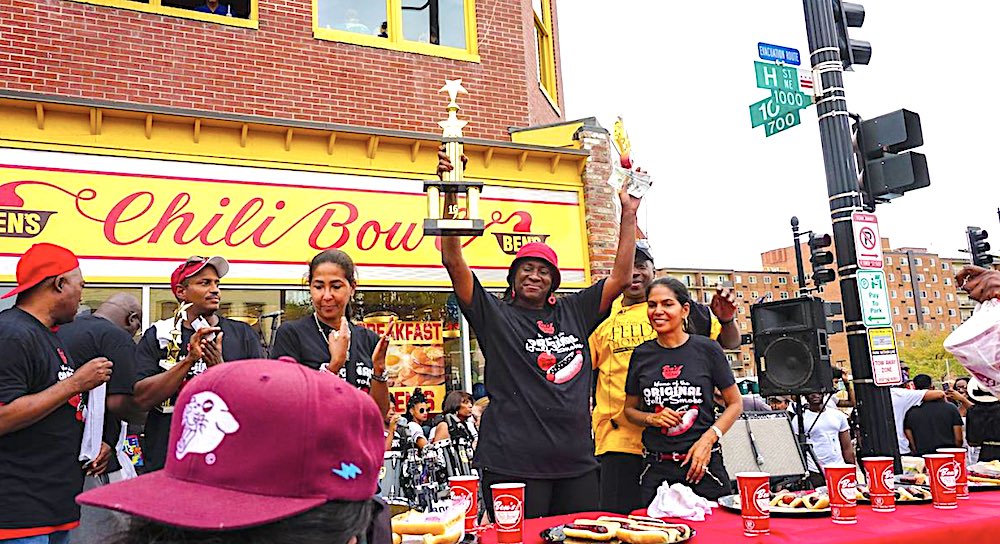
On Saturday, Sept 17, during the H Street Festival, Ben’s Chili Bowl welcomed eaters and spectators to the 4th Annual Half Smoke Eating Contest.
Tens of thousands streamed along the 11-block corridor looking to taste wholesome food and experience diverse culture and fun.
Half Smoke Eating Contest
What is unique about the D.C. half smoke? Is it because it’s half pork and half beef? Or is it Ben’s original spice mix that is a well-kept family secret. Or maybe because it’s grilled on both sides on a hot griddle until perfectly charred. Whatever the reason, the sausage placed on a lightly steamed bun, dowsed with yellow mustard, sprinkled with chopped white onions and smothered with the famous, generation-old chili sauce has become D.C.’s signature dish.
As usual, Virginia Ali, the Matriarch of the D.C. restaurant world, was busy running the restaurant, cooking half smokes and cleaning tables.
Eight lucky participants got to enjoy the sweet, smoky half smokes, grilled to perfection, to see who could consume them the fastest.
Mary Jones set a local record by devouring eight half-smokes in eight minutes — a feat that could put Joey Chestnut to shame.
Vida Ali congratulates Mary Jones for winning the Half Smoke Eating Contest.
Ben’s stage also showcased some of D.C.’s hottest local artists such as Rare Essence, Ozone, Renee and Wooty 95
After the contest and concert, fans filed into Ben’s to grab a chili dog with chili cheese fries or Upstairs to grab a Southern Caribbean sandwich paired with a Mojito.
A beautiful, full-figured woman with long, black hair and a thick, rich accent served me a Caribe cupcake with a Red Stripe.
[ Image: Kiomey Ben’s Upstairs.png ]
Kamara @ Ben’s Upstairs
“Thank you kindly Kimara. What a great time for you to start working here.”
“I’ll swing by shortly to see if you want another one.”
“Thanks, but one beer is all I’m gonna have today.”
“What are you on a diet?”
“I’m trying to taper off, and attending these events and festivals ain’t making it any easier.”
The festival was amazing and the launch was a smashing success. Now it was time to stroll down the avenue to watch other local talents and dancers perform. Cheers to H Street! This community has become a veritable playground for foodies and art and music aficionados alike.
I wanted to remain in this vibrant city and enjoy all the perks she had to offer — her culture, the restaurant scenes, the melting pot — but part of me told me it was time to move on..to head west towards the mountains and valleys, where I would find respite and healing.
I was running vigorously along a cinder path, flanked by the Smithsonian Castle and the Museum of Natural History, when I suddenly realized that running was my heaven on earth. It was also the optimal time to be in D.C. during the pomp-filled Smithsonian Folklife Festival, showcasing Northern Ireland and the Mekong Delta. The most northern country of the U.K. was experiencing a watershed moment following ten years of stability and peace. Over 100 participants from Ulster — performers, artists, storytellers, craftspeople, cooks, etc. — traveled to the Nation’s Capital for several months to teach, demonstrate and display their lifestyle in their Celtic homeland.
Running and sweating profusely along my well-worn path, it’s very rare to have a chance to enjoy a cold one.
Noticing that the Northern Ireland display had an actual outdoor bar and dehydrated after an arduous run, it was hard to resist the cooldown. I ordered a creamy pint of Guinness that would surely quench my raging thirst.
This is where I met Jamie, a cute, cheerful brunette who had an avid interest in anything Celtic. This was her second year volunteering for the Folklife Fest, and she enlisted so that others could enjoy her passion for folk.
“Some people have volunteered for 30 years. Once you serve for 10, you get a pin. Some say that the pin’s diamond is a shaving from the Hope Diamond on display at the Natural History Museum.”
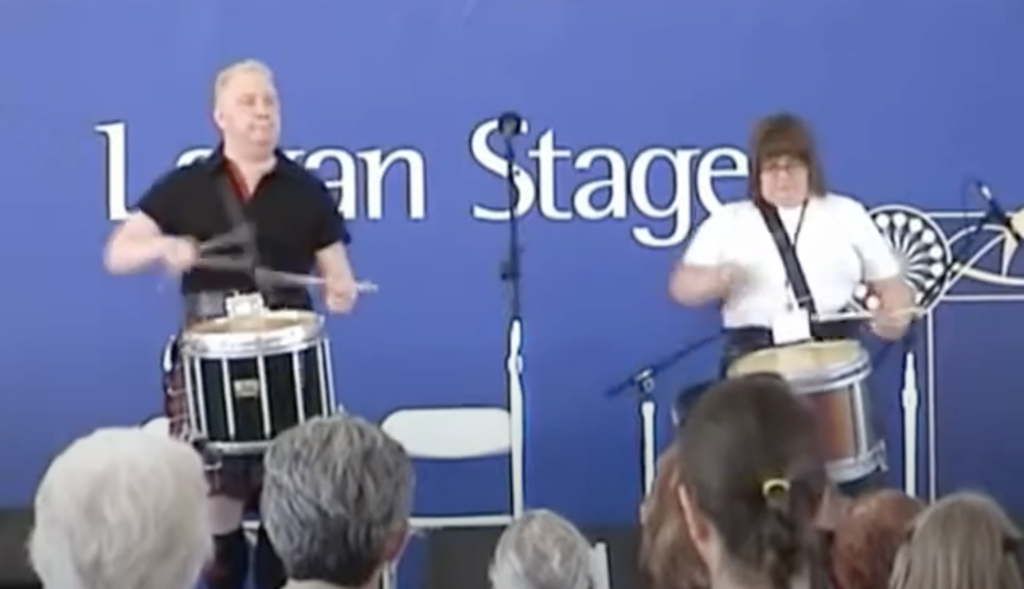
The Irish love to drink, toast, and chat, and soon Mark Wilson and Lee Lawson, stylish musicians strutted out, showing off their remarkable set of drums. The two could twirl the drumsticks like a cheerleader’s baton and never miss a beat. There was a variety of other musicians and bagpipers at the festival, but Mark was one hell of a drummer who could put on a captivating show leaving the crowd in awe.
Mark introduced me to Tommy Sands — a legendary Irish-ballad singer whose bariton Irish Gaelic voice could calm even my most excruciating painful runs. I could listen to him endlessly and grieved when the show concluded. I gave Tommy one of my signature military coins, and he presented me with one of his CDs that had not yet been released — I felt royally honored and overjoyed by such a heartfelt gesture from such an endearing musician.
Mark and Lee, snare drummers, during the Smithsonian Folklife Festival
Mark picked up a drum stick and gave it a twirl. “Why don’t you join us at the Key Bridge Marriott after the festival.”
“Yeah, it’s the after-hours entertainment in the ‘Olympic Village’ for all the performers,” Lee added.
When I arrived in the drab brown ballroom I was immediately met by Scottish bagpipers and colorfully dressed people from the Bahnar tribe of central Vietnam. There was lots of music, dancing, multicultural harmony, and of course traditional ethnic food.
Mark picked up a traditional French baguette with what looked like deli meat inside. “What kind of sandwich is this?”
Jamie picked up a slice of pate. “It’s a Banh Mi, a Vietnamese baguette.”
“Wow, the crust is super thin and crispy. What’s inside?” Lee asked.
“That’s precisely what makes a Banh Mi different than an American sub. It has pork belly, grilled pork, pate, cucumbers, cilantro, and jalapeños,” Mr. Nguyễn, who was responsible for narrating the tall tales of the Mekong Delta, replied.
Mark took a bite and chewed softly. “Geez, I’ve grown up loving corn beef and Ulster fry, but I appreciate the opportunity to try different cuisines.”
We stayed up late meeting new people, dancing, and consuming Guinness and Harp. At 2 am, we hung out by the pool and went for a dip.
“Have you visited Irish pubs in the area?” Jamie turned and asked.
“Don’t believe I have, except maybe on St Patrick’s Day. Any recommendations to get a good pint of Guinness?”
“Super, word of mouth is the most reliable restaurant guide.”
Tommy raised a pint of Guinness. “The mark of a true Irish pub is not the cottage pies or stouts, but real Irish drinking music.”
“And real football, not the fake one that goes spiral through the air,” Mark said. “There’s nothing like Ulster rugby — the Americans just copied us.”
You guys should take a tour of the Pentagon tomorrow,” I suggested. “Would love to show you where I work.”
“Really, didn’t know they were giving out tours now after 9/11.”
“Well, we’ll visit the Sept 11 Memorial and chapel as well as the Hall of Heroes featuring the names of all the Medal of Honor recipients, but I’ll also give you a personal tour and show you the DOD (Department of Defense) press offices and briefing room.”
“Would love that,” Mark replied. “And one day, I hope to show you my stomping grounds and spectacular countryside of Northern Ireland.”