Category: African

  • Meskerem

    Meskerem

    When Meskerem opened on March 15, 1985, there wasn’t much of Ethiopia in D.C. Its owners were amongst the first wave of immigrants who fled their homeland after a Marxist military junta overthrew Emperor Haile Selassie in 1974.1 That coup triggered the civil war between Ethiopia and Eritrea that lasted until 2000 with the final peace agreement not being signed until 2018. 

    Both Ethiopian and Eritrean refugees settled down near the Adams Morgan neighborhood in D.C., a culturally diverse neighborhood known for its eclectic dining scene. The name AdMo is derived from two formerly segregated elementary schools and when the sun goes down, the laid-back 18th St transformed into a mile-long party zone. 

    The popularity and vibrant nightlife led to higher rent prices so a lot of the Ethiopian entrepreneurs moved out purchasing dilapidated properties on U and 9th Sts NW that were devastated by the 1968 riots following Martin Luther King Jr’s assassination.

    Eventually, the number of Ethiopian eateries got so dense on 9th St that several community leaders petitioned the D.C. government to rename the block “Little Ethiopia.” That petition was overruled since its location in Shaw was near Howard Theater and doing so would replace the “Black Broadway” moniker. 

    There’s always a lot of excitement in AdMo. On weekend nights, hoards of party-goers can be seen getting drunk and boisterous, raising a ruckus into the early morning.

    On Sunday, Sept 29, 2008, a man walked into Meskerem, greeted the owner, Mohaba Mohammed, with a hug, and then started chatting.  Everything seemed normal between the longtime friends. Suddenly and without provocation, the man took out his Beretta and then shot Mohaba in the neck. 2

    “Everybody don’t worry!” He yelled, then fired two shots into the ceiling before shooting himself in the head.

    Mohaba recovered from his injuries, and through the years, he and his sister, Nafisa Said kept the restaurant running, through the good times and hard, even as others around them closed.  They did that for 3o years, eventually becoming the oldest Ethiopian restaurant in the US — instrumental in shaping the personality of Adams Morgan into the vast melting pot that it is today.

    Supplies used to be tough to come by. Mohammed could not find any teff, an Ethiopian grain used to make injera.  So he used wheat flour and let the dough ferment for days in plastic buckets.  Today, Ethiopian Airlines flies daily to D.C. carrying injera, teff, spices, and much more. 

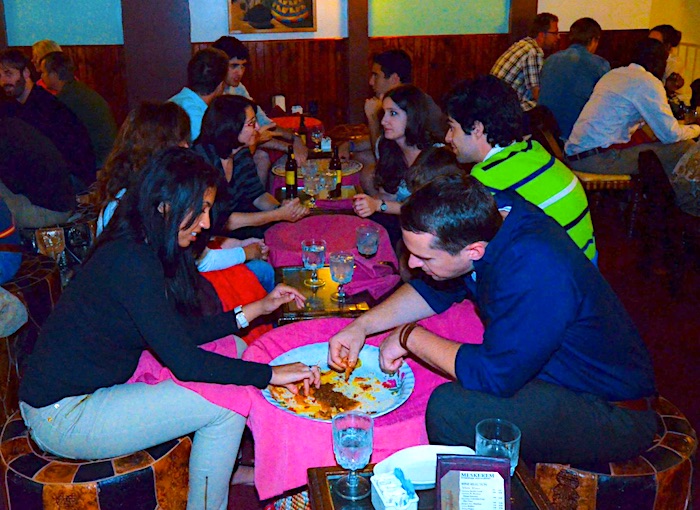
    So when Jackie invited me to join her for a Sept 2014 Ethiopian dinner at Meskerem, I was delighted to attend. There was a fairly large group of diners who were mostly Ethiopian cuisine neophytes. We didn’t sit on elegant wooden chairs or eat from pristine table tops. We were seated instead on traditional cushioned low chairs next to knee-high round tables made out of basket weave.

    Jackie Woodbury, Sept 25, 2014

    Join me tomorrow night for our Ethiopian dinner at Meskerem in Adams Morgan!

    Did you know Ethiopian New Year was Sept 11? Celebrate Meskerem, the name for the first month of the Ethiopian calendar. It ends the 3 month rainy season in Ethiopia (Jun-Aug) and celebrates more pleasant weather! We asked owners Mohaba and Nafisa to bring back their coffee ceremony for Bookalokal Inc.. Can’t wait! D.C. #DCeats #dcdining 

    Most of our group ordered the Meskerem Messob — mixed special which included beef, chicken, lamb, veggies, and unlimited injera all for $13.50 per person. A few ordered the veggie-only version. The dishes were anything but boring. The healthy portions included ruby beets, lentils, salad, carrots, green beans, and chickpeas and were flavored with garlic, paprika, and rosemary. The platter was fairly big and it was meant to be shared with others at your table.

    Sharing with others meant teamwork, better conversation, and synergy. We enjoyed our spicy palette of delicious curry-like stews accompanied by honey wine or St George, the national beer of Ethiopia. 

    The soft, stretchy, spongy flatbread doubled as an eating utensil and the hands still get plenty messy.

    “Is this the messiest you’ve ever gotten eating with your hands?” I asked my friend Yoomie Huynh.

    “Close, but not quite. The messiest I’ve ever gotten was at the Ben’s Chili Bowl half smoke eating contest during the H Street Festival. I didn’t win, but I ate everything in sight.” 

    Jackie enjoyed working with Mohaba and Nafisa in organizing the event. 

    “It brought lots of people from all different nationalities together to share a meal, a chat, and a smile,” she said. “Ethiopian cuisine is very communal.”

    I am forever awed by the resourcefulness and resiliency of the Ethiopian people.  Just like Tadiwos Belete from Boston Spa, the owners of Meskerem were innovative and resourceful in building their business and keeping it running despite limitations and setbacks.

    Less than a year later, Meskerem — after being opened every day since March 15, 1985, suddenly closed. The owners held down the fort and watched as one after another, Ethiopian eateries closed or relocated to U St or the burbs in Maryland and Northern Virginia. And after 30 years, they decided to sell the property to developers and retire from the limelight.

    And with that according to Tim Carman, food reporter at the Washington Post, “the neighborhood’s connection to that first wave of war-weary immigrants appears to be severed forever.”
    * * *

    1 Carman, Tim. “R.I.P., Meskerem: The Ethiopian restaurant that shaped Adams Morgan”, May 4, 2016

    2 “Manager of Meskerem Restaurant in D.C. shot, wounded”, Ethiopian Review, September 30, 2008
  • Mmm Sumah’s

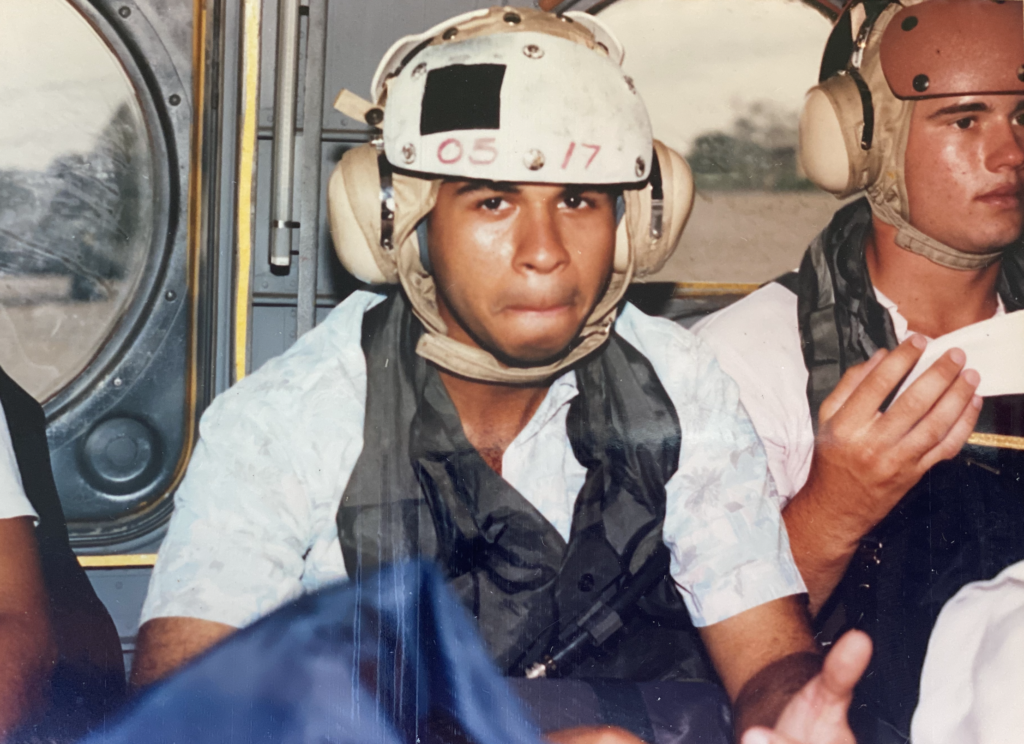
    In the summer of 1990, a half dozen U.S. Navy 2nd class midshipmen from different parts of the U.S. were excited to be spending their summer in the Mediterranean. They would be embarking aboard USS Peterson (DD 969) which was scheduled to visit Italy, Spain, France, and Israel. 

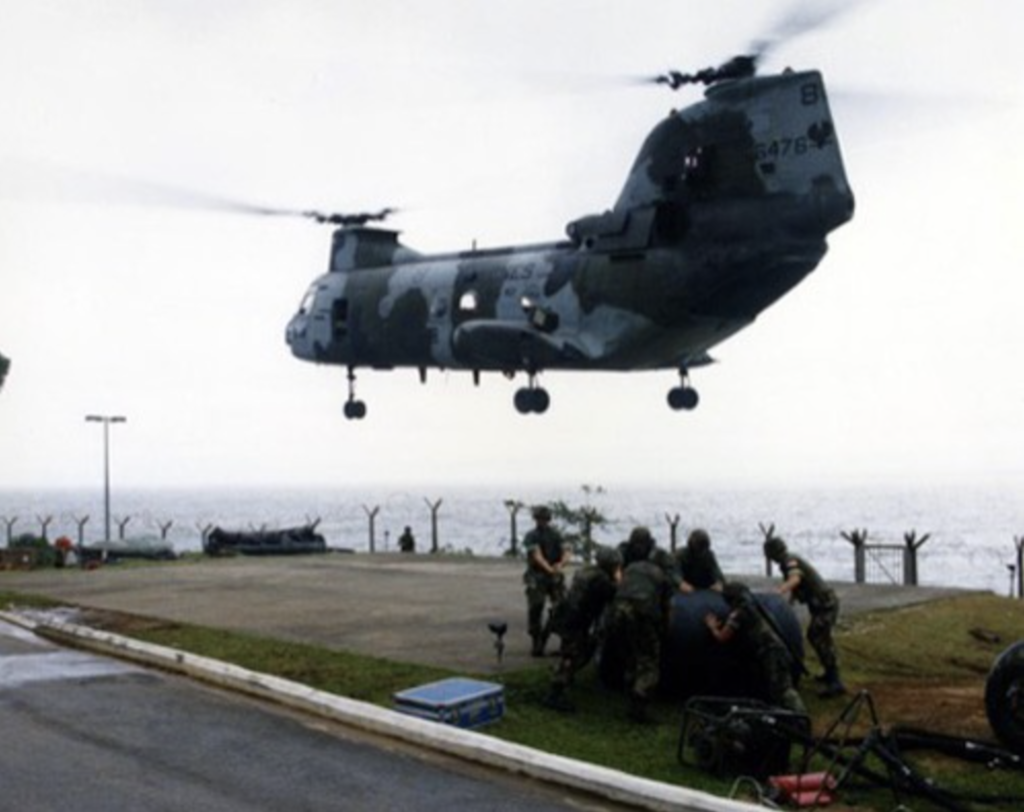
    Then suddenly civil war broke out in Liberia and Peterson was called upon to make a high-speed transit off the coast with Marines on board to evacuate American citizens trapped in the fighting. The six illustrious midshipmen were rerouted to Rota where we boarded a CH-46 Sea Knight and flew over West Africa. 

    MIDN Dave Trotman aboard CH-46 Sea Knight

    I remember flying over the savannas in Senegal, elephants grazing in the sparse grassland. Then over the dense mangrove forest in Guinea traversing the Great Scarcies River which borders Sierra Leone. Barely a soul was seen until we arrived in the capital city of Freetown. There we flew over dozens of shantytowns packed with makeshift shelters squeezed on the banks of rivers, on the face of steep mountains, and on the precipice of the sea. The rainy season was pending and due to overpopulation and deforestation, the risk of mudslides was great. I wished we could visit the tenements and the bustling street markets. But we were there due to war in Liberia and to support Operation Sharp Edge, so we headed to the Lungi Airport to await our SH-60 Seahawk to transport us to our ship. 

    Marines evacuate Americans from Liberia. (Courtesy of DoD)

    While we waited, we were tired and famished, so we purchased some smoked herring and fried plantains washed down with mango juice from an eager street food vendor. Though it was just a slice, the food was mouthwatering and fresh, and I craved for a little bit more. That was the last time I ate West African food.

    My contractor working on the boiler on my rental in Lebaum St told me about a Jamaican girl who just arrived in Virginia and was looking to move into the city.

    “Do you have a room?” He asked candidly.

    “Not here in Lebaum, but at my other property at Bruce Place, perhaps.”

    The next day, I drove 50 miles south on the congested 95 to the exurb of Fredericksburg to pick her up.

    “I’m just hanging out in the countryside working at Firehouse Subs, bored and wasting time.”

    “So what are your plans while in D.C.,” I asked Kimara.

    “Meet city peeps, git ah job, try sum criss cooking.”

    “Anything in particular?”

    “I’m feeling homesick, so I want to get some cassava and curry — something that reminds me of home. 

    I showed her RUNINOut and did a search for Jamaican food. She was impressed but then asked me to search for cassava. The nearest spot was a West African restaurant in Petworth. 

    She pointed to a spot on the map. “Sumah’s — I want you to take me there.”

    When Isata and Amara Sumah immigrated here from Sierra Leone 40 years ago, they had very little possessions and money. They worked hard every day at local restaurants and rented a $100-a-month apartment across the street from where Sumah’s stands today.

    Since 1993 when Isata and Amara opened up their West African restaurant, Sumah’s, they have been serving Jollof rice and West African stews daily. They typically start their day at 8 am and work until 10 pm then drive to their house in Southern Maryland, where their two college-aged daughters live.

    “We’ve worked hard so we could buy a house and put our two daughters through college,” said Amara.

    Sumah’s is a modest seven-table restaurant with neon green walls adorned with hand-carved wood beaded masks.

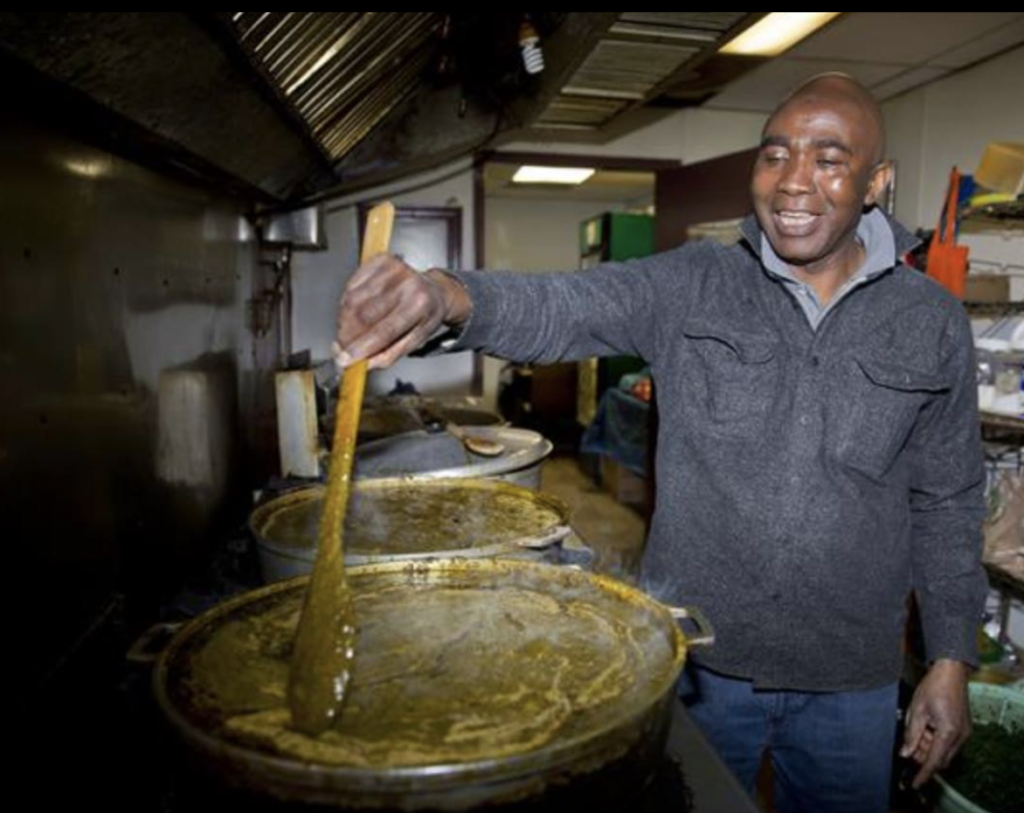
    When Kimara and I walked in, we could immediately sense the aroma of African spices and the fragrant smell of nuts. We followed the savory scent to the kitchen where we found Amara smiling while gently stirring a large pot of cassava that would be quickly consumed by his loyal lunchtime clientele.

    Amara Sumah

    Both Amara and Isata were very pleasant and cordial. They believed in bestowing authentic customer service and took great joy in introducing Washingtonians to West African cuisine, steeped in history and geography.

    “This is my new friend Kimara from Jamaica,” I said. “She adores West African food.”

    “Of course, I grew up with it. Jamaican cuisine is a fusion of African, Creole and Latin American,” Kimara replied. “Where do you think jerk sauce comes from?”

    “Well, we treat all first timers to a free sampler of our delectable cuisine,” Isata said as she dished up a plate of jollof rice with seven other sauces along with egusi and peanut butter stew.

    “That’s very kind of you. I’ve been craving for cassava-leaf stew for the past two months since I arrived in the US,” Kimara said delightfully. “A large bowl please and plenty of peanut butter gravy — my favorite.”

    “Of course,” Isata stated. “We always serve our customers a healthy plate. Whatever you can’t eat, take it home and enjoy it there.”

    We sat down, admiring the African wall art. The canvas displaying ethnic African women and the handmade pieces were eye-catching and fascinating. 

    Another customer next to us was deeply engrossed in his stew. This goat with jollof is so spicy and tender,” he said. “I’ve eaten everything on this menu, and I come here at least twice a week.”

    One patron from Liberia told me that he came here in 1990, and there were no West African restaurants or stores in D.C. Thankfully now there is a handful and he visits Bukom in Adams Morgan on weekends for dancing and drinks.

    “Hey Amara, when did you arrive in the US?” I asked.

    “Nov 28, 1978 — with nothing but a dollar to my name.”

    “May 28, 1990 — was the day I set foot in Freetown,” I mentioned. “A hidden gem, but sadly with thousands of impoverished people, overcrowded and in need.”

    “Have you been back to Africa since?”

    “No just Egypt and Ethiopia, but I would like to travel to West Africa and enjoy her mountains and rainforests and tour national parks to witness wildlife.”

    It didn’t take long for our steamy hot food to come out along with soothing ginger juice on ice.

    “Made with Love from Freetown,” Isata stated. “Our ingredients are imported directly from West Africa.”

    “Mmm,” Kimara exclaimed “My Mother would be amazed.” Kimara didn’t wait long to start digging in.

    “Easy now, this isn’t a cassava eating contest,” I said with a smirk as I dished some of my Jollof onto her plate. “Just as this scrumptious meal was slow-cooked, we have to consume it slowly.”

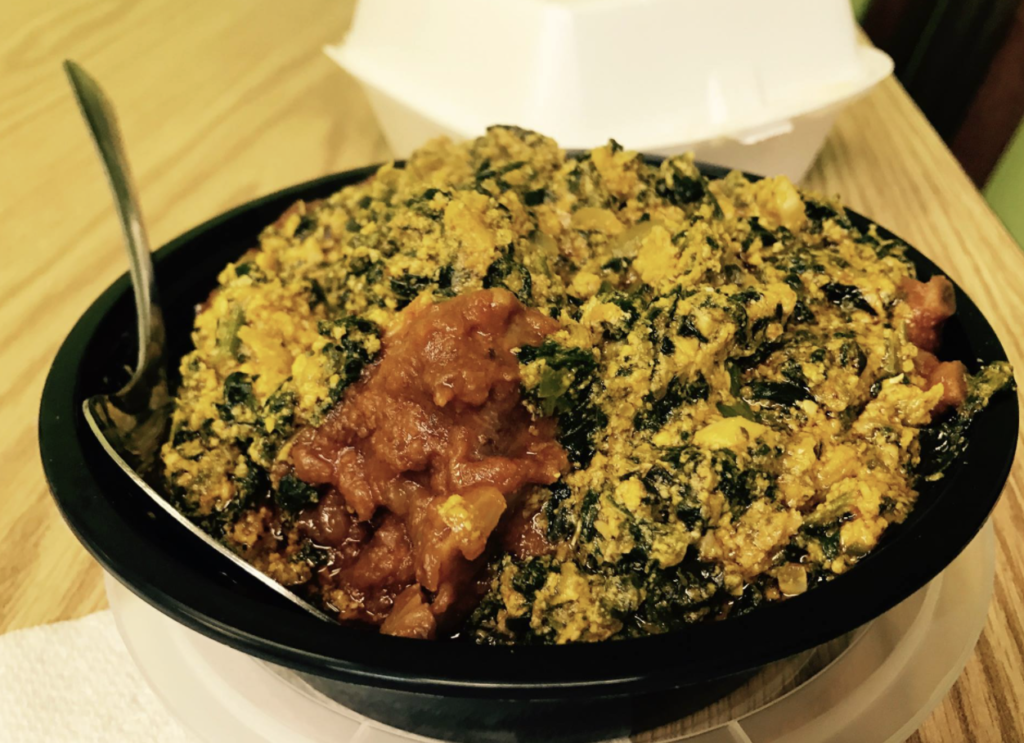
    Cassava-leaf stew

    Kimara took another bite and smiled warmly. “I should order a gallon of this egusi and peanut butter stew.”

    “You got it, and I’ll add a bowl of krain-krain and some fufu,” Isata said. 

    “We love our customers,” Amara said. “Some drive hundreds of miles just for a warm bowl of Jollof. They are all considered family.”

    Kimara reached over and gave the Sumahs a warm hug. “You guys are so incredibly sweet and charming. This brings back wonderful memories from home. #HugsnKisses”

    “Thank you soooo much Mama & Papa Sumah,” I said as I joined them in the hug. “And please send my regards to your whole family.”

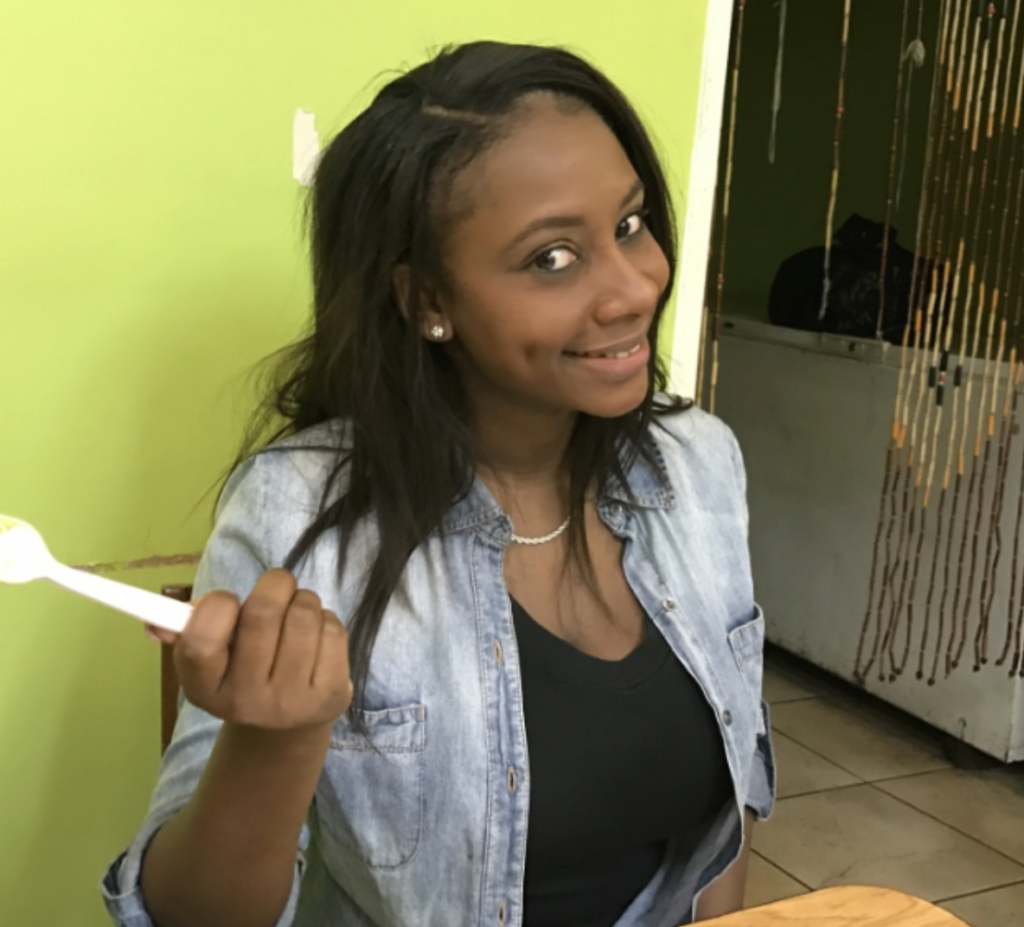
    Kimara enjoyed the cassava

    After being satiated I asked Kimara where she would like to go next.  

    “To the mall to visit the museums. Then I need to fine ah job.”

    “What kind of work?”

    “Waitress, but eventually attend Bartending school.”

    “Do you enjoy bartending?”

    “It was my first job at the age of 16, right on the corner of Windward Road in Kingston.”

    “Any particular restaurants?”

    “Caribbean of course. But really I can work anywhere. Beach bars, sports bars, I’m flexible baby love.”