Category: University

  • The Tower

    The Tower

    In October 1984, I enlisted in the Navy straight out of high school in a small town in Southeast Georgia.  After serving aboard the USS Francis Hammond (FF-1067) in Yokosuka, Japan (the land of my mother), I applied for a commissioning program and the Navy awarded me a scholarship to the University of Florida where I earned my degree in Material Science and Engineering.  Upon my commissioning, I served as a Fire Control Officer and Navigator aboard USS O’Ban non (DD-987) in Charleston, South Carolina. and Mayport, Florida, and as Cruise Missile Training Officer in San Diego, California. After back-to-back sea tours, I wanted to broaden my horizons beyond Surface Warfare so I lateral transferred to the Public Affairs Community.  I served as the P.A.O. for the USS John C. Stennis (CVN-74), which deployed for Operation Enduring Freedom after 9/11, and as the Public Affairs Officer for Bethesda Naval Hospital (now Walter Reed) where a generation of warfighters healed and moved on.  After Bethesda, I was assigned to The Office of the Secretary of Defense where I served as a spokesman for detainee affairs in Guantánamo Bay, Cuba. There wasn’t a single day that I wasn’t answering a media query about the health and well-being of our Gitmo detainees, and after two years of shuffling back and forth from D.C. to Camp Delta, I was ready to return to military medicine. I served as the P.A.O. for the Surgeon General of the Navy, an assignment that required a lot of traveling to visit our medical forces in the U.S. and abroad. My final duty was as a P.A.O. for the U.S. European Command and NATO’s Supreme Allied Commander where I got to do a lot of traveling in Europe as well as visit our troops in Afghanistan. By then, I was both burned out and washed out and my marriage fell apart due to the stressors of the military, and in Nov. 2009, I retired with 20 years of combined service.  

    I was ready to reboot and start a brand new career in the private sector. Thankfully, the Veterans Affairs offered generous G.I. Bill education benefits, so I applied to the George Washington University School of Business hoping to incorporate my experience and appreciation with social media in my career. I enrolled in the Executive MBA program, a degree where I fit in because it was targeted to senior managers who were already in the workforce. The school was in high demand due to the great recession as many unemployed decided to return to school. Before the semester started, our cohort of 20 eager students embarked on a five-day retreat at the Homestead Resort in Hot Springs, VA.

    We were attending sessions that didn’t require powerpoint or pointers, but still had everything to do with leadership development. Because the truth is, you can’t learn management from just inside a classroom.

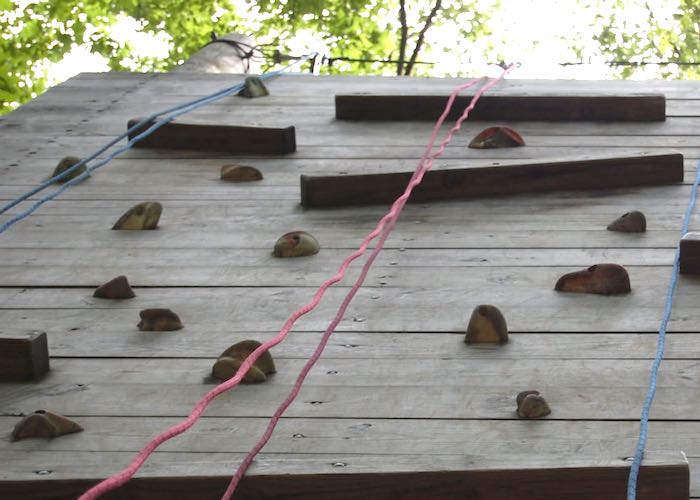
    After spending two days engaged in team-building exercises and thought-provoking discussions, we were ready to get some fresh air. The next morning, we hiked down the Allegheny Mountain gorge trail, through the thick forest, past the lovely cascade falls until we arrived in the middle of a grassy field with a gigantic wall affectionately known as the Tower. At first glance, the 40-foot Tower seemed daunting and insurmountable.
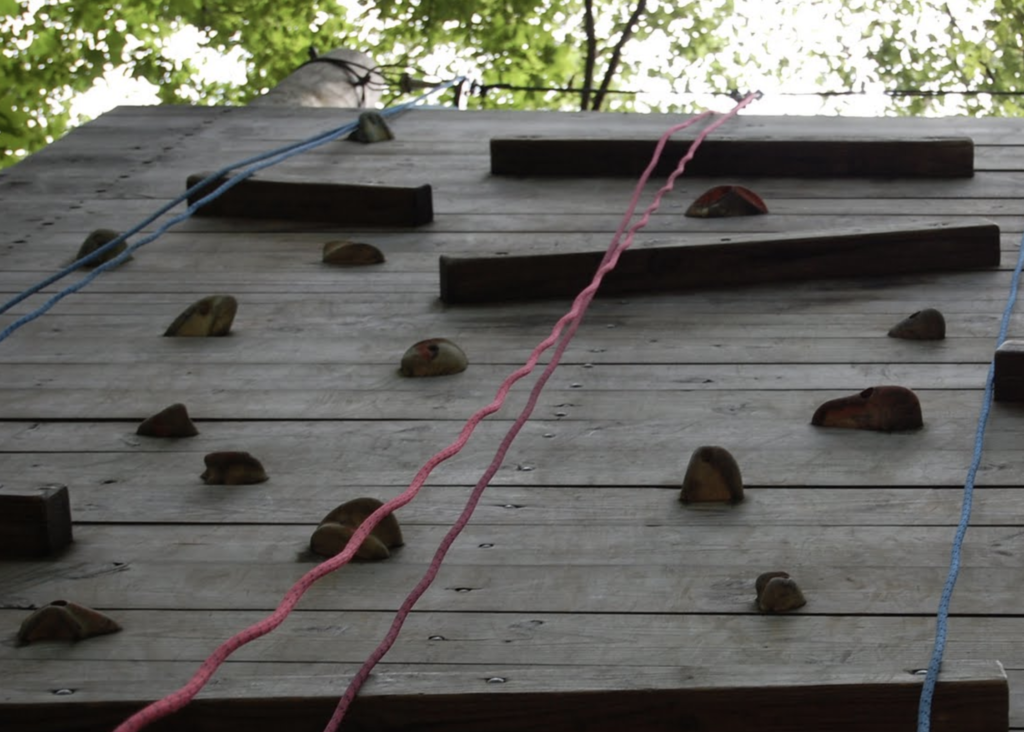
    Throughout life, we face many obstacles both personal and professional. The key to responding to these roadblocks is to face them head-on and to rely on the support from others around you. This is teamwork — being supported and supporting each other. To work as a team, it’s imperative to understand each other’s strengths and weaknesses, both physically and mentally. The better we know one another, the better we’re able to assist each other.

    The Ropes Course is a metaphor for problem-solving — it challenges us to face our fears and climb on. The higher you climb, the more you rely on your team for support.

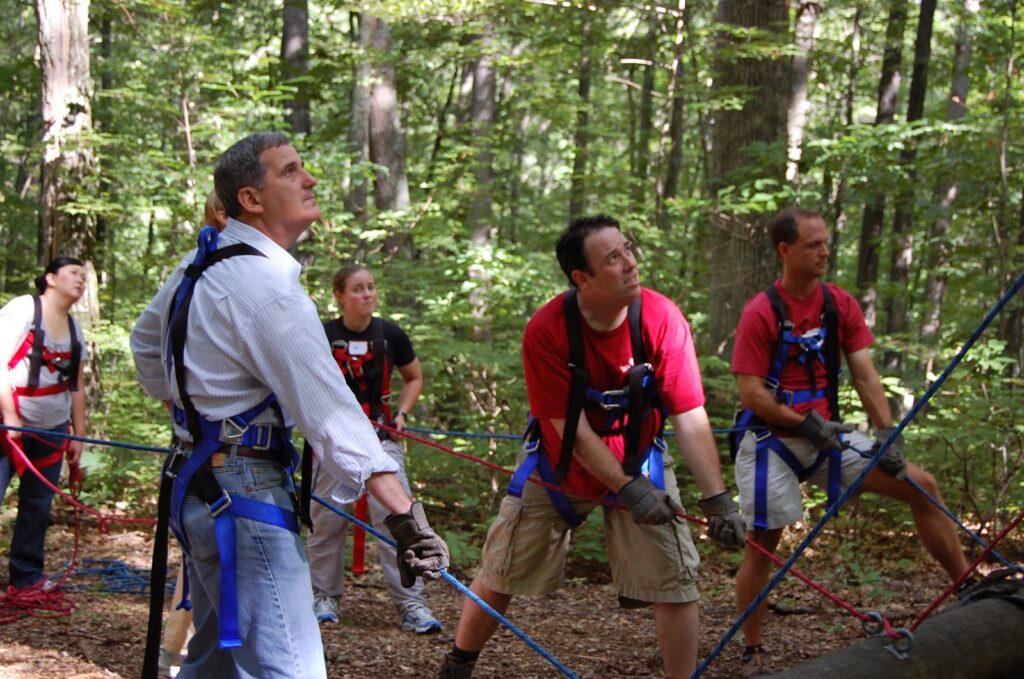
    The first task was to have each person assist their team members in donning their harnesses — the one crucial piece of equipment that would ensure our safety and protection.
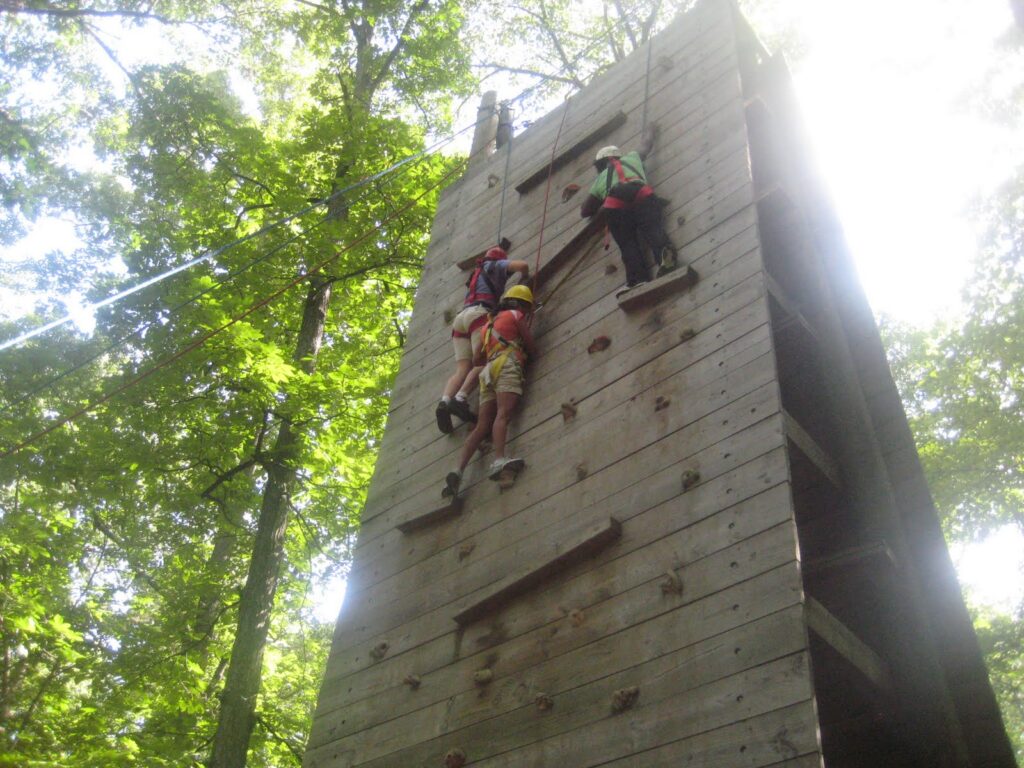
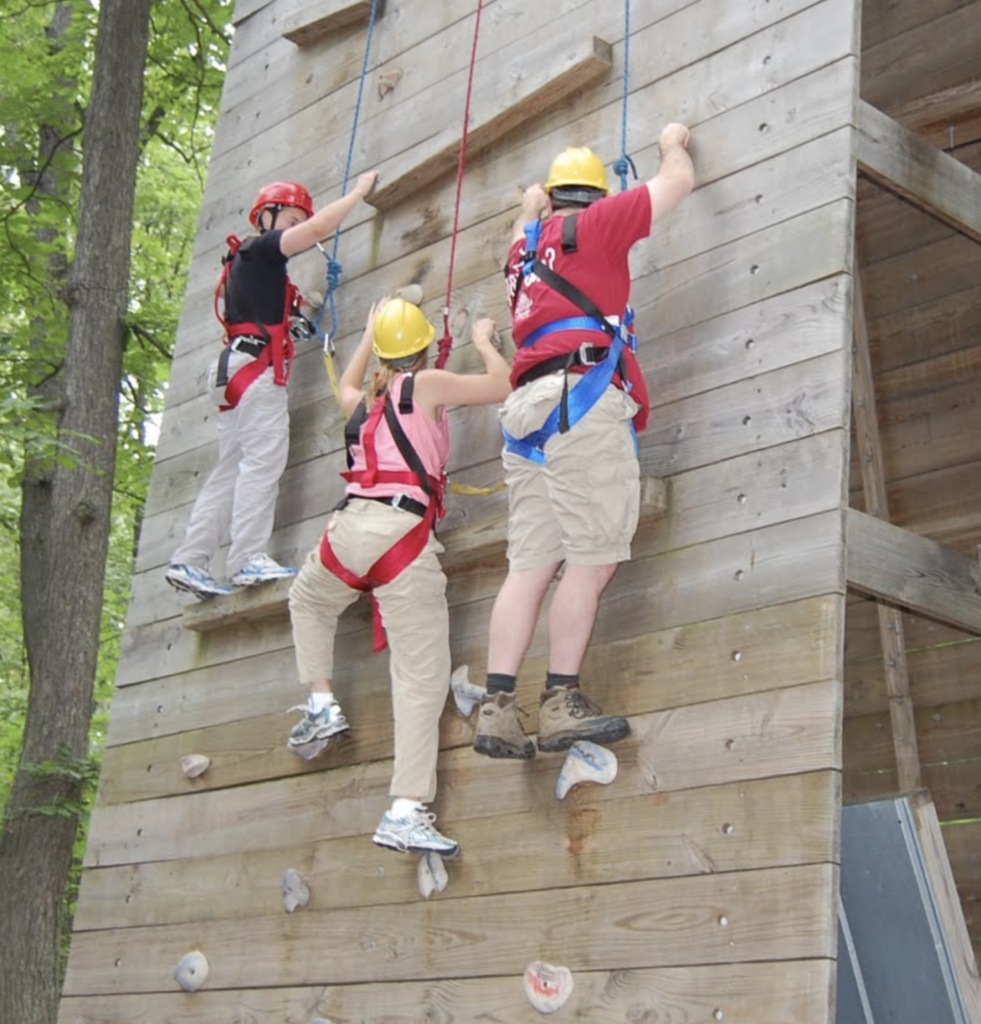
    Then each three-member team ascended in tandem facing the challenge of not having enough steps for all three to ascend at the same time.  Sometimes a climber would have to take a step down in order for another climber to proceed.  That was ok, as long as they all reached their final goal together.

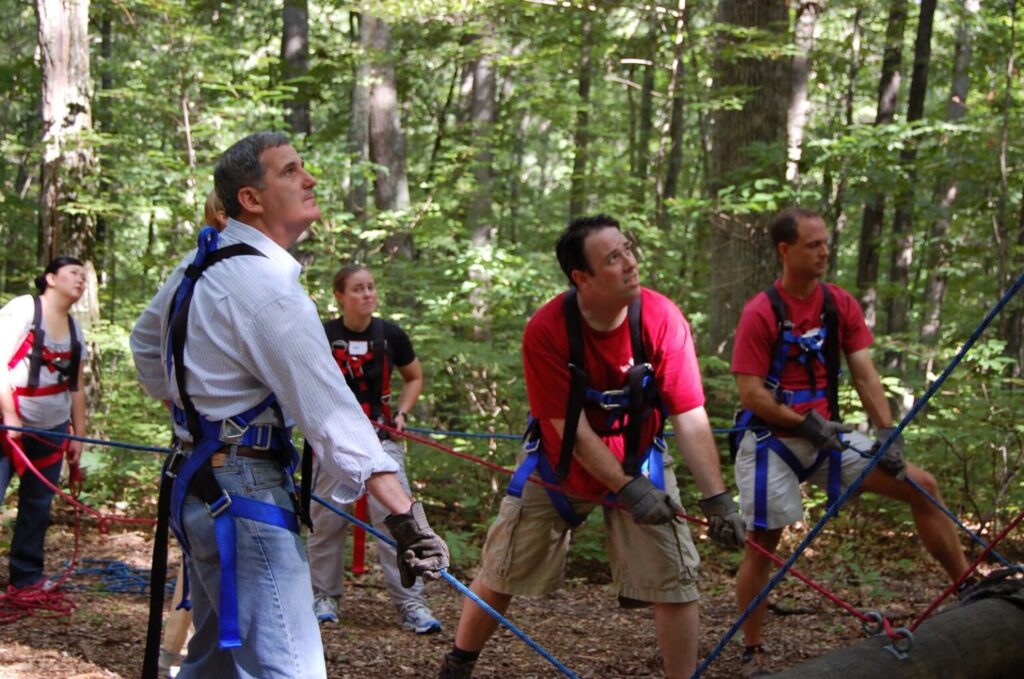
    Meanwhile, the rope handlers kept a close eye on the climbers, coaching them on where to place their hands and feet and providing support and encouragement so that the 3-member team could ascend up to the top together and then back down.

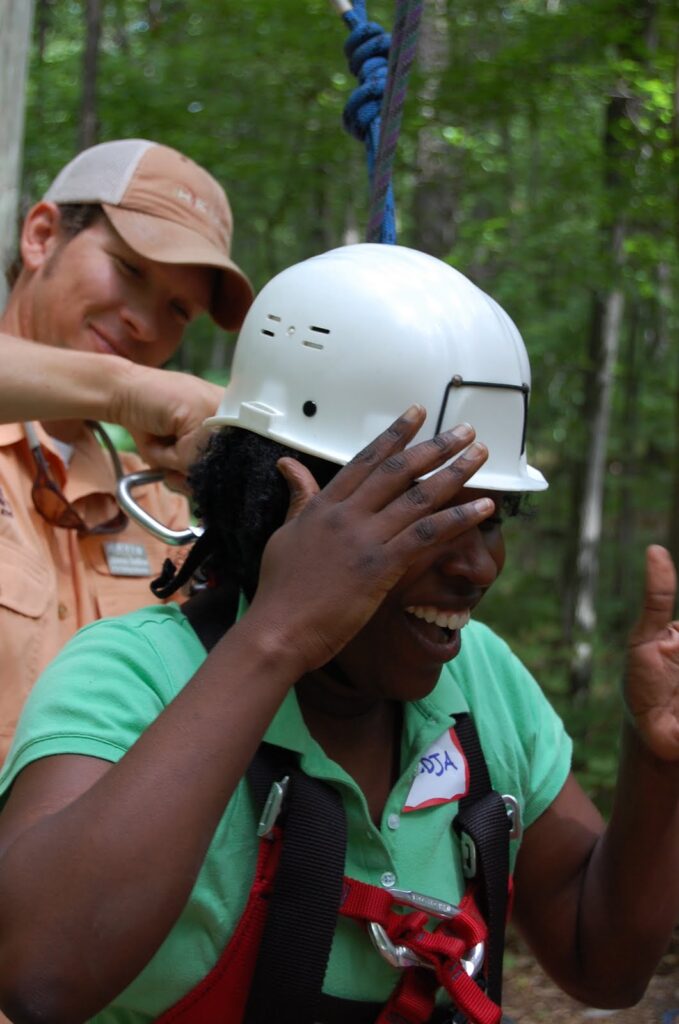
    When it was my turn to go, I knew I could rely on my teammates Senodja Walker and Amir Moore. 

    Rope team: 

    “Senodja, place the right hand on the block and your left foot on the step.”

    “Amir, move your right foot off the step and place it on the block so that Senodja can place her foot on it.”
    As the climbers moved up the wall and then back down, the Belay teams were tasked to remove the slack by paying out or pulling in the excess line. They kept a close eye and a taut line, but they were not allowed to pull the crew up the wall — the climbers had to figure this out on their own.

    Climbers: “Slack!” (pay out a little rope.)

    Belayers: pays out the rope and pauses to see if climbers ask again.

    Eventually, all of us made it over the wall and back down, taking one step at a time.  The journey in life is rarely simplistic and straightforward. If we keep striving, we will eventually reach our goals, even if we have to climb over life’s challenges, obstacles, and setbacks.
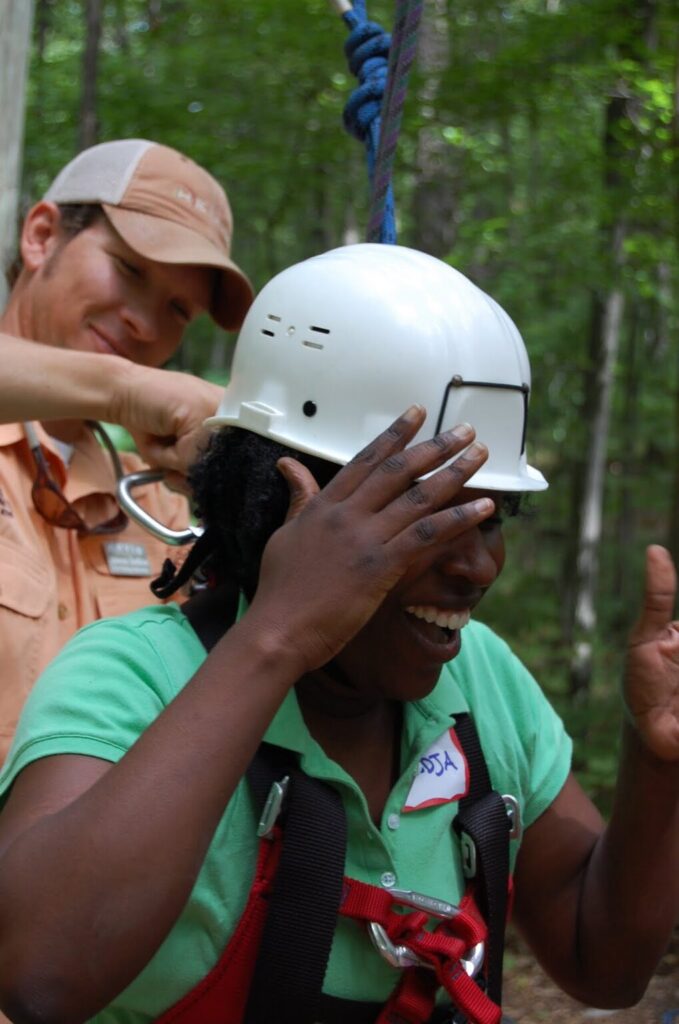
    Senodja completes her climb

    The EMBA class was broken down into five groups of four and we would remain in our group for the entire two years.  One of the first projects that we worked on was the Airline Pilots Association.  ALPA, with 53,000 members and 40 airlines in the U.S. and Canada, is the largest airline labor union in the world.

    We were having a conference call on Skype when I touted the fact that airlines such as Jet Blue and Delta have successfully used Twitter and Facebook to promote their services and to provide updates on weather and flight cancellations.

    “I’ve had it with you. Your solution to everything is always social media!” Eli my classmates exclaimed.

    This wasn’t the first time he had said that and we always seemed to butt heads over the value of social media for building brand awareness and winning new customers.

    I immediately slammed the phone down in disgust, ending the conference call.

    The next thing I did was call Senodja on the phone. “I can’t work with Eli any longer — he’s so unaccepting of social media. I’m here to learn and broaden my horizon, not to clash heads with idiots who are operating in the stone age.”

    “Wish you could join my team, but we’re already maxed out.”

    “Then maybe I should try to understand his point of view better and discuss our differences.”

    “Or perhaps you could transfer out of the EMBA and enroll in the Professional MBA program — it may take a little longer to complete but you’re offered a choice of a wide selection of classes and will be collaborating with a diverse myriad of people, many I’m sure value the virtues of social media.”


    October 1984

    I enlisted in the Navy, straight out of high school in a small town in Southeast Georgia., named Darien.  After serving aboard the USS Francis Hammond (FF-1067) in Yokosuka, Japan (the land of my mother), I applied for a commissioning program and the Navy awarded me a scholarship to the University of Florida where I earned my degree in Material Science and Engineering.  Upon my commissioning, I served as a Fire Control Officer and Navigator aboard USS O’Ban non (DD-987) in Charleston, South Carolina. and Mayport, Florida., and as Cruise Missile Training Officer in San Diego, California.  After back-to-back sea tours, I wanted to broaden my horizons beyond Surface Warfare so I lateral transferred to the Public Affairs Community.  

    I served as the Public Affairs Officer for the USS John C. Stennis (CVN-74), which deployed for Operation Enduring Freedom after 9/11, and as the P.A.O. for Bethesda Naval Hospital (now Walter Reed) where a generation of warfighters healed and moved on.  After Bethesda, I was assigned to The Office of the Secretary of Defense where I served as a spokesman for detainee affairs in Guantánamo Bay, Cuba. There wasn’t a single day that I wasn’t answering a media query about the health and well-being of our Gitmo detainees, and after two years of shuffling back and forth from D.C. to Camp Delta, I was ready to return to military medicine. I served as the Public Affairs Officer for the Surgeon General of the Navy, an assignment that required a lot of traveling to visit our medical forces in the U.S. and abroad. My final duty was as a P.A.O. for the U.S. European Command and NATO’s Supreme Allied Commander where I got to do a lot of traveling in Europe as well as visit our troops in Afghanistan. By then, I was both burned out and washed out and my marriage fell apart due to the stressors of the military, and in Nov. 2009, I retired with 20 years of combined service.  

    I was ready to reboot and start a brand new career in the private sector. Thankfully, the Veterans Affairs offered generous GI Bill education benefits, so I applied to the George Washington University School of Business hoping to incorporate my experience and appreciation with social media in my career. I enrolled in the Executive MBA program, a degree where I fit in because it was targeted to senior managers who were already in the workforce. The school was in high demand due to the great recession as many unemployed decided to return to school. Before the semester started, our cohort of 20 eager students embarked on a five-day retreat at the Homestead Resort in Hot Springs, VA.

    We were attending sessions that didn’t require powerpoint or pointers, but still had everything to do with leadership development. Because the truth is, you can’t learn management from just inside a classroom.

    After spending two days engaged in team-building exercises and thought-provoking discussions, we were ready to get some fresh air. The next morning, we hiked down the Allegheny Mountain gorge trail, through the thick forest, past the lovely cascade falls until we arrived in the middle of a grassy field with a gigantic wall affectionately known as the Tower. At first glance, the 40-foot Tower seemed daunting and insurmountable.

    Throughout life, we face many obstacles both personal and professional. The key to responding to these roadblocks is to face them head-on and to rely on the support from others around you. This is teamwork — being supported and supporting each other. To work as a team, it’s imperative to understand each other’s strengths and weaknesses, both physically and mentally. The better we know one another, the better we’re able to assist each other.

    The Ropes Course is a metaphor for problem-solving — it challenges us to face our fears and climb on. The higher you climb, the more you rely on your team for support.

    The first task was to have each person assist their team members in donning their harnesses — the one crucial piece of equipment that would ensure our safety and protection.

    Then each three-member team ascended in tandem facing the challenge of not having enough steps for all three to ascend at the same time.  Sometimes a climber would have to take a step down in order for another climber to proceed.  That was ok, as long as they all reached their final goal together.

    Meanwhile, the rope handlers kept a close eye on the climbers, coaching them on where to place their hands and feet and providing support and encouragement so that the 3-member team could ascend up to the top together and then back down.

    When it was my turn to go, I knew I could rely on my teammates Senodja Walker and Amir Moore. 

    Rope team: 

    “Senodja, place the right hand on the block and your left foot on the step.”

    “Amir, move your right foot off the step and place it on the block so that Senodja can place her foot on it.”

    As the climbers moved up the wall and then back down, the Belay teams were tasked to remove the slack by paying out or pulling in the excess line. They kept a close eye and a taut line, but they were not allowed to pull the crew up the wall — the climbers had to figure this out on their own.

    Climbers: “Slack!” (pay out a little rope.)

    Belayers: pays out the rope and pauses to see if climbers ask again.

    Eventually, all of us made it over the wall and back down, taking one step at a time.  The journey in life is rarely simplistic and straightforward. If we keep striving, we will eventually reach our goals, even if we have to climb over life’s challenges, obstacles, and setbacks.

    The EMBA class was broken down into five groups of four and we would remain in our group for the entire two years.  One of the first projects that we worked on was the Airline Pilots Association.  ALPA, with 53,000 members and 40 airlines in the U.S. and Canada, is the largest airline labor union in the world.

    We were having a conference call on Skype when I touted the fact that airlines such as Jet Blue and Delta have successfully used Twitter and Facebook to promote their services and to provide updates on weather and flight cancellations.

    “I’ve had it with you. Your solution to everything is always social media!” Eli my classmates exclaimed.

    This wasn’t the first time he had said that and we always seemed to butt heads over the value of social media for building brand awareness and winning new customers.

    I immediately slammed the phone down in disgust, ending the conference call.

    The next thing I did was call Senodja on the phone. “I can’t work with Eli any longer — he’s so unaccepting of social media. I’m here to learn and broaden my horizon, not to clash heads with idiots who are operating in the stone age.”

    “Wish you could join my team, but we’re already maxed out.”

    “Then maybe I should try to understand his point of view better and discuss our differences.”

    “Or perhaps you could transfer out of the EMBA and enroll in the Professional MBA program — it may take a little longer to complete but you’re offered a choice of a wide selection of classes and will be collaborating with a diverse myriad of people, many I’m sure value the virtues of social media.”
  • Five Qualities of the Diaspora

    Five Qualities of the Diaspora

    There were two milestones I needed to achieve in order to complete my MBA — a new venture capstone project and a study abroad trip to compare and contrast cultures, business practices, and management styles.

    In the spring semester of 2012, I enrolled in a six-week course entitled Engaging Diaspora Communities for International Business and Development. It was taught by Dr. Liesl Riddle, the associate dean of GW’s School of Business who has written extensively about diasporas and international entrepreneurship. 

    The course studied the diaspora communities in the US and abroad and their motivations for sending remittances to their home countries to spur growth and prosperity. A vast majority of the diaspora who return to Ethiopia are starting businesses and creating jobs. The class culminated with a week-long trip to Ethiopia to take what we learned and apply it firsthand.

    There are an estimated 2.5 million Ethiopians living outside of Ethiopia. Many of them live in Washington, DC, so this particular diaspora was the perfect one to focus on.

    “I want you all to contemplate what you expect Ethiopia to be like, compared to what we observed once we are actually in the country,” said Dean Riddle.

    The GWU MBA class departed from Dulles excited about the adventures ahead. When they arrived at Addis Ababa 14 hours later, they were sleep-deprived and jet-lagged but enlivened nonetheless. Situated in the Horn of Africa, Ethiopia is a rugged, landlocked country and the cradle of humanity where Homo Sapiens first walked on two legs.  It is the “Land of Origins”…of humanity, language, and of course one of life’s greatest pleasures – coffee arabica.

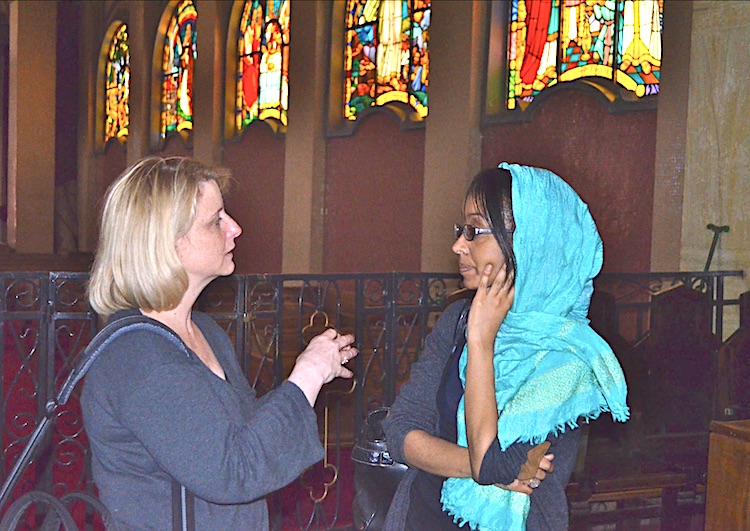
    Since it was too early to check into our suites, Dean Riddle arranged for us to do some sightseeing. Our first stop was the Holy Trinity Cathedral, a product of the colonial period imbued with rich history and majestic architecture. 

    Many tourists who visit Washington, DC yearn to visit the Smithsonian Natural History Museum to ogle at the Hope Diamond. Likewise, an obligatory stop in Addis Ababa is the National Museum of Ethiopia to admire the Lucy fossil.  She is 3.2 million years old, and the most famous early human ancestor because she walked upright. Unfortunately, the bones we saw were not the real Lucy, but plaster replicas. The original skeleton is displayed at the Cleveland Museum of Natural History. Ironically, it was offered to the Smithsonian in D.C., but turned down due to a resolution that early human fossils should be stored in the country of origin and to make displays in other countries with fossil replicas. It’s like traveling 7,000 miles to meet a fairy tale luminary, only to find out she’s half the world away on a sabbatical. But real Lucy or not, we were ready to do some slumbering as we finally headed to the hotel.

    On the way to the Ramada we were greeted by the impressive stone monument of the Lion of Judah roaring over the city, a crown jewel of the infamous Haile Selassie. 

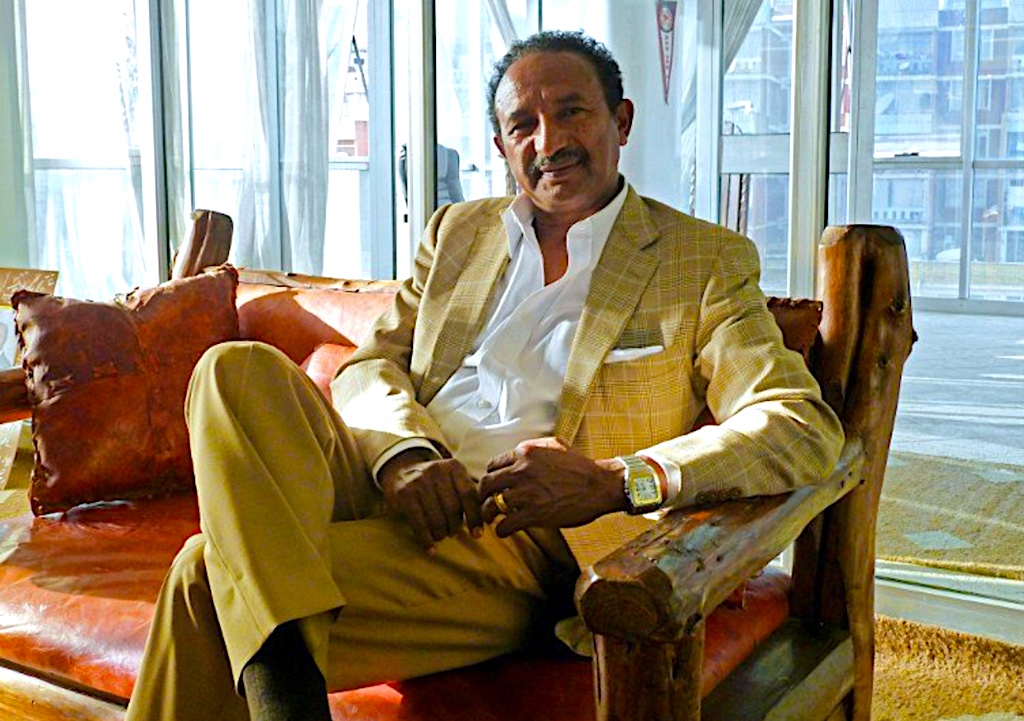
    Finally, at the lodge, I took a long shower and squeezed in a power nap, but by nightfall, we had to gather up for our first guest speaker – Addis Alemayehou, a serial entrepreneur who returned to his roots and has become a household name in Addis. He founded 251 Communications which has grown into one of the leading PR and communication firms in the country.  

    “I started my entrepreneurship endeavor here when the war between Ethiopia and Eritrea was just coming to an end and the economy at the time was in shambles,” Addis said. “I lost my iPod and missed having my playlist with all my favorite songs, and realized that there were many people who also enjoyed Western music. So I started the first English Speaking FM Radio station in Addis. A good business is always one that finds a need in society and fills that void.”

    “Are there lots of opportunities here for startups?” my classmate, Marilu Ortega asked.

    “Business in Ethiopia flourishes out of sheer need. If you were to spend a week in this country, carrying a notepad and writing down everything you wished you had but didn’t, you would finish the week with at least 35 promising ideas.

    “How is the labor market here?” Erin Dahan asked.

    “Steadily improving every year. Wages are low and there’s lots of talent here.  Foreigners are investing and diasporans are returning and creating millions of jobs every year.”

    The next day, we met one of those diasporans who had contributed enormously to the job market. Daniel Gad immigrated to the US after school in search of better career opportunities.  After serving as an executive for AT&T for 20 years and building a nest egg, he decided to return home. When he met with the Chamber of Commerce to see where he should invest, they steered him to the field of agriculture.  Daniel deep-dived in the industry and discovered that flowers are a multi-billion dollar export business. He then created a 28-hectare rose farm called Metrolux Flowers which he successfully exited.  He now manages and operates Omega Farms, a leading vegetable production farm that produces and sells high-value vegetables to the EU.  He is currently collaborating with PepsiCo on a partnership called EthioPEA aimed at chickpea production which would hire over 10,000 farmers. Daniel Gad is undoubted “mining gold from the dirt.”

    * * *

    One industry that is facing a difficult time getting diasporans to return is the medical field.

    “There are more Ethiopian doctors working in Washington, DC than in Ethiopia,” said Dr. Asfaw Atnafu, a professor of radiology at Addis Ababa University and the Head of Telemedicine at the Black Lion Hospital

    One issue that Dean Riddle taught us in class is the concept of “brain drain”. In Ethiopia, many students leave the country to study medicine, but the vast majority do not return. Dr. Atnafu who studied medicine abroad was given a very lucrative offer to practice medicine in the UK. It seemed obvious for him to accept it. But one day, his mentor saved a very well-known British official who was suffering from a severe brain injury. The surgery was such a success that he was interviewed by the BBC. They asked him why he was returning to his homeland. The doctor said that Ethiopia would be safer now because they would now have one neurosurgeon. That one sentence changed Dr. Atnafu’s perspective, so he decided also to return.

    Ethiopia is one of the fastest-growing countries in Africa with more than 104 million people. The country has made significant health care gains lately, such as lowering infant mortality, but more work needs to be done — particularly in rural areas. Healthcare, something that many Americans take for granted is a precious resource in many Third World countries and needs to be drastically improved and will be key to boosting economic growth.

    Black Lion Hospital

    Dr. Atnafu was not focused as much on remittances as he was on the social and educational aspects that diasporans can have on Ethiopia. That was why he’s big on telemedicine. Much of the engagement he facilitated was through knowledge sharing and training conducted virtually. In addition to receiving input from diasporans abroad, the medical community in Ethiopia can contribute to the medical dialogue by sharing their own experiences.

    I wish my former boss, Admiral Robinson had an opportunity to meet with Dr. Atnafu. As the Surgeon General, responsible for seeing healthcare for the Navy and Marine Corps throughout the world, he was a big proponent of telemedicine and would have loved sharing information with Ethiopia on how to make healthcare available to everyone.

    * * *

    We also met with Dan Rosenthal, the Commercial Officer at the U.S. Embassy. Ethiopia is a state-run economy and with the government overseeing the development, there is a lot of red tape.  Thankfully, the country is starting to privatize and is looking for foreign investors to improve the quality of life for Ethiopians.

    “The five sectors that are the most important for the future are Telecommunication, Agriculture, Manufacturing, and Power.  These industries will create the maximum number of jobs leading the country to a dynamic future.”

    “What are some of the major draws for international investors?” I asked.

    “Duty-free imports of capital equipment, tax exemptions, cheap electricity, a thriving local airline with a large international footprint, and duty-free access to the US market through the African Growth and Opportunity Act. But probably the most attractive is low wages — the country wants to keep its wages low to attract investment for its manufacturing industry.”

    “But low wages will barely lift workers out of poverty, and once workers gain skills, they will leave their jobs to seek higher-paying jobs, resulting in high attrition and higher training costs.”

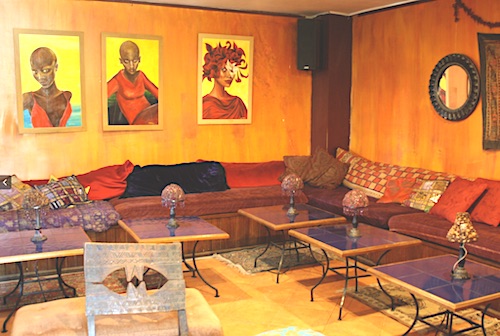
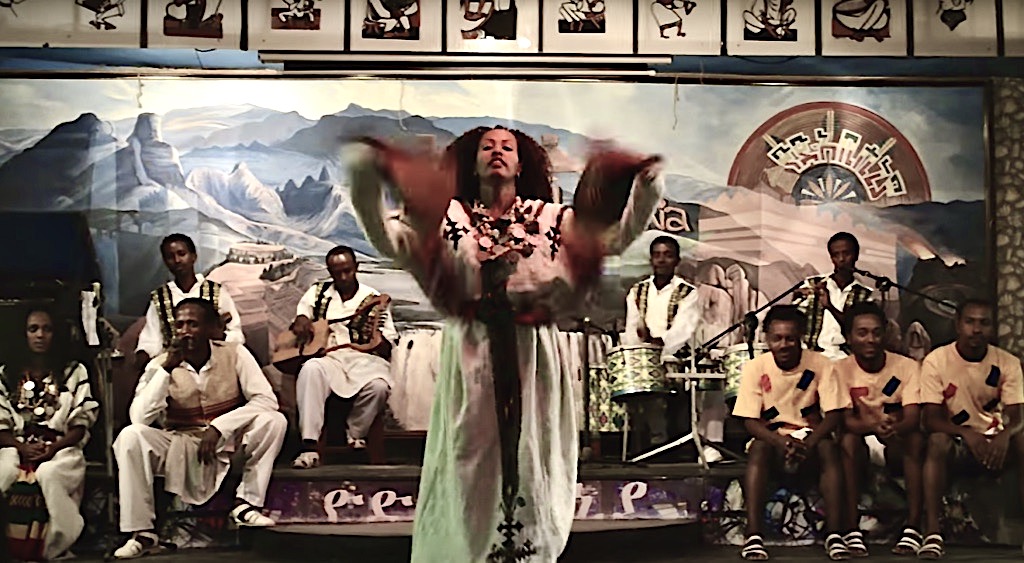
    The field trip wasn’t all meetings and business attire. We also went to enjoy the food and culture. And Dean Riddle recommended we visit the 2000 Habesha Cultural Restaurant. At first glance, the restaurant offering a buffet of traditional food and a stage show of dancing and singing looked like another tourist trap. But you cannot judge a venue by its clientele.

    2000 Habesha Cultural Restaurant

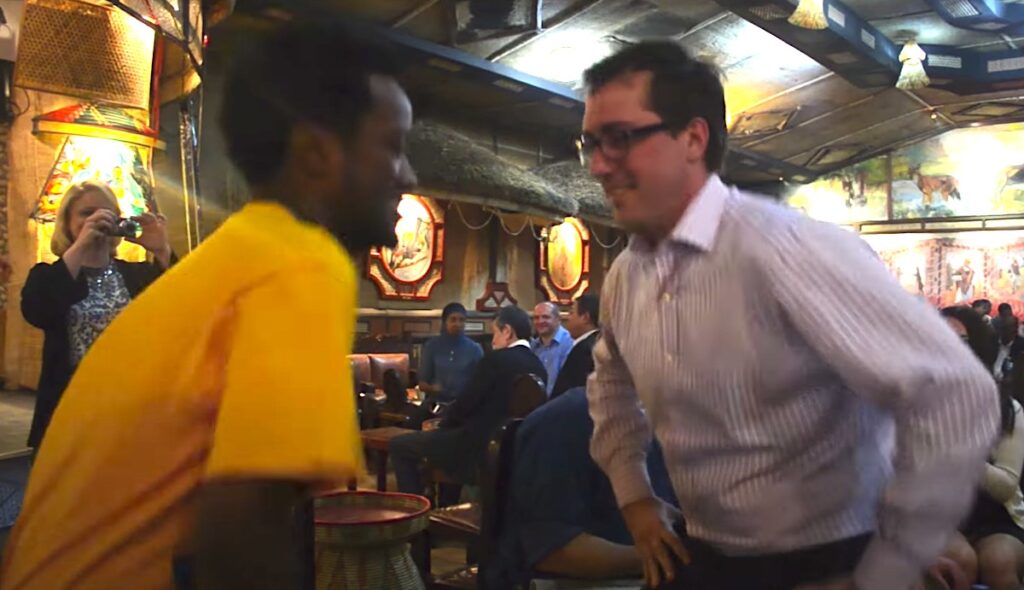
    We loaded up with large platters of injera and wot and sat up front to enjoy the festive performances.  The veggie-friendly dishes were anything but boring. The healthy portions included ruby beets, lentils, salad, carrots, green beans, and chickpeas and were flavored with garlic, paprika, and rosemary. After a few glasses of honey wine and bottles of St George beer, a couple of brave souls sauntered on stage and performed the Eskita (traditional dance moving the shoulders).

    The next day, Dean Riddle and several of my classmates visited the Boston Day Spa nearby. They had a relaxing time to refresh and detox until one or two of them accidentally imbibed on the tap water that was served to them and immediately realized they weren’t in Boston USA. Ethiopia has made impressive progress over the past 10 years on improving water quality, but the water supply is still very contaminated and should not be drunk. Needless to say, a couple of them caught gastroenteritis and had to rest at the hotel to recuperate. 

    At this trailblazing spa, we got to meet with Tadiwos Belete, a diasporan who trained as a hairstylist and attended cosmetology school in Boston. When the Derg regime overthrew the Ethiopian monarchy in 1974 and established a brutal dictatorship, Tadiwos, at the age of 15 decided to flee on his own to Sudan. There he was even paid by farmers to scare off birds feeding on crops. After a few years of roaming about, he applied for refugee status in the U.S. and moved to Boston where he worked odd jobs until he decided to become a hairstylist.

    Boston Day Spa

    After saving money, Tadiwos wanted to open up a salon in the city’s poshest neighborhood, but nobody wanted to rent to an unestablished immigrant.  He decided to reach out to the owner of a building on Newbury St by inviting him for dinner at a nearby Ethiopian restaurant to get acquainted. The owner was sold by his negotiating skills, and in 1998, Tadiwos opened up his first hair salon called Konjo (beautiful in Amharic).  

    It wasn’t long before Tadiwos started to feel a longing to return to his homeland. He developed the idea of starting a luxury spa, hair salon, and hairdresser training school in Addis Ababa.  But he didn’t have the funding.  He asked nearly every customer who got a haircut from him to partner with him and invest in his country.  After asking nearly a thousand people, one Taiwanese woman reluctantly agreed to come in as a silent investor. Tadiwos built an office block on crumbling, dilapidated Africa St, where many had not dared to set foot. His relatives thought he was crazy, but he wouldn’t be deterred. 

    Nine years later, business is through the roof, and his brilliant idea has spurred dozens of other spas to sprout all over the city. Tadiwos has also embarked on a development boom, opening up a restaurant and a wine bar downtown along with two luxury resorts a couple of hours from the hub. In all, he employs over 1,500 people spurring the economy. We had the opportunity to visit Tadiowos’ Kuriftu Resort, a 28-room tourist retreat in Bahir Dar, at the source of the Blue Nile river.  It’s an amazing place with great food, hookah, and a splendid lake where you can go on a relaxing boat ride. And like Boston Spa, they have a massage, steam, and sauna to top off a very relaxing retreat from the city. Just remember not to drink the water.

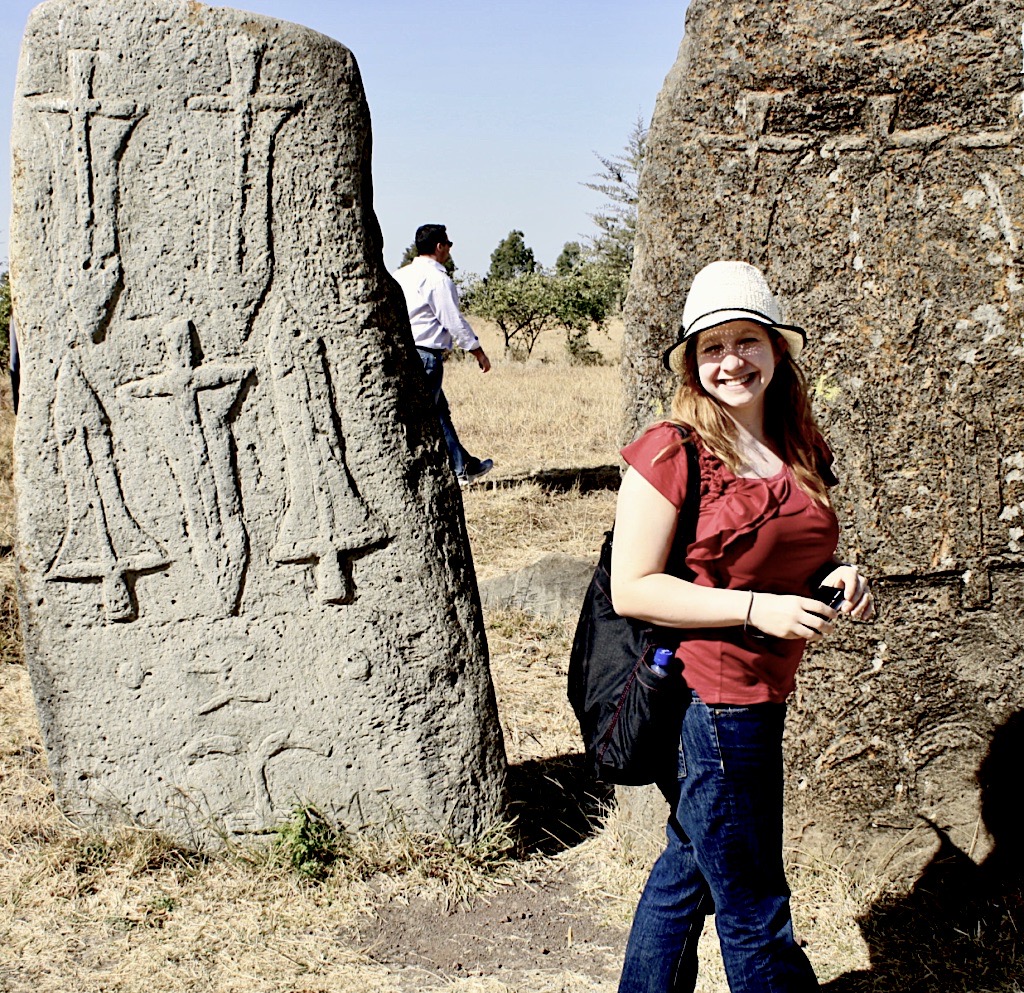
    On the way back to the city, we stopped at the legendary Tiya Stelae, an archaeological site containing 36 enigmatic monuments. Each obelisk-shaped stone is engraved with primitive, clear images of swords, shapes, and figurines. To date, no one has been able to determine the age or the purpose of these carvings. One reason why they call Ethiopia a “Land of Mystery.”

    legendary Tiya Stelae

    Finally, we got to visit the Commodities Exchange, established just four years prior. The country’s two major goods exports are not surprisingly coffee (29%) and cut flowers (14%).

    Ethiopia is also a land of rich opportunities for investors, from all over the world. That is why it is projected to be Africa’s fastest-growing economy, and perhaps one of the fastest globally. Labor is fairly inexpensive and highly skilled and the country has made huge investments in infrastructure and manufacturing. The government is making reforms to unleash the private sector and has wholeheartedly embraced the diaspora for impactful development projects. Returning diaspora also share invaluable skills, education, and experiences they acquired from the West. In order for the motherland to optimize development and job growth, she must continue to forge lasting, meaningful ties with this salient community, translating into sustained, measured growth in the years ahead.

    But the road to investment is a rocky one. Diasporans are facing a huge information gap in the current market and steep odds that they will reach their lofty goals. That’s why it’s highly imperative that they conduct proper research and fully understand the industry and the market in which they are operating in.  They need to be savvy innovators and shrewd negotiators in a volatile and intransigent market.  What I found noteworthy was the resourcefulness and resilience of the diaspora community. Through grit and resilience, many persevered and ultimately made a significant difference for their country and citizens.

    On the final day of our journey, I sat down with my friends to discuss what we learned. 

    Rasheida Knight was really smitten with Addis Alemayehou. Addis has been able to achieve massive success because he was innovative.  Most people who lose an item of value like an iPod would regard it as a setback. Addis viewed it as an opportunity to fill a void. He reflected on how important his playlist of Western music was to him and realized that there were many Ethiopians that felt the same way. He conducted a target market analysis to understand the size and scope of the audience and researched what was needed to launch the first private English-speaking radio station, Afro-FM. He not only tried to understand how people work, but he also wanted to understand how things work. And in so doing, he documented everything. 

    “If you were to spend a week in Ethiopia and write down everything you wished you had but didn’t, you would come up with tons of innovative ideas.”

    Marilu Ortega enjoyed her time at the spa and was thus impressed with the innovativeness of Tadiwos Belete who thoroughly researched the local market and felt that a day spa business could thrive there. People thought he was crazy, but he understood the potential customer base and was confident that the salon would be a huge success.

    But Tadiwos didn’t have the funds or resources to make all this happen. He was an effective negotiator beginning in his Boston, MA. days when he skillfully convinced a building owner to lease him space to open his first hair salon to when he convinced one of his customers to invest in his business venture abroad. Without his ability to listen, communicate and persuade, Boston Day Spa would never have been built. 

    Tadiwos Belete

    Erin Dahan was impressed with Tadiwos’ resourcefulness. At the age of 15 and living in a Sudanese refugee camp, he was able to survive and find a way to show his usefulness to farmers and work with the Catholic Church to immigrate to the U.S. He lived in Boston for 20 years and through resourcefulness and grit, managed to save money and learn an important skill that led him to build his luxury spa business franchise.

    Brady Shannon also enjoyed hearing about the resourcefulness of Daniel Gad. After living in the U.S. for 20 years, he was shocked when the Chamber of Commerce recommended that he invest in flowers. To be successful in agriculture one has to be highly resourceful. For one, the country did not have access to modern farming equipment. They still used pitchforks and plowed with donkeys. Daniel eventually sold MetroLux Flowers and started a new business in horticulture called Omega Farms. He did a lot of research and observed how his farmers harvested chickpeas. He then realized that by being more resourceful and making small improvements in their handling processes, his farmers would be able to increase production by 30%.

    “I like to use the analogy of gold in the dirt,” said Daniel Gad. Ethiopia has a lot of dirt. The key is to find out how to get gold out of it.”

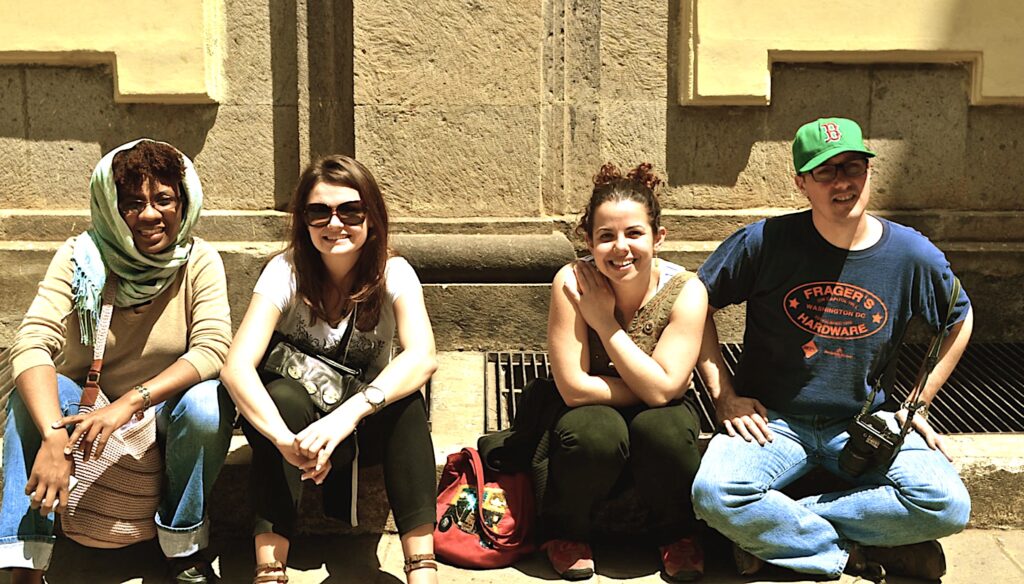
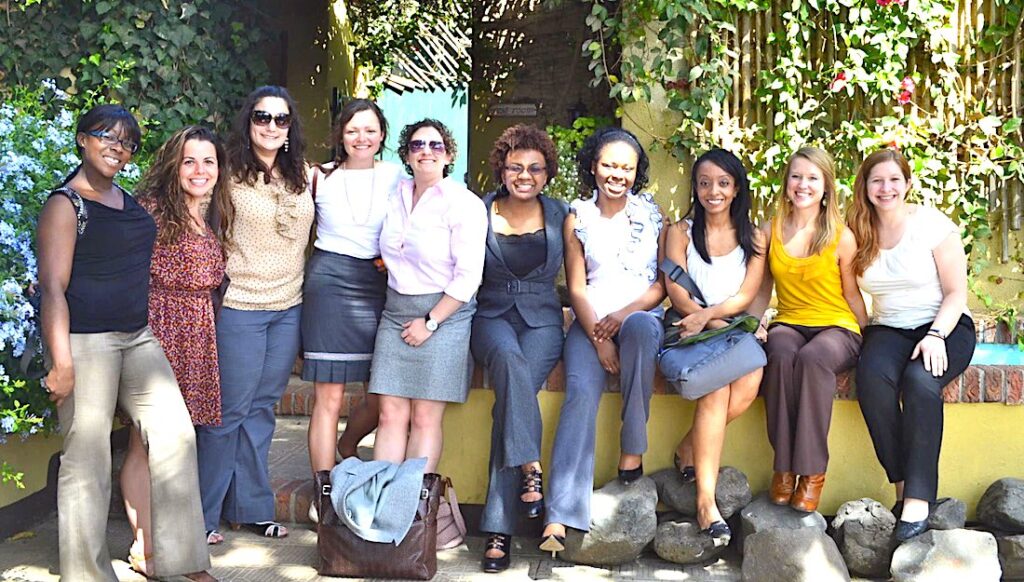
    Rashida, Marilu, Erin & Brady

    Marilu sympathized with the huge healthcare challenges the country faces. “Their resourcefulness in utilizing telemedicine is both novel and remarkable,” she said. “Dr. Atnafu has made huge sacrifices and has done a remarkable job.”

    All the entrepreneurs we met, made bold decisions and took huge steps to start their businesses in a very risky and volatile environment. There was a huge information gap, and they faced steep odds against reaching their lofty goals. When faced with challenges, some of them had to take a step back or make a drastic course change, but they always kept their eyes focused on their goal and navigated towards it.

    Even 10 years later, I remain inspired by the group’s resourcefulness, their deep understanding of the current market, their ability to broker and negotiate, their willingness to adopt innovation, and their courage to take the next step.

  • Pedicabber

    Pedicabber

    The following weekend, Zach and I were in my Subaru Baja, driving at full speed on the N.J. Turnpike to NYC.  

    “Why are we driving up to the Big Apple just to pick up a damn rickshaw?” Zach asked incredulously. “Segways are all the rage on the Mall.”

    “So we can hang signage promoting our brand and ride it all over town like a taxi cab.”

    “Can’t you just buy one in D.C.?”

    “There’s a premium for these three-wheeled wonders in the metro area. But in NYC, where their popularity was spurred, there’s a superabundance.”

    Many tourists choose to ride the pedicabs instead of taking a bus or taxi because it allows them to observe the surroundings better and because the bikes can squeeze through heavy traffic. And sure enough, as soon as we crossed the Lincoln Tunnel, the busy streets of Manhattan were congested with taxis, bikes, scooters, and pedestrians. One pedicab driver just purchased a medallion to own a taxi and was selling his weaning out of the travel destination business. He was happy to let it go for $1800, and I was delighted to take it off his hands. We deftly squeezed the pedaled contraption on the bed of my Baja and with the handlebars hanging over carried it home to greener pastures. When we landed at the Mall and took her on a spin-down Constitution, she looked like a Lamborghini basked in sunshine.  

    “I will dub her Lil Yellow.”

    “Yes, she looks sleek and shiny and will definitely turn some heads.”

    “She’s not just for advertising. She’s to make a few bucks, and you’re welcome to ride Lil so you can earn extra beer money. How else is a scavenging Colonial supposed to survive? I know it sucks to be a non-paid intern.”

    “Yes getting paid with cheeseburgers and subs gets old after a while. Yes, I’ll love to take her on a spin after class and see if I can coerce some stray tourists to pile on.”

    “Sounds like a plan. And don’t forget we’re not licensed to charge a fare but can easily take donations.”

    “Super, I’ll bring along my school work which I can tackle when there’s a lull.”

    “Yes, please use your time wisely, and take the opportunity to learn more about the history and landmarks so you can better inform and entertain your guests.”

    When Zach was parked at the green zone in front of the American History Museum, he spotted a pretty Persian girl with long brown hair and knee-high socks. Tall and tanned, she looked like a supermodel on wheels, and it was evident that she was passionate about her mission.

    Her name is Shaadi, and she was a former elementary school teacher turned into an enterprising rockstar.

    “How did you get into this business dominated by jocks, vets, and hippies?”

    “Well, I got into an accident, and doctors found a tumor in my left leg. They removed it, and the tumor returned. When I was rehabbing on a stationary bike, it was challenging to have my right leg get my other leg to go around. So I made a pact with myself. ‘The day I can ride my bike again, I’m gonna ride for 50 miles, and I’m not gonna stop.’”

    Shaady took Zach under her wings and got him up to speed on the history and background of this fledgling business.

    Last summer, the Park Police started cracking down on pedicabbers on the Mall. They claimed we were cutting into the Tourmobile monopoly that the National Park Service had a long-term contract with. An operator was attempting to pick up customers in front of the Smithsonian Air and Space Museum when he was tased, tackled, and arrested.

    “Damn, that’s harsh. So the Park Police Gestapo felt threatened, so they started suppressing our Eco-Friendly business model.” 

    “Yes, we’ve come to a truce now. I love your silly monkey logo, by the way. I’ve got six pedicabs and would love to advertise your brand on our backs.”

    “Love how environmentally friendly this is,” stated a tourist from Maine. “Summer days are just roasting, and we’re too exhausted to walk up and down the Mall. Take your time and tell us all you know about the spots.”

    When Zach wasn’t using the cab to shuttle tourists, Lil Yellow was employed during multiple events such as Taste of D.C., where we interacted with various vendors such as the Cupcakes Lounge. The multi-day culinary event along Pennsylvania Ave attracted some of the region’s best restaurants and lively entertainment.

    People loved the thrill of the ride and they loved posing and shooting selfies. Even met a young, newlywed couple who deemed it quite romantic and were found smooching in the back.

    “Are we allowed to drink inside the cab?” a passenger asked meekly.

    “I don’t see why not. The only stipulation is that the driver can’t drink. But please buckle up.”

    During our reconnaissance and cold calls with Suzannah, I would drive the pedicab and she would sit in the back waving at dumbfounded passersby. From time to time, we would pick up a sightseer or a tipsy passenger bar crawling along H Street.  Lil Yellow was our lucky charm. We were able to negotiate business with Biergarten Haus on H St., Ulah on U St., and Jake’s American Grille in Chevy Chase.

    Our pedicab and signage got a lot of attention, and we were invited to provide complimentary rides during the H Street Festival, the quintessential 10-block street party featuring live music, karaoke stages, live music, and yes, even belly dancing.  

    It was a sweltering, hot day, and many people were tired of having to walk from 3rd to 14th street. My illustrious intern agreed to provide rides as long as I provided refreshments and he kept all the tips.

    When we weren’t providing rides, guests enjoyed using our cab as a photo op, and we were happy to oblige. 

    Every year, the British-themed double-decker bus would be parked in front of The Queen Vic where Newcastle Brown Ale flowed like the River Thames.

    There was a half-pipe for local skateboarders. Dangerously Delicious Pies sponsored a hands-free pie-eating contest and the grungy ex-funeral parlor turned lounge, Rock and Roll Hotel, pumped music all day.

    Zach and I got to meet so many people — tourists, locals, business owners, and artists. One gifted performer specialized in Egyptian belly dance, and she was quite a ravishing entertainer. Dressed in a red chiffon hip scarf, the Arabian beauty swayed her hips and shimmied her body rhythmically to the cheering audience’s delight. I didn’t catch her name, but I promised to introduce myself the next time I see on stage.

    There were also tons of local artists such as Pete Baker, and Flo Anito was strumming her guitar, singing her tongue-in-cheek ballad to the vacuum “No Dustbunnies.”

    Flo is a classically trained vocalist and pianist and sang like a blue jay on a hot summer day.

    The H St Fest was the best block party in town. There were tons of people and lots of random conversations. It was the best marketing event we could dream of and the word was definitely getting out that RUNINOut was about rides.

    In the Fall, we provided support at the Marine Corps Marathon cheering runners and even offering free rides to spectators or exhausted runners who wanted to beat the  (14th street) bridge. Runners had to maintain a 14 min/mile pace until mile 22 or else they would be taken off the course and bussed back.

    The ending was great with Marines in their BDUs shouting “Oorah” and handing out the coveted Eagle, Globe and Anchor finisher medals. There were tons of photo-op moments, and we all had a blast, especially Kanita, who lost her voice screaming and cheering. 

    “The pedicab is great for marketing. You should take her on a spin on Halloween night and get more people to come aboard,” she suggested.

    One thing about the intelligent mind of a great attorney — she was always a source of great ideas. And so was my reliable sidekick, Suzannah.

    “I have an idea for an event.” Suzannah said. “Hold a reelection night party for Obama at the Rocket Bar in Chinatown.”

    And November 6, 2012, President Obama and his running mate Joe Biden had easily gotten reelected and the GOP, it seemed, had become the grand old party of the past.

  • RUNIN — the Theme

    RUNIN — the Theme

    RUNIN is not exactly about the joys (or pain) of running.  It’s not about running out of food either. Did you realize that RUNIN is actually a back acronym? Huh? Let’s take a look at the qualities of the Ethiopian Diaspora. 

    They were all Resourceful in surviving tough living conditions and eventually found success in their business ventures. They Understood the local environment well and identified the target market audience before starting their businesses in Ethiopia. They had to Negotiate with business owners, investors and the local governments who at first had little faith in them. They had to be Innovative to find the right business that would fill a void. And they all made bold decisions but remained open-minded and nimble when they Navigated toward their goals.

    Resourcefulness:

    Resourcefulness is about using the full resource of tools and other people to solve problems and reach goals. When the devastating EF-5 tornado ripped through downtown Joplin, Americans from near and far rushed to lend a helping hand. Thankfully, there was no shortage of compassion and generosity. The AmeriCorps displayed resourcefulness by allowing me to build an online database that tracked donations and matched them with survivors and their specific needs.

    When our team didn’t place during Startup Weekend due to lacking a technical co-founder, I had to rely on resourcefulness to find a developer who was flexible enough to fulfill our requirements.

    When we reached out to restaurants, many were willing to have us photograph their dishes, but didn’t want the food to go to waste.  So we decided to photograph the food in conjunction with events and allow our guests to enjoy it.  The events also served to promote the restaurants and we were able to capture amazing photography of attendees enjoying the ambiance and cuisine.

    R also stands for Reflecting on what’s important in this journey and seeing how we can make improvements.  Deb Santos taught me how to truly reflect —  learning to invest in myself and showing self-compassion regardless of my mistakes. 

    R also stands for Researching.  The secret sauce for RUNINOut was the behind-the-scenes research that we did for each restaurant to ensure that the user would get the best results possible.

    Understanding:

    The Irish Republican Army who sought a united Ireland clashed with the British forces resulting in massive death and destruction. When I visited Belfast, I met a tour guide named Arthur Magee who talked about building bridges.  For peace to start and the troubles to end, both sides had to build bridges.

    “If you come nigh you will see a city where on a micro level, people are building bridges.  The most important bridge that is been built is in each and every single person here. That bridge is between who you actually are and how you see yourself. Whether you’re part of the problem, looking back and blaming other people, or whether you’re part of the solution and reaching out and seeing other human beings, as exactly that, human beings.”

    From a business standpoint, one must fully understand the environment, the target market, and the competition in order to build a successful business. The diaspora community had done their research — that’s why they were able to build a leading PR firm, a luxury day spa chain, and a rose farm despite facing steep odds and many doubters that were skeptical that such business ideas could flourish in Ethiopia.

    I applied these lessons when I worked with restaurants and bars. When I tried to sell our services to the Irish Channel, they were also receiving bids from other providers.  In order to stand out from the competition, I studied the pub’s clientele and target market to determine which sports teams they could affiliate with and which social events we could host.

    When the Lebanese Taverna requested to host a belly dancing event with Arabian folk music, I immediately did my research to familiarize myself with the art of belly dancing — I would then need to be resourceful to find the right talent and audience that would attract a strong turnout so we could host many more events and raise money for charity.

    Over the years, we ended up working with several different groups and hosted a wide variety of events: running, comedy, political, food blogging — spanning a diverse group of bars and restaurants.

    In the end, hosting tons of events took its toll, and I had to honestly look in the mirror and realize that the boozing had gone to extremes and I needed to start tapering off. 

    Negotiating:

    Many restaurants were receptive to our services but did not have the resources or the inclination to pay for them. So we found a clever way to negotiate by having them host our events and provide free food and other amenities. We often got paid, but we were willing to barter web and social media assistance for food, eatups, and fundraisers.

    Negotiating is something that I’ve always done my entire adult life.  Throughout my entire Navy career, I never seemed to get what I wanted so I had to negotiate for just about everything of value. Successful negotiating requires understanding the other side’s priorities, open communication, and settling differences.

    Innovating:

    My search for a technical co-founder led me to take a Greyhound to Vancouver to find a web developer who could create our site in Drupal.  And once the framework was built, I had to stay current in both Drupal and WordPress by regularly attending tech meetups.

    Innovating meant building a menu prototype for Burma Restaurant and Vapiano’s so customers can decide on their orders while waiting in line.

    When RUNINOut got rejected by the GW Business Plan Competition, I had to find ways to gain traction with users.  It was imperative that we were able to expand our reach throughout the entire city with innovative methods. That meant deploying a used pedicab to market our brand and acquiring loyal followers who would vote for us for Best of D.C. We won the “Best Restaurant App” award in 2012 and 2013, and my alma mater agreed to let us present in the Business Plan Competition after all.

    Navigating:

    Some people struggle to make a decision. Some may be very simple like what to wear, others are very complex like finding a new job. Many times, we’ll end up regretting the decision that we make, but the worst decision is making no decision. No decision can be a decision, also, but the main thing is you need to take some action. 

    Navigating means making a decision to go one way and to stay on course despite experiencing choppy seas. It also means making course changes if the path is not the right one for you, even if it means making a drastic change.

    I wouldn’t be where we are today if I never got into a scuffle with my GWU classmate causing me to transfer out of the Executive MBA program to the Professional MBA.  With more freedom and flexibility, I was able to enroll in a New Ventures class where the idea of RUNINOut came to life.

    After working tirelessly for over five years, It was clear that it was time to change course.  Hosting events was time-consuming and tiring, and there was usually excessive drinking resulting in anxiety and depression.

    It also became clear that we needed to branch out further from the DMV (D.C. – MD – VA).

    How we would achieve that and what would the next step would be, was still undecided.  But it was clear that it was time to take a radical, new direction.

    Wherever we would be going, it would sure be a magical ride that the universe has specifically earmarked for us.

    RUNIN Ragged…

    * * *

  • Vapiano

    Vapiano

    I applied for the GWU Business Plan competition in 2011 and 12 with high hopes that perseverance would pay off. After all, I had a couple of notches such as Startup Weekend in my belt, and unlike the vast majority of applicants, I actually had a real business that was gaining traction.

    April 1 2012

    Dear Chito,

     I was personally very impressed with your business plan.  Therefore, I was pleased that even though it was not included in the top 8, it was selected to serve as the “backup” in case one of the 8 teams selected chosen to advance to the finals cannot present on April 13. 

     My advice is to begin planning your oral presentation now and I will let you know as soon as we know for sure whether you will or won’t be presenting on the 13th. 

    I will be in touch as soon as I know more about whether the top 8 teams will all be able to present on April 13.  Congratulations on being one of the “top 9” teams out of the 144 that entered this year’s competition!

    John Rollins

    Director, GW Business Plan Competition

    Professor of Entrepreneurship

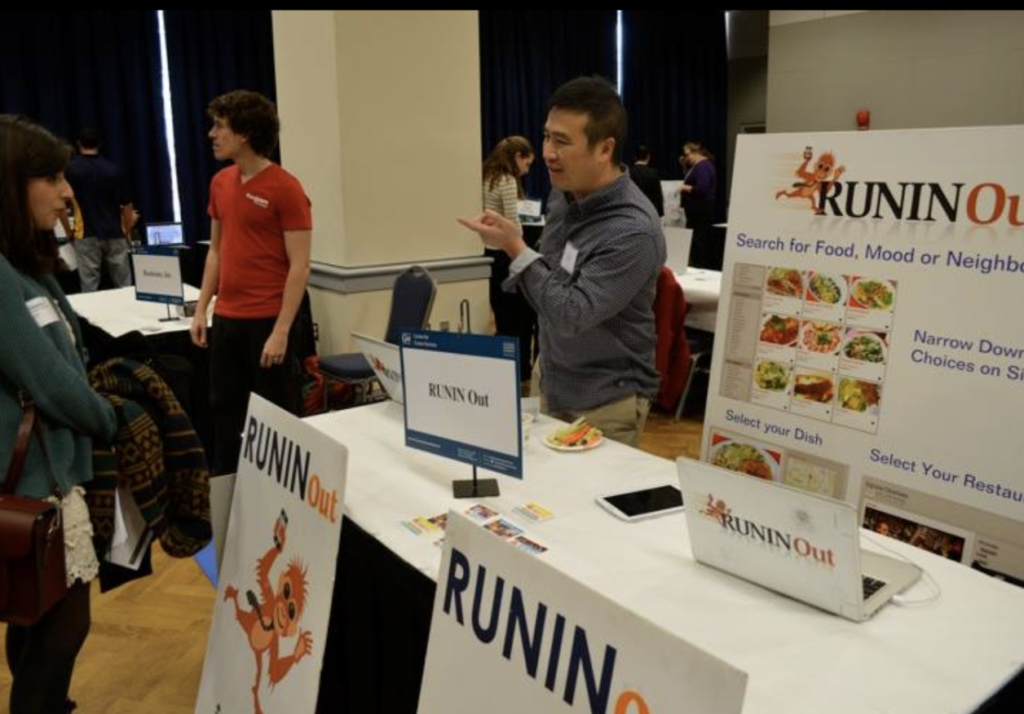
    I took Professor Rollins advice and accepted the invitation to attend the April 2012 GW Startup & Internship Fair.  The halls of the Marvin Center were filled with students some with blank stares mindlessly flipping pages, others on their laptops with Netflix streaming in the background. Despite their best attempts, they yearned for the lazy days of summer, but could not ignore the fact that midterms were just around the corner. Meanwhile, upstairs in the Grand Ballroom, there was lots of buzz for the next big thing.  I arrived at the career fair with huge aspirations but tempered expectations.  A flock of fellow co-founders from the D.C. meetup group as well as George Washington University classmates were also participating, and those adventurous self-starters were eager to explain their big ideas.  There were many thoughtful conversations and face-to-face interactions with the rising talent pool from all over the metro area.

    GW Startup & Internship Fair

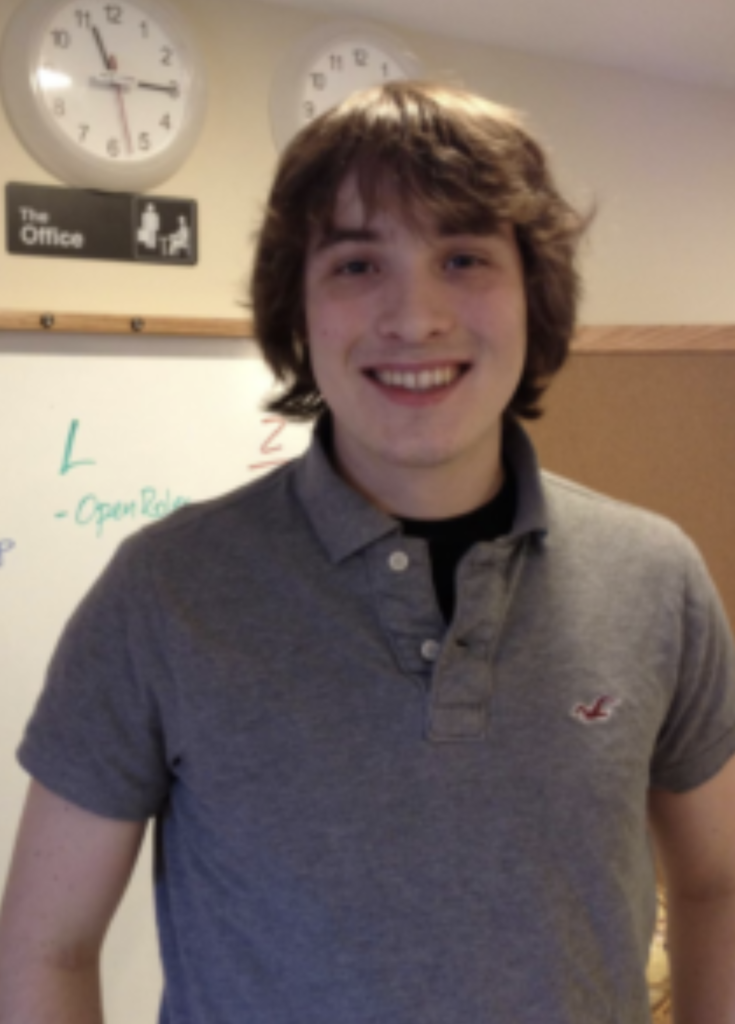
    One particular enterprising young man meandered through the crowd and over to my table. He was a cheerful happy-go-lucky sophomore who looked every bit a techie, but also a guy with a playful smile. “Hello, I’m Zach,” he introduced himself gleefully.

    “Nice to meet you. Are you from here?”

    “Originally from California, but went to high school in the South. I’m passionate, over-caffeinated and goofy, some say.”

    Zach Peirce

    Zach geeked over the pictures of food and wanted to hear more about our dish repository.

    “I love discovering new places and tasting different types of food, and I’m a technical product guy, so this could be the right fit.”

    “Are you sure the startup world is the right move for you as opposed to interning for Uncle Sam down the road?”

    “I’m more enamored by the startup life than working for the government.”

    “How ‘bout environmental activism – there are tons of opportunities in town.”

    “I’m a business student, so I’m all about process improvement.  I have lots of innovative ideas that I would like to see put to work and don’t have the patience for the government to implement them. Again, I’m here so I can effect immediate change.”

    I described to Zach the whole concept of the Vapiano ordering system. “You get a store charge card as you enter, and then you walk up to different stations to order pasta, pizza, antipasto, salad and drinks, scanning your card at each station.  Often you have to have to queue up for 15-20 minutes before you even get to order from the line cooks, so it’s important to have your selection ready. If you’re not a regular customer, it can be difficult to know what type of dish to order and what toppings and ingredients you want.

    “So we should feature each dish online and break it down by specific type and category and then list all their ingredients.  Then customers can preselect their preferences and taste and the site will show them the name and picture of the dish which they can show to the cooks.”

    “How will customers access the site?”

    “We can provide the QR code to customers when they queue up, and they can use their phones to make their seamless selections.”

    The following week, Zach and I spent an afternoon at Vapiano like food nerds, snapping pictures of dishes as they were prepared.  Lunchtime was crush time from a rush of mindless govies, so major kudos to the white coats who let us photograph the dishes while juggling orders from impatient customers. The work was exhausting but stimulating, and the best part, the starving sophomore and I were able to sample several dishes that are renowned across Italy.

    “What’s next? I’ve eaten my share of fettuccine to last the whole school year.”

    “I’m afraid there’s plenty more pasta on the horizon. Now we gotta do all the grunt work.”

    We headed to the Gelman Library on campus to post the dishes and categories on our site. There we met up with my friend and fellow entrepreneur JD Pagano. A software developer by trade, JD recently returned from a two-year stint in the Peace Corp.

    “This country is very grateful to its veterans. But we need to appreciate the service of the Peace Corps, also. How did you enjoy your tour?” I asked.

    “Very meaningful and impactful service. The experience was life-changing.”

    “That’s awesome. Anywhere exotic?”

    “The beautiful country of Kyrgyzstan in Central Asia.”

    “Was there lots to see and do?”

    “Absolutely. Great place to hike and ski. Loved the traditional Kyrgyz dancing and amazing folklife.”

    After the three of us got done adding the content to RUNINOut, we planned the next step.

    “Let’s organize a food tasting event at Vapiano’s for later this month,” I suggested. “We want people to test out our platform.”

    “Great idea,” Zach said. “Just advertise on campus that they’ll be free pizza, and you’ll get a ton of students there.”

    “College students are not the right audience for our survey. We’re looking for young professionals in their 20s and 30s with more refined taste,” I replied.

    JD started creating an event on Facebook. “I can ask my friend Misha to help promote it. Between the two of us, we know a ton of people in that demographic.”

    Together we sent out a boatload of invitations to our friends from that category, and we were delighted to see a few dozen foodies and govies show up with curious minds and ravenous appetites.

    In the beginning, the three of us stayed busy doling out dishes of Carbonara and Margherita. But once everyone was served, we were able to mingle and obtain feedback.

    I approached a cute girl with long black hair. “So you must be Misha, JD’s friend who you met in Kazakhstan.”

    Misha chuckled. “You got the right girl, but the wrong stan. It’s Kyrgyzstan not Kazakhstan.”

    “Oh so sorry, Kazakhstan was the country portrayed in the movie ‘Borat’ — a lot different than Kyrgyzstan where you served.”

    “No worries, almost everyone gets the names mixed up. The Peace Corp recently left Kazakhstan and hopefully, there’ll be no more mockumentaries.”

    JD Pagano & Misha Davies

    Kanita Williams left her job early from the D.C. Superior Court and made the 10 minutes walk over.

    “The pizza is awesome, but not great for someone on a minimal-carb diet.”

    “You should meet Orlando. He’s a personal trainer and runs a company called Bodyfit D.C.”

    Orlando walked over to introduce himself. “Nice to meet you. Where do you currently work out?”

    “LA Fitness but with work requirements, I find it challenging meeting my fitness goals.”

    “Skip the gym and get an awesome workout outdoors. Come join me for a boot camp workout three times a week. We do high intensity interval training.”

    “But my schedule at the court is so unpredictable. Can you be flexible?”

    Kanita and Orlando

    “Absolutely. Daily exercise is a gift that enables us to experience the gift of life more abundantly. I would be happy to get you started.”


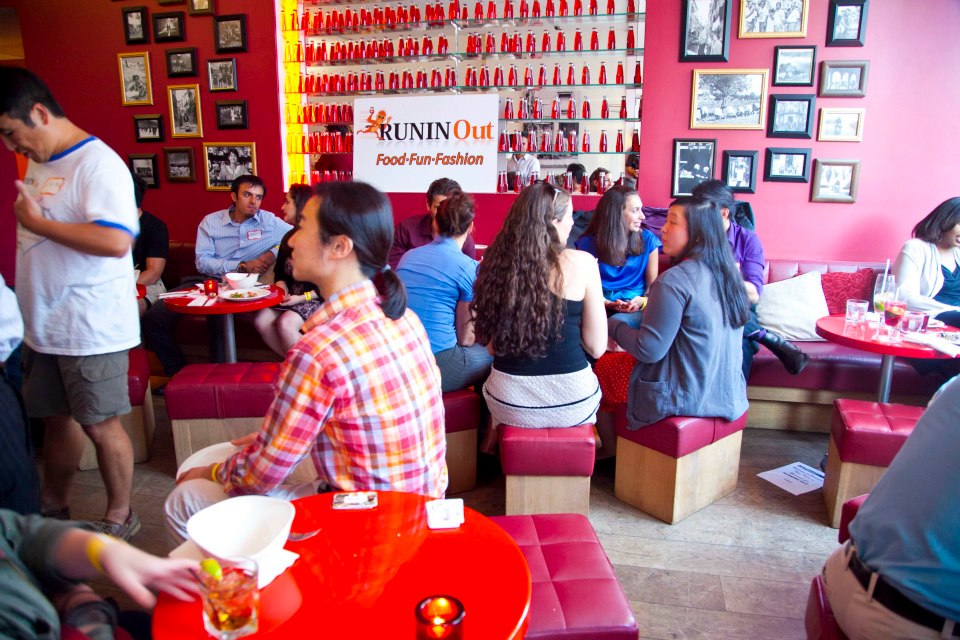
    Vapiano’s Meetup

    A woman in her early 30’s with dirty blonde hair and a beaming smile took a bite of her pasta. “Mmm, the Pasta Basilico is cooked perfectly, al dente.”

    “Tender but firm is how I like it, too. So what do you think of this crazy concept?”

    “Not a fan of having to wait in line and returning to my table, only to find out that my friends have already started digging into their Greek salads. But I like how your site helps customers choose their orders while they wait.”

    “Super to hear. Zach and I spent last week, photographing each dish and then painstakingly adding them to the site.”

    “Wow, just the two of you? There’s a ton of different dishes here.”

    “Yes, my co-founder, Senodja, is deployed to Camp Arifjan, Kuwait, and Kanita is busy clerking in the D.C. Superior Court. So we have room for one more.”

    “I think this would be fun. My name is Suzannah by the way.  I’m a foodie just like you, and also an entrepreneur, specializing in marketing and business development.”

    “Super Suzannah, maybe we can help each other. We could use help reaching out to restaurants, and you can gain priceless experience working with a budding startup.”

    PHOTO GALLERY

  • Apollo’s Flight

    Apollo’s Flight

    DC is a town full of festivals, and there’s no better time to celebrate festivals than in the summer. I had the perfect companion to attend my annual Folklife Festival, Capital Pride and Fiesta Asia. Apollo loved everyone and sang in front of Embassies and he was the character. I should have put Apollo as the star.

    On May 20, 2013, I took Apollo on a run again at the National Mall.  Apollo took flight as he often does, but this time, he went higher and further than ever before. Oh my goodness, I conveyed an expression of blunder. I had gotten so careless that I had forgotten to trim his wings, and suddenly high above the Mulberry trees along the scenic mall, Apollo found freedom.

    I looked everywhere for Apollo, even bringing along his cage, his Bonka Bird toy, rattling in the wind.  I scattered sunflower seeds and peanuts everywhere and had to fight off the squirrels who had a field day. Sadly, he was nowhere to be found.  Like a menacing tween, he had skipped school, and he was not yet ready to reunite with his distressed patriarch. The massive magnolias along the miles-long cinder path served as an ideal refuge for him and the Capitol dome and the Monument obelisk served as his landmarks.

    “Apollo, Come home to Papa!” I screamed at the top of my lungs. As sunset beckoned, I came to the sad conclusion that my wails were been drowned by the hustle and bustle of the young people and tourists mingling on the grassy fields. 

    Soon the sun was shadowed by the majestic, iron dome of the Capitol, and I would have to return the next day to make my unwavering attempt.  At daybreak, when the sun’s rays bathed the Lincoln Memorial in golden sunlight, I was roving up and down the grassy turf searching for my wanderlust feathered friend.  I played a scratchy recording of his chirping. It sounded promising, but after a while the raspy screams only commingled with the purrs from the cormorants and the buzz from the sparrows.

    GW University just so happened to be hosting their commencement ceremony at noon, so soon there would be several hundred black robes and caps with excited families scurrying all over the mall.

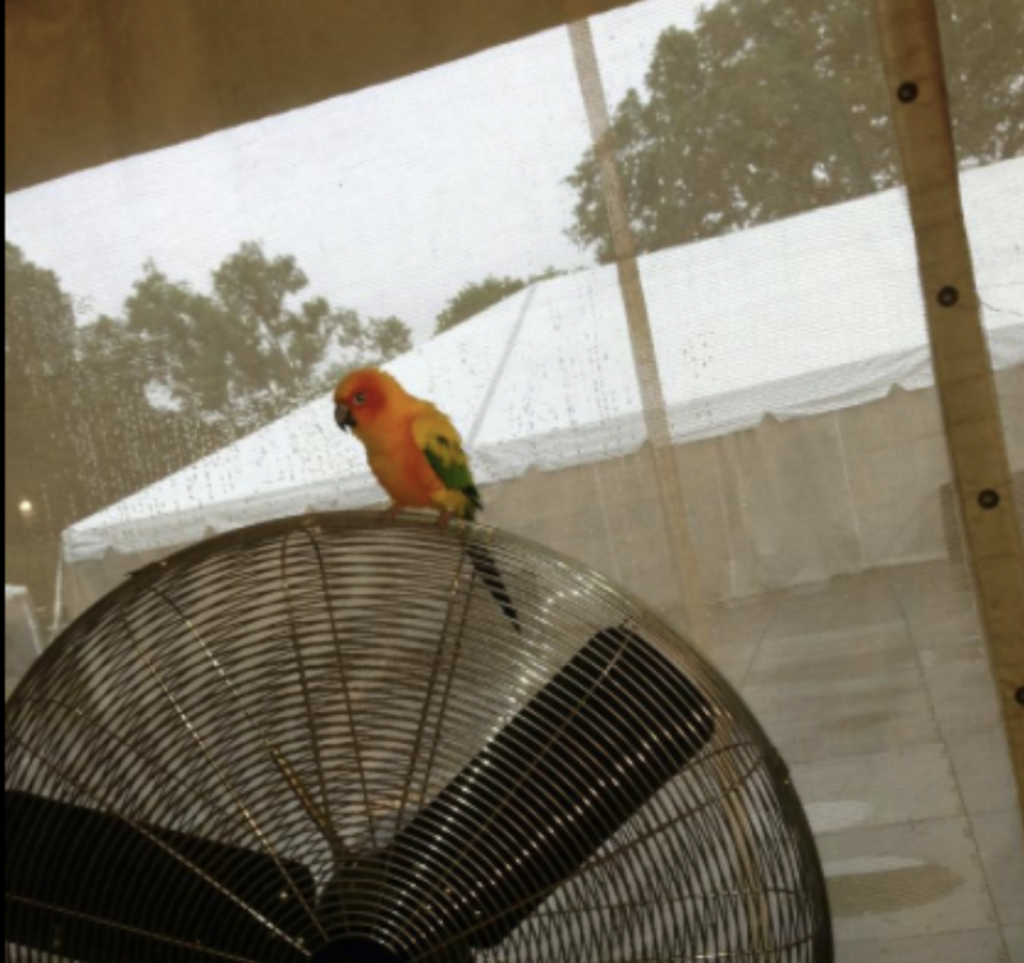
    If I couldn’t physically search, I would leverage social media. My Facebook posting gained some traction and a friend of mine mentioned that a student graduating from GWU saw Apollo hanging out on top of a standing fan, just screaming away. So she called the Washington Humane Society who readily captured him.

    Picture taken by GWU student of Apollo at the graduation.

    I immediately called them and was overjoyed when I found out that they had poor Apollo in safe keeping. 

    Apollo was home now, and he would join me on more runs and escapades throughout D.C..  But this time, I would make sure his flight feathers are well manicured and his favorite Bonga Bird toy is within arm’s reach.

    * * *

  • Best of DC

    We applied for the GWU Business Plan competition three times, hoping that indeed the third and last time was the charm.  Unfortunately, all the leprechauns in the world could not help us. Each time, we advanced to the semifinals, but the finals turned out to be our tough mudder. 

    The second time, was the most promising, where we came in 9th, so we served as a back-up just in case one of the top eight teams couldn’t present.  Unfortunately, we weren’t asked to pinch-hit and we went back to the drawing board for the following year. 

    Then, on April 2, 2013, I got the dreaded news that once again we didn’t make the cut.

    * * *

    April 2, 2013

    Chito,

    I was shocked that RUNINOut did not advance to the finals, since you were ranked #9 last year!  I didn’t read your 20-page business plan this time, but the feedback from the judges this year will give you more insights into why this happened, and you will receive it much sooner than before.  That’s all because I put an emphasis on upgrading this year to an online scoring/commenting system which means no re-keying of the judges’ comments.

    Please let me know if there’s anything I can do to help RUNINOut continue to grow and thrive.

    John Rollins 

    * * *

    Professor Rollins explained to me that the independent group of judges (mostly non-faculty business leaders) may not have had the insight to select the top teams. The business school was pulling for me, but since they had to keep the competition objective, they had no say in the matter.

    Not only did the rejection sting, but the elimination kept us from securing funding. That’s because the university published the results online so venture capitalists (VC) were privy to this info.

    My alma mater wasn’t the only one that rejected us.  We were also spurned by D.C.’s VC firm and accelerator Fortify as well as Baltimore’s Emerging Technology Center.  An accelerator takes an early-stage startup that has already developed a minimum viable product and helps them secure resources and capital funding. They also provide a nominal amount of funding in return for a small equity stake, normally 5-10%.

    So was acceptance to an accelerator the right path for RUNINOut? Without mentorship and funding, our chances of reaching rapid growth were slim to none. It didn’t mean that our business model wasn’t sound or that we would never be profitable. But it likely meant our company would focus on lifestyle instead of growth, on income rather than revenue, on bootstrapping instead of venture capital, and instead of advertising, we would rely on face-to-face guerrilla marketing.

    This new path was right up our alley.  Since we hosted several events a month, we had developed a knack for gaining traction and creating a buzz.  We provided value, engagement, and fun, and in return, our attendees spread the word virally and gave us raving reviews online.

    A week after receiving the bad news from GWU, Suzannah woke me up with some glad tidings.   We were selected as the “Best Restaurant App” in the Washington City Paper Readers’ Choice poll.

    After dozens and dozens of events, miles, and miles of pedicab rides, and tons of food blogs, the hard work seemed to have paid off. 

    I called Gregg Coppen, the web developer from Vancouver, and he almost fell off his chair.  “I’m so glad we decided to add the faceted search at the last minute — this feature must have been popular with restaurant-goers.”

    He was so proud to add the new “Best App” tag to his portfolio and exuberant that he could make a tremendous impact thousands of miles away.

    “When you approached us two years ago, we were hesitant to take on this project on a shoestring budget. But looking back, I’m damn glad we trusted our intuition.”

    “Yes, it’s amazing what we can accomplish if we all work together, communicate and innovate.”

    Soon, I shared the news with Professor Rollins. 

    “What, you beat Yelp, Foodspotting and Urban Table?”

    “It’s hard to believe — it was really the matter of getting name recognition and we did that by gaining traction.”

    “I tell you what. You guys didn’t advance, but your company has shown user-acceptance and income – that’s really what matters, not a trophy.”

    “But we still will not get a chance to present at the coveted New Venture Competition.”

    “Not if I have any say in it.”

    On April 22, 2013, I got the chance to do just that. I was delighted to have the opportunity to present my business and demo my site to the University where the idea was born. And that was really the most important thing — acceptance and validation from an academic institution. The consumers, we already had them in the bag.

  • Patriots’ Day

    Patriots’ Day

    We were conducting routine flight operations off the balmy coast of Southern California — in the distance stood the coastal mountain range of Santa Ana where the blistery, dry winds blew from deep within.

    On that gray September day, I woke up like any other, and switched on the remote to see whether the Atlanta Braves still remained on top of the National League and whether the Chargers would start Drew Brees or Doug Flutie as quarterback during the regular season.

    Strange, I thought, as I started my morning ritual of shaving, brushing, and dressing.  One of the twin towers was hit by an errant airplane. What kind of idiot would do that?

    In the wardroom, I polished up my continental breakfast while participating in the obligatory morning gossip with friends.

    “What’s up PAO (Public Affairs Officer)?”  The yellow-shirted flight deck officer chuckled as we bumped fists.

    “Not a thing, Shooter.  Hoping for a slow day and a nice weekend in port. Got lots of tours, but also time with my four-year-old son. How are your catapults doing?”

    “Well, we’re flying, aren’t we? We got lots of steam enough to launch a MAC truck a million miles.”

    “Super, save some steam for my DVs.  So, I hear the Chargers are finalizing on a starting quarterback. Do you think Brees will fly or go down the Ryan Leaf road?”

    [DVs or Distinguished Visitors is the Navy program to expose community members to the role of an aircraft carrier.  The DVs are flown aboard the plane and spend a night on board before taking off again the next day]

    “Nah, Brees is quality stuff man. Still can’t get over the Bolts picking Leaf over Hasselbeck. I’ve got a lot of hope pegged on this year, though.”

    “Aha, gotta run. Got a big tour to plan this weekend — Navy Leaguers and VFW.”

    A small cadre of junior officers from both the ship’s company and air wing created a weekly “fantasy football wing” aboard the carrier.  It took a lot of work sometimes following the performance of each player, but it built camaraderie, and these were the same officers that I worked with regularly when hosting distinguished visitors for a 24-hour visit to watch carrier flight operations out at sea.

    I grabbed a mug of java and then made my leisurely stroll across the hangar bay to my office on the second level of the ship’s island to start the day’s work of planning media visits and shipboard tours.  As the newest aircraft carrier in the west coast, we had a plethora of inport tour requests from veterans groups to students, some requesting specific things to see.  But every tour, no matter what the scope or size stopped in the Stennis Room to honor the living legacy of Senator John C. Stennis, the Statesman who served in the US Senate for 41 years and coined the ship’s mantra: “Look Ahead.”

    By this time, I had almost forgotten all about the World Trade Center.  When I arrived at the office, my entire division of three journalists and a Senior Chief Petty Officer were already there, but instead of reading email or editing the ship’s paper, their eyes were glued to the TV. The second tower was now ablaze and the sky all around southern Manhattan was filled with a huge plume of smoke.  

    From that day on, our lives were instantly shattered and perpetually changed. On November 12, 2001, the USS John C. Stennis (CVN 74) deployed to the coast of Afghanistan in support of Operation Enduring Freedom.

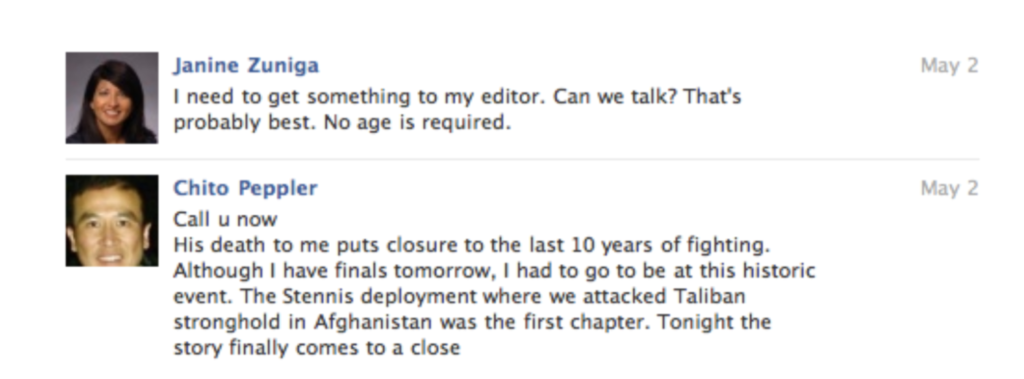
    As we left the San Diego harbor, Janine Zúñiga from the SD Union-Tribune along with a cadre of reporters stayed onboard to capture last words before we headed to harm’s way.

    “Stay safe Chito. Hope you guys hunt down Bin Laden,” Janine said giving me a warm embrace. Hope to see you back soon.”

    And before the Santa Ana disappeared on the horizon, Janine and the rest of the team boarded a C2 Greyhound and strapped in backward while the COD (Carrier Onboard Delivery) launched into the SOCAL sunny sky.

    * * *

    It was May 2, 2011. When I returned home late after studying for my Entrepreneurship and Innovation class finals with my industrious GWU classmates, I was shocked beyond comprehension. I flicked on the news to see jubilant university students and a throng of mostly young people celebrating in front of the White House. They popped champagne corks, climbed trees, and swung from lampposts.  Whoa, what happened? Did D.C. finally get the monkey off their backs and win a playoff series?  Many were still in sports jerseys embracing perfect strangers regardless of team loyalty. They had stepped out of a Washington Capitals playoff game and would be out here celebrating till the wee hours of the night.  Revelers waved American flags and chanted “USA, USA!”, celebrating the heartwarming news from President Obama that Bin Laden was killed in a firefight.   

    Ecstatic Americans had stormed Lafayette Square as if it was V-J day all over again. I was overjoyed to witness an outpouring of patriotism and devotion for our country displayed by the college-aged crowd—the generation that was just kids when 9/11 struck.  These Millennials will be around—raising our flag—a lot longer than the Boomers for the rest of this eventful tumultuous, 21st century.

    Despite it being finals week, no exam was more significant or impactful.  I felt that it was imperative that I had to be physically in front of the White House to witness history being made.  Everything else played second fiddle. This was our version of the falling of the Berlin Wall.  Would it mark a pivotal moment in history during the Global War on Terror?

    As I snapped pictures on my phone, I noticed a DM from Janine Zúñiga, who was still working at the Union-Tribune. She was reporting on the event and searching for a quote.

    Naturally, I was happy to go on record and it was a big closure to the tragic events ten years prior. 

    I also knew that I was way overdue for a reunion.  Back in December, I made a pact with Janine and her husband, Jari, that I would visit them to run the San Diego marathon and they would do the same in D.C.   So I purchased a one-way bus ticket west, hoping to make it a multi-trip excursion — I had a lot on my plate, a lot of goals to accomplish, and I kept my eyes steady on the prize.

  • A Site is Born

    During the spring of 2010, I enrolled in Professor Richard Donnelly’s New Ventures Class at the George Washington University (GWU) School of Business.  Students had to create ideas for a new venture, form groups of four and present the idea to the entire class at the end of the semester.

    My teammates were Daniel Lonnerdal, Jing Xe, and Mustafa Onerci.

    “What I learned from the Foodspotting eatup at Burma Restaurant was the need to provide faceted search where users can choose their cuisine, type of dish, ingredients, and taste preferences,” I said.

    “Not only that, but you can choose your mood and ambiance,” Jing added. “Last weekend, I went on a date with my boyfriend. I tasked him to find something romantic with a pleasant view and no distractions, and thank goodness he didn’t disappoint.”

    “Lucky for him, he came through. And if you’re a fan of sports like me, you can select the team that you like to watch, and the site will tell you which pubs to visit.  A Falcons fan definitely doesn’t want to stumble blindly into a Saints bar.  Unless you’re game for an ass whooping contest.”

    “Perfect example — what shall we name it?” Daniel asked

    We brainstormed for a few..”How ‘bout Food Runner?” Mustafa suggested.

    “Nah, some people drive or catch a cab.”

    “How ‘bout Run this Town?” Jing asked.

    “Nah, not a big fan of Jay-Z.”

    “How ‘bout Dining Out?” Daniel asked.

    “Meh, how ‘bout RUNINOut?” I suggested.

    “That’s a weird name. Like running out of food, groceries, things to do?” Mustafa asked.

    “Umm, yeah that’s an accurate expression.” I began to write the name on the notepad.

    “Strange…Looks too much like RUIN tho. And isn’t running spelled with two N’s and one G?” Jing asked.

    “Yeah, but that’s just too long to fit in an address bar. I like the shortened version even if we’re ruining the spelling.”

    “It’s kinda catchy, but I think people will get confused and misspell it. Then they won’t be able to find it on Google,” Jing replied.

    “Well tell that to Larry Page and Sergey Brin when they came up with Google or Jerry Chang with Yahoo.”

    “Too bad we’re not in Silicon Valley. So are you going to hire someone local to develop the site?” Daniel asked.

    “Would love to, but the prices in this town are up in the stratosphere due to high demand from government contracts.”

    “Then why don’t you outsource the work to India, the Philippines, or Africa?” Mustafa suggested.

    “We can outsource the content management once the structure is in place. But to build the foundation, I want to find a team from North America who understands our culture, our cuisine, our history, our beliefs, and attitudes. Someone who I can physically reach out and touch if I need to and someone that won’t break our piggy bank.”

    “Where can you find such gifted talent whose willing to work below market price?” Daniel asked.

    “Dunno, but maybe we can find a technical co-founder at the next tech meetup.

    “That’s possible. And I hope we get good feedback from Professor Donnelly and the class during our capstone presentation next month.”


    Presenting RUNINOut at the New Ventures Class at The GWU University
  • The Tower

    The Tower

    I enrolled in the Executive MBA program, and before the semester started, our cohort of 20 eager students embarked on a five-day retreat at the Homestead Resort in Hot Springs, VA.

    Our team coaching sessions led by Professor James Bailey didn’t require PowerPoint or pointers but still had everything to do with leadership development — You can’t create a leader in a classroom.

    After spending two days engaged in team-building exercises and thought-provoking discussions, we were ready to get some fresh air. The next morning, we hiked down the Allegheny Mountain gorge trail, through the thick forest, past the lovely cascade falls until we arrived in the middle of a grassy field with a gigantic wall affectionately known as the Tower. At first glance, the 40-foot Tower seemed daunting and insurmountable. 

    Throughout life, we face many obstacles both personal and professional. The key to responding to these roadblocks is to face them head-on and to rely on the support from others around you. This is teamwork — being supported and supporting each other. To work as a team, it’s imperative to understand each other’s strengths and weaknesses, both physically and mentally. The better we know one another, the better we’re able to assist each other.

    The Ropes Course is a metaphor for problem-solving — it challenges us to face our fears and climb on. The higher you climb, the more you rely on your team for support.

    The first task was to have each person assist their team members in donning their harnesses — the one crucial piece of equipment for our safety and protection.

    Then each team ascended in tandem facing the challenge of not having enough steps for all three to ascend at the same time.  Sometimes a climber would have to take a step down in order for another climber to proceed.  That was ok, as long as they all reached their final destination together.

    Meanwhile, the rope handlers kept a close eye on the climbers, coaching them on where to place their hands and feet and providing support and encouragement so that the 3-member team could ascend up to the top together and then back down.

    When it was my turn to go, I knew I could rely on my teammates Senodja Walker and Amir Moore. 

    Rope team:

    “Senodja, place the right hand on the block and your left foot on the step.”

    “Amir, move your right foot off the step and place it on the block so that Senodja can place her foot on it.”

    As the climbers moved up the wall and then back down, the Belay teams were tasked to remove the slack by paying out or pulling in the excess line. They kept a close eye and a taut line, but they were not allowed to pull the crew up the wall — the climbers had to figure this out on their own.

    Climbers: “Slack!” (pay out a little rope.)

    Belayers: pays out the rope and pauses to see if climbers ask again.

    Climbers: “Up rope.” (pull in rope slack.)

    Belayers: pulls in rope and pause to see if climbers ask again.

    Senodja Walker

    Eventually, all of us made it over the wall and back down, taking one step at a time.  The journey in life is rarely simplistic and straightforward. If we keep striving, we will eventually reach our goals, even if we have to climb over life’s challenges, obstacles, and setbacks.

    The EMBA class was broken down into five groups of four and we would remain in our group for the entire two years.  One of the first projects that we worked on was the Airline Pilots Association.  ALPA, with 53,000 members and 40 airlines in the U.S. and Canada, is the largest airline labor union in the world.

    We were having a conference call on skype when I touted the fact that airlines such as Jet Blue and Delta have successfully used Twitter and Facebook to promote their products and to provide updates on weather and flight cancellations.

    “I’ve had it with you. Your solution to everything is always social media!” Eli my classmates exclaimed.

    This wasn’t the first time he had said that and we always seemed to butt heads over the value of social media for building brand awareness and winning new customers.

    I immediately slammed the phone down and ended the conference call.

    The next thing I did was call Senodja on the phone. “I can’t work with Eli any longer — he’s so unaccepting of social media. I’m here to learn and broaden my horizon, not to clash heads.”

    “Wish you could join my team, but we’re already maxed out.”

    “Then maybe I should try to understand his point of view better and discuss our differences.”

    “Or perhaps you could transfer out of the EMBA and enroll in the Professional MBA program — it may take a little longer to complete but you have a choice of a wide selection of classes and work with a diverse myriad of people.”