Donald “Clay” Clay, an Air Force veteran, was enjoying his stogie while chit chatting with friends, watching boats slipping by. On every weekday afternoon when the weather is fine, he and a half dozen of his perennial friends such as Robert “Bleu” Jones and Kimo Tavares gather at the Slip Inn to chill, booze up and snack on the crowd-favorite George wings. No one knows for sure why they call them George, but rumor is one of the cooks from the earliest days in the 80s came up with the secret breading.
The Tiki bar and restaurant wasn’t located in the Navy Yard, Old Town Alexandria or the National Harbor — places packed with tourists. Instead it was tucked away at the edge of Joint Base Anacostia Bolling, a well-kept secret amongst retirees. That’s why Clay, Bleu and a handful of old timers made it a daily ritual when the clouds are clear and the skies are blue.
And the weather forecast for the next three days was bright and promising. There was a ton of activity as military personnel and their families kicked off the glorious weekend with Country Western Night featuring a local, up-and-coming talent.
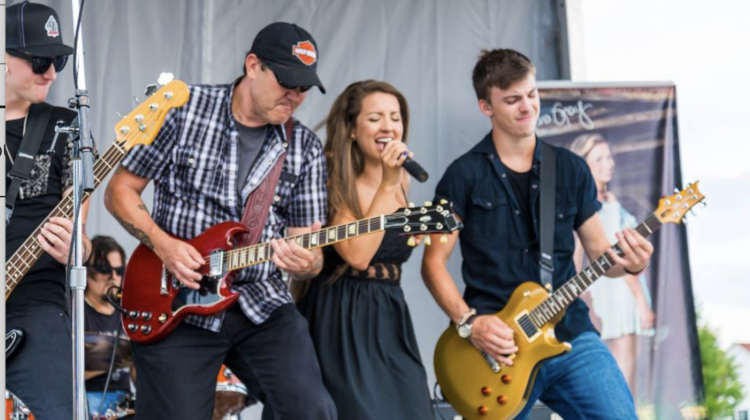
Sara Gray is a singer, song-writer from Indian Head, MD., just down the beaten river in Southern Maryland. The first time she sang in public was at the age of three on a cruise ship — from the soundtrack of the Teenage Mutant Ninja Turtles. She watched her father sing in his local band, then started performing at church and has rendered the National Anthem at various community events. At 16, she wrote her first song and her budding repertoire focuses on country and classic rock. For the last year, her schedule has been in high demand, opening for country stars such as Toby Keith, Dierks Bentley, the Zac Brown Band and Luke Bryan and performing all over the DMV.
Sara Gray covering”Cowboy Take Me Away”Sara Gray loves audience participation
“I’m so happy to be on the stage where I feel right at home. I love getting the crowd involved, clapping, dancing and singing along. They inspire me.”
Justin Voskuil bartending at the Slip Inn Tiki BarSara Gray singing her original “One of A Kind”
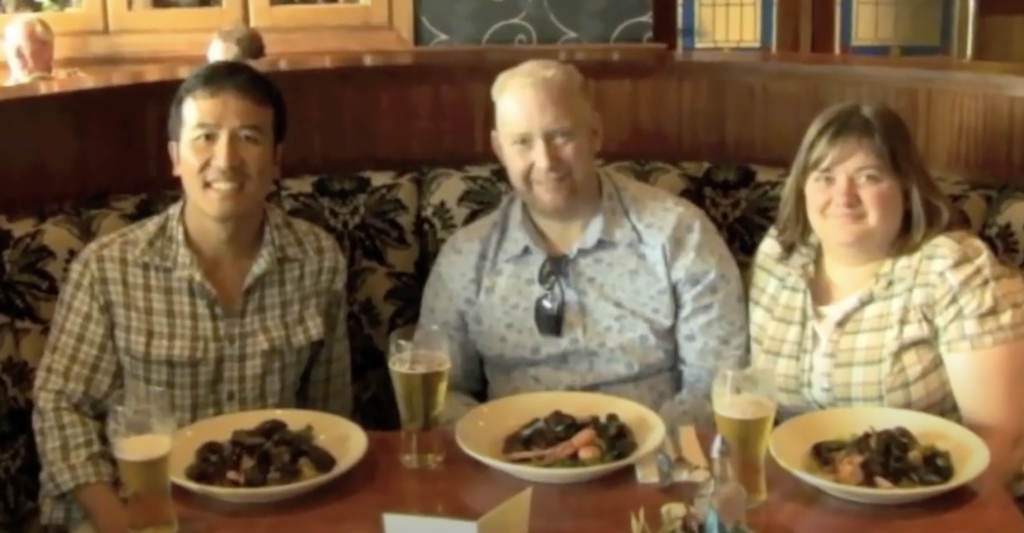
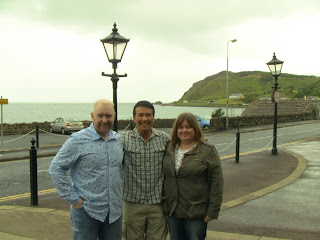
The next day, I hopped on a train to Northern Ireland to see Mark and Lee, my folklife fest friends who I had not seen since 2007. They took the entire day off from work to give me a grand tour of the Antrim Coast showcasing the scenic, untouched Northern Ireland coastline — one of the most beautiful in the world, and the Giant’s Causeway, a World Heritage Site, declared by the Irish as the 8th Wonder of the World.
Enjoying a meal with Mark and Lee in Northern Ireland
Mark and I created an impromptu limerick which we posted on Youtube.
Here we are in Giant’s Causeway
Where 40,000 columns of basalt rock stand today
The volcano erupted
The larva cooled
But before there was science
There was the Legend of Finn McCool
It is called the Giant’s Causeway
It was made by Finn McCool
It’s really just the start of a stepping stone tool
To get across to Scotland
To fight with Bennadonner
Through many disagreements
They pulled each other asunder
He took the cloth much
And try and try as he may
He never hit his target
But he made us our Loch Neagh
The mud landed in the water
And with all the might he can
He only then succeeded
In making the Isle of Man
So he took to playing the organ
And over here were his pipes
He played the Sash, Derry’s Walls, and Billyboys
But started loads of fights
Cuz’ the Scottish Giant thought they were his tunes
But little did he know
That the music for Highland bagpipes
Came from across there near Dunloe
We then visited Balintoy Harbour on the Antrim Coast, 13 kms away.
“Haven’t been back in 28 years. When I was nine years old, my family would come here for the summer holidays, and I would dive off these rocks, swim across this pool of water, climb up the natural stairway and dive again. Would do this all day long,” Mark reflected.
“When you return to the Capital City, please let all your friends and runners know how beautiful the Emerald Isle truly is,” Mark said. Then I gave him and Lee a big hug and wondered where in the world we would meet again.
I got to do a lot of quality sightseeing and made new friends who taught me a lot about the precious value of life and respecting other people. I learned about the sectarian conflict and how it is important to learn and understand each other.
Belfast is known for its troubles and religious conflict. For over 25 years, the IRA (Irish Republican Army) clashed with the Irish National Liberation Army. The Republicans carried out a guerrilla campaign against the British forces as well as bombing infrastructure and killing innocent civilians.
On Bloody Friday 1972, the IRA set off 22 bombs killing 9 people and injuring 120. When the bombs dropped, people did not know what to do. There were no bomb shelters. They did not know whether to run, hide or stay sheltered at home. The IRA hoped they would be just as successful in catching the government and the people unprepared in hopes of getting Northern Ireland out of the UK.
Truly, there was only one main pursuit: The Irish Republicans wanted a united Ireland. More than 3,500 people were killed of whom over half were civilians.
However, there was never such a state as a united Ireland. As an outsider looking in, I didn’t truly understand what the big deal was, other than the name and the unity. Just ten years ago the border was filled with concrete barriers, barbed wires and bombs. Today Northern Ireland and Ireland enjoy an open border where citizens could cross either side freely without having to produce a passport.
“I’m glad you took some time to research our history,” Mark said. “It was very important for the parties to understand our differences so that the IRA and the British government could properly negotiate.”
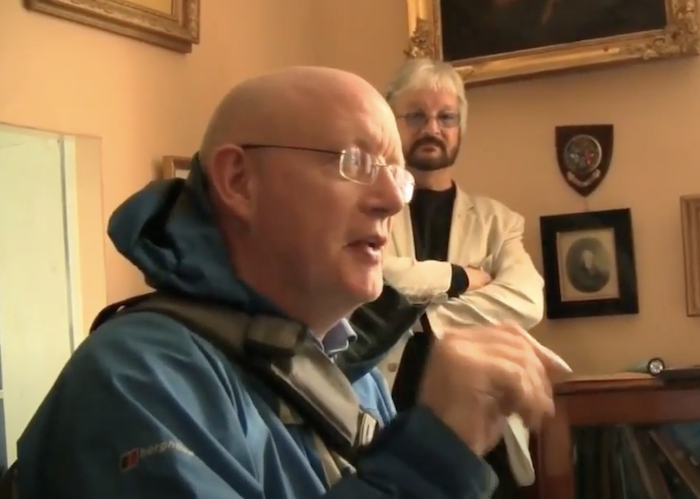
The last place I visited was the First Presbyterian Church where I met tour guide Arthur Magee.
Arthur Magee
“Belfast has been a by-word for the troubles, sectarian strife, and intolerance. If you come nigh you will see a city where on a micro level, people are building bridges. The most important bridge that is been built is in each and every single person here. That bridge is between who you actually are and how you see yourself. Whether you’re part of the problem, looking back and blaming other people, or whether you’re part of the solution and reaching out and seeing other human beings, as exactly that, human beings. We’re no different from any other place in this planet. We’re products of circumstances and history. And the same problems that exist in Belfast apply everywhere. Belfast isn’t a byword for intolerance, it’s a beacon for hope. It’s a place where people are reaching out and it shows the possibility of change. And it also shows the importance of each and single person to reach out, to build bridges and to see other people as exactly that, other people.”
This whole trip was more eye-opening than attending class at GWU, and definitely a lot more fun. No encyclopedia, no ebook reader, no youtube video could teach me life’s social skills better than what I learned in Barcelona, Normandy, or Belfast.
I only had one final day in London when I returned from Belfast. In life, nothing rarely happens the way you intended it to. It’s important to be flexible, fluid and understanding. Sometimes life brings you pleasant surprises — it’s not scripted or orchestrated, but just right. Life can be charming, like that, if you let it. In the long run, we will appreciate the fact that we were flexible and cherish the tender times that we were able to spend together.
The dinner with Kim and my nieces was wholesome and filling. I did not know it was even possible to make spaghetti so delicious. The meal, in fact, was just as good as Rio’s Japanese Tonkatsu curry she cooked for us the night I left for Northern Ireland. This is also the very first time I’ve spent time with Kim, Kae, Rio, and Rintaro all at the same time, under one roof. So it’s a very special moment to be thankful and cherish especially when we let life’s circumstances take the lead.
We had a wonderful time, talking, laughing, and just enjoying a simple and pleasant meal with friends and loved ones. Nothing special, though it meant the entire world to me.
After dinner, we all went to Notting Hill to visit Rio as she was painting her clothing store. Notting Hill is a fabulous, affluent, fashionable community with beautiful Victorian homes and attractive storefronts. It is a very artsy place that reminds me of Chelsea, NYC, and Georgetown, D.C.
The last 12 months have been momentous for Kim since this is the first time that she has seen Mom, my older sister, Pearl, and me, within the same calendar year, since we immigrated to the US in ’79 (Mom in Japan at my grandmother’s funeral, Pearl in Hong Kong and now home in London). This was no coincidence, and it was a precious moment to forever embrace.
Luck was recurrent through the course of the trip since the idea was born during a routine run on the Mall. I boarded a Space-A flight from Joint Base Andrews at the very last minute and every moment after that was entirely spontaneous.
It was serendipitous that I met Marcy and fortuitous to reunite with my folklife friends Mark and Lee. And I wanted nothing more than to re-create this experience for Americans back home. And on the MAC (Military Airlift Command) flight from Ramstein AFB back to Andrews, I had plenty of time to contemplate and plan my next big project. I was looking forward to coming home and reuniting with my pet parrot, Apollo and my pit bull, Georgia. Both were in good hands with my housemate, Kanita Williams. I knew that fate would lead her to become a lot more than just a typical roommate.
We were conducting routine flight operations off the balmy coast of Southern California — in the distance stood the coastal mountain range of Santa Ana where the blistery, dry winds blew from deep within.
On that gray September day, I woke up like any other, and switched on the remote to see whether the Atlanta Braves still remained on top of the National League and whether the Chargers would start Drew Brees or Doug Flutie as quarterback during the regular season.
Strange, I thought, as I started my morning ritual of shaving, brushing, and dressing. One of the twin towers was hit by an errant airplane. What kind of idiot would do that?
In the wardroom, I polished up my continental breakfast while participating in the obligatory morning gossip with friends.
“What’s up PAO (Public Affairs Officer)?” The yellow-shirted flight deck officer chuckled as we bumped fists.
“Not a thing, Shooter. Hoping for a slow day and a nice weekend in port. Got lots of tours, but also time with my four-year-old son. How are your catapults doing?”
“Well, we’re flying, aren’t we? We got lots of steam enough to launch a MAC truck a million miles.”
“Super, save some steam for my DVs. So, I hear the Chargers are finalizing on a starting quarterback. Do you think Brees will fly or go down the Ryan Leaf road?”
[DVs or Distinguished Visitors is the Navy program to expose community members to the role of an aircraft carrier. The DVs are flown aboard the plane and spend a night on board before taking off again the next day]
“Nah, Brees is quality stuff man. Still can’t get over the Bolts picking Leaf over Hasselbeck. I’ve got a lot of hope pegged on this year, though.”
“Aha, gotta run. Got a big tour to plan this weekend — Navy Leaguers and VFW.”
A small cadre of junior officers from both the ship’s company and air wing created a weekly “fantasy football wing” aboard the carrier. It took a lot of work sometimes following the performance of each player, but it built camaraderie, and these were the same officers that I worked with regularly when hosting distinguished visitors for a 24-hour visit to watch carrier flight operations out at sea.
I grabbed a mug of java and then made my leisurely stroll across the hangar bay to my office on the second level of the ship’s island to start the day’s work of planning media visits and shipboard tours. As the newest aircraft carrier in the west coast, we had a plethora of inport tour requests from veterans groups to students, some requesting specific things to see. But every tour, no matter what the scope or size stopped in the Stennis Room to honor the living legacy of Senator John C. Stennis, the Statesman who served in the US Senate for 41 years and coined the ship’s mantra: “Look Ahead.”
By this time, I had almost forgotten all about the World Trade Center. When I arrived at the office, my entire division of three journalists and a Senior Chief Petty Officer were already there, but instead of reading email or editing the ship’s paper, their eyes were glued to the TV. The second tower was now ablaze and the sky all around southern Manhattan was filled with a huge plume of smoke.
From that day on, our lives were instantly shattered and perpetually changed. On November 12, 2001, the USS John C. Stennis (CVN 74) deployed to the coast of Afghanistan in support of Operation Enduring Freedom.
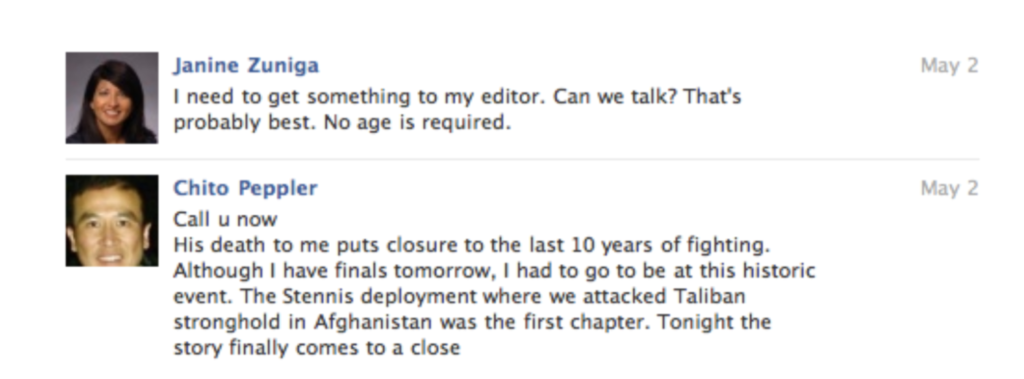
As we left the San Diego harbor, Janine Zúñiga from the SD Union-Tribune along with a cadre of reporters stayed onboard to capture last words before we headed to harm’s way.
“Stay safe Chito. Hope you guys hunt down Bin Laden,” Janine said giving me a warm embrace. Hope to see you back soon.”
And before the Santa Ana disappeared on the horizon, Janine and the rest of the team boarded a C2 Greyhound and strapped in backward while the COD (Carrier Onboard Delivery) launched into the SOCAL sunny sky.
* * *
It was May 2, 2011. When I returned home late after studying for my Entrepreneurship and Innovation class finals with my industrious GWU classmates, I was shocked beyond comprehension. I flicked on the news to see jubilant university students and a throng of mostly young people celebrating in front of the White House. They popped champagne corks, climbed trees, and swung from lampposts. Whoa, what happened? Did D.C. finally get the monkey off their backs and win a playoff series? Many were still in sports jerseys embracing perfect strangers regardless of team loyalty. They had stepped out of a Washington Capitals playoff game and would be out here celebrating till the wee hours of the night. Revelers waved American flags and chanted “USA, USA!”, celebrating the heartwarming news from President Obama that Bin Laden was killed in a firefight.
Ecstatic Americans had stormed Lafayette Square as if it was V-J day all over again. I was overjoyed to witness an outpouring of patriotism and devotion for our country displayed by the college-aged crowd—the generation that was just kids when 9/11 struck. These Millennials will be around—raising our flag—a lot longer than the Boomers for the rest of this eventful tumultuous, 21st century.
Despite it being finals week, no exam was more significant or impactful. I felt that it was imperative that I had to be physically in front of the White House to witness history being made. Everything else played second fiddle. This was our version of the falling of the Berlin Wall. Would it mark a pivotal moment in history during the Global War on Terror?
As I snapped pictures on my phone, I noticed a DM from Janine Zúñiga, who was still working at the Union-Tribune. She was reporting on the event and searching for a quote.
Naturally, I was happy to go on record and it was a big closure to the tragic events ten years prior.
I also knew that I was way overdue for a reunion. Back in December, I made a pact with Janine and her husband, Jari, that I would visit them to run the San Diego marathon and they would do the same in D.C. So I purchased a one-way bus ticket west, hoping to make it a multi-trip excursion — I had a lot on my plate, a lot of goals to accomplish, and I kept my eyes steady on the prize.
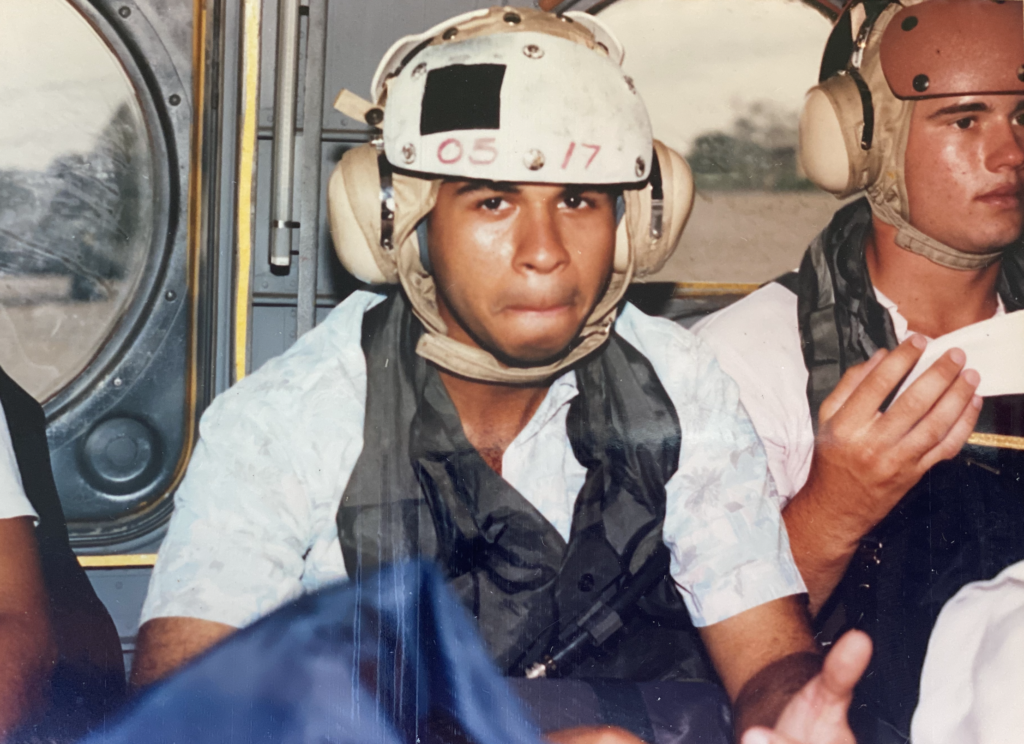
In the summer of 1990, a half dozen U.S. Navy 2nd class midshipmen from different parts of the U.S. were excited to be spending their summer in the Mediterranean. They would be embarking aboard USS Peterson (DD 969) which was scheduled to visit Italy, Spain, France, and Israel.
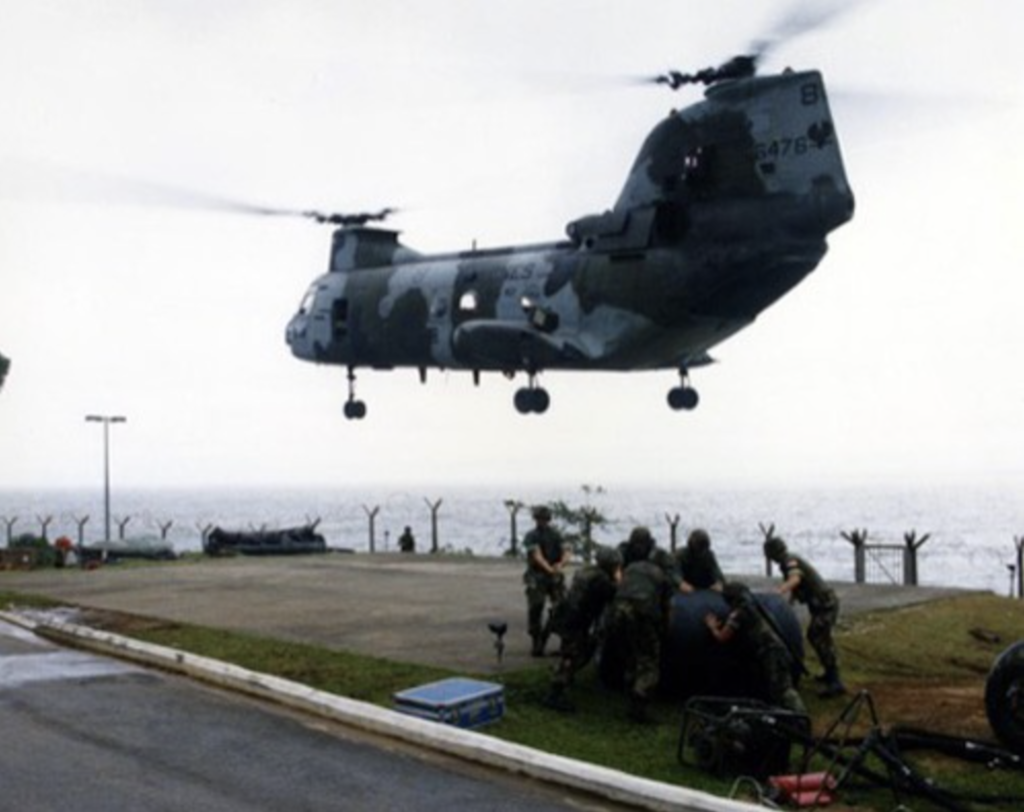
Then suddenly civil war broke out in Liberia and Peterson was called upon to make a high-speed transit off the coast with Marines on board to evacuate American citizens trapped in the fighting. The six illustrious midshipmen were rerouted to Rota where we boarded a CH-46 Sea Knight and flew over West Africa.
MIDN Dave Trotman aboard CH-46 Sea Knight
I remember flying over the savannas in Senegal, elephants grazing in the sparse grassland. Then over the dense mangrove forest in Guinea traversing the Great Scarcies River which borders Sierra Leone. Barely a soul was seen until we arrived in the capital city of Freetown. There we flew over dozens of shantytowns packed with makeshift shelters squeezed on the banks of rivers, on the face of steep mountains, and on the precipice of the sea. The rainy season was pending and due to overpopulation and deforestation, the risk of mudslides was great. I wished we could visit the tenements and the bustling street markets. But we were there due to war in Liberia and to support Operation Sharp Edge, so we headed to the Lungi Airport to await our SH-60 Seahawk to transport us to our ship.
Marines evacuate Americans from Liberia. (Courtesy of DoD)
While we waited, we were tired and famished, so we purchased some smoked herring and fried plantains washed down with mango juice from an eager street food vendor. Though it was just a slice, the food was mouthwatering and fresh, and I craved for a little bit more. That was the last time I ate West African food.
My contractor working on the boiler on my rental in Lebaum St told me about a Jamaican girl who just arrived in Virginia and was looking to move into the city.
“Do you have a room?” He asked candidly.
“Not here in Lebaum, but at my other property at Bruce Place, perhaps.”
The next day, I drove 50 miles south on the congested 95 to the exurb of Fredericksburg to pick her up.
“I’m just hanging out in the countryside working at Firehouse Subs, bored and wasting time.”
“So what are your plans while in D.C.,” I asked Kimara.
“Meet city peeps, git ah job, try sum criss cooking.”
“Anything in particular?”
“I’m feeling homesick, so I want to get some cassava and curry — something that reminds me of home.
I showed her RUNINOut and did a search for Jamaican food. She was impressed but then asked me to search for cassava. The nearest spot was a West African restaurant in Petworth.
She pointed to a spot on the map. “Sumah’s — I want you to take me there.”
When Isata and Amara Sumah immigrated here from Sierra Leone 40 years ago, they had very little possessions and money. They worked hard every day at local restaurants and rented a $100-a-month apartment across the street from where Sumah’s stands today.
Since 1993 when Isata and Amara opened up their West African restaurant, Sumah’s, they have been serving Jollof rice and West African stews daily. They typically start their day at 8 am and work until 10 pm then drive to their house in Southern Maryland, where their two college-aged daughters live.
“We’ve worked hard so we could buy a house and put our two daughters through college,” said Amara.
Sumah’s is a modest seven-table restaurant with neon green walls adorned with hand-carved wood beaded masks.
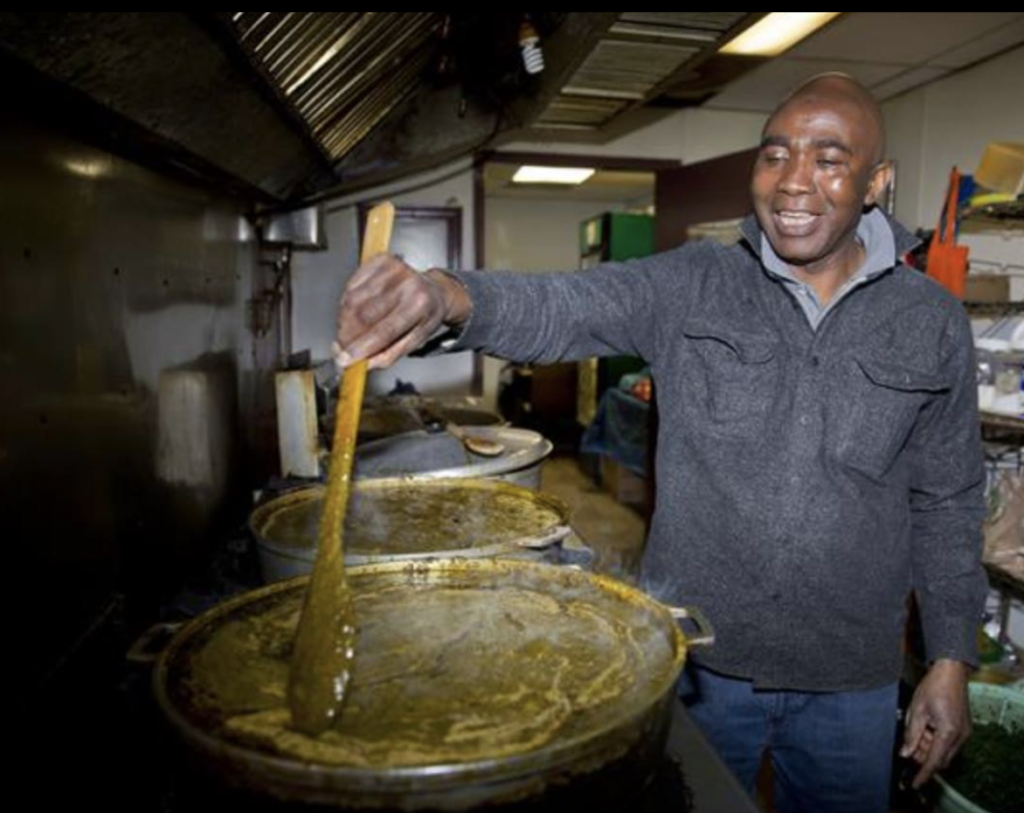
When Kimara and I walked in, we could immediately sense the aroma of African spices and the fragrant smell of nuts. We followed the savory scent to the kitchen where we found Amara smiling while gently stirring a large pot of cassava that would be quickly consumed by his loyal lunchtime clientele.
Amara Sumah
Both Amara and Isata were very pleasant and cordial. They believed in bestowing authentic customer service and took great joy in introducing Washingtonians to West African cuisine, steeped in history and geography.
“This is my new friend Kimara from Jamaica,” I said. “She adores West African food.”
“Of course, I grew up with it. Jamaican cuisine is a fusion of African, Creole and Latin American,” Kimara replied. “Where do you think jerk sauce comes from?”
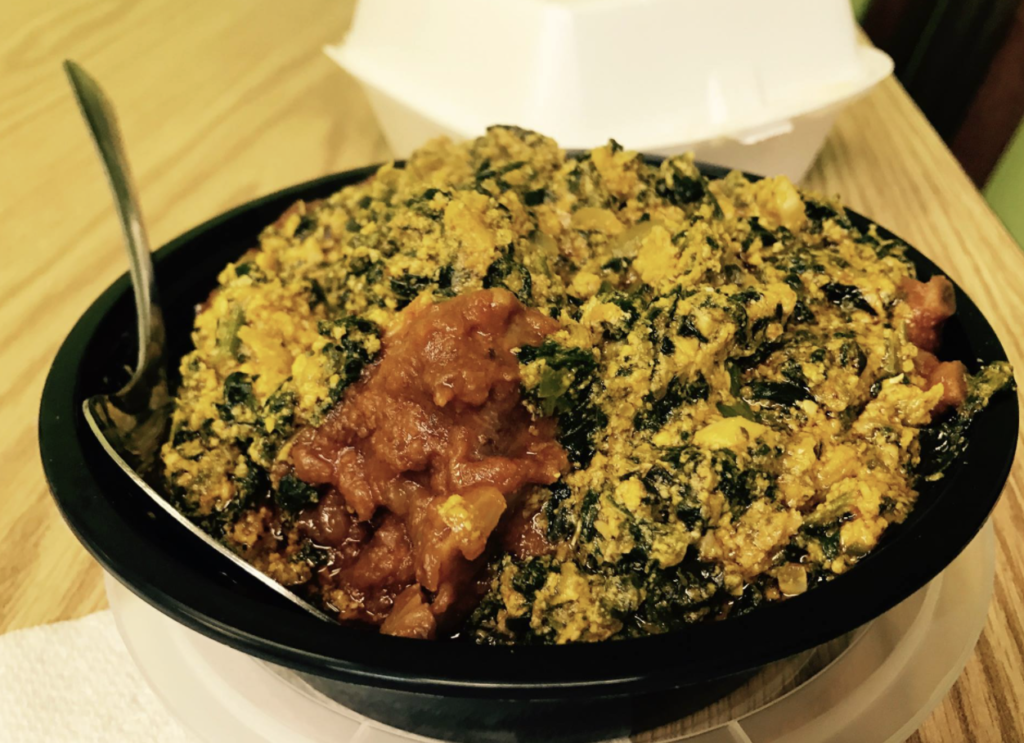
“Well, we treat all first timers to a free sampler of our delectable cuisine,” Isata said as she dished up a plate of jollof rice with seven other sauces along with egusi and peanut butter stew.
“That’s very kind of you. I’ve been craving for cassava-leaf stew for the past two months since I arrived in the US,” Kimara said delightfully. “A large bowl please and plenty of peanut butter gravy — my favorite.”
“Of course,” Isata stated. “We always serve our customers a healthy plate. Whatever you can’t eat, take it home and enjoy it there.”
We sat down, admiring the African wall art. The canvas displaying ethnic African women and the handmade pieces were eye-catching and fascinating.
Another customer next to us was deeply engrossed in his stew. This goat with jollof is so spicy and tender,” he said. “I’ve eaten everything on this menu, and I come here at least twice a week.”
One patron from Liberia told me that he came here in 1990, and there were no West African restaurants or stores in D.C. Thankfully now there is a handful and he visits Bukom in Adams Morgan on weekends for dancing and drinks.
“Hey Amara, when did you arrive in the US?” I asked.
“Nov 28, 1978 — with nothing but a dollar to my name.”
“May 28, 1990 — was the day I set foot in Freetown,” I mentioned. “A hidden gem, but sadly with thousands of impoverished people, overcrowded and in need.”
“Have you been back to Africa since?”
“No just Egypt and Ethiopia, but I would like to travel to West Africa and enjoy her mountains and rainforests and tour national parks to witness wildlife.”
It didn’t take long for our steamy hot food to come out along with soothing ginger juice on ice.
“Made with Love from Freetown,” Isata stated. “Our ingredients are imported directly from West Africa.”
“Mmm,” Kimara exclaimed “My Mother would be amazed.” Kimara didn’t wait long to start digging in.
“Easy now, this isn’t a cassava eating contest,” I said with a smirk as I dished some of my Jollof onto her plate. “Just as this scrumptious meal was slow-cooked, we have to consume it slowly.”
Cassava-leaf stew
Kimara took another bite and smiled warmly. “I should order a gallon of this egusi and peanut butter stew.”
“You got it, and I’ll add a bowl of krain-krain and some fufu,” Isata said.
“We love our customers,” Amara said. “Some drive hundreds of miles just for a warm bowl of Jollof. They are all considered family.”
Kimara reached over and gave the Sumahs a warm hug. “You guys are so incredibly sweet and charming. This brings back wonderful memories from home. #HugsnKisses”
“Thank you soooo much Mama & Papa Sumah,” I said as I joined them in the hug. “And please send my regards to your whole family.”
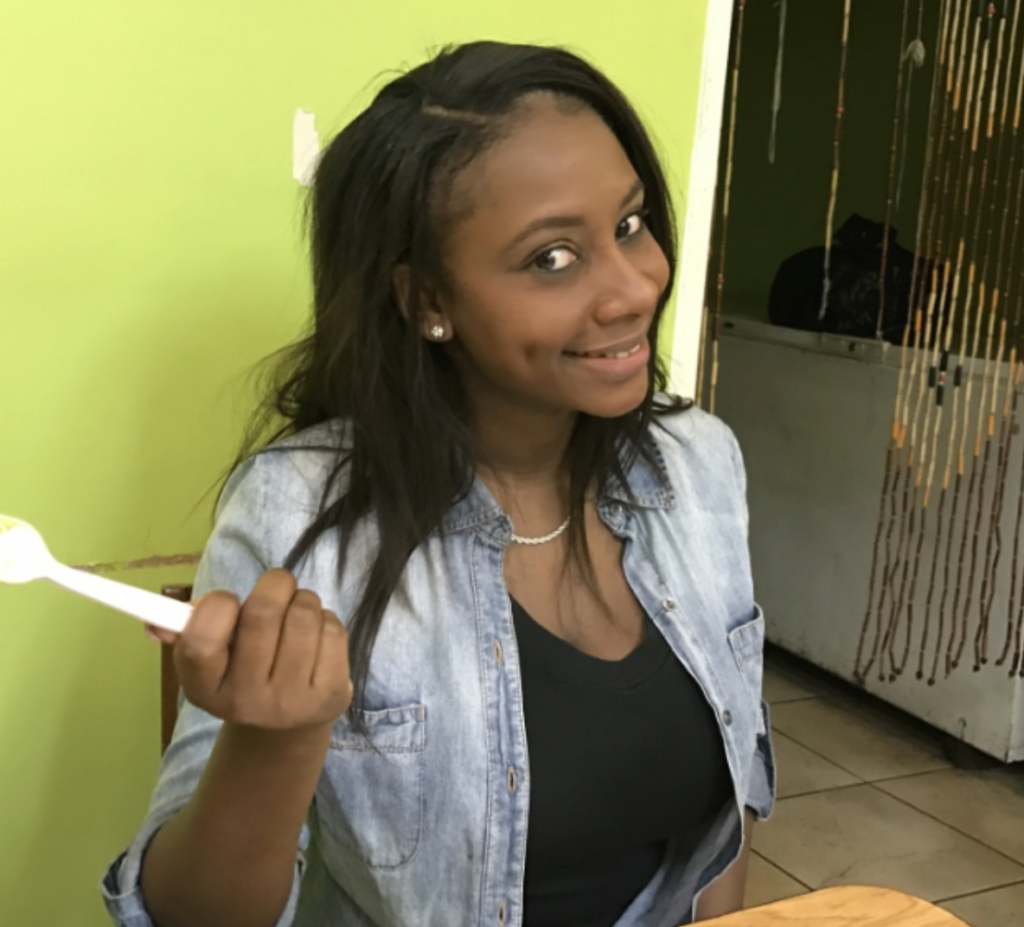
Kimara enjoyed the cassava
After being satiated I asked Kimara where she would like to go next.
“To the mall to visit the museums. Then I need to fine ah job.”
“What kind of work?”
“Waitress, but eventually attend Bartending school.”
“Do you enjoy bartending?”
“It was my first job at the age of 16, right on the corner of Windward Road in Kingston.”
“Any particular restaurants?”
“Caribbean of course. But really I can work anywhere. Beach bars, sports bars, I’m flexible baby love.”