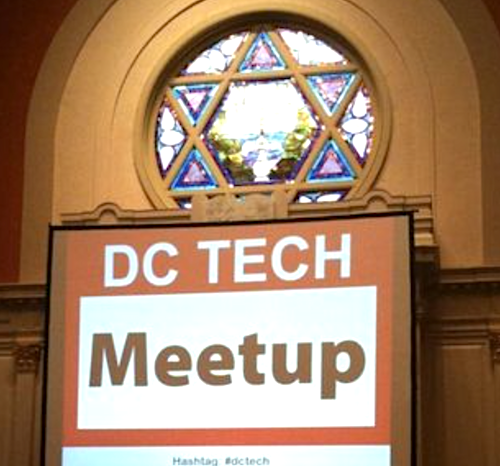
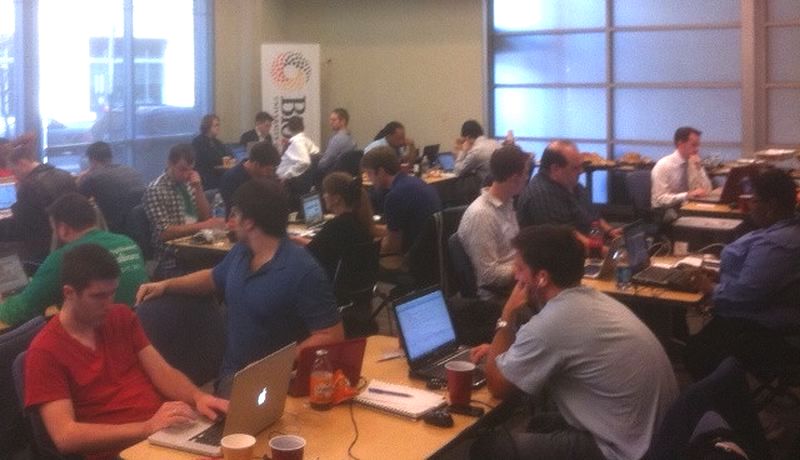
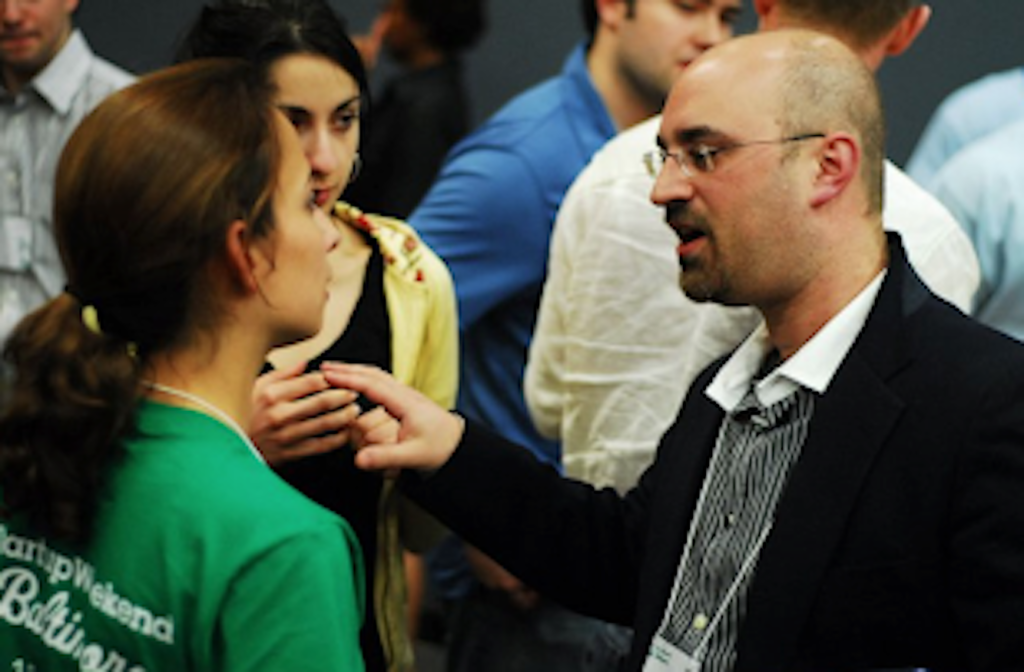
Every month, D.C. technologists, investors, and entrepreneurs gathered together for discussions, lightning talks, and demos. #DCtech. With over 25,000 members, the event was usually held at a large auditorium such as the historic Synagogue on 6th and I St. or the Martin Luther King Jr. Library.
On Tuesday, May 1st D.C. Tech was hosting a “Hacks, Code and Creative” meetup at the Synagogue. I decided to arrive early to pass out stickers and shades to attendees who were arriving.
Peter Corbett, the CEO of iStrategyLabs came storming in. “You can’t do that. I never gave you permission.”
“Why not, it’s just swag.”
“People will get the impression that you’re part of this event. And we have huge sponsors who are forking out tons of money to make this happen.”
“Well, maybe one day I’ll be there. But as for now, we’re just a fledgling startup.”
Peter Corbett is a tireless tech evangelist and the defacto leader for D.C. Startups. Out of a Logan Circle row house in 2007 that quickly won over Fortune 500 clients with his quirky digital marketing campaigns.
He was selected to be a speaker at the World Economic Forum in Davos, Switzerland, where he shared lessons learned from D.C. and had the mayor’s ear on any issues relating to tech.
But in a city filled with unvaried lawyers and govvies, he became the jaunty party host, who seemed just as interested in helping find dates as in matching entrepreneurs with each other or with investors.
Peter strode with an air of confidence and controlled the meetup with a strong grip. Everything had to go through him, all decisions, even the minutiae, and woe on to you if you got on his bad side.
While the sanctuary pews are where one learned about breakthrough innovative ideas, it was actually on the booths and bar stools where one got to engage with novel minds.
Inside Penn Social, with an iPad on hand, I was delighted to find Peter in a free moment so I quickly approached him before some other entrepreneur or intern did.
“Peter, I’m so sorry about passing out swag — I didn’t think about your sponsors.”
“No worries. Just don’t do it again.”
“Absolutely not, say I love your innovative beer cooler in your office — it’s a very avant-garde.”
“Yes, in order to grab a Yuengling or Bud Lite, they have to check in on FourSquare.”
I quickly typed into my iPad and showed him the results. “Here are all the pubs in the area that serves traditional Yuengling on draft, Coors, D.C. Brau Corruption, or any brand or type of beer that you’re looking for.”
“Interesting, and I can find a bar that shows football and is playing my favorite teams?”
“Absolutely, it shows you a faceted search result and you can update your profile so when you’re in NYC, it’ll find you similar places nearby.”
“So what do you want from me? An audience?”
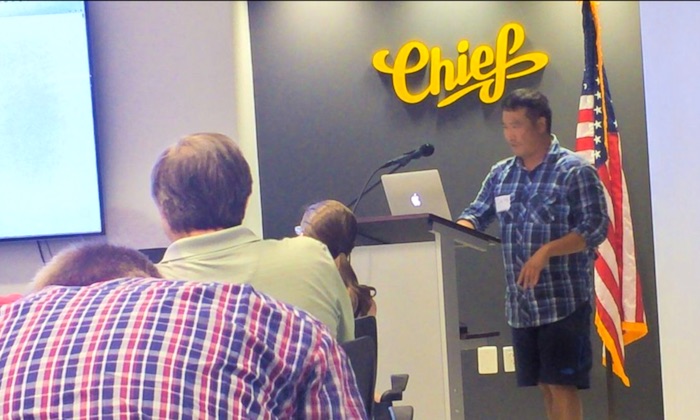
On Wed, July 11, I returned to the Synagogue. This time I didn’t need to bring swag. I was scheduled to demo third and before Bennett Richardson the co-founder of Hinge.
“RUNINOut is a custom search engine for restaurants, retail, and attractions in the D.C. Metro area. A lot of people ask us how are different from Google and Yelp.
Imagine the internet being a big, juicy birthday cake. RUNINOut would only be a small slice of that cake. However, if you were to cut through the cake, you will see that while Google and Yelp are broader, RUNINOut is deeper. Cuz it’s not just about finding restaurants based on cuisine and neighborhood. Here you’re looking for a specific dish, the ingredients in that dish, how that dish tastes, and how the restaurant appeals to your preferences.
A lot of people ask us how we make money. Believe it or not, making money is not our #1 priority. That’s because we wanna raise traction — it’s about getting people to recognize our name, to like our brand, and to tell others about what we do.”
The presentation was a lot longer than the 5-minutes that I was provided. And just like at Startup Weekend last year, I was under the gun. There was time for a few questions.
“Is your business model business-to-business (B2B) or business-to-consumer (B2C)?” a fellow entrepreneur, Jeff Tong, asked.
“Both. RUNINOut primarily works closely with restaurants to feature their menu and amenities through our website and events, and the online directory provides specific information to consumers so they can narrow down their choices and customize their profile .”
“Then you should also create restaurant websites,” he suggested. “That will provide another stream of income and your personalized services will become more value-added to their business model.”
“You should also include social media and CRM marketing to the mix,” another attendee said. “Facebook, Twitter, Instagram, MailChimp, you name it.”
“These are awesome ideas. After all, I already have created much of the content, and have become quite familiar with their menus, and customers. Now the next important question – where are we going for happy hour?”
Jason Morenz was working in the kitchen in Piola located on the northern border of U St by Florida Ave NW. The restaurant was popular on Sunday for their bottomless brunch (not mimosas) but 10 different types of pizzas (personal size) as much as you can binge.
During the weekday, all draft beer (including the Peroni) was only $3 and occasionally, they would offer involtini puffs, bite-sized roll-ups with bacon, mozzarella, and eggs. On the 29th of each month, Piola would offer AYCE handmade Gnocchis with a handful of decadent sauces.
Although 14th Street has a fair share of pizzerias, Piola was popular with pizza aficionados for their thin-crust and savory cheese and hearty toppings. Couples and groups also came for the chilled atmosphere and friendly servers.
Piola’s, on most nights, was buzzing and the demand for take-out was through the roof. The biggest problem was apps like DoorDash and Grubhub took a huge slice of their paper-thin margins, as much as 30%.
“Why not cut out the middleman?” Jason thought to himself. “We could build a slick website and channel all call-in orders through it.”
Under his direction, I purchased the domain Piola D.C. and replicated their menu on an eCommerce platform. Then I updated Google maps with the new website name.
Within days, the website traffic started to pick up and if anyone called to order, they were redirected to the new site. But Piola’s did not have its own fleet of delivery drivers. So Jason came up with another ingenious idea.
For every delivery order that came in, Jason would duplicate the order on the Postmates app.
For the sake of example, Charlene is at home with a big craving for traditional Italian pizzas and Peter is working a swing shift as a bike messenger.
Charlene ordered the Quattro Formaggi on the Piola D.C. website. The instruction would then be automatically printed out and sent to the kitchen. Jason would then make the same order on the Postmates app. In little time Peter would show up at Piola’s to pick up Jason’s pizza.
Jason would immediately greet Peter. “This order is for Charlene and it’s going to this address down the road,” Jason instructed. “And I’m going to tip you ahead of time, so don’t screw this up.”
15 minutes later, Peter called Charlene at the Union Row Flats on 14th and she happily buzzed him in. He checked in at the front desk then took the elevator to the 5th floor and tapped on her door.
Charlene opened the door in her skimpy, pink terrycloth bathrobe “Come on in,” as she motioned for him to follow her.
“Please set the pizza on the table.”
Peter bewilderedly followed her to the dining room. Then he opened his bright red pizza warmer bag and gently took out the large pizza box with the slogan “FAMOSI PER LA PIZZA” embossed on the side.
Charlene thanked him with a slight twinkle in her eye.
Peter returned the smile and maintained a steady gaze. Then a prolonged uneasy silence, while Peter noticed a partial view of the Capitol rotunda from the master bedroom vaulted windows. He wanted to say something, but luckily she beat him to it.
“Well, I guess I better dig in while it’s still hot,” she mutters under her breath.
“Umm, yeah. It looks good. I betta be going now,” he mumbles.
Peter almost tripped on himself as he stumbled out. He thought he heard her say something about the savory gorgonzola, but by then he had safely extricated himself into the hallway.
“Whoa, wait, don’t leave just yet…”
Peter’s heart was jumping by the time he got to the elevator.
“You forgot your tip.”
But Peter already got his tip, from Jason at Piola’s, and he noticed on the app that there was another order to pick up.
As soon as he descended down to the lobby, he wished he could retrace his steps back to the apartment with the shapely blonde and the panoramic view.
“Man, I had my one chance, and I totally blew it,” he muttered. “How could I be such a coward,”
He thought about calling Charlene and inquired how she was enjoying her slice, and whether she wanted him to bring up some chardonnay to complement, but he clearly didn’t have the guts to see it through.
The autumn night was dreamy and delightful when Peter raced back to the store.
“You’re a dumbass,” Jason admonished. “Such a pathetic loser.”
“Well I delivered on time,” Peter quipped. “And the pizza was still hot and steamy when she ate it.”
“Yeah, but you left the tip on the table, you idiot, not to mention some other things.”
“Well, I definitely didn’t expect her to be so revealing. Perhaps she was seducing me to make a move, then report me to Postmates.”
In the weeks ahead, Piola was humming, and the orders kept flooding in. The upper echelon and franchisees were delighted with the ton of sales and the favorable reviews.
But then the number of orders made by Jason on Postmates aroused suspicion. The corporate office in Miami Beach caught on to the website and the Piola D.C. domain.
One morning, I was aghast when an email from the company’s attorneys showed up in my inbox. They wanted to know why I purchased the domain without their permission and why I created the site without their oversight.
For the next several days, I kept mum, but after they hit the resend button, I decided I would finally disclose my motives.
I opened the books to everything we did and mentioned to them how the new site was making them a killing.
Needless to say, they were grateful, but still piqued that I owned the domain name of the local franchisee.
“We would like you to transfer the domain to the corporate office ASAP.”
“Well, there were expenses incurred for both labor and costs.”
“We’re willing to pay, as long as you’re willing to cooperate.”
The following Tuesday, a check for $500 arrived in the mail. Then later that day, Jason and I drove to Piola and picked up 20 boxes of pies with all the flavors they offered on their menu.
We drove them down Connecticut Ave until we reached Dupont Circle. Then we entered the ornate building on 1800 Massachusetts Ave and rode the elevator to the 2nd floor.
Guests were beyond pleased when they saw Jason and I laid out 20 boxes of mouth-watering pies on a folding banquet table.
“Thank you so much for your donation to our monthly meetup,” said Scott Johnson, CEO of Agency Chief. “Hope this didn’t set you back much.”
“It didn’t cost us a dime, but getting these pies wasn’t easy.”
“Hope you didn’t have to do anything under the table. Either way would love for you to share your experiences at our next WordPress meetup.”
“Can I share my portfolio with the audience?”
“Absolutely, just don’t talk about your work for Mpire or the Showcase Theater.”
In the evenings Suzannah and I would set up shop at different incubators or at a co-working group called the Nightowls which was held at several locations and co-working spaces in town. On this particular evening, we were working up in the 1776 incubator space on 1133 15th St. NW.
This is where I would run into fellow entrepreneurs such as Justin McLeod and Bennett Richardson from Hinge, Dan Berger from Social Tables, and Anton Gelman from Cont3nt.com.
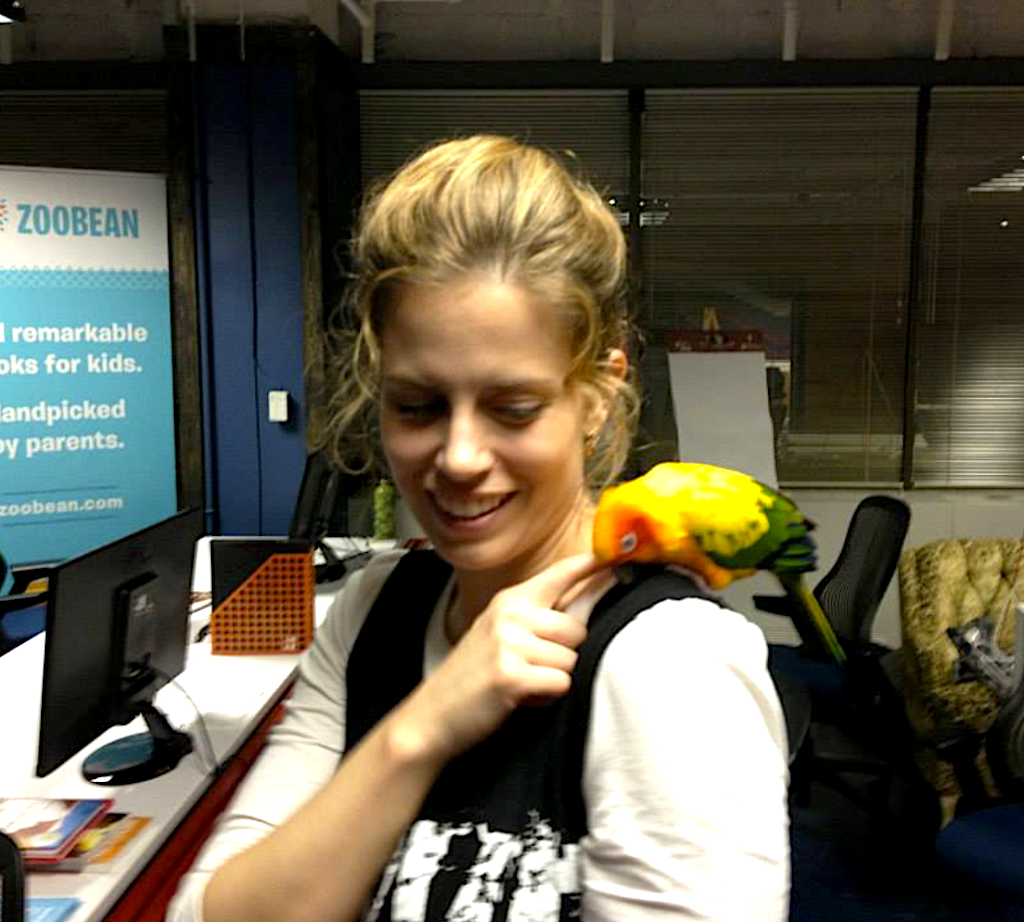
Pets weren’t allowed, but it wasn’t like me to follow rules. From time to time, I would bring Apollo, my sun conure to keep things lively during the late night jam sessions.
“Hey we’re night owls, not sun parrots. Hoot Hoot,” came a witty voice from the peanut gallery.
“I thought that your logo is a monkey, not a damn parrot?”
“It’s neither. It’s actually a baby orangutan,” I responded. “And my little bird is my sidekick and co-founder, and he can fly circles around you.”
Suzannah lightly caressed the parrot on her shoulder. “We’re not just about food, we’re about fun.”
Apollo was indeed a playful, social partner and a nice digression from brainstorming and side hacks. Having the multi-colored parrot fly around the room and interacting with other overtaxed entrepreneurs actually inspired creativeness.
One night, Suzannah invited her friend Sonia Herrero, a creative artist, yoga teacher, musician and dancer to join us for our buzz session. I invited my photographer friend Jason Morenz.
Suzannah gently tapped Apollo’s beak. “Love how he’s chewing on my hair.”
Jason picked up his Nikon DLSR and snapped a picture. “Think he’s partial to blondes.
“Yeah that means he likes you,” Sonia added. “It’s a sign of affection and trust.”
“He’s actually preening you – just like how he preens his own feathers to keeps it clean and neat,” I said.
Apollo then flew to Sonia’s shoulder and started squawking for attention.
“Hope he’s not too noisy. He’s louder than a Macaw in the mornings and serves as my dreaded alarm clock when I’m trying to sleep in.”
“Ok, Apollo, you’re too cute and cuddly, but it’s time to socialize with other Nightowls. We have to put on our thinking caps.” Sonia used her hands to shoo him away and he flew away to find a new friend.
“RUNINOut has to go beyond food and branch into fitness. Have you thought about doing yoga?” Suzannah asked.
“Good idea. I’m hosting a rooftop yoga session at the Mellow Mushroom in Adams Morgan next week,” Sonia added. “You’re welcome to join us?”
“Apollo and I will be there — bright-eyed and bushy-tailed”
“So RUNINOut’s slogan is not just food and fun, it’s also fashion,” Suzannah said. “As in colorful costumes and outfits.”
“Like an exotic dancer’s chiffon. Say you should also consider belly dancing, that would really broaden your horizons, both figuratively and literally,” Sonia added. “There’s a Turkish eatery called Tel’Veh in NOMA where I’ve performed before that could use your help.”
“Whoa, you should stay in your lane. Your logo is a running orangutan that resembles a clueless monkey. You carry a colorful parrot on your shoulder to Nightowls,” Jason responded. “Now you’re adding belly dancing to the mix?”
“Yeah, people definitely need to start taking us seriously. That’s probably why I get so many rejections during my cold calls. I often hear ‘No, thanks, we don’t want to be featured on your site,’ and ‘if it’s really free, then how do you make money?’”
“Tell them you make money from building websites, managing their social media profile and selling advertising,” Sonia replied. “And you get paid for hosting events.”
“Perhaps you should start doing demos. Present at the D.C. Tech meetup, Tech Breakfast, etc.”
“And you ought to stop making cold calls without me. I need to tag along and do all the face time, while you work on all the stuff behind the scenes,” Suzannah said. “Remember I was able to convince Jeepo from the Biergarten.”
“I couldn’t agree with you more. Both you and Apollo are a lot more pleasing to the eye, and together you can sell everything but the kitchen sink.”
“Which restaurants should we target?” Sonia asked.
“D.C. has a large celebrity chef talent. I would visit Mike Isabella, Morou Ouattara, Marjorie Meek-Bradley, Roberto Donna, all top chef alumni,” Suzannah replied. “Getting your site associated with their reputation will give you instant credibility.”
“Roberto Donna? Didn’t he plead guilty for meals tax embezzlement and accused of underpaying his staff at Bebo?” I asked.
“Yes, but people don’t care about that. They like hanging out with big name chefs. He’s won a James Beard Award and was once bigger than Jose Andres,” Jason replied.
“Also don’t forget about the top PR firms like Heather Freeman and Jill Collins,” Suzannah suggested.
“For restaurants to start taking you seriously, you’ll need to show them some formal validation besides Twitter engagement and Facebook likes,” Sonia added.
“Hey, I got an idea. Why don’t you submit RUNINOut for the Washington City Paper, Best Restaurant App contest next year,” Suzannah recommended.
“That could be challenging. You have to advertise and market to get people to vote,” Sonia said.
“So how do we get the word out without paying a bundle?” I asked.
“Post on Facebook, Twitter, Instagram begging people for their votes.”
“And we could also ask guests who attend our events to give us a vote of approval. Heck if they enjoyed the food and had a good time, don’t see why they wouldn’t oblige,” I added.
“And also the traditional way, putting signage around town to reinforce the message,” Sonia added.
“That’s another reason why you should buy a pedicab,” Jason suggested. “Tack on a large sign on her and ride her all over town.”
“Pedi… what?” I asked.
“A small pedal-operated vehicle that you can transport people in and plenty of room to store your stuff and chill out.”
“That’s brilliant. It’s not just a taxi company, it’s an advertising agency!” Suzannah exclaimed.
“All terrific ideas. My head is buzzing from all this brainstorming. Let’s go down to the Green Lantern and tie one on.”
“Not tonight. I’m not in the mood to visit gay bars. But why don’t we meet up at Meridian Hill Park Sunday,” Sonia suggested. “Rhythm in the Park starts at 3.”
“Well, I was planning to go paddle boarding with Georgia on the Potomac.”
“Awww! Bring her to the park after your paddle. They’ll be lots of drummers and dancing till late, it’s quite spiritual and uplifting, and I’m sure she’ll enjoy it, too.”
In October 1984, I enlisted in the Navy straight out of high school in a small town in Southeast Georgia. After serving aboard the USS Francis Hammond (FF-1067) in Yokosuka, Japan (the land of my mother), I applied for a commissioning program and the Navy awarded me a scholarship to the University of Florida where I earned my degree in Material Science and Engineering. Upon my commissioning, I served as a Fire Control Officer and Navigator aboard USS O’Ban non (DD-987) in Charleston, South Carolina. and Mayport, Florida, and as Cruise Missile Training Officer in San Diego, California. After back-to-back sea tours, I wanted to broaden my horizons beyond Surface Warfare so I lateral transferred to the Public Affairs Community. I served as the P.A.O. for the USS John C. Stennis (CVN-74), which deployed for Operation Enduring Freedom after 9/11, and as the Public Affairs Officer for Bethesda Naval Hospital (now Walter Reed) where a generation of warfighters healed and moved on. After Bethesda, I was assigned to The Office of the Secretary of Defense where I served as a spokesman for detainee affairs in Guantánamo Bay, Cuba. There wasn’t a single day that I wasn’t answering a media query about the health and well-being of our Gitmo detainees, and after two years of shuffling back and forth from D.C. to Camp Delta, I was ready to return to military medicine. I served as the P.A.O. for the Surgeon General of the Navy, an assignment that required a lot of traveling to visit our medical forces in the U.S. and abroad. My final duty was as a P.A.O. for the U.S. European Command and NATO’s Supreme Allied Commander where I got to do a lot of traveling in Europe as well as visit our troops in Afghanistan. By then, I was both burned out and washed out and my marriage fell apart due to the stressors of the military, and in Nov. 2009, I retired with 20 years of combined service.
I was ready to reboot and start a brand new career in the private sector. Thankfully, the Veterans Affairs offered generous G.I. Bill education benefits, so I applied to the George Washington University School of Business hoping to incorporate my experience and appreciation with social media in my career. I enrolled in the Executive MBA program, a degree where I fit in because it was targeted to senior managers who were already in the workforce. The school was in high demand due to the great recession as many unemployed decided to return to school. Before the semester started, our cohort of 20 eager students embarked on a five-day retreat at the Homestead Resort in Hot Springs, VA.
We were attending sessions that didn’t require powerpoint or pointers, but still had everything to do with leadership development. Because the truth is, you can’t learn management from just inside a classroom.
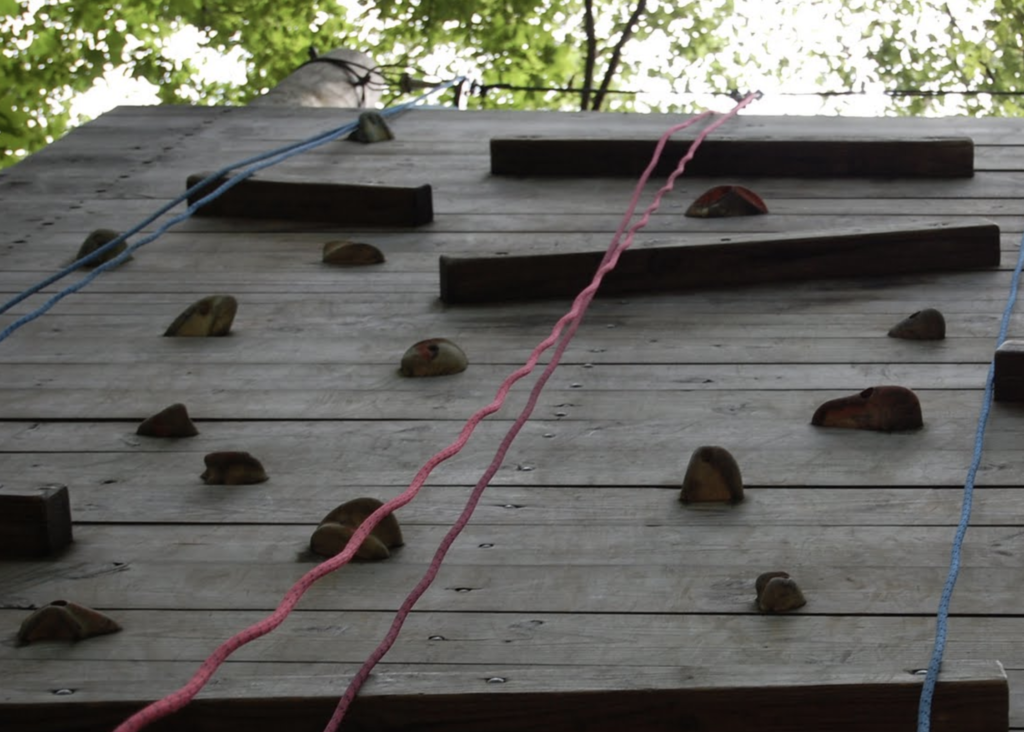
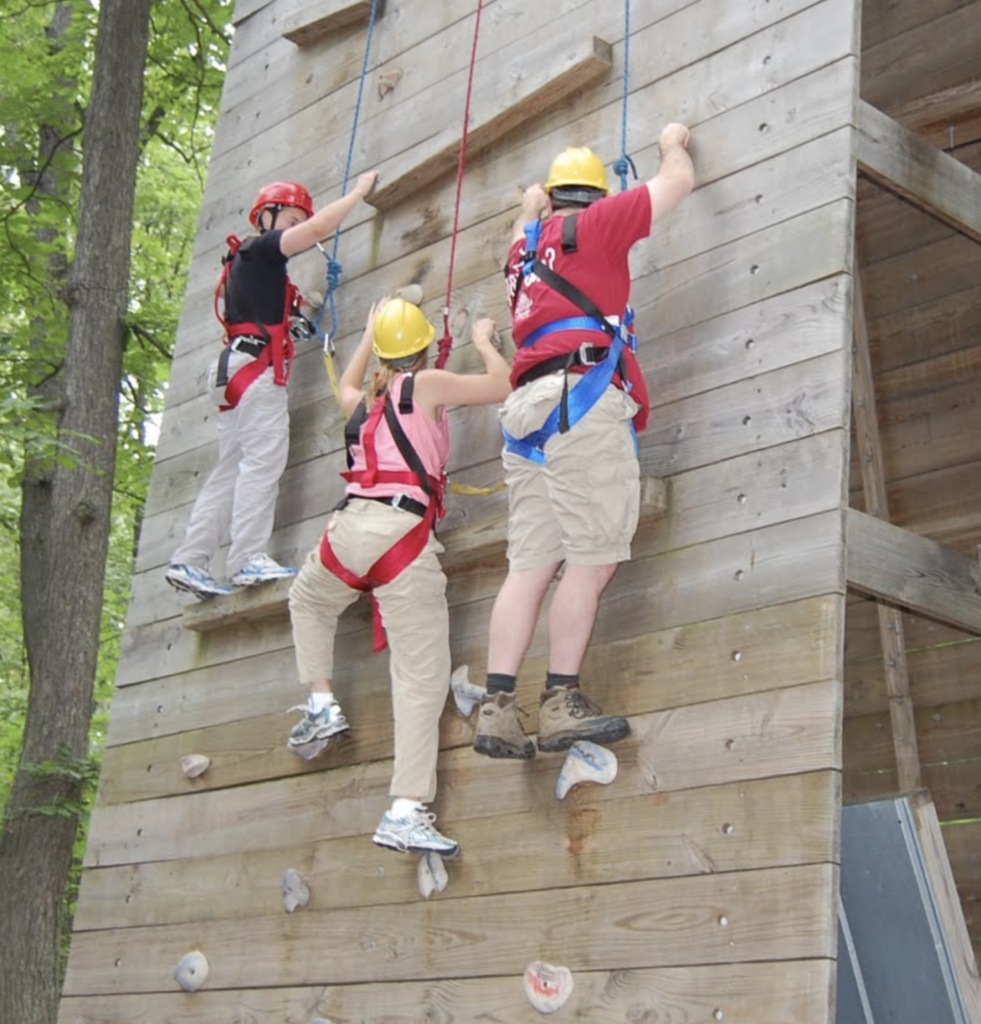
After spending two days engaged in team-building exercises and thought-provoking discussions, we were ready to get some fresh air. The next morning, we hiked down the Allegheny Mountain gorge trail, through the thick forest, past the lovely cascade falls until we arrived in the middle of a grassy field with a gigantic wall affectionately known as the Tower. At first glance, the 40-foot Tower seemed daunting and insurmountable.
Throughout life, we face many obstacles both personal and professional. The key to responding to these roadblocks is to face them head-on and to rely on the support from others around you. This is teamwork — being supported and supporting each other. To work as a team, it’s imperative to understand each other’s strengths and weaknesses, both physically and mentally. The better we know one another, the better we’re able to assist each other.
The Ropes Course is a metaphor for problem-solving — it challenges us to face our fears and climb on. The higher you climb, the more you rely on your team for support.
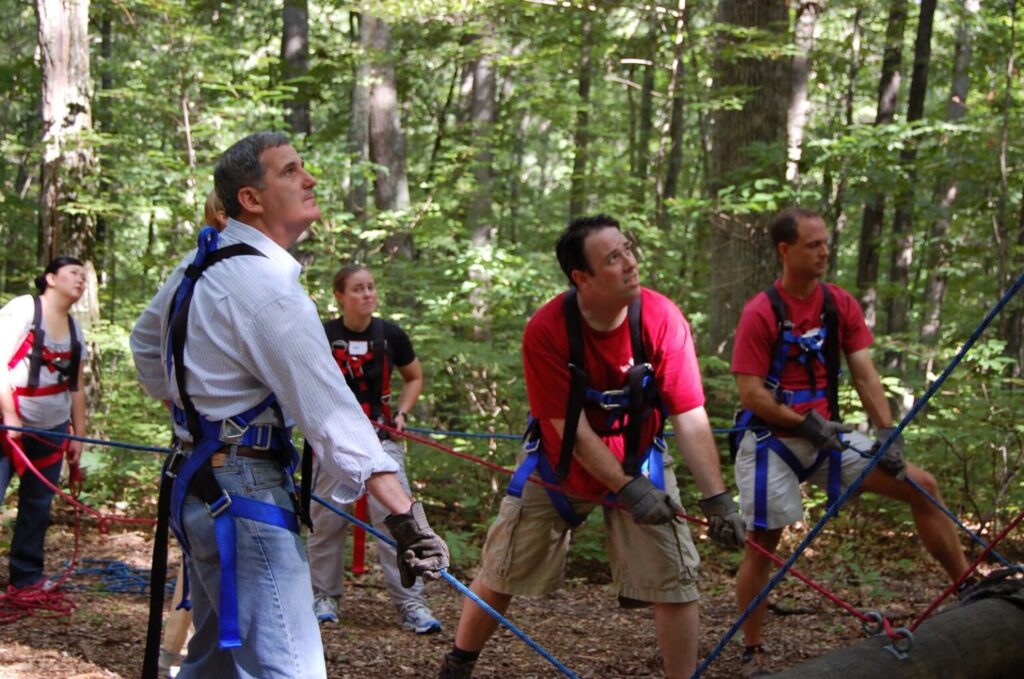
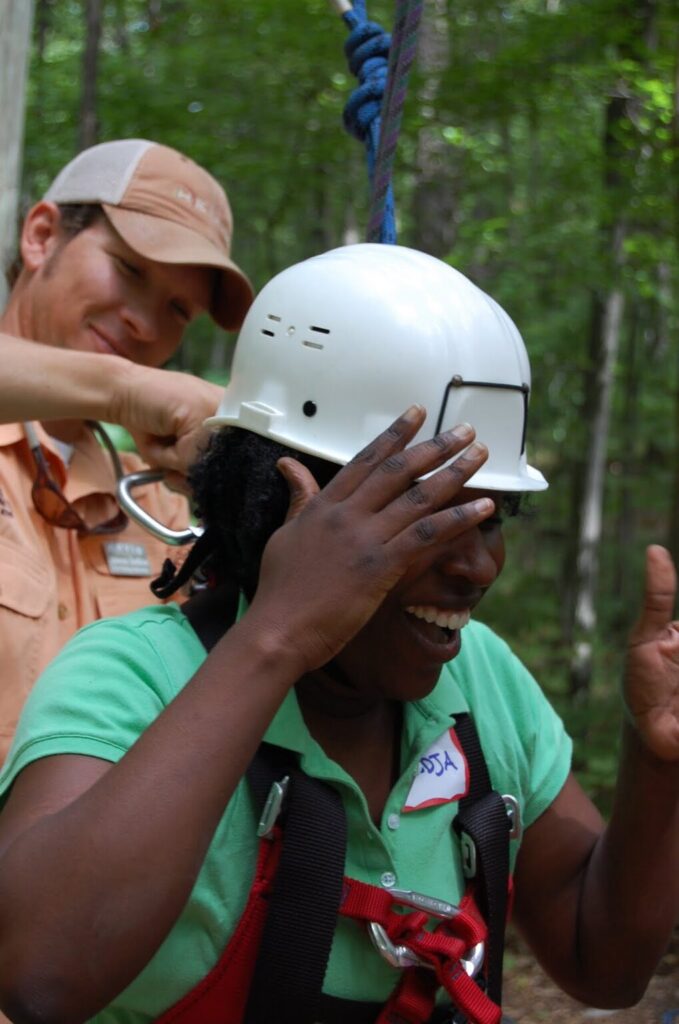
The first task was to have each person assist their team members in donning their harnesses — the one crucial piece of equipment that would ensure our safety and protection.
Then each three-member team ascended in tandem facing the challenge of not having enough steps for all three to ascend at the same time. Sometimes a climber would have to take a step down in order for another climber to proceed. That was ok, as long as they all reached their final goal together.
Meanwhile, the rope handlers kept a close eye on the climbers, coaching them on where to place their hands and feet and providing support and encouragement so that the 3-member team could ascend up to the top together and then back down.
When it was my turn to go, I knew I could rely on my teammates Senodja Walker and Amir Moore.
Rope team:
“Senodja, place the right hand on the block and your left foot on the step.”
“Amir, move your right foot off the step and place it on the block so that Senodja can place her foot on it.”
As the climbers moved up the wall and then back down, the Belay teams were tasked to remove the slack by paying out or pulling in the excess line. They kept a close eye and a taut line, but they were not allowed to pull the crew up the wall — the climbers had to figure this out on their own.
Climbers: “Slack!” (pay out a little rope.)
Belayers: pays out the rope and pauses to see if climbers ask again.
Eventually, all of us made it over the wall and back down, taking one step at a time. The journey in life is rarely simplistic and straightforward. If we keep striving, we will eventually reach our goals, even if we have to climb over life’s challenges, obstacles, and setbacks.
Senodja completes her climb
The EMBA class was broken down into five groups of four and we would remain in our group for the entire two years. One of the first projects that we worked on was the Airline Pilots Association. ALPA, with 53,000 members and 40 airlines in the U.S. and Canada, is the largest airline labor union in the world.
We were having a conference call on Skype when I touted the fact that airlines such as Jet Blue and Delta have successfully used Twitter and Facebook to promote their services and to provide updates on weather and flight cancellations.
“I’ve had it with you. Your solution to everything is always social media!” Eli my classmates exclaimed.
This wasn’t the first time he had said that and we always seemed to butt heads over the value of social media for building brand awareness and winning new customers.
I immediately slammed the phone down in disgust, ending the conference call.
The next thing I did was call Senodja on the phone. “I can’t work with Eli any longer — he’s so unaccepting of social media. I’m here to learn and broaden my horizon, not to clash heads with idiots who are operating in the stone age.”
“Wish you could join my team, but we’re already maxed out.”
“Then maybe I should try to understand his point of view better and discuss our differences.”
“Or perhaps you could transfer out of the EMBA and enroll in the Professional MBA program — it may take a little longer to complete but you’re offered a choice of a wide selection of classes and will be collaborating with a diverse myriad of people, many I’m sure value the virtues of social media.”
October 1984
I enlisted in the Navy, straight out of high school in a small town in Southeast Georgia., named Darien. After serving aboard the USS Francis Hammond (FF-1067) in Yokosuka, Japan (the land of my mother), I applied for a commissioning program and the Navy awarded me a scholarship to the University of Florida where I earned my degree in Material Science and Engineering. Upon my commissioning, I served as a Fire Control Officer and Navigator aboard USS O’Ban non (DD-987) in Charleston, South Carolina. and Mayport, Florida., and as Cruise Missile Training Officer in San Diego, California. After back-to-back sea tours, I wanted to broaden my horizons beyond Surface Warfare so I lateral transferred to the Public Affairs Community.
I served as the Public Affairs Officer for the USS John C. Stennis (CVN-74), which deployed for Operation Enduring Freedom after 9/11, and as the P.A.O. for Bethesda Naval Hospital (now Walter Reed) where a generation of warfighters healed and moved on. After Bethesda, I was assigned to The Office of the Secretary of Defense where I served as a spokesman for detainee affairs in Guantánamo Bay, Cuba. There wasn’t a single day that I wasn’t answering a media query about the health and well-being of our Gitmo detainees, and after two years of shuffling back and forth from D.C. to Camp Delta, I was ready to return to military medicine. I served as the Public Affairs Officer for the Surgeon General of the Navy, an assignment that required a lot of traveling to visit our medical forces in the U.S. and abroad. My final duty was as a P.A.O. for the U.S. European Command and NATO’s Supreme Allied Commander where I got to do a lot of traveling in Europe as well as visit our troops in Afghanistan. By then, I was both burned out and washed out and my marriage fell apart due to the stressors of the military, and in Nov. 2009, I retired with 20 years of combined service.
I was ready to reboot and start a brand new career in the private sector. Thankfully, the Veterans Affairs offered generous GI Bill education benefits, so I applied to the George Washington University School of Business hoping to incorporate my experience and appreciation with social media in my career. I enrolled in the Executive MBA program, a degree where I fit in because it was targeted to senior managers who were already in the workforce. The school was in high demand due to the great recession as many unemployed decided to return to school. Before the semester started, our cohort of 20 eager students embarked on a five-day retreat at the Homestead Resort in Hot Springs, VA.
We were attending sessions that didn’t require powerpoint or pointers, but still had everything to do with leadership development. Because the truth is, you can’t learn management from just inside a classroom.
After spending two days engaged in team-building exercises and thought-provoking discussions, we were ready to get some fresh air. The next morning, we hiked down the Allegheny Mountain gorge trail, through the thick forest, past the lovely cascade falls until we arrived in the middle of a grassy field with a gigantic wall affectionately known as the Tower. At first glance, the 40-foot Tower seemed daunting and insurmountable.
Throughout life, we face many obstacles both personal and professional. The key to responding to these roadblocks is to face them head-on and to rely on the support from others around you. This is teamwork — being supported and supporting each other. To work as a team, it’s imperative to understand each other’s strengths and weaknesses, both physically and mentally. The better we know one another, the better we’re able to assist each other.
The Ropes Course is a metaphor for problem-solving — it challenges us to face our fears and climb on. The higher you climb, the more you rely on your team for support.
The first task was to have each person assist their team members in donning their harnesses — the one crucial piece of equipment that would ensure our safety and protection.
Then each three-member team ascended in tandem facing the challenge of not having enough steps for all three to ascend at the same time. Sometimes a climber would have to take a step down in order for another climber to proceed. That was ok, as long as they all reached their final goal together.
Meanwhile, the rope handlers kept a close eye on the climbers, coaching them on where to place their hands and feet and providing support and encouragement so that the 3-member team could ascend up to the top together and then back down.
When it was my turn to go, I knew I could rely on my teammates Senodja Walker and Amir Moore.
Rope team:
“Senodja, place the right hand on the block and your left foot on the step.”
“Amir, move your right foot off the step and place it on the block so that Senodja can place her foot on it.”
As the climbers moved up the wall and then back down, the Belay teams were tasked to remove the slack by paying out or pulling in the excess line. They kept a close eye and a taut line, but they were not allowed to pull the crew up the wall — the climbers had to figure this out on their own.
Climbers: “Slack!” (pay out a little rope.)
Belayers: pays out the rope and pauses to see if climbers ask again.
Eventually, all of us made it over the wall and back down, taking one step at a time. The journey in life is rarely simplistic and straightforward. If we keep striving, we will eventually reach our goals, even if we have to climb over life’s challenges, obstacles, and setbacks.
The EMBA class was broken down into five groups of four and we would remain in our group for the entire two years. One of the first projects that we worked on was the Airline Pilots Association. ALPA, with 53,000 members and 40 airlines in the U.S. and Canada, is the largest airline labor union in the world.
We were having a conference call on Skype when I touted the fact that airlines such as Jet Blue and Delta have successfully used Twitter and Facebook to promote their services and to provide updates on weather and flight cancellations.
“I’ve had it with you. Your solution to everything is always social media!” Eli my classmates exclaimed.
This wasn’t the first time he had said that and we always seemed to butt heads over the value of social media for building brand awareness and winning new customers.
I immediately slammed the phone down in disgust, ending the conference call.
The next thing I did was call Senodja on the phone. “I can’t work with Eli any longer — he’s so unaccepting of social media. I’m here to learn and broaden my horizon, not to clash heads with idiots who are operating in the stone age.”
“Wish you could join my team, but we’re already maxed out.”
“Then maybe I should try to understand his point of view better and discuss our differences.”
“Or perhaps you could transfer out of the EMBA and enroll in the Professional MBA program — it may take a little longer to complete but you’re offered a choice of a wide selection of classes and will be collaborating with a diverse myriad of people, many I’m sure value the virtues of social media.”
There were two milestones I needed to achieve in order to complete my MBA — a new venture capstone project and a study abroad trip to compare and contrast cultures, business practices, and management styles.
In the spring semester of 2012, I enrolled in a six-week course entitled Engaging Diaspora Communities for International Business and Development. It was taught by Dr. Liesl Riddle, the associate dean of GW’s School of Business who has written extensively about diasporas and international entrepreneurship.
The course studied the diaspora communities in the US and abroad and their motivations for sending remittances to their home countries to spur growth and prosperity. A vast majority of the diaspora who return to Ethiopia are starting businesses and creating jobs. The class culminated with a week-long trip to Ethiopia to take what we learned and apply it firsthand.
There are an estimated 2.5 million Ethiopians living outside of Ethiopia. Many of them live in Washington, DC, so this particular diaspora was the perfect one to focus on.
“I want you all to contemplate what you expect Ethiopia to be like, compared to what we observed once we are actually in the country,” said Dean Riddle.
The GWU MBA class departed from Dulles excited about the adventures ahead. When they arrived at Addis Ababa 14 hours later, they were sleep-deprived and jet-lagged but enlivened nonetheless. Situated in the Horn of Africa, Ethiopia is a rugged, landlocked country and the cradle of humanity where Homo Sapiens first walked on two legs. It is the “Land of Origins”…of humanity, language, and of course one of life’s greatest pleasures – coffee arabica.
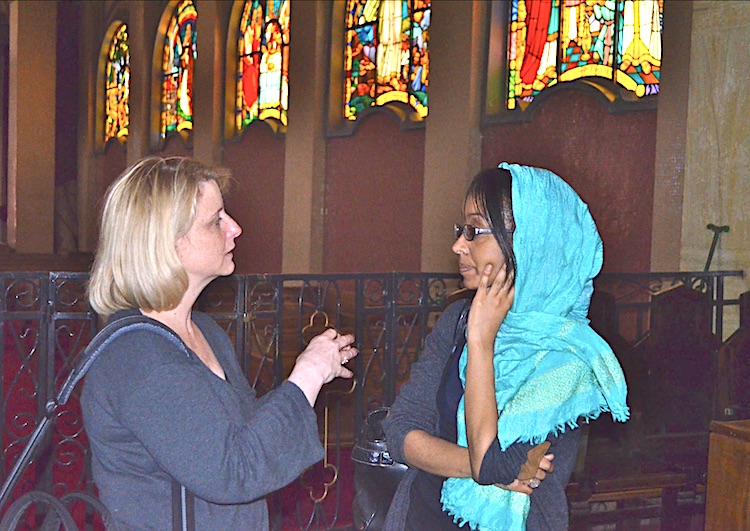
Since it was too early to check into our suites, Dean Riddle arranged for us to do some sightseeing. Our first stop was the Holy Trinity Cathedral, a product of the colonial period imbued with rich history and majestic architecture.
Many tourists who visit Washington, DC yearn to visit the Smithsonian Natural History Museum to ogle at the Hope Diamond. Likewise, an obligatory stop in Addis Ababa is the National Museum of Ethiopia to admire the Lucy fossil. She is 3.2 million years old, and the most famous early human ancestor because she walked upright. Unfortunately, the bones we saw were not the real Lucy, but plaster replicas. The original skeleton is displayed at the Cleveland Museum of Natural History. Ironically, it was offered to the Smithsonian in D.C., but turned down due to a resolution that early human fossils should be stored in the country of origin and to make displays in other countries with fossil replicas. It’s like traveling 7,000 miles to meet a fairy tale luminary, only to find out she’s half the world away on a sabbatical. But real Lucy or not, we were ready to do some slumbering as we finally headed to the hotel.
On the way to the Ramada we were greeted by the impressive stone monument of the Lion of Judah roaring over the city, a crown jewel of the infamous Haile Selassie.
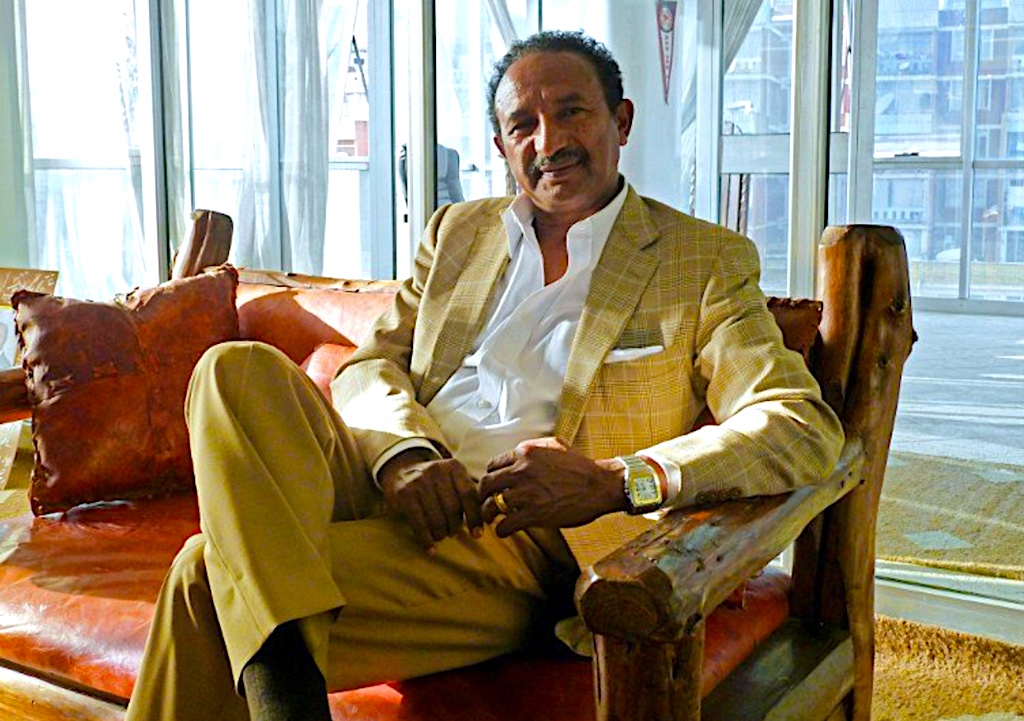
Finally, at the lodge, I took a long shower and squeezed in a power nap, but by nightfall, we had to gather up for our first guest speaker – Addis Alemayehou, a serial entrepreneur who returned to his roots and has become a household name in Addis. He founded 251 Communications which has grown into one of the leading PR and communication firms in the country.
“I started my entrepreneurship endeavor here when the war between Ethiopia and Eritrea was just coming to an end and the economy at the time was in shambles,” Addis said. “I lost my iPod and missed having my playlist with all my favorite songs, and realized that there were many people who also enjoyed Western music. So I started the first English Speaking FM Radio station in Addis. A good business is always one that finds a need in society and fills that void.”
“Are there lots of opportunities here for startups?” my classmate, Marilu Ortega asked.
“Business in Ethiopia flourishes out of sheer need. If you were to spend a week in this country, carrying a notepad and writing down everything you wished you had but didn’t, you would finish the week with at least 35 promising ideas.
“How is the labor market here?” Erin Dahan asked.
“Steadily improving every year. Wages are low and there’s lots of talent here. Foreigners are investing and diasporans are returning and creating millions of jobs every year.”
The next day, we met one of those diasporans who had contributed enormously to the job market. Daniel Gad immigrated to the US after school in search of better career opportunities. After serving as an executive for AT&T for 20 years and building a nest egg, he decided to return home. When he met with the Chamber of Commerce to see where he should invest, they steered him to the field of agriculture. Daniel deep-dived in the industry and discovered that flowers are a multi-billion dollar export business. He then created a 28-hectare rose farm called Metrolux Flowers which he successfully exited. He now manages and operates Omega Farms, a leading vegetable production farm that produces and sells high-value vegetables to the EU. He is currently collaborating with PepsiCo on a partnership called EthioPEA aimed at chickpea production which would hire over 10,000 farmers. Daniel Gad is undoubted “mining gold from the dirt.”
* * *
One industry that is facing a difficult time getting diasporans to return is the medical field.
“There are more Ethiopian doctors working in Washington, DC than in Ethiopia,” said Dr. Asfaw Atnafu, a professor of radiology at Addis Ababa University and the Head of Telemedicine at the Black Lion Hospital
One issue that Dean Riddle taught us in class is the concept of “brain drain”. In Ethiopia, many students leave the country to study medicine, but the vast majority do not return. Dr. Atnafu who studied medicine abroad was given a very lucrative offer to practice medicine in the UK. It seemed obvious for him to accept it. But one day, his mentor saved a very well-known British official who was suffering from a severe brain injury. The surgery was such a success that he was interviewed by the BBC. They asked him why he was returning to his homeland. The doctor said that Ethiopia would be safer now because they would now have one neurosurgeon. That one sentence changed Dr. Atnafu’s perspective, so he decided also to return.
Ethiopia is one of the fastest-growing countries in Africa with more than 104 million people. The country has made significant health care gains lately, such as lowering infant mortality, but more work needs to be done — particularly in rural areas. Healthcare, something that many Americans take for granted is a precious resource in many Third World countries and needs to be drastically improved and will be key to boosting economic growth.
Black Lion Hospital
Dr. Atnafu was not focused as much on remittances as he was on the social and educational aspects that diasporans can have on Ethiopia. That was why he’s big on telemedicine. Much of the engagement he facilitated was through knowledge sharing and training conducted virtually. In addition to receiving input from diasporans abroad, the medical community in Ethiopia can contribute to the medical dialogue by sharing their own experiences.
I wish my former boss, Admiral Robinson had an opportunity to meet with Dr. Atnafu. As the Surgeon General, responsible for seeing healthcare for the Navy and Marine Corps throughout the world, he was a big proponent of telemedicine and would have loved sharing information with Ethiopia on how to make healthcare available to everyone.
* * *
We also met with Dan Rosenthal, the Commercial Officer at the U.S. Embassy. Ethiopia is a state-run economy and with the government overseeing the development, there is a lot of red tape. Thankfully, the country is starting to privatize and is looking for foreign investors to improve the quality of life for Ethiopians.
“The five sectors that are the most important for the future are Telecommunication, Agriculture, Manufacturing, and Power. These industries will create the maximum number of jobs leading the country to a dynamic future.”
“What are some of the major draws for international investors?” I asked.
“Duty-free imports of capital equipment, tax exemptions, cheap electricity, a thriving local airline with a large international footprint, and duty-free access to the US market through the African Growth and Opportunity Act. But probably the most attractive is low wages — the country wants to keep its wages low to attract investment for its manufacturing industry.”
“But low wages will barely lift workers out of poverty, and once workers gain skills, they will leave their jobs to seek higher-paying jobs, resulting in high attrition and higher training costs.”
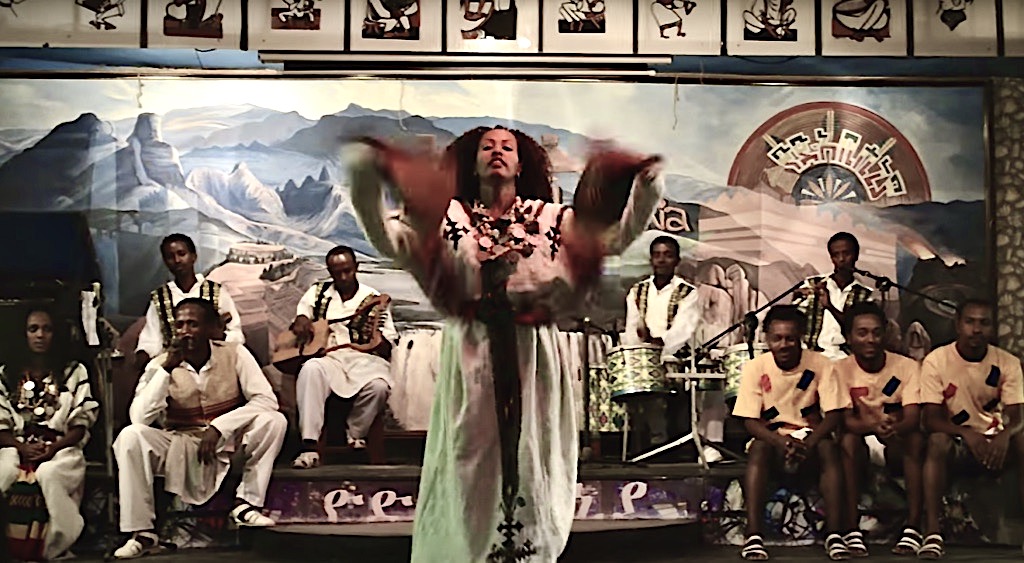
The field trip wasn’t all meetings and business attire. We also went to enjoy the food and culture. And Dean Riddle recommended we visit the 2000 Habesha Cultural Restaurant. At first glance, the restaurant offering a buffet of traditional food and a stage show of dancing and singing looked like another tourist trap. But you cannot judge a venue by its clientele.
2000 Habesha Cultural Restaurant
We loaded up with large platters of injera and wot and sat up front to enjoy the festive performances. The veggie-friendly dishes were anything but boring. The healthy portions included ruby beets, lentils, salad, carrots, green beans, and chickpeas and were flavored with garlic, paprika, and rosemary. After a few glasses of honey wine and bottles of St George beer, a couple of brave souls sauntered on stage and performed the Eskita (traditional dance moving the shoulders).
The next day, Dean Riddle and several of my classmates visited the Boston Day Spa nearby. They had a relaxing time to refresh and detox until one or two of them accidentally imbibed on the tap water that was served to them and immediately realized they weren’t in Boston USA. Ethiopia has made impressive progress over the past 10 years on improving water quality, but the water supply is still very contaminated and should not be drunk. Needless to say, a couple of them caught gastroenteritis and had to rest at the hotel to recuperate.
At this trailblazing spa, we got to meet with Tadiwos Belete, a diasporan who trained as a hairstylist and attended cosmetology school in Boston. When the Derg regime overthrew the Ethiopian monarchy in 1974 and established a brutal dictatorship, Tadiwos, at the age of 15 decided to flee on his own to Sudan. There he was even paid by farmers to scare off birds feeding on crops. After a few years of roaming about, he applied for refugee status in the U.S. and moved to Boston where he worked odd jobs until he decided to become a hairstylist.
Boston Day Spa
After saving money, Tadiwos wanted to open up a salon in the city’s poshest neighborhood, but nobody wanted to rent to an unestablished immigrant. He decided to reach out to the owner of a building on Newbury St by inviting him for dinner at a nearby Ethiopian restaurant to get acquainted. The owner was sold by his negotiating skills, and in 1998, Tadiwos opened up his first hair salon called Konjo (beautiful in Amharic).
It wasn’t long before Tadiwos started to feel a longing to return to his homeland. He developed the idea of starting a luxury spa, hair salon, and hairdresser training school in Addis Ababa. But he didn’t have the funding. He asked nearly every customer who got a haircut from him to partner with him and invest in his country. After asking nearly a thousand people, one Taiwanese woman reluctantly agreed to come in as a silent investor. Tadiwos built an office block on crumbling, dilapidated Africa St, where many had not dared to set foot. His relatives thought he was crazy, but he wouldn’t be deterred.
Nine years later, business is through the roof, and his brilliant idea has spurred dozens of other spas to sprout all over the city. Tadiwos has also embarked on a development boom, opening up a restaurant and a wine bar downtown along with two luxury resorts a couple of hours from the hub. In all, he employs over 1,500 people spurring the economy. We had the opportunity to visit Tadiowos’ Kuriftu Resort, a 28-room tourist retreat in Bahir Dar, at the source of the Blue Nile river. It’s an amazing place with great food, hookah, and a splendid lake where you can go on a relaxing boat ride. And like Boston Spa, they have a massage, steam, and sauna to top off a very relaxing retreat from the city. Just remember not to drink the water.
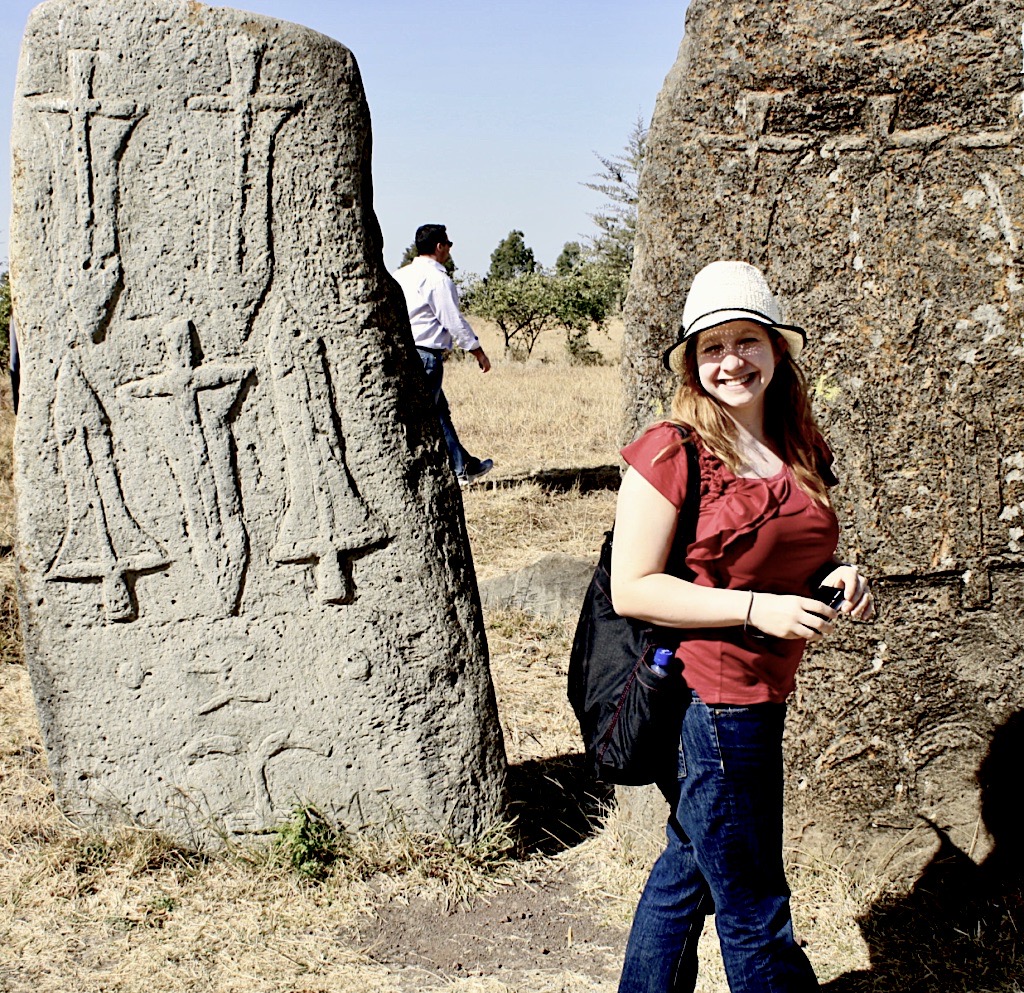
On the way back to the city, we stopped at the legendary Tiya Stelae, an archaeological site containing 36 enigmatic monuments. Each obelisk-shaped stone is engraved with primitive, clear images of swords, shapes, and figurines. To date, no one has been able to determine the age or the purpose of these carvings. One reason why they call Ethiopia a “Land of Mystery.”
legendary Tiya Stelae
Finally, we got to visit the Commodities Exchange, established just four years prior. The country’s two major goods exports are not surprisingly coffee (29%) and cut flowers (14%).
Ethiopia is also a land of rich opportunities for investors, from all over the world. That is why it is projected to be Africa’s fastest-growing economy, and perhaps one of the fastest globally. Labor is fairly inexpensive and highly skilled and the country has made huge investments in infrastructure and manufacturing. The government is making reforms to unleash the private sector and has wholeheartedly embraced the diaspora for impactful development projects. Returning diaspora also share invaluable skills, education, and experiences they acquired from the West. In order for the motherland to optimize development and job growth, she must continue to forge lasting, meaningful ties with this salient community, translating into sustained, measured growth in the years ahead.
But the road to investment is a rocky one. Diasporans are facing a huge information gap in the current market and steep odds that they will reach their lofty goals. That’s why it’s highly imperative that they conduct proper research and fully understand the industry and the market in which they are operating in. They need to be savvy innovators and shrewd negotiators in a volatile and intransigent market. What I found noteworthy was the resourcefulness and resilience of the diaspora community. Through grit and resilience, many persevered and ultimately made a significant difference for their country and citizens.
On the final day of our journey, I sat down with my friends to discuss what we learned.
Rasheida Knight was really smitten with Addis Alemayehou. Addis has been able to achieve massive success because he was innovative. Most people who lose an item of value like an iPod would regard it as a setback. Addis viewed it as an opportunity to fill a void. He reflected on how important his playlist of Western music was to him and realized that there were many Ethiopians that felt the same way. He conducted a target market analysis to understand the size and scope of the audience and researched what was needed to launch the first private English-speaking radio station, Afro-FM. He not only tried to understand how people work, but he also wanted to understand how things work. And in so doing, he documented everything.
“If you were to spend a week in Ethiopia and write down everything you wished you had but didn’t, you would come up with tons of innovative ideas.”
Marilu Ortega enjoyed her time at the spa and was thus impressed with the innovativeness of Tadiwos Belete who thoroughly researched the local market and felt that a day spa business could thrive there. People thought he was crazy, but he understood the potential customer base and was confident that the salon would be a huge success.
But Tadiwos didn’t have the funds or resources to make all this happen. He was an effective negotiator beginning in his Boston, MA. days when he skillfully convinced a building owner to lease him space to open his first hair salon to when he convinced one of his customers to invest in his business venture abroad. Without his ability to listen, communicate and persuade, Boston Day Spa would never have been built.
Tadiwos Belete
Erin Dahan was impressed with Tadiwos’ resourcefulness. At the age of 15 and living in a Sudanese refugee camp, he was able to survive and find a way to show his usefulness to farmers and work with the Catholic Church to immigrate to the U.S. He lived in Boston for 20 years and through resourcefulness and grit, managed to save money and learn an important skill that led him to build his luxury spa business franchise.
Brady Shannon also enjoyed hearing about the resourcefulness of Daniel Gad. After living in the U.S. for 20 years, he was shocked when the Chamber of Commerce recommended that he invest in flowers. To be successful in agriculture one has to be highly resourceful. For one, the country did not have access to modern farming equipment. They still used pitchforks and plowed with donkeys. Daniel eventually sold MetroLux Flowers and started a new business in horticulture called Omega Farms. He did a lot of research and observed how his farmers harvested chickpeas. He then realized that by being more resourceful and making small improvements in their handling processes, his farmers would be able to increase production by 30%.
“I like to use the analogy of gold in the dirt,” said Daniel Gad. Ethiopia has a lot of dirt. The key is to find out how to get gold out of it.”
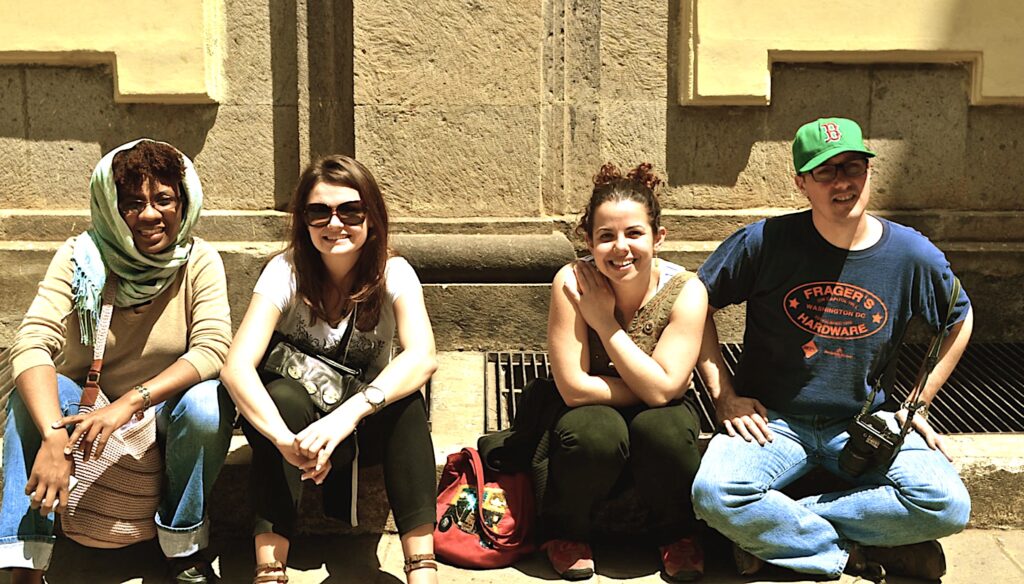
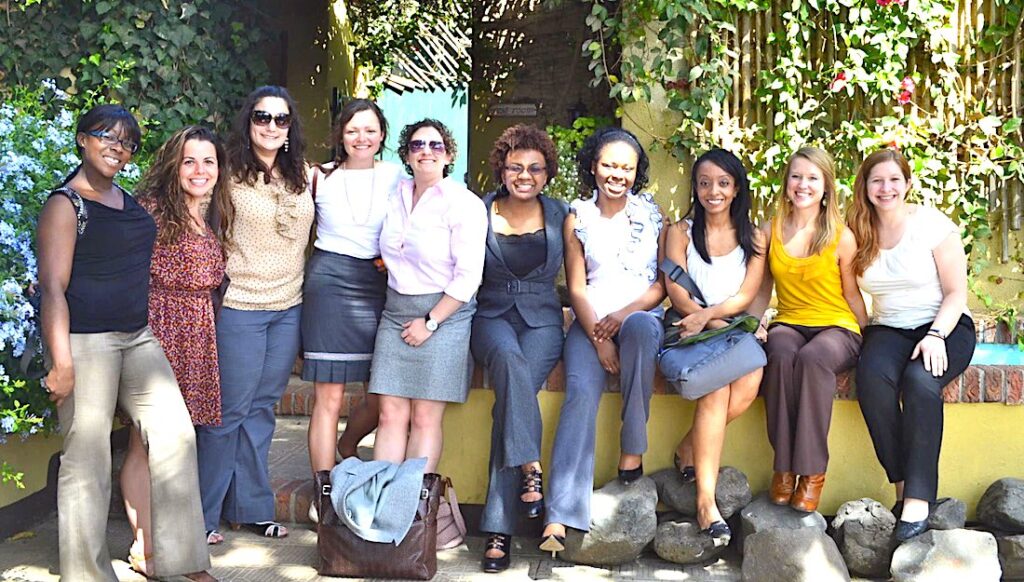
Rashida, Marilu, Erin & Brady
Marilu sympathized with the huge healthcare challenges the country faces. “Their resourcefulness in utilizing telemedicine is both novel and remarkable,” she said. “Dr. Atnafu has made huge sacrifices and has done a remarkable job.”
All the entrepreneurs we met, made bold decisions and took huge steps to start their businesses in a very risky and volatile environment. There was a huge information gap, and they faced steep odds against reaching their lofty goals. When faced with challenges, some of them had to take a step back or make a drastic course change, but they always kept their eyes focused on their goal and navigated towards it.
Even 10 years later, I remain inspired by the group’s resourcefulness, their deep understanding of the current market, their ability to broker and negotiate, their willingness to adopt innovation, and their courage to take the next step.
During the spring of 2010, I enrolled in Professor Richard Donnelly’s New Ventures Class at the George Washington University (GWU) School of Business. Students had to create ideas for a new venture, form groups of four and present the idea to the entire class at the end of the semester.
My teammates were Daniel Lonnerdal, Jing Xe, and Mustafa Onerci.
“What I learned from the Foodspotting eatup at Burma Restaurant was the need to provide faceted search where users can choose their cuisine, type of dish, ingredients, and taste preferences,” I said.
“Not only that, but you can choose your mood and ambiance,” Jing added. “Last weekend, I went on a date with my boyfriend. I tasked him to find something romantic with a pleasant view and no distractions, and thank goodness he didn’t disappoint.”
“Lucky for him, he came through. And if you’re a fan of sports like me, you can select the team that you like to watch, and the site will tell you which pubs to visit. A Falcons fan definitely doesn’t want to stumble blindly into a Saints bar. Unless you’re game for an ass whooping contest.”
“Perfect example — what shall we name it?” Daniel asked
We brainstormed for a few..”How ‘bout Food Runner?” Mustafa suggested.
“Nah, some people drive or catch a cab.”
“How ‘bout Run this Town?” Jing asked.
“Nah, not a big fan of Jay-Z.”
“How ‘bout Dining Out?” Daniel asked.
“Meh, how ‘bout RUNINOut?” I suggested.
“That’s a weird name. Like running out of food, groceries, things to do?” Mustafa asked.
“Umm, yeah that’s an accurate expression.” I began to write the name on the notepad.
“Strange…Looks too much like RUIN tho. And isn’t running spelled with two N’s and one G?” Jing asked.
“Yeah, but that’s just too long to fit in an address bar. I like the shortened version even if we’re ruining the spelling.”
“It’s kinda catchy, but I think people will get confused and misspell it. Then they won’t be able to find it on Google,” Jing replied.
“Well tell that to Larry Page and Sergey Brin when they came up with Google or Jerry Chang with Yahoo.”
“Too bad we’re not in Silicon Valley. So are you going to hire someone local to develop the site?” Daniel asked.
“Would love to, but the prices in this town are up in the stratosphere due to high demand from government contracts.”
“Then why don’t you outsource the work to India, the Philippines, or Africa?” Mustafa suggested.
“We can outsource the content management once the structure is in place. But to build the foundation, I want to find a team from North America who understands our culture, our cuisine, our history, our beliefs, and attitudes. Someone who I can physically reach out and touch if I need to and someone that won’t break our piggy bank.”
“Where can you find such gifted talent whose willing to work below market price?” Daniel asked.
“Dunno, but maybe we can find a technical co-founder at the next tech meetup.
“That’s possible. And I hope we get good feedback from Professor Donnelly and the class during our capstone presentation next month.”
Presenting RUNINOut at the New Ventures Class at The GWU University
That next big tech event was Baltimore’s first-ever Startup Weekend held on April 17-19, 2011.
On Friday afternoon, I arrived at the Emerging Technology Center, Baltimore’s Technology Incubator, at 8 pm, just in time for the pitches and a quick drink of something. I chugged down an Amstel Light as I glanced around the burgeoning crowd of 150+ Type-A people. Many developers and entrepreneurs had used the time wisely over the last two hours to get to know each other and to sell their ideas. Not knowing anyone, I was already at a severe disadvantage — and I needed people to vote for my idea, or else I wouldn’t make the cut.
We made our one-minute pitches in a large hallway with no chairs and barely room to crawl — just the floor to sit on and the person next to me to lean on. There were over 75 pitches that night (more than half of the people who attended had ideas), but only about 20 would be asked to demo during startup weekend.
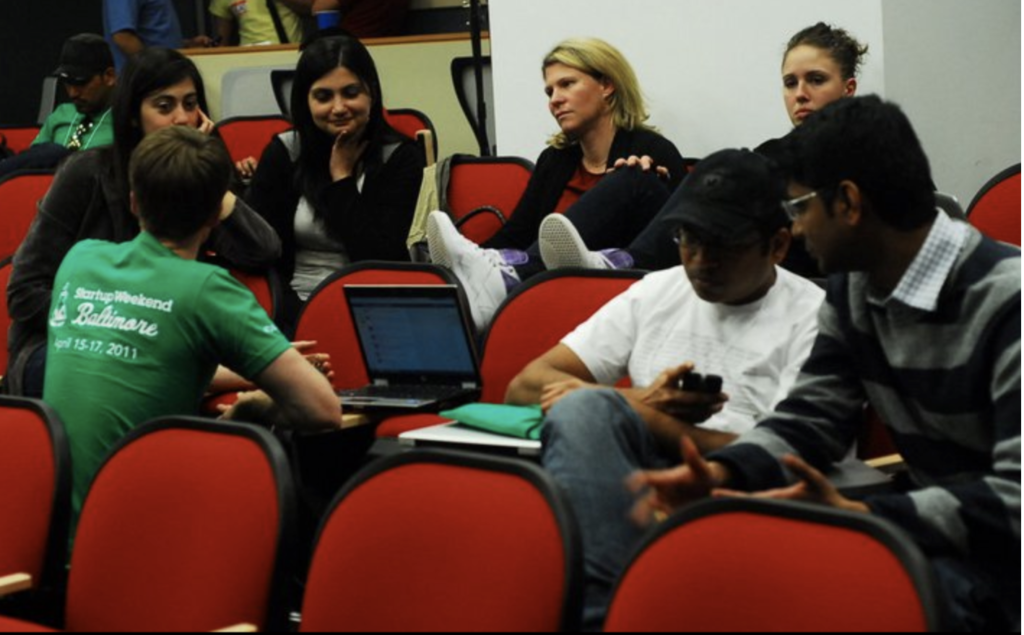
Entrepreneurs brainstorming at Startup Weekend
Most of the people there were business, marketing types, with less than half being developers — me being an MBA communications type and designer, finding a developer was the one critical skill set needed to make RUNINOut functional by Sunday evening.
There were lots of wonderful ideas — each one of them was an application that I surely had use for.
Mappable links, text-relationship manager, social charitable giving, checking your health online and via SMS, a mobile site that lets you rent out your driveway, crowdsourcing advice on what you should wear via Twitter, determine ad potential for sites, etc.
When my turn came up, I asked Mike Brenner, if he would allow me to tell the story of my car getting broken into. After much nagging, he relented, and I used that example to segue into my core message that it would be wonderful if I had access to an aggregator that could read Yelp reviews as well as tweets and police reports and provide a customized recommendation based on the sources I choose and the weights assigned to each one.
“I woke up Friday morning and I was delighted to see a Living Social Dollar Lunch coupon available for a myriad of restaurants all over the city.
I was on my way to Baltimore, heading to Startup Weekend, so I conveniently stopped at a renowned restaurant in Dupont Circle just prior to leaving the city.
The restaurant was cozy with a lovely ambience. But because I wanted to arrive in Baltimore before the rush hour traffic, I grabbed something to go and quickly returned to my car, only to find window glass spread all over the sidewalk and my backpack with my MacBook Pro and Canon camcorder conveniently lifted from my car seat.
I would have hollered if it wasn’t for the pleasant demeanor of a young lady named Tinoi Marché who was already on the phone with the police. She was having lunch in a restaurant directly across the street and had witnessed the whole ordeal. Shortly before, a vagrant ruffian was pacing up and down 17th Street NW looking into cars.
My Subaru Baja window break-in
A moment later, he shatters my side window, and the thug is seeing running down 17th with a backpack in tow.
By the time I arrived, a mere five minutes had escaped. “If I wasn’t sitting down enjoying my meal, I would have run after him,” she said.
“It would have been worth it. That same clown could steal from me the next day or worse hurt somebody.”
When the officer arrived, he explained to me that there had been a rash of break-ins lately. If I had taken the time to look at SpotCrime, I would have found this out, but who does this?
“Well thanks for calling the cops, and no, I wouldn’t want you to get hurt over a laptop and camera.”
Furthermore, I didn’t really enjoy the lunch. I didn’t have a chance to read consumer reviews from sites like Yelp because, well, I just didn’t have the time.
The first thing I did after I called the police was to post an update on Facebook that my car was broken into and my laptop was stolen. Mike Brenner, organizer of Startup Weekend Baltimore, immediately contacted me and informed me that they could easily refund my money.
I thanked Mike for the offer but said heck no. Come hell or high water, I was heading to Bmore. I had an idea to pitch, and I wasn’t gonna let a thug ruin my day.
The pitch was well-received, but when it got time for the voting, everyone was given three sticky notes to place on the the wall pads of each idea. Because there were so many pitches, some of the pads were spread out further down the hall where less people congregated.
Pitching at Startup Weekend Baltimore
As a result, I only received six votes, one less than was needed to make the cut of 20 participants. My heart sank. I went to see Mike who informed me that although I didn’t make the cut, I was still welcomed to demo as long as I could gather a team and build a prototype by Sunday.
There were plenty of peeps with brilliant ideas and keen business acumen, but those with expertise in web programming were rarer than genius itself.
I quickly scurried around the room looking for techies — noticed that groups were already nestled away in their own groups, brainstorming ideas, hoping to change the universe. Meanwhile, there were a few poor souls, pacing around with great ideas, but no associates to fertilize the soul.
Senodja Walker
That’s when I made a quick call to my prior EMBA classmate. Senodja Walker was home in Laurel, MD., getting ready to call it a day — she had class all day Saturday at GWU and Sunday was a day of rest.
“Senodja, I need you to come and help me demo.”
“How about your classmates from Donnelly’s class?”
“They’re not interested in pursuing the startup — only for the class project.”
“Would love to help, but are you going to be ready?”
“I have no choice. It’s make or break for RUNINOut.”
I also invited Kanita Williams, to join us in our strategy session and throughout the weekend, all the different groups worked hard to refine their business models.
What was truly unique was how folks who didn’t even know each other before Friday night got together and collaborated so seamlessly to create a product, a business model, and a polished presentation in a mere 54 hours.
On Sunday, the event culminated with presentations by all 20+ groups. Though it would be a long night, all the presenters were highly engaging. Everyone — entrepreneur, developer, marketer — was enormously talented, and all their creative juices gushed out throughout the entire weekend.
Usually, I hate lectures, but I completely loved listening to what these innovative minds had to say. The best part of all the hard work was finally sitting down with an open mind and listening to the fantastic demos. I could see myself being a huge user of their apps one day.
“Startup Weekend proves that there is enough critical mass to build a sustainable startup culture in Baltimore,” said Ron Schmelzer, a mentor, and judge.
RUNINOut presented midway through the demos. I started out with the car break in story.
Ron Schmelzer, Techstars Mentor and Investor chats with Yasmine Mustafa
As I went down the bunny trail, Senodja deftly ran the demo illustrating its value in selecting restaurants by location, occasion and appeal (look and taste).
We are a restaurant search engine that crawls the internet for relevant reviews and trends and creates a comprehensive rating report for each individual. Our algorithm also incorporates the user’s personal preferences based on the latest input, restaurant selections, types of images clicked and user feedback. Like Pandora for music, the more you interact with RUNINOut, the better it gets to know you.
“A site that is a repository for dishes throughout the local area is a brilliant idea,” Ron Schmelzer, a Techstars mentor and investor stated. “The other day, I had the craving for a cheesesteak, and I wanted to know where I could find one.”
“And I love how your site will display the pictures of all the top dishes from my favorite Middle Eastern restaurants,” said Yasmine Mustafa, the CEO, and founder of 123LinkIt. “I was born in Kuwait and moved to Philly when I was eight.”
“As exciting as it is to look at pretty pictures, you’re still needing someone to work behind the scenes doing the coding,” Ron added.
“But can’t we just hire someone to build the site?” I asked.
“Anyone can hire a developer. Look, there are three things a startup needs to succeed — money, talent, and expertise. Right now, you’re missing two of these legs,” Ron said.
Once the demos were over, I was tremendously rewarded from hearing the great vision of these promising entrepreneurs — many of them on the verge of creating products that will change the lives of people in Baltimore, DC, and beyond.
But truth be told, it was apparent once again that we would not make the final cut.
3rd place: Dapprly + Talkchalkco — Dapprly is a Twitter application that allows a person to model outfit options and let the masses tweet-vote for which is best. Talk Chalk is a Facebook app for students, teachers, and parents, allowing for virtual homework assignments and game-style award incentives for doing them.
2nd place: ispylocal: a business that plans to put banners in vacant storefronts, providing a phone number and text system in which passers-by can call and vote for what business they’d like to see move in.
1st place: Parking Panda: a mobile app business designed to connect people who have available parking spaces and those looking for a cheap spot near a busy event
(In 2017, Parking Panda was acquired by its competitor, Spot Hero)
I loved hearing about all these fascinating ideas and best of all, meeting and collaborating with extraordinary like-minded entrepreneurs — an invaluable life experience.
Ron again explained that we didn’t place because our team lacked a technical expert. Senodja was an Army officer who would be leading her troops to battle, and Kanita was a law clerk in the DC Superior Courts, hoping to grace the halls of SCOTUS one day.
Together we knew a lot about marketing plans, SWOT (Strength, Weakness, Opportunity, and Threat) Analysis, and product life cycle models, but we lacked the knowledge of one thing that mattered the most – how to write code. What we lacked in technical expertise, we could make up for by being innovative and resourceful. I needed to head west until I found someone that could build the framework for our site.