Category: Travel

  • Europe on a Whim

    Europe on a Whim

    July 6, 2010

    The nation’s capital was recovering from the festive Independence Day events, and piles of trash were strewn all over the lawn and pavement. I was on my routine run on the National Mall when I suddenly realized how much better it would be to run in a foreign country. I was on summer break from George Washington University (GWU), and I needed respite from working exhaustively on my startup business plan.

    So I stopped in my tracks, pulled out my phone from my fanny pack, and called the Andrews Air Force Base passenger terminal. A C-17 was departing that night for Germany with a roll call of 2210.  I rushed home and started stuffing my garb into my threadbare backpack. Normally I would need a couple of days to pack for these trips.  But today, I only had a couple of hours.

    Service members, retirees, and their families were traveling “Space-A” — short for space available — on an Air Mobility Command flight to Germany. If a seat on the 54-seat Globemaster cargo aircraft was available they could travel without charge.

    The C-17 with the 445th Airlift Wing normally ferries troops and cargo around the world. On its way to Afghanistan, plenty of people were headed to Europe for the Christmas holidays.  

    There were no more seats available. As a military retiree, I was bumped to the bottom of the barrel. A family of four had to rush home to grab some gifts they forgot to bring.  If they didn’t come back in time, I would be assigned one of their seats.

    Needless to say, by midnight I sat shivering away on a metal seat, the only cost for the flight was $10 for a box lunch, its baloney sandwich and carrot sticks as hard as ice.  Many families with children were bundled up in blankets and lying on sleeping bags.  The jet was so loud passengers had to wear earplugs and thankfully my dose of trazodone reposed me to psychedelic-like sleep.  When I woke up, eight hours later, we were arriving at Ramstein Air Force Base.  The sun was just rising over the Luxembourg horizon. It was Christmas Day, and there were plenty of rooms available at the Ramstein Inn.

    I’ve been to Germany many times over my career. My last duty station in the Navy was at the U.S. European Command in Stuttgart.  I would love to enjoy schnitzels and Pils for Christmas, but the main intent on this trip was to run in warmer pastures.

    So I found a flight to someplace more sultry and exotic for only 150 Euros. It was an Air France flight from Frankfurt to Paris.  I was fortunate to have an overnight, 9-hour layover in Paris — the only catch — it was in Orly, an airport an hour and a half from Charles de Gaulle.

    What a weird concept. It was like having an overnight layover in Reagan. Then hopping on a taxi to Dulles 30 miles away to board the next flight. 

    Orly Airport was as dead as a wing joint in Paris.  The terminal was closed but luckily several of us managed to find a spot to catch some ZZZs, away from the custodians and security guards.

    The next morning, I hopped on a taxi to CDG and then caught a puddle jumper to Barcelona. I was excited but also dead tired — flying on military Space-A and sleeping on the floor in Paris airports started to take their toll.

    I checked into the Party Hostel Kabul, a vibrant oasis located just a 4-minute walk from the Liceu subway station. Its prime location in Plaza Real, nestled amidst the ancient streets of the old city and a stone’s throw away from the illustrious Picasso Museum, made it an irresistible choice. The name itself evoked an aura of revelry, beckoning me into a world of excitement and adventure.

    Arriving exhausted, I opted for a mixed-gender dormitory and immediately crashed into bed. When I woke up at 6 pm, I refreshed myself with a shower and checked my email before venturing downstairs to explore the bustling Las Ramblas. It was there, on my way down, that I encountered a group of friendly backpackers – Brazilians, Canadians, and two adorable American sisters named Meagan and Marcy Miller from NYC.

    Curious about their plans, I put on my best Southern twang and asked, “Where y’all headed?”

    “Marsella, the oldest bar in Barcelona,” Meagan replied.

    “Yeah, Picasso and Gaudi used to frequent that place. It’s still exactly the same as it was in 1820,” added Marcy.

    Intrigued, we embarked on a journey through the charming Gothic Quarter, wandering its narrow medieval streets adorned with trendy bars and Catalan restaurants. The district, once a Roman village, juxtaposed ancient architecture with buildings from the turn of the century. Artisans sold leather and jewelry near the 15th-century Barcelona Cathedral, where a delightful courtyard housed playful geese. Meanwhile, working girls roamed the winding streets in search of love and fortune.

    “10 Euros,” one of them advertised, while another whistled and winked, provoking a ripple of mixed emotions within me.
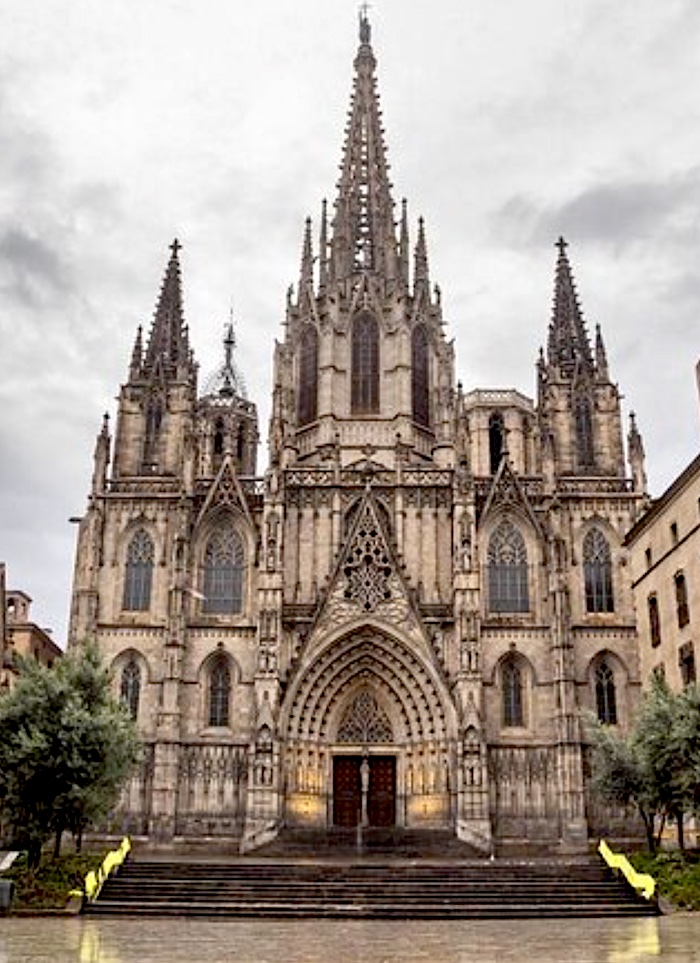
    Cathedral of Barcelona

    Barcelona proved to be a shopper’s paradise, offering everything from large commercial stores on Calle Portal de L’Angel to pint-sized boutiques on Calle Avinyo. Our intended 5-minute stroll turned into a 45-minute sightseeing excursion, filled with cultural attractions and delightful diversions..

    Finally, we arrived at Bar Marsella, stepping into a bygone era of old Barcelona that still clung on but was slowly fading away. The walls, stained chocolate brown from years of cigarette smoke, and the century-old whiskey bottles covered in dust created an atmosphere steeped in history. Chunks of paint fell from the ceiling, while thick cobwebs adorned the vault and antique chandelier, adding to the bar’s mysterious ambiance.

    Our bartender, Sebastián, greeted us warmly, boasting, “Hemingway was a regular here. We’re famous for our absinthe.”

    “Really? Absinthe is banned in the US,” Meagan remarked. “They say it causes hallucinations.”

    “Absinthe is a spirit, not a liquor,” corrected Sebastián with a crude smile. “And we serve 100 proof here.”

    “Well, we’ve made it this far. There must be a reason why Picasso was such a great abstract artist,” Marcy quipped playfully. “I’ll buy the first round of shots.”

    “You don’t drink the absinthe straight. It’s too potent and disgusting,” Sebastián said flashing a crude smile.

    “Then how do we drink it? As a cocktail or a mixed drink?” I asked.

    Sebastián explained that we could order it in a cocktail, mixed with a mojito, or experience the traditional French way. Intrigued, we opted for the latter.

    Sebastián prepared the Marsella, a concoction of one part absinthe and five parts iced water poured over a sugar cube on a fork until it dissolved. He advised us to sip it slowly, warning of a scalding sensation if we gulped it down.

    The absinthe’s wormwood and anise flavor proved acrid and potent, but the sugar mitigated the bitterness, while the water diluted the drink, making it more palatable. It was a Mediterranean ritual, marking the beginning of an extraordinary European adventure.

    “Swallow this slowly,” Sebastián suggested. “Or else it could scald your throat.”

    As the night progressed, Marcy exclaimed, “Ok, the next round, I wanna light it on fire.”

    “You can get lit tonight Marcy as long as you live tomorrow to tell the tale,” Meagan quipped.

    “And I’ll be sure to wake you up early so we can catch the beautiful Barcelona sunrise,” I added, raising my eyebrows for emphasis.

    The next morning, Marcy and I caught a glimpse of the first rays peeking over the Mediterranean Sea at Port Olímpic.  Built in 1991, the marina hosted water sports and sailing for the ’92 Summer Olympics. 

    We ran on the spacious stretch of sand alongside sculptures of sea life to the Barceloneta fishing village.  Then we ran past the ferry station and the largest Marine Aquarium in Europe.

    “We went there yesterday,” Marcy said, pointing to its unique, cylindrical shape. “It’s a Mediterranean-themed aquarium, and they have a large tunnel which gives you the feeling that you are swimming with the sharks.”

    “I would love to pay a visit, but I’m running out of time here. Where else did you guys go?”

    “We visited Camp Nou. Meagan and I are both Barcelona FC fanatics.”

    “Is that right? I’m a big fan of Lionel Messi, too. He’s the greatest of all time.”

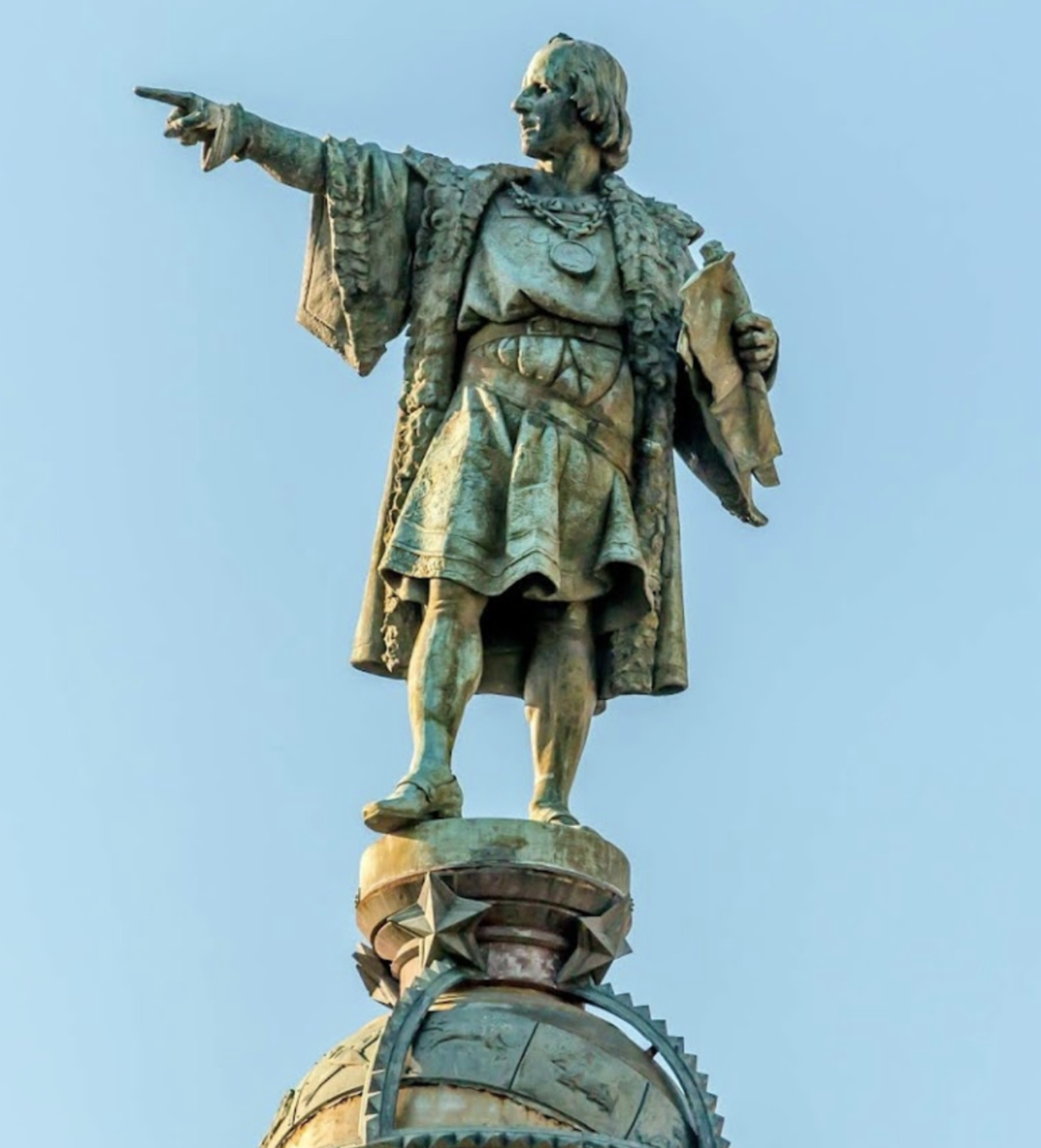
    As we ran past the World Trade Center, we saw Christopher Columbus pointing to the distant west over an ornate Corinthian column.

    “The hostel staff told me that this is the top tourist spot in town,” Marcy stated

    We stopped to admire the statue and then approached to read the plaque. 
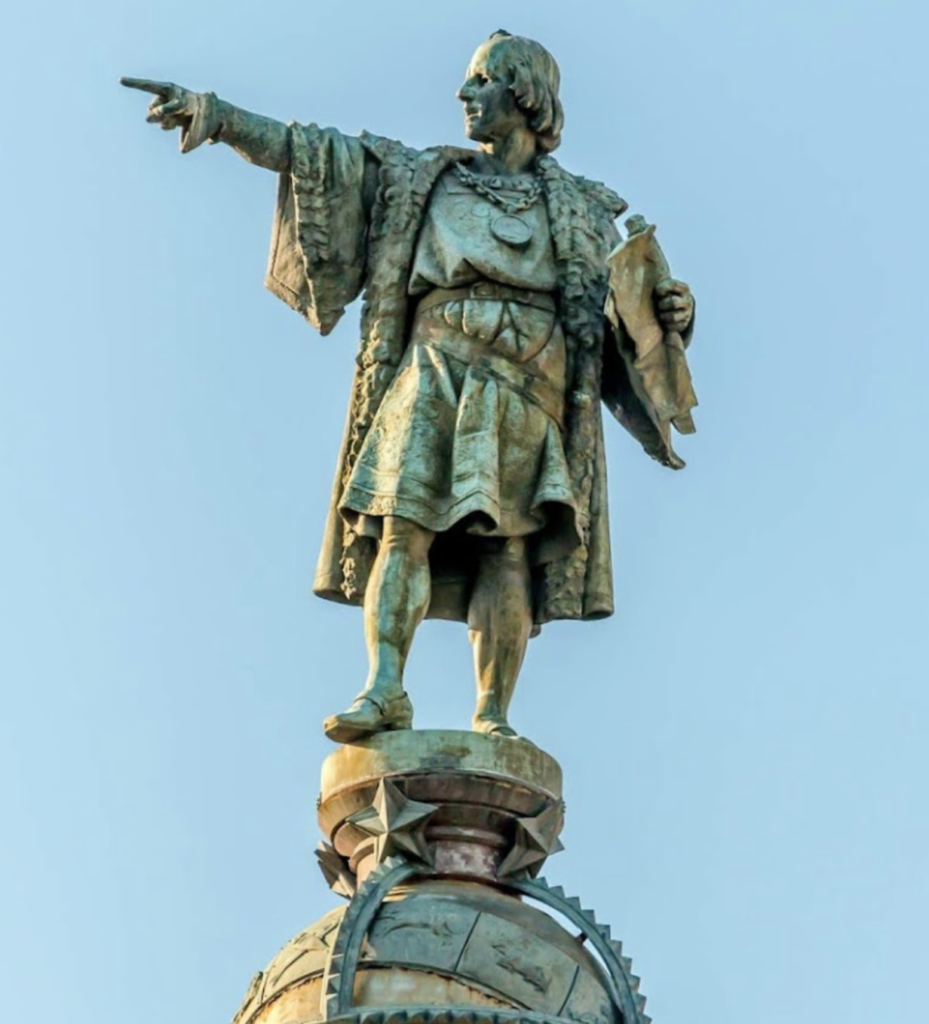
    Monumento a Colón

    Monumento a Colón — constructed for the Exposición Universal de Barcelona in 1888. Location of the site where Columbus returned to Spain after his first voyage to the Americas. The monument serves as a reminder that Barcelona is where Christopher Columbus reported to Queen Isabella and Ferdinand after Columbus’ most famous trip.

    “Columbus is such a hero in this country.”

    “But he’s not adored back home,” Marcy rebutted. “Many consider him a villain who embraced slavery, colonialism, brutality, and theft of indigenous land.”

    After discussing the significance of the memorial and watching people starting to accumulate, we ran back along the tree-lined promenade on La Rambla. 

    “So now that you’re retired from the Navy and getting your MBA, will you be working a government job?”

    “I dunno, but I really hope not. I want to do something entrepreneurial, something that will help people and continue traveling not just overseas, but in the US.”

    “How old are you?”

    “42, and you?”

    “24, I thought you were a lot younger.”

    “Age is how you perceive it.” I replied with a grin.

    Returning to the hostel, we witnessed fellow backpackers emerging for breakfast, enjoying sweet rolls with jam and café con leche. Meagan descended the stairs, stretching her arms and yawning before giving her sister a warm hug.

    Meagan came down, stretched her arms, and yawned. Then gave her sis a heartfelt hug.

    “Glad you’re alive after last night.”

    “We’re very much alive. We ran three miles and saw many Barcelonians jogging,” Marcy uttered. “The city is most spectacular at the crack of dawn.”

    “So I’m sorry to see you go tomorrow,” Marcy said with a twinge of sadness. “Where’s your next adventure?”

    “Normandy, France, then off to London to see my folks. You guys should join me.”

    “Well, it’s not like we have much going on. What do you think Meagan?”

    “Thanks for the invitation, but we really have so much more to see and do in Barcelona.”

    “Like what?” Marcy asked with a twinge of displeasure.

    “Well for one we have to do the obligatory girly thing and lots more shopping on La Rambla. And two, we still have lots of museums to see such as the Picasso Art Museum.  

    “Those things are important, but recognizing the sacrifices of the greatest generation is priceless,” Marcy replied.

    Normandy

    As we looked over Omaha Beach, we paid homage to the D-Day troops in Normandy.  The troops faced a daunting challenge. The invasion was beset with ineffective air strikes, and poor naval bombardments. This set up the Allied troops against an almost unscathed German front, armed with formidable machine gun fire. The only chance of cover, was to run towards the enemy. 

    Sixty-five years later, the hilly seaside bore few scars from the dark and gray day of June 6, 1944.  But on that longest day, things had turned to hell in a hurry.

    I could not imagine these young soldiers jumping out of their LCAs (Landing Craft Assault), crossing the slippery beach and climbing the cliff face via ropes and grappling hooks in the face of nasty fire.

    It was extremely unnerving. The soldiers could hear the heavy thump of shells bombarding the exterior of the coffin-like LCAs as they were approaching the shore.  They knew death was knocking, but they kept approaching.  They kept their mind affixed on the Star Spangled Banner and Her Majesty the Queen.

    Some shells hit dead on, the LCAs exploding into tiny pieces like a box of eggs dropped from the Eiffel Tower. Many soldiers perished from gunshot, blast or drowning before even hitting the shore. They would never set foot on the foreign beach they aspired to reach, the sea crimson red, their faces, white with shock and trepidation.

    It was a travesty to see so many young, unbounded lives forever lost on the blood-soaked beaches. At the American Cemetery, we could see thousands of white crosses and Stars of David facing patriotically towards their homeland, saluting with only their solemn smiles. This is the final resting place for 9,400 Americans along with a monument to 1,500 more listed as missing in action.  How sad that we never found their bodies — brave Americans who never got to come home, their bodies washed away in the English Channel.

    “Have you lost close friends in the current conflict?” Marcy asked as she placed her hand softly on my shoulder.

    [ Image: American Cemetery .png ]

    American Cemetery

    “Yes, one to each war – a buddy who I went to school with and a coworker at the Naval Hospital in Bethesda.”

    “I’m very sorry. D-Day was necessary to allow the Allies to complete the liberation of Western Europe. The wars in Iraq and Afghanistan are unjust and a tragic verdict of 9/11.”

    Marcy and I continued on our run along Av. Moulin flanked by hedgerows and surrounded by geography very similar to what our soldiers faced 67 years ago.

    A couple of km later, we were back in Omaha.  The beaches still bore witness to the immense human sacrifices.  Numerous German battery sites were maintained in excellent condition (since countless, young Germans had surrendered without putting up a fight). As a result, we were offered a rare glimpse into a living, life-less museum that clearly depicts the power and plight of the mighty German defensive.  Luckily, many of the troops from Eastern Europe and Asia would surrender at the first opportunity.  Many of them were comprised of an international army made up of troops from throughout the Soviet empire and even China and Korea.  Can you imagine the looks in the eyes of our GIs when they first faced their enemies?

    But still, many Germans fought viciously and effectively.  The Germans had four huge casements with a 205 mm cannon. These guns were effective in dueling with American battleships.  For eight days, the German soldiers stayed inside the casements with virtually nothing to eat and drink but stale bread and bad water. They had no place to use the bathroom — yet they stayed.  Many did not surrender until they ran out of ammunition.

    “If you were a young soldier during Normandy, would you risk your life for your country?”

    I thought long and hard. “The simple answer was yes, but would I be brave enough to carry out my duties the same way these men did on these beaches?  That is an enduring question that bears no easy answers.”

    “Why don’t you plan a run back home,” Marcy suggested. “Kind of like the run we did in Barcelona, to see all the amazing sights and to ponder on the significance of these historic landmarks?”

    “That’s a wonderful idea. It’s a great way to understand different cultures and to navigate through the sights and sounds of the old continent.”

    The English Channel was rough and choppy the next day when I caught the Normandie Express to Portsmouth, England — a high-speed catamaran cruise ferry. I would have time to reflect on the profound question and consider the interesting suggestion from Marcy.  She and her sister would catch the Eurail to Paris, and I thanked them for giving me incredible ideas to ponder.

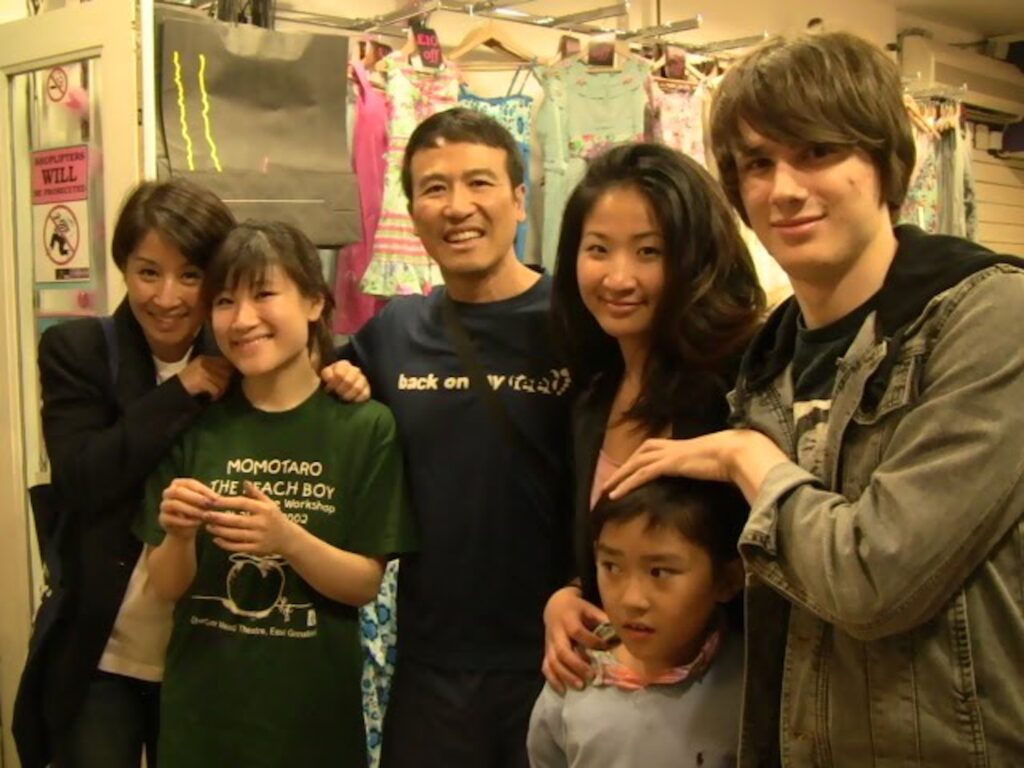
    In London, I visited my sister, Kim, my nieces Kae and Rio, and nephew Rintaro at their Chiswick, West London flat. It was a special, last-minute, family reunion – my first time seeing everyone all together.

    I gave Kim a tight embrace. “I’m very sorry for the loss of Grandma.”

    “Thank you. She will always have a special place in my heart.”

  • Five Qualities of the Diaspora

    Five Qualities of the Diaspora

    There were two milestones I needed to achieve in order to complete my MBA — a new venture capstone project and a study abroad trip to compare and contrast cultures, business practices, and management styles.

    In the spring semester of 2012, I enrolled in a six-week course entitled Engaging Diaspora Communities for International Business and Development. It was taught by Dr. Liesl Riddle, the associate dean of GW’s School of Business who has written extensively about diasporas and international entrepreneurship. 

    The course studied the diaspora communities in the US and abroad and their motivations for sending remittances to their home countries to spur growth and prosperity. A vast majority of the diaspora who return to Ethiopia are starting businesses and creating jobs. The class culminated with a week-long trip to Ethiopia to take what we learned and apply it firsthand.

    There are an estimated 2.5 million Ethiopians living outside of Ethiopia. Many of them live in Washington, DC, so this particular diaspora was the perfect one to focus on.

    “I want you all to contemplate what you expect Ethiopia to be like, compared to what we observed once we are actually in the country,” said Dean Riddle.

    The GWU MBA class departed from Dulles excited about the adventures ahead. When they arrived at Addis Ababa 14 hours later, they were sleep-deprived and jet-lagged but enlivened nonetheless. Situated in the Horn of Africa, Ethiopia is a rugged, landlocked country and the cradle of humanity where Homo Sapiens first walked on two legs.  It is the “Land of Origins”…of humanity, language, and of course one of life’s greatest pleasures – coffee arabica.

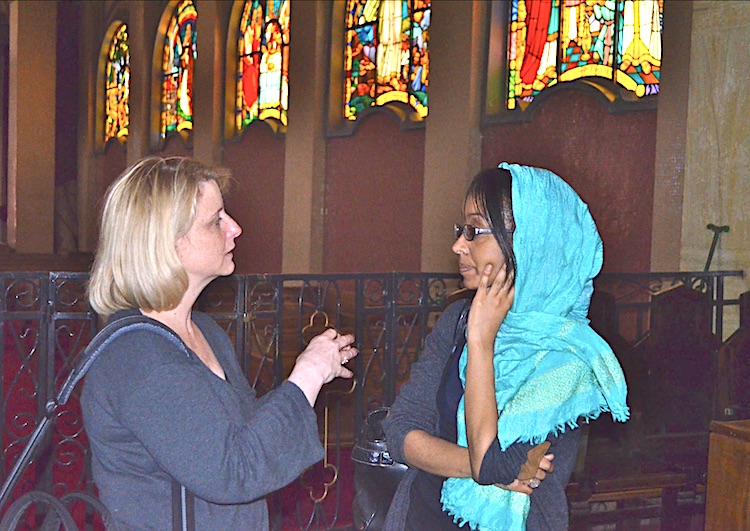
    Since it was too early to check into our suites, Dean Riddle arranged for us to do some sightseeing. Our first stop was the Holy Trinity Cathedral, a product of the colonial period imbued with rich history and majestic architecture. 

    Many tourists who visit Washington, DC yearn to visit the Smithsonian Natural History Museum to ogle at the Hope Diamond. Likewise, an obligatory stop in Addis Ababa is the National Museum of Ethiopia to admire the Lucy fossil.  She is 3.2 million years old, and the most famous early human ancestor because she walked upright. Unfortunately, the bones we saw were not the real Lucy, but plaster replicas. The original skeleton is displayed at the Cleveland Museum of Natural History. Ironically, it was offered to the Smithsonian in D.C., but turned down due to a resolution that early human fossils should be stored in the country of origin and to make displays in other countries with fossil replicas. It’s like traveling 7,000 miles to meet a fairy tale luminary, only to find out she’s half the world away on a sabbatical. But real Lucy or not, we were ready to do some slumbering as we finally headed to the hotel.

    On the way to the Ramada we were greeted by the impressive stone monument of the Lion of Judah roaring over the city, a crown jewel of the infamous Haile Selassie. 

    Finally, at the lodge, I took a long shower and squeezed in a power nap, but by nightfall, we had to gather up for our first guest speaker – Addis Alemayehou, a serial entrepreneur who returned to his roots and has become a household name in Addis. He founded 251 Communications which has grown into one of the leading PR and communication firms in the country.  

    “I started my entrepreneurship endeavor here when the war between Ethiopia and Eritrea was just coming to an end and the economy at the time was in shambles,” Addis said. “I lost my iPod and missed having my playlist with all my favorite songs, and realized that there were many people who also enjoyed Western music. So I started the first English Speaking FM Radio station in Addis. A good business is always one that finds a need in society and fills that void.”

    “Are there lots of opportunities here for startups?” my classmate, Marilu Ortega asked.

    “Business in Ethiopia flourishes out of sheer need. If you were to spend a week in this country, carrying a notepad and writing down everything you wished you had but didn’t, you would finish the week with at least 35 promising ideas.

    “How is the labor market here?” Erin Dahan asked.

    “Steadily improving every year. Wages are low and there’s lots of talent here.  Foreigners are investing and diasporans are returning and creating millions of jobs every year.”

    The next day, we met one of those diasporans who had contributed enormously to the job market. Daniel Gad immigrated to the US after school in search of better career opportunities.  After serving as an executive for AT&T for 20 years and building a nest egg, he decided to return home. When he met with the Chamber of Commerce to see where he should invest, they steered him to the field of agriculture.  Daniel deep-dived in the industry and discovered that flowers are a multi-billion dollar export business. He then created a 28-hectare rose farm called Metrolux Flowers which he successfully exited.  He now manages and operates Omega Farms, a leading vegetable production farm that produces and sells high-value vegetables to the EU.  He is currently collaborating with PepsiCo on a partnership called EthioPEA aimed at chickpea production which would hire over 10,000 farmers. Daniel Gad is undoubted “mining gold from the dirt.”

    * * *

    One industry that is facing a difficult time getting diasporans to return is the medical field.

    “There are more Ethiopian doctors working in Washington, DC than in Ethiopia,” said Dr. Asfaw Atnafu, a professor of radiology at Addis Ababa University and the Head of Telemedicine at the Black Lion Hospital

    One issue that Dean Riddle taught us in class is the concept of “brain drain”. In Ethiopia, many students leave the country to study medicine, but the vast majority do not return. Dr. Atnafu who studied medicine abroad was given a very lucrative offer to practice medicine in the UK. It seemed obvious for him to accept it. But one day, his mentor saved a very well-known British official who was suffering from a severe brain injury. The surgery was such a success that he was interviewed by the BBC. They asked him why he was returning to his homeland. The doctor said that Ethiopia would be safer now because they would now have one neurosurgeon. That one sentence changed Dr. Atnafu’s perspective, so he decided also to return.

    Ethiopia is one of the fastest-growing countries in Africa with more than 104 million people. The country has made significant health care gains lately, such as lowering infant mortality, but more work needs to be done — particularly in rural areas. Healthcare, something that many Americans take for granted is a precious resource in many Third World countries and needs to be drastically improved and will be key to boosting economic growth.

    Black Lion Hospital

    Dr. Atnafu was not focused as much on remittances as he was on the social and educational aspects that diasporans can have on Ethiopia. That was why he’s big on telemedicine. Much of the engagement he facilitated was through knowledge sharing and training conducted virtually. In addition to receiving input from diasporans abroad, the medical community in Ethiopia can contribute to the medical dialogue by sharing their own experiences.

    I wish my former boss, Admiral Robinson had an opportunity to meet with Dr. Atnafu. As the Surgeon General, responsible for seeing healthcare for the Navy and Marine Corps throughout the world, he was a big proponent of telemedicine and would have loved sharing information with Ethiopia on how to make healthcare available to everyone.

    * * *

    We also met with Dan Rosenthal, the Commercial Officer at the U.S. Embassy. Ethiopia is a state-run economy and with the government overseeing the development, there is a lot of red tape.  Thankfully, the country is starting to privatize and is looking for foreign investors to improve the quality of life for Ethiopians.

    “The five sectors that are the most important for the future are Telecommunication, Agriculture, Manufacturing, and Power.  These industries will create the maximum number of jobs leading the country to a dynamic future.”

    “What are some of the major draws for international investors?” I asked.

    “Duty-free imports of capital equipment, tax exemptions, cheap electricity, a thriving local airline with a large international footprint, and duty-free access to the US market through the African Growth and Opportunity Act. But probably the most attractive is low wages — the country wants to keep its wages low to attract investment for its manufacturing industry.”

    “But low wages will barely lift workers out of poverty, and once workers gain skills, they will leave their jobs to seek higher-paying jobs, resulting in high attrition and higher training costs.”

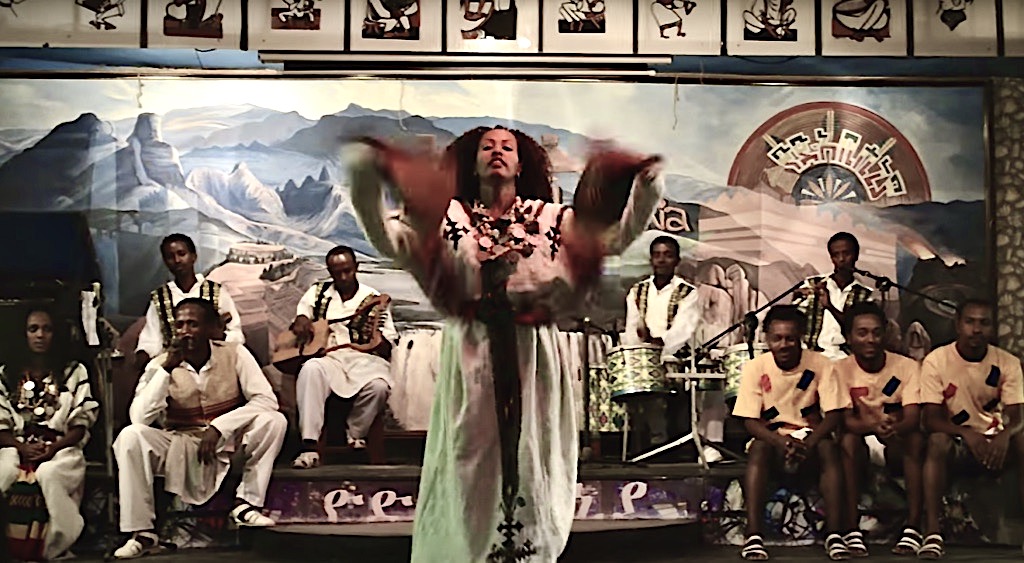
    The field trip wasn’t all meetings and business attire. We also went to enjoy the food and culture. And Dean Riddle recommended we visit the 2000 Habesha Cultural Restaurant. At first glance, the restaurant offering a buffet of traditional food and a stage show of dancing and singing looked like another tourist trap. But you cannot judge a venue by its clientele.

    2000 Habesha Cultural Restaurant

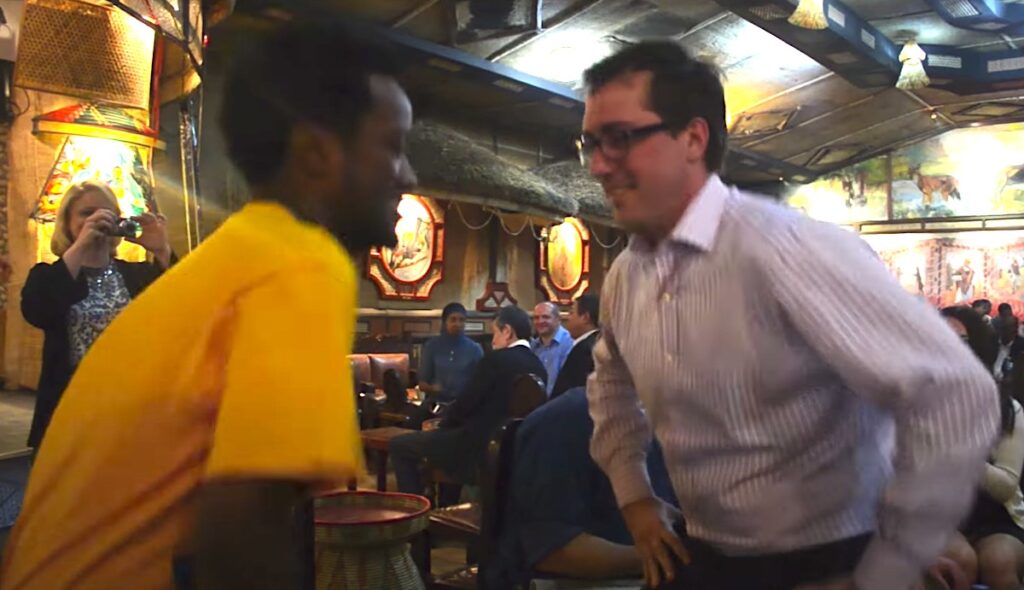
    We loaded up with large platters of injera and wot and sat up front to enjoy the festive performances.  The veggie-friendly dishes were anything but boring. The healthy portions included ruby beets, lentils, salad, carrots, green beans, and chickpeas and were flavored with garlic, paprika, and rosemary. After a few glasses of honey wine and bottles of St George beer, a couple of brave souls sauntered on stage and performed the Eskita (traditional dance moving the shoulders).

    The next day, Dean Riddle and several of my classmates visited the Boston Day Spa nearby. They had a relaxing time to refresh and detox until one or two of them accidentally imbibed on the tap water that was served to them and immediately realized they weren’t in Boston USA. Ethiopia has made impressive progress over the past 10 years on improving water quality, but the water supply is still very contaminated and should not be drunk. Needless to say, a couple of them caught gastroenteritis and had to rest at the hotel to recuperate. 

    At this trailblazing spa, we got to meet with Tadiwos Belete, a diasporan who trained as a hairstylist and attended cosmetology school in Boston. When the Derg regime overthrew the Ethiopian monarchy in 1974 and established a brutal dictatorship, Tadiwos, at the age of 15 decided to flee on his own to Sudan. There he was even paid by farmers to scare off birds feeding on crops. After a few years of roaming about, he applied for refugee status in the U.S. and moved to Boston where he worked odd jobs until he decided to become a hairstylist.

    Boston Day Spa

    After saving money, Tadiwos wanted to open up a salon in the city’s poshest neighborhood, but nobody wanted to rent to an unestablished immigrant.  He decided to reach out to the owner of a building on Newbury St by inviting him for dinner at a nearby Ethiopian restaurant to get acquainted. The owner was sold by his negotiating skills, and in 1998, Tadiwos opened up his first hair salon called Konjo (beautiful in Amharic).  

    It wasn’t long before Tadiwos started to feel a longing to return to his homeland. He developed the idea of starting a luxury spa, hair salon, and hairdresser training school in Addis Ababa.  But he didn’t have the funding.  He asked nearly every customer who got a haircut from him to partner with him and invest in his country.  After asking nearly a thousand people, one Taiwanese woman reluctantly agreed to come in as a silent investor. Tadiwos built an office block on crumbling, dilapidated Africa St, where many had not dared to set foot. His relatives thought he was crazy, but he wouldn’t be deterred. 

    Nine years later, business is through the roof, and his brilliant idea has spurred dozens of other spas to sprout all over the city. Tadiwos has also embarked on a development boom, opening up a restaurant and a wine bar downtown along with two luxury resorts a couple of hours from the hub. In all, he employs over 1,500 people spurring the economy. We had the opportunity to visit Tadiowos’ Kuriftu Resort, a 28-room tourist retreat in Bahir Dar, at the source of the Blue Nile river.  It’s an amazing place with great food, hookah, and a splendid lake where you can go on a relaxing boat ride. And like Boston Spa, they have a massage, steam, and sauna to top off a very relaxing retreat from the city. Just remember not to drink the water.

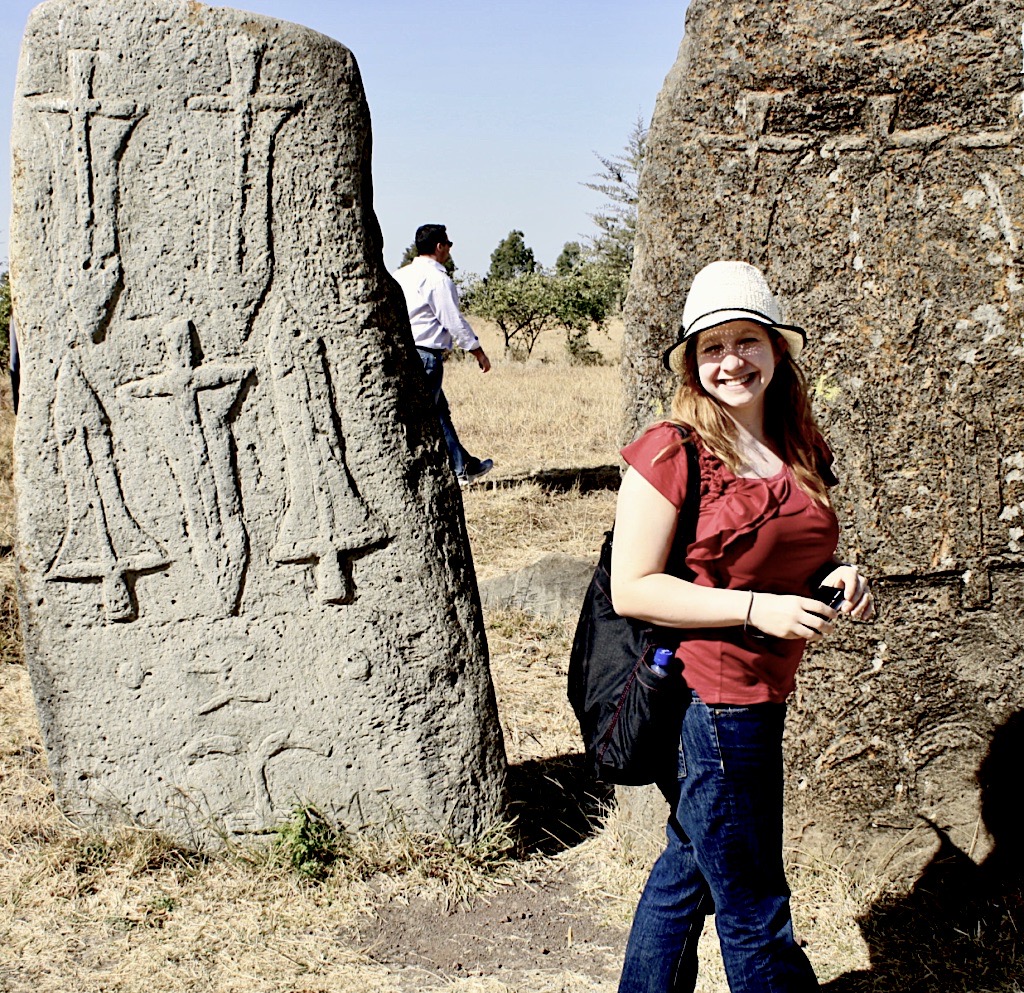
    On the way back to the city, we stopped at the legendary Tiya Stelae, an archaeological site containing 36 enigmatic monuments. Each obelisk-shaped stone is engraved with primitive, clear images of swords, shapes, and figurines. To date, no one has been able to determine the age or the purpose of these carvings. One reason why they call Ethiopia a “Land of Mystery.”

    legendary Tiya Stelae

    Finally, we got to visit the Commodities Exchange, established just four years prior. The country’s two major goods exports are not surprisingly coffee (29%) and cut flowers (14%).

    Ethiopia is also a land of rich opportunities for investors, from all over the world. That is why it is projected to be Africa’s fastest-growing economy, and perhaps one of the fastest globally. Labor is fairly inexpensive and highly skilled and the country has made huge investments in infrastructure and manufacturing. The government is making reforms to unleash the private sector and has wholeheartedly embraced the diaspora for impactful development projects. Returning diaspora also share invaluable skills, education, and experiences they acquired from the West. In order for the motherland to optimize development and job growth, she must continue to forge lasting, meaningful ties with this salient community, translating into sustained, measured growth in the years ahead.

    But the road to investment is a rocky one. Diasporans are facing a huge information gap in the current market and steep odds that they will reach their lofty goals. That’s why it’s highly imperative that they conduct proper research and fully understand the industry and the market in which they are operating in.  They need to be savvy innovators and shrewd negotiators in a volatile and intransigent market.  What I found noteworthy was the resourcefulness and resilience of the diaspora community. Through grit and resilience, many persevered and ultimately made a significant difference for their country and citizens.

    On the final day of our journey, I sat down with my friends to discuss what we learned. 

    Rasheida Knight was really smitten with Addis Alemayehou. Addis has been able to achieve massive success because he was innovative.  Most people who lose an item of value like an iPod would regard it as a setback. Addis viewed it as an opportunity to fill a void. He reflected on how important his playlist of Western music was to him and realized that there were many Ethiopians that felt the same way. He conducted a target market analysis to understand the size and scope of the audience and researched what was needed to launch the first private English-speaking radio station, Afro-FM. He not only tried to understand how people work, but he also wanted to understand how things work. And in so doing, he documented everything. 

    “If you were to spend a week in Ethiopia and write down everything you wished you had but didn’t, you would come up with tons of innovative ideas.”

    Marilu Ortega enjoyed her time at the spa and was thus impressed with the innovativeness of Tadiwos Belete who thoroughly researched the local market and felt that a day spa business could thrive there. People thought he was crazy, but he understood the potential customer base and was confident that the salon would be a huge success.

    But Tadiwos didn’t have the funds or resources to make all this happen. He was an effective negotiator beginning in his Boston, MA. days when he skillfully convinced a building owner to lease him space to open his first hair salon to when he convinced one of his customers to invest in his business venture abroad. Without his ability to listen, communicate and persuade, Boston Day Spa would never have been built. 

    Tadiwos Belete

    Erin Dahan was impressed with Tadiwos’ resourcefulness. At the age of 15 and living in a Sudanese refugee camp, he was able to survive and find a way to show his usefulness to farmers and work with the Catholic Church to immigrate to the U.S. He lived in Boston for 20 years and through resourcefulness and grit, managed to save money and learn an important skill that led him to build his luxury spa business franchise.

    Brady Shannon also enjoyed hearing about the resourcefulness of Daniel Gad. After living in the U.S. for 20 years, he was shocked when the Chamber of Commerce recommended that he invest in flowers. To be successful in agriculture one has to be highly resourceful. For one, the country did not have access to modern farming equipment. They still used pitchforks and plowed with donkeys. Daniel eventually sold MetroLux Flowers and started a new business in horticulture called Omega Farms. He did a lot of research and observed how his farmers harvested chickpeas. He then realized that by being more resourceful and making small improvements in their handling processes, his farmers would be able to increase production by 30%.

    “I like to use the analogy of gold in the dirt,” said Daniel Gad. Ethiopia has a lot of dirt. The key is to find out how to get gold out of it.”

    Rashida, Marilu, Erin & Brady

    Marilu sympathized with the huge healthcare challenges the country faces. “Their resourcefulness in utilizing telemedicine is both novel and remarkable,” she said. “Dr. Atnafu has made huge sacrifices and has done a remarkable job.”

    All the entrepreneurs we met, made bold decisions and took huge steps to start their businesses in a very risky and volatile environment. There was a huge information gap, and they faced steep odds against reaching their lofty goals. When faced with challenges, some of them had to take a step back or make a drastic course change, but they always kept their eyes focused on their goal and navigated towards it.

    Even 10 years later, I remain inspired by the group’s resourcefulness, their deep understanding of the current market, their ability to broker and negotiate, their willingness to adopt innovation, and their courage to take the next step.

  • RUNIN — the Theme

    RUNIN — the Theme

    RUNIN is not exactly about the joys (or pain) of running.  It’s not about running out of food either. Did you realize that RUNIN is actually a back acronym? Huh? Let’s take a look at the qualities of the Ethiopian Diaspora. 

    They were all Resourceful in surviving tough living conditions and eventually found success in their business ventures. They Understood the local environment well and identified the target market audience before starting their businesses in Ethiopia. They had to Negotiate with business owners, investors and the local governments who at first had little faith in them. They had to be Innovative to find the right business that would fill a void. And they all made bold decisions but remained open-minded and nimble when they Navigated toward their goals.

    Resourcefulness:

    Resourcefulness is about using the full resource of tools and other people to solve problems and reach goals. When the devastating EF-5 tornado ripped through downtown Joplin, Americans from near and far rushed to lend a helping hand. Thankfully, there was no shortage of compassion and generosity. The AmeriCorps displayed resourcefulness by allowing me to build an online database that tracked donations and matched them with survivors and their specific needs.

    When our team didn’t place during Startup Weekend due to lacking a technical co-founder, I had to rely on resourcefulness to find a developer who was flexible enough to fulfill our requirements.

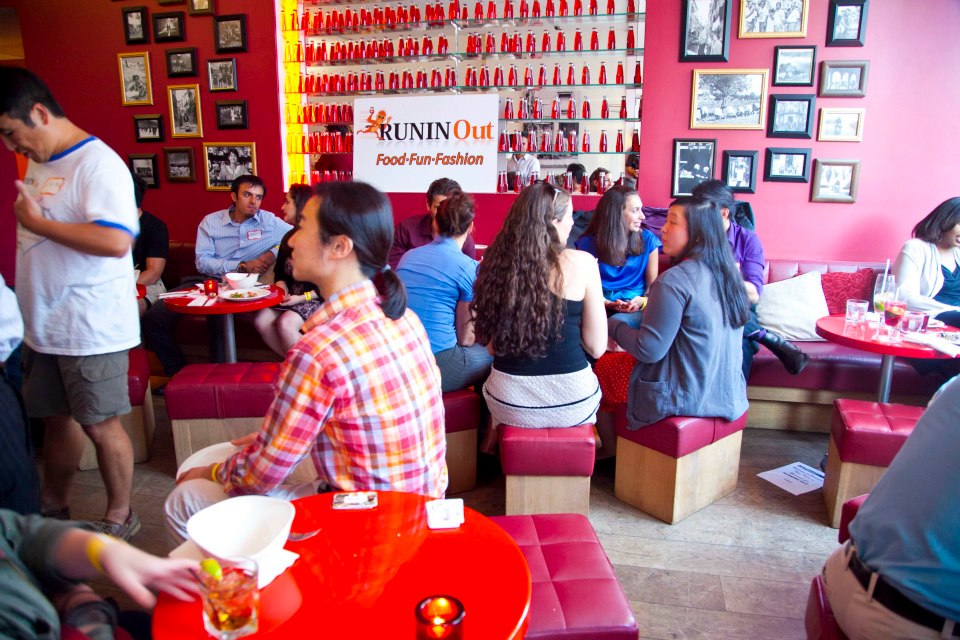
    When we reached out to restaurants, many were willing to have us photograph their dishes, but didn’t want the food to go to waste.  So we decided to photograph the food in conjunction with events and allow our guests to enjoy it.  The events also served to promote the restaurants and we were able to capture amazing photography of attendees enjoying the ambiance and cuisine.

    R also stands for Reflecting on what’s important in this journey and seeing how we can make improvements.  Deb Santos taught me how to truly reflect —  learning to invest in myself and showing self-compassion regardless of my mistakes. 

    R also stands for Researching.  The secret sauce for RUNINOut was the behind-the-scenes research that we did for each restaurant to ensure that the user would get the best results possible.

    Understanding:

    The Irish Republican Army who sought a united Ireland clashed with the British forces resulting in massive death and destruction. When I visited Belfast, I met a tour guide named Arthur Magee who talked about building bridges.  For peace to start and the troubles to end, both sides had to build bridges.

    “If you come nigh you will see a city where on a micro level, people are building bridges.  The most important bridge that is been built is in each and every single person here. That bridge is between who you actually are and how you see yourself. Whether you’re part of the problem, looking back and blaming other people, or whether you’re part of the solution and reaching out and seeing other human beings, as exactly that, human beings.”

    From a business standpoint, one must fully understand the environment, the target market, and the competition in order to build a successful business. The diaspora community had done their research — that’s why they were able to build a leading PR firm, a luxury day spa chain, and a rose farm despite facing steep odds and many doubters that were skeptical that such business ideas could flourish in Ethiopia.

    I applied these lessons when I worked with restaurants and bars. When I tried to sell our services to the Irish Channel, they were also receiving bids from other providers.  In order to stand out from the competition, I studied the pub’s clientele and target market to determine which sports teams they could affiliate with and which social events we could host.

    When the Lebanese Taverna requested to host a belly dancing event with Arabian folk music, I immediately did my research to familiarize myself with the art of belly dancing — I would then need to be resourceful to find the right talent and audience that would attract a strong turnout so we could host many more events and raise money for charity.

    Over the years, we ended up working with several different groups and hosted a wide variety of events: running, comedy, political, food blogging — spanning a diverse group of bars and restaurants.

    In the end, hosting tons of events took its toll, and I had to honestly look in the mirror and realize that the boozing had gone to extremes and I needed to start tapering off. 

    Negotiating:

    Many restaurants were receptive to our services but did not have the resources or the inclination to pay for them. So we found a clever way to negotiate by having them host our events and provide free food and other amenities. We often got paid, but we were willing to barter web and social media assistance for food, eatups, and fundraisers.

    Negotiating is something that I’ve always done my entire adult life.  Throughout my entire Navy career, I never seemed to get what I wanted so I had to negotiate for just about everything of value. Successful negotiating requires understanding the other side’s priorities, open communication, and settling differences.

    Innovating:

    My search for a technical co-founder led me to take a Greyhound to Vancouver to find a web developer who could create our site in Drupal.  And once the framework was built, I had to stay current in both Drupal and WordPress by regularly attending tech meetups.

    Innovating meant building a menu prototype for Burma Restaurant and Vapiano’s so customers can decide on their orders while waiting in line.

    When RUNINOut got rejected by the GW Business Plan Competition, I had to find ways to gain traction with users.  It was imperative that we were able to expand our reach throughout the entire city with innovative methods. That meant deploying a used pedicab to market our brand and acquiring loyal followers who would vote for us for Best of D.C. We won the “Best Restaurant App” award in 2012 and 2013, and my alma mater agreed to let us present in the Business Plan Competition after all.

    Navigating:

    Some people struggle to make a decision. Some may be very simple like what to wear, others are very complex like finding a new job. Many times, we’ll end up regretting the decision that we make, but the worst decision is making no decision. No decision can be a decision, also, but the main thing is you need to take some action. 

    Navigating means making a decision to go one way and to stay on course despite experiencing choppy seas. It also means making course changes if the path is not the right one for you, even if it means making a drastic change.

    I wouldn’t be where we are today if I never got into a scuffle with my GWU classmate causing me to transfer out of the Executive MBA program to the Professional MBA.  With more freedom and flexibility, I was able to enroll in a New Ventures class where the idea of RUNINOut came to life.

    After working tirelessly for over five years, It was clear that it was time to change course.  Hosting events was time-consuming and tiring, and there was usually excessive drinking resulting in anxiety and depression.

    It also became clear that we needed to branch out further from the DMV (D.C. – MD – VA).

    How we would achieve that and what would the next step would be, was still undecided.  But it was clear that it was time to take a radical, new direction.

    Wherever we would be going, it would sure be a magical ride that the universe has specifically earmarked for us.

    RUNIN Ragged…

    * * *

  • Vapiano

    Vapiano

    I applied for the GWU Business Plan competition in 2011 and 12 with high hopes that perseverance would pay off. After all, I had a couple of notches such as Startup Weekend in my belt, and unlike the vast majority of applicants, I actually had a real business that was gaining traction.

    April 1 2012

    Dear Chito,

     I was personally very impressed with your business plan.  Therefore, I was pleased that even though it was not included in the top 8, it was selected to serve as the “backup” in case one of the 8 teams selected chosen to advance to the finals cannot present on April 13. 

     My advice is to begin planning your oral presentation now and I will let you know as soon as we know for sure whether you will or won’t be presenting on the 13th. 

    I will be in touch as soon as I know more about whether the top 8 teams will all be able to present on April 13.  Congratulations on being one of the “top 9” teams out of the 144 that entered this year’s competition!

    John Rollins

    Director, GW Business Plan Competition

    Professor of Entrepreneurship

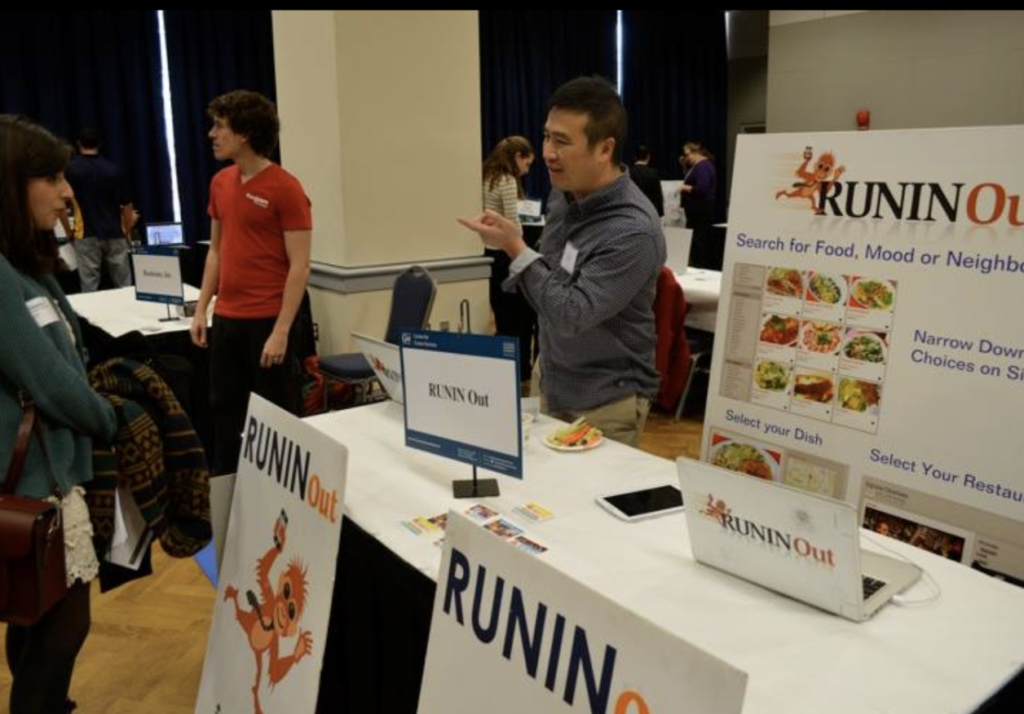
    I took Professor Rollins advice and accepted the invitation to attend the April 2012 GW Startup & Internship Fair.  The halls of the Marvin Center were filled with students some with blank stares mindlessly flipping pages, others on their laptops with Netflix streaming in the background. Despite their best attempts, they yearned for the lazy days of summer, but could not ignore the fact that midterms were just around the corner. Meanwhile, upstairs in the Grand Ballroom, there was lots of buzz for the next big thing.  I arrived at the career fair with huge aspirations but tempered expectations.  A flock of fellow co-founders from the D.C. meetup group as well as George Washington University classmates were also participating, and those adventurous self-starters were eager to explain their big ideas.  There were many thoughtful conversations and face-to-face interactions with the rising talent pool from all over the metro area.

    GW Startup & Internship Fair

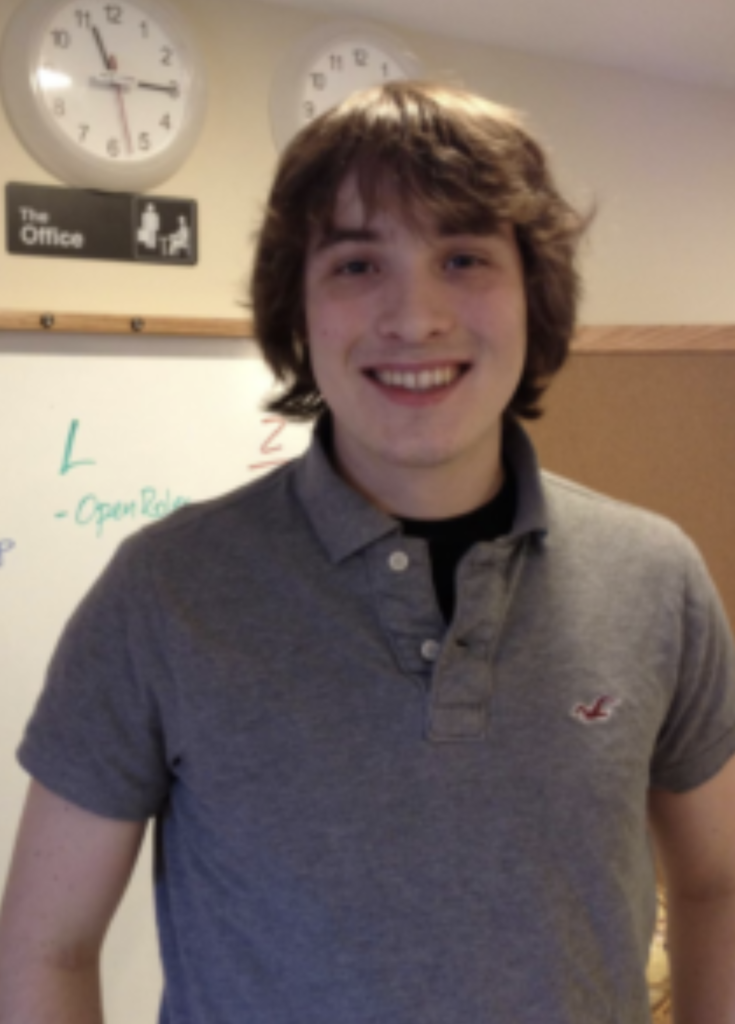
    One particular enterprising young man meandered through the crowd and over to my table. He was a cheerful happy-go-lucky sophomore who looked every bit a techie, but also a guy with a playful smile. “Hello, I’m Zach,” he introduced himself gleefully.

    “Nice to meet you. Are you from here?”

    “Originally from California, but went to high school in the South. I’m passionate, over-caffeinated and goofy, some say.”

    Zach Peirce

    Zach geeked over the pictures of food and wanted to hear more about our dish repository.

    “I love discovering new places and tasting different types of food, and I’m a technical product guy, so this could be the right fit.”

    “Are you sure the startup world is the right move for you as opposed to interning for Uncle Sam down the road?”

    “I’m more enamored by the startup life than working for the government.”

    “How ‘bout environmental activism – there are tons of opportunities in town.”

    “I’m a business student, so I’m all about process improvement.  I have lots of innovative ideas that I would like to see put to work and don’t have the patience for the government to implement them. Again, I’m here so I can effect immediate change.”

    I described to Zach the whole concept of the Vapiano ordering system. “You get a store charge card as you enter, and then you walk up to different stations to order pasta, pizza, antipasto, salad and drinks, scanning your card at each station.  Often you have to have to queue up for 15-20 minutes before you even get to order from the line cooks, so it’s important to have your selection ready. If you’re not a regular customer, it can be difficult to know what type of dish to order and what toppings and ingredients you want.

    “So we should feature each dish online and break it down by specific type and category and then list all their ingredients.  Then customers can preselect their preferences and taste and the site will show them the name and picture of the dish which they can show to the cooks.”

    “How will customers access the site?”

    “We can provide the QR code to customers when they queue up, and they can use their phones to make their seamless selections.”

    The following week, Zach and I spent an afternoon at Vapiano like food nerds, snapping pictures of dishes as they were prepared.  Lunchtime was crush time from a rush of mindless govies, so major kudos to the white coats who let us photograph the dishes while juggling orders from impatient customers. The work was exhausting but stimulating, and the best part, the starving sophomore and I were able to sample several dishes that are renowned across Italy.

    “What’s next? I’ve eaten my share of fettuccine to last the whole school year.”

    “I’m afraid there’s plenty more pasta on the horizon. Now we gotta do all the grunt work.”

    We headed to the Gelman Library on campus to post the dishes and categories on our site. There we met up with my friend and fellow entrepreneur JD Pagano. A software developer by trade, JD recently returned from a two-year stint in the Peace Corp.

    “This country is very grateful to its veterans. But we need to appreciate the service of the Peace Corps, also. How did you enjoy your tour?” I asked.

    “Very meaningful and impactful service. The experience was life-changing.”

    “That’s awesome. Anywhere exotic?”

    “The beautiful country of Kyrgyzstan in Central Asia.”

    “Was there lots to see and do?”

    “Absolutely. Great place to hike and ski. Loved the traditional Kyrgyz dancing and amazing folklife.”

    After the three of us got done adding the content to RUNINOut, we planned the next step.

    “Let’s organize a food tasting event at Vapiano’s for later this month,” I suggested. “We want people to test out our platform.”

    “Great idea,” Zach said. “Just advertise on campus that they’ll be free pizza, and you’ll get a ton of students there.”

    “College students are not the right audience for our survey. We’re looking for young professionals in their 20s and 30s with more refined taste,” I replied.

    JD started creating an event on Facebook. “I can ask my friend Misha to help promote it. Between the two of us, we know a ton of people in that demographic.”

    Together we sent out a boatload of invitations to our friends from that category, and we were delighted to see a few dozen foodies and govies show up with curious minds and ravenous appetites.

    In the beginning, the three of us stayed busy doling out dishes of Carbonara and Margherita. But once everyone was served, we were able to mingle and obtain feedback.

    I approached a cute girl with long black hair. “So you must be Misha, JD’s friend who you met in Kazakhstan.”

    Misha chuckled. “You got the right girl, but the wrong stan. It’s Kyrgyzstan not Kazakhstan.”

    “Oh so sorry, Kazakhstan was the country portrayed in the movie ‘Borat’ — a lot different than Kyrgyzstan where you served.”

    “No worries, almost everyone gets the names mixed up. The Peace Corp recently left Kazakhstan and hopefully, there’ll be no more mockumentaries.”

    JD Pagano & Misha Davies

    Kanita Williams left her job early from the D.C. Superior Court and made the 10 minutes walk over.

    “The pizza is awesome, but not great for someone on a minimal-carb diet.”

    “You should meet Orlando. He’s a personal trainer and runs a company called Bodyfit D.C.”

    Orlando walked over to introduce himself. “Nice to meet you. Where do you currently work out?”

    “LA Fitness but with work requirements, I find it challenging meeting my fitness goals.”

    “Skip the gym and get an awesome workout outdoors. Come join me for a boot camp workout three times a week. We do high intensity interval training.”

    “But my schedule at the court is so unpredictable. Can you be flexible?”

    Kanita and Orlando

    “Absolutely. Daily exercise is a gift that enables us to experience the gift of life more abundantly. I would be happy to get you started.”


    Vapiano’s Meetup

    A woman in her early 30’s with dirty blonde hair and a beaming smile took a bite of her pasta. “Mmm, the Pasta Basilico is cooked perfectly, al dente.”

    “Tender but firm is how I like it, too. So what do you think of this crazy concept?”

    “Not a fan of having to wait in line and returning to my table, only to find out that my friends have already started digging into their Greek salads. But I like how your site helps customers choose their orders while they wait.”

    “Super to hear. Zach and I spent last week, photographing each dish and then painstakingly adding them to the site.”

    “Wow, just the two of you? There’s a ton of different dishes here.”

    “Yes, my co-founder, Senodja, is deployed to Camp Arifjan, Kuwait, and Kanita is busy clerking in the D.C. Superior Court. So we have room for one more.”

    “I think this would be fun. My name is Suzannah by the way.  I’m a foodie just like you, and also an entrepreneur, specializing in marketing and business development.”

    “Super Suzannah, maybe we can help each other. We could use help reaching out to restaurants, and you can gain priceless experience working with a budding startup.”

    PHOTO GALLERY

  • Meskerem

    Meskerem

    When Meskerem opened on March 15, 1985, there wasn’t much of Ethiopia in D.C. Its owners were amongst the first wave of immigrants who fled their homeland after a Marxist military junta overthrew Emperor Haile Selassie in 1974.1 That coup triggered the civil war between Ethiopia and Eritrea that lasted until 2000 with the final peace agreement not being signed until 2018. 

    Both Ethiopian and Eritrean refugees settled down near the Adams Morgan neighborhood in D.C., a culturally diverse neighborhood known for its eclectic dining scene. The name AdMo is derived from two formerly segregated elementary schools and when the sun goes down, the laid-back 18th St transformed into a mile-long party zone. 

    The popularity and vibrant nightlife led to higher rent prices so a lot of the Ethiopian entrepreneurs moved out purchasing dilapidated properties on U and 9th Sts NW that were devastated by the 1968 riots following Martin Luther King Jr’s assassination.

    Eventually, the number of Ethiopian eateries got so dense on 9th St that several community leaders petitioned the D.C. government to rename the block “Little Ethiopia.” That petition was overruled since its location in Shaw was near Howard Theater and doing so would replace the “Black Broadway” moniker. 

    There’s always a lot of excitement in AdMo. On weekend nights, hoards of party-goers can be seen getting drunk and boisterous, raising a ruckus into the early morning.

    On Sunday, Sept 29, 2008, a man walked into Meskerem, greeted the owner, Mohaba Mohammed, with a hug, and then started chatting.  Everything seemed normal between the longtime friends. Suddenly and without provocation, the man took out his Beretta and then shot Mohaba in the neck. 2

    “Everybody don’t worry!” He yelled, then fired two shots into the ceiling before shooting himself in the head.

    Mohaba recovered from his injuries, and through the years, he and his sister, Nafisa Said kept the restaurant running, through the good times and hard, even as others around them closed.  They did that for 3o years, eventually becoming the oldest Ethiopian restaurant in the US — instrumental in shaping the personality of Adams Morgan into the vast melting pot that it is today.

    Supplies used to be tough to come by. Mohammed could not find any teff, an Ethiopian grain used to make injera.  So he used wheat flour and let the dough ferment for days in plastic buckets.  Today, Ethiopian Airlines flies daily to D.C. carrying injera, teff, spices, and much more. 

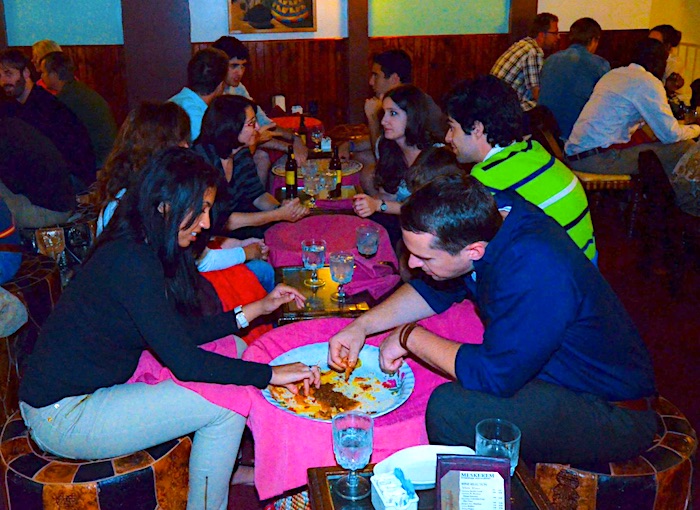
    So when Jackie invited me to join her for a Sept 2014 Ethiopian dinner at Meskerem, I was delighted to attend. There was a fairly large group of diners who were mostly Ethiopian cuisine neophytes. We didn’t sit on elegant wooden chairs or eat from pristine table tops. We were seated instead on traditional cushioned low chairs next to knee-high round tables made out of basket weave.

    Jackie Woodbury, Sept 25, 2014

    Join me tomorrow night for our Ethiopian dinner at Meskerem in Adams Morgan!

    Did you know Ethiopian New Year was Sept 11? Celebrate Meskerem, the name for the first month of the Ethiopian calendar. It ends the 3 month rainy season in Ethiopia (Jun-Aug) and celebrates more pleasant weather! We asked owners Mohaba and Nafisa to bring back their coffee ceremony for Bookalokal Inc.. Can’t wait! D.C. #DCeats #dcdining 

    Most of our group ordered the Meskerem Messob — mixed special which included beef, chicken, lamb, veggies, and unlimited injera all for $13.50 per person. A few ordered the veggie-only version. The dishes were anything but boring. The healthy portions included ruby beets, lentils, salad, carrots, green beans, and chickpeas and were flavored with garlic, paprika, and rosemary. The platter was fairly big and it was meant to be shared with others at your table.

    Sharing with others meant teamwork, better conversation, and synergy. We enjoyed our spicy palette of delicious curry-like stews accompanied by honey wine or St George, the national beer of Ethiopia. 

    The soft, stretchy, spongy flatbread doubled as an eating utensil and the hands still get plenty messy.

    “Is this the messiest you’ve ever gotten eating with your hands?” I asked my friend Yoomie Huynh.

    “Close, but not quite. The messiest I’ve ever gotten was at the Ben’s Chili Bowl half smoke eating contest during the H Street Festival. I didn’t win, but I ate everything in sight.” 

    Jackie enjoyed working with Mohaba and Nafisa in organizing the event. 

    “It brought lots of people from all different nationalities together to share a meal, a chat, and a smile,” she said. “Ethiopian cuisine is very communal.”

    I am forever awed by the resourcefulness and resiliency of the Ethiopian people.  Just like Tadiwos Belete from Boston Spa, the owners of Meskerem were innovative and resourceful in building their business and keeping it running despite limitations and setbacks.

    Less than a year later, Meskerem — after being opened every day since March 15, 1985, suddenly closed. The owners held down the fort and watched as one after another, Ethiopian eateries closed or relocated to U St or the burbs in Maryland and Northern Virginia. And after 30 years, they decided to sell the property to developers and retire from the limelight.

    And with that according to Tim Carman, food reporter at the Washington Post, “the neighborhood’s connection to that first wave of war-weary immigrants appears to be severed forever.”

    * * *

    1 Carman, Tim. “R.I.P., Meskerem: The Ethiopian restaurant that shaped Adams Morgan”, May 4, 2016

    2 “Manager of Meskerem Restaurant in D.C. shot, wounded”, Ethiopian Review, September 30, 2008

  • Building Bridges

    Building Bridges

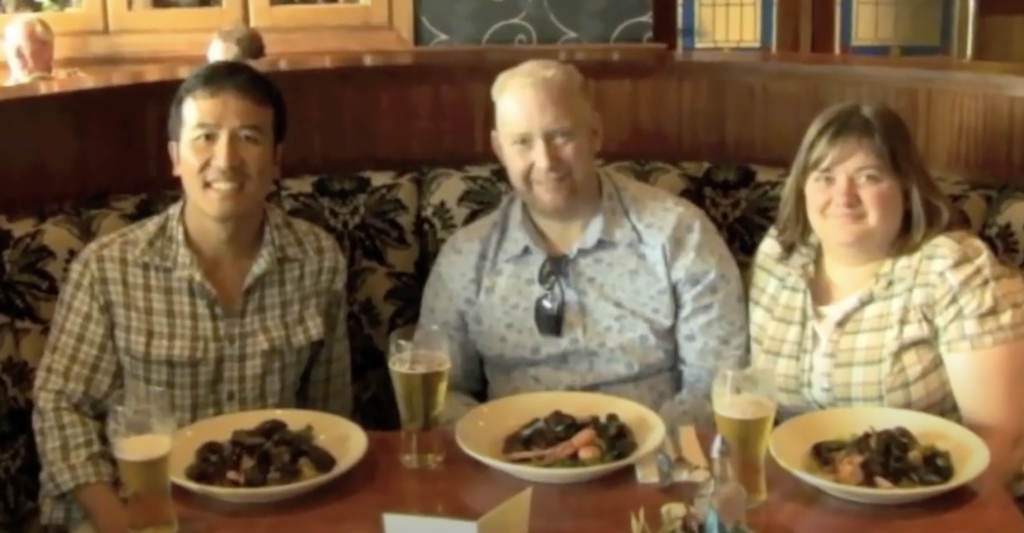
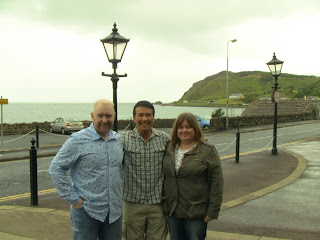
    The next day, I hopped on a train to Northern Ireland to see Mark and Lee, my folklife fest friends who I had not seen since 2007. They took the entire day off from work to give me a grand tour of the Antrim Coast showcasing the scenic, untouched Northern Ireland coastline —  one of the most beautiful in the world, and the Giant’s Causeway, a World Heritage Site, declared by the Irish as the 8th Wonder of the World.


    Enjoying a meal with Mark and Lee in Northern Ireland

    Mark and I created an impromptu limerick which we posted on Youtube

    Here we are in Giant’s Causeway

    Where 40,000 columns of basalt rock stand today

    The volcano erupted

    The larva cooled

    But before there was science

    There was the Legend of Finn McCool

    It is called the Giant’s Causeway

    It was made by Finn McCool

    It’s really just the start of a stepping stone tool

    To get across to Scotland

    To fight with Bennadonner

    Through many disagreements

    They pulled each other asunder 

    He took the cloth much 

    And try and try as he may

    He never hit his target

    But he made us our Loch Neagh

    The mud landed in the water

    And with all the might he can

    He only then succeeded

    In making the Isle of Man

    So he took to playing the organ

    And over here were his pipes

    He played the Sash, Derry’s Walls, and Billyboys

    But started loads of fights

    Cuz’ the Scottish Giant thought they were his tunes

    But little did he know

    That the music for Highland bagpipes

    Came from across there near Dunloe

    We then visited Balintoy Harbour on the Antrim Coast, 13 kms away. 

    “Haven’t been back in 28 years.  When I was nine years old, my family would come here for the summer holidays, and I would dive off these rocks, swim across this pool of water, climb up the natural stairway and dive again. Would do this all day long,” Mark reflected.

    “When you return to the Capital City, please let all your friends and runners know how beautiful the Emerald Isle truly is,” Mark said.  Then I gave him and Lee a big hug and wondered where in the world we would meet again.

    I got to do a lot of quality sightseeing and made new friends who taught me a lot about the precious value of life and respecting other people.  I learned about the sectarian conflict and how it is important to learn and understand each other.

    Belfast is known for its troubles and religious conflict.  For over 25 years, the IRA (Irish Republican Army) clashed with the Irish National Liberation Army. The Republicans carried out a guerrilla campaign against the British forces as well as bombing infrastructure and killing innocent civilians. 

    On Bloody Friday 1972, the IRA set off 22 bombs killing 9 people and injuring 120.  When the bombs dropped, people did not know what to do.  There were no bomb shelters.  They did not know whether to run, hide or stay sheltered at home. The IRA hoped they would be just as successful in catching the government and the people unprepared in hopes of getting Northern Ireland out of the UK.

    Truly, there was only one main pursuit: The Irish Republicans wanted a united Ireland. More than 3,500 people were killed of whom over half were civilians.

    However, there was never such a state as a united Ireland.  As an outsider looking in, I didn’t truly understand what the big deal was, other than the name and the unity.  Just ten years ago the border was filled with concrete barriers, barbed wires and bombs. Today Northern Ireland and Ireland enjoy an open border where citizens could cross either side freely without having to produce a passport. 

     “I’m glad you took some time to research our history,” Mark said.  “It was very important for the parties to understand our differences so that the IRA and the British government could properly negotiate.” 

    The last place I visited was the First Presbyterian Church where I met tour guide Arthur Magee.

    Arthur Magee

    “Belfast has been a by-word for the troubles, sectarian strife, and intolerance. If you come nigh you will see a city where on a micro level, people are building bridges.  The most important bridge that is been built is in each and every single person here. That bridge is between who you actually are and how you see yourself. Whether you’re part of the problem, looking back and blaming other people, or whether you’re part of the solution and reaching out and seeing other human beings, as exactly that, human beings. We’re no different from any other place in this planet. We’re products of circumstances and history. And the same problems that exist in Belfast apply everywhere.  Belfast isn’t a byword for intolerance, it’s a beacon for hope. It’s a place where people are reaching out and it shows the possibility of change. And it also shows the importance of each and single person to reach out, to build bridges and to see other people as exactly that, other people.”

    This whole trip was more eye-opening than attending class at GWU, and definitely a lot more fun. No encyclopedia, no ebook reader, no youtube video could teach me life’s social skills better than what I learned in Barcelona, Normandy, or Belfast.

    I only had one final day in London when I returned from Belfast. In life, nothing rarely happens the way you intended it to.  It’s important to be flexible, fluid and understanding.  Sometimes life brings you pleasant surprises — it’s not scripted or orchestrated, but just right.  Life can be charming, like that, if you let it. In the long run, we will appreciate the fact that we were flexible and cherish the tender times that we were able to spend together.

    The dinner with Kim and my nieces was wholesome and filling.  I did not know it was even possible to make spaghetti so delicious.  The meal, in fact, was just as good as Rio’s Japanese Tonkatsu curry she cooked for us the night I left for Northern Ireland. This is also the very first time I’ve spent time with Kim, Kae, Rio, and Rintaro all at the same time, under one roof.  So it’s a very special moment to be thankful and cherish especially when we let life’s circumstances take the lead.

    We had a wonderful time, talking, laughing, and just enjoying a simple and pleasant meal with friends and loved ones. Nothing special, though it meant the entire world to me.

    After dinner, we all went to Notting Hill to visit Rio as she was painting her clothing store.  Notting Hill is a fabulous, affluent, fashionable community with beautiful Victorian homes and attractive storefronts.  It is a very artsy place that reminds me of Chelsea, NYC, and Georgetown, D.C.

    The last 12 months have been momentous for Kim since this is the first time that she has seen Mom, my older sister, Pearl, and me, within the same calendar year, since we immigrated to the US in ’79  (Mom in Japan at my grandmother’s funeral, Pearl in Hong Kong and now home in London). This was no coincidence, and it was a precious moment to forever embrace.

    Luck was recurrent through the course of the trip since the idea was born during a routine run on the Mall.  I boarded a Space-A flight from Joint Base Andrews at the very last minute and every moment after that was entirely spontaneous.

    It was serendipitous that I met Marcy and fortuitous to reunite with my folklife friends Mark and Lee.  And I wanted nothing more than to re-create this experience for Americans back home.  And on the MAC (Military Airlift Command) flight from Ramstein AFB back to Andrews, I had plenty of time to contemplate and plan my next big project.  I was looking forward to coming home and reuniting with my pet parrot, Apollo and my pit bull, Georgia. Both were in good hands with my housemate, Kanita Williams.  I knew that fate would lead her to become a lot more than just a typical roommate.

  • Patriots’ Day

    Patriots’ Day

    We were conducting routine flight operations off the balmy coast of Southern California — in the distance stood the coastal mountain range of Santa Ana where the blistery, dry winds blew from deep within.

    On that gray September day, I woke up like any other, and switched on the remote to see whether the Atlanta Braves still remained on top of the National League and whether the Chargers would start Drew Brees or Doug Flutie as quarterback during the regular season.

    Strange, I thought, as I started my morning ritual of shaving, brushing, and dressing.  One of the twin towers was hit by an errant airplane. What kind of idiot would do that?

    In the wardroom, I polished up my continental breakfast while participating in the obligatory morning gossip with friends.

    “What’s up PAO (Public Affairs Officer)?”  The yellow-shirted flight deck officer chuckled as we bumped fists.

    “Not a thing, Shooter.  Hoping for a slow day and a nice weekend in port. Got lots of tours, but also time with my four-year-old son. How are your catapults doing?”

    “Well, we’re flying, aren’t we? We got lots of steam enough to launch a MAC truck a million miles.”

    “Super, save some steam for my DVs.  So, I hear the Chargers are finalizing on a starting quarterback. Do you think Brees will fly or go down the Ryan Leaf road?”

    [DVs or Distinguished Visitors is the Navy program to expose community members to the role of an aircraft carrier.  The DVs are flown aboard the plane and spend a night on board before taking off again the next day]

    “Nah, Brees is quality stuff man. Still can’t get over the Bolts picking Leaf over Hasselbeck. I’ve got a lot of hope pegged on this year, though.”

    “Aha, gotta run. Got a big tour to plan this weekend — Navy Leaguers and VFW.”

    A small cadre of junior officers from both the ship’s company and air wing created a weekly “fantasy football wing” aboard the carrier.  It took a lot of work sometimes following the performance of each player, but it built camaraderie, and these were the same officers that I worked with regularly when hosting distinguished visitors for a 24-hour visit to watch carrier flight operations out at sea.

    I grabbed a mug of java and then made my leisurely stroll across the hangar bay to my office on the second level of the ship’s island to start the day’s work of planning media visits and shipboard tours.  As the newest aircraft carrier in the west coast, we had a plethora of inport tour requests from veterans groups to students, some requesting specific things to see.  But every tour, no matter what the scope or size stopped in the Stennis Room to honor the living legacy of Senator John C. Stennis, the Statesman who served in the US Senate for 41 years and coined the ship’s mantra: “Look Ahead.”

    By this time, I had almost forgotten all about the World Trade Center.  When I arrived at the office, my entire division of three journalists and a Senior Chief Petty Officer were already there, but instead of reading email or editing the ship’s paper, their eyes were glued to the TV. The second tower was now ablaze and the sky all around southern Manhattan was filled with a huge plume of smoke.  

    From that day on, our lives were instantly shattered and perpetually changed. On November 12, 2001, the USS John C. Stennis (CVN 74) deployed to the coast of Afghanistan in support of Operation Enduring Freedom.

    As we left the San Diego harbor, Janine Zúñiga from the SD Union-Tribune along with a cadre of reporters stayed onboard to capture last words before we headed to harm’s way.

    “Stay safe Chito. Hope you guys hunt down Bin Laden,” Janine said giving me a warm embrace. Hope to see you back soon.”

    And before the Santa Ana disappeared on the horizon, Janine and the rest of the team boarded a C2 Greyhound and strapped in backward while the COD (Carrier Onboard Delivery) launched into the SOCAL sunny sky.

    * * *

    It was May 2, 2011. When I returned home late after studying for my Entrepreneurship and Innovation class finals with my industrious GWU classmates, I was shocked beyond comprehension. I flicked on the news to see jubilant university students and a throng of mostly young people celebrating in front of the White House. They popped champagne corks, climbed trees, and swung from lampposts.  Whoa, what happened? Did D.C. finally get the monkey off their backs and win a playoff series?  Many were still in sports jerseys embracing perfect strangers regardless of team loyalty. They had stepped out of a Washington Capitals playoff game and would be out here celebrating till the wee hours of the night.  Revelers waved American flags and chanted “USA, USA!”, celebrating the heartwarming news from President Obama that Bin Laden was killed in a firefight.   

    Ecstatic Americans had stormed Lafayette Square as if it was V-J day all over again. I was overjoyed to witness an outpouring of patriotism and devotion for our country displayed by the college-aged crowd—the generation that was just kids when 9/11 struck.  These Millennials will be around—raising our flag—a lot longer than the Boomers for the rest of this eventful tumultuous, 21st century.

    Despite it being finals week, no exam was more significant or impactful.  I felt that it was imperative that I had to be physically in front of the White House to witness history being made.  Everything else played second fiddle. This was our version of the falling of the Berlin Wall.  Would it mark a pivotal moment in history during the Global War on Terror?

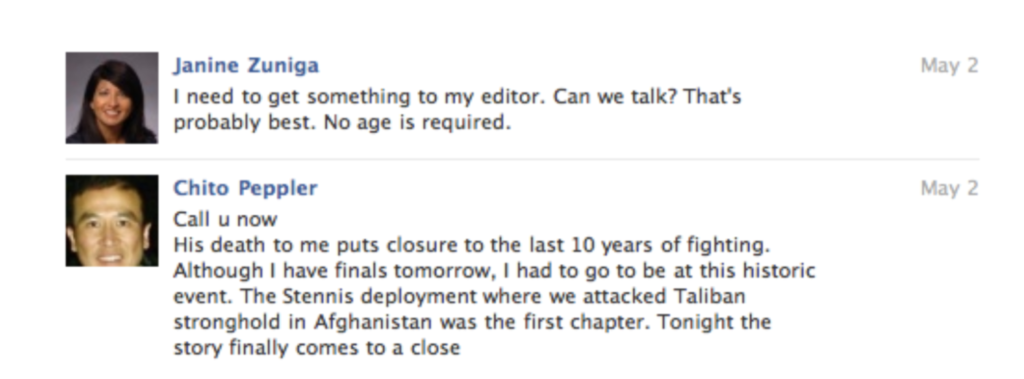
    As I snapped pictures on my phone, I noticed a DM from Janine Zúñiga, who was still working at the Union-Tribune. She was reporting on the event and searching for a quote.

    Naturally, I was happy to go on record and it was a big closure to the tragic events ten years prior. 

    I also knew that I was way overdue for a reunion.  Back in December, I made a pact with Janine and her husband, Jari, that I would visit them to run the San Diego marathon and they would do the same in D.C.   So I purchased a one-way bus ticket west, hoping to make it a multi-trip excursion — I had a lot on my plate, a lot of goals to accomplish, and I kept my eyes steady on the prize.

  • Europe on a Whim

    Europe on a Whim

    The tall white fir draped with multi-colored lights shined bright and festive in front of the U.S. Capitol.  A mile and a half to the west, the nation’s most iconic monument was bathed in a spotlight embodying the history and culture of the nation’s capital. 

    On December 18, 2010, I was on my routine run on the National Mall when I suddenly realized how much better it would be to run in a foreign country. It was on a two-week winter break from George Washington University (GWU), and I was in desperate need of respite from working exhaustively on a startup business plan.

    So I stopped in my tracks, pulled out my phone from my fanny pack, and called Andrews Air Force Base passenger terminal. A C-17 was departing that night for Germany with a roll call of 2210.  I rushed home and started stuffing winter clothes into my threadbare backpack. Normally I would need a couple of days to pack for these trips.  But today, I only had a couple of hours.

    Service members, retirees, and their families were traveling “Space-A” — short for space available — on an Air Mobility Command flight to Germany. If a seat on the 54-seat Globemaster jet was available they could travel without charge.

    The C-17 with the 445th Airlift Wing normally ferries troops and cargo around the world. On its way to Afghanistan, plenty of people were headed to Europe for the Christmas holidays.  

    There were no more seats available. As a military retiree, I was bumped to the bottom of the barrel. A family of four had to rush home to grab some gifts they forgot to bring.  If they didn’t come back in time, I would be assigned one of their seats.

    Needless to say, by midnight I sat shivering away on a metal seat, the only cost for the flight was $10 for a box lunch, its baloney sandwich and carrot sticks as hard as ice.  Many families with children were bundled up in blankets and lying on sleeping bags.  The jet was so loud passengers had to wear earplugs and thankfully my dose of trazodone reposed me to psychedelic-like sleep.  When I woke up, eight hours later, we were arriving at Ramstein Air Force Base.  The sun was just rising over the Luxembourg horizon. It was Christmas Day, and there were plenty of rooms available at the Ramstein Inn.

    I’ve been to Germany many times over my career. My last duty station in the Navy was at the U.S. European Command in Stuttgart.  I would love to enjoy schnitzels and Pils for Christmas, but the main intent on this trip was to run in warmer pastures.

    So I found a flight to someplace more sultry and exotic for only 150 Euros. It was an Air France flight from Frankfurt to Paris.  I was fortunate to have an overnight, 9-hour layover in Paris — the only catch — it was in Orly, an airport an hour and a half from Charles de Gaule.

    What a weird concept. It was like having an overnight layover in Reagan. Then hopping on a taxi to Dulles 30 miles away to board the next flight. 

    During the holidays, Orly Airport was as dead as a wing joint in Paris.  The terminal was closed but luckily several of us managed to find a spot to catch some ZZZs, away from the custodians and security guards.

    The next morning, I hopped on a taxi to CDG and then caught a puddle jumper to Barcelona. I was excited but also dead tired — flying on military Space-A and sleeping on the floor in Paris airports started to take their toll.

    I checked into Party Hostel Kabul, a 4-min walk from the Liceu subway station. I was happy to discover that the lodge was smack dab in the middle of Plaza Real in the center of the old city, not far from the Picasso Museum.  With such a festive name like, I couldn’t resist.

    I was too exhausted to wait to see if a double bedroom would come available. So I took the mixed-gender dorm and immediately hit the sack.  When I woke up at 6 pm, I showered, checked my email, and moseyed down the steps to see what was cooking in bustling Las Ramblas.

    On the way down, I met some friendly backpackers: Brazilians, Canadians, and two cute American sisters: Meagan and Marcy Miller from NYC.

    “Where are y’all going?” I asked in the most distinct Southern twang I could muster.

    “Marsella, the oldest bar in Barcelona,” said Meagan.

    “Yeah, Picasso and Gaudi went there. It remains exactly how it was in 1820,” Marcy added.

    We roamed the charming Gothic Quarter with narrow medieval streets filled with trendy bars and Catalan restaurants.  The district was a former Roman village, ancient architecture sat next to buildings constructed at the turn of the century.  Artisans sold leather and jewelry near the 15th-century Barcelona Cathedral with a stunning courtyard full of playful geese. And working girls roamed the winding streets looking for lovers and dollars.

    “10 Euros,” one advertised.  

    Another whistled and winked her eye. I felt a ripple of humiliation and sorrow.

    Shopping is amazing in Barcelona from all the large commercial stores at Calle Portal de L’Angel to the pint-sized boutiques on Calle Avinyo.  What should have been an easy 5-min stroll morphed into a 45 min sight-seeing excursion packed with cultural attractions and diversions.

    As soon as we walked into Bar Marsella, we were brought back in time to the old Barcelona that still thrives but is slowly disappearing. The walls were stained chocolate brown from years and years of cigarette smoke.  The whiskey bottles that lined the walls must have been a century old and covered in dust. Paint falling from the ceiling in big chunks. Thick clumps of cobwebs lined the ceilings and antique chandelier, creating an ambiance of character and age.  

    Our bartender, Sebastián, greeted us amicably. “Hemingway was a regular patron here,” he boasted. “We’re super famous for our absinthe.”

    “Really, the liquor is banned in the US,” Meagan murmured. “It’s s’posed to cause hallucinations.”

    “Hey absinthe is a spirit, not a liquor.,” our bartender exclaimed. “And we serve 100 proof here.”

    “Well, we made it this far. There’s a reason why Picasso was such a great abstract artist,” Marcy said jokingly. I’ll buy the first round of shots.”

    “You don’t drink the absinthe straight. It’s too potent and disgusting,” Sebastián said flashing a crude smile. 

    “Then how do we drink it? As a cocktail or a mixed drink?” I asked.

    “You can order it in a cocktail, or with a mojito or you can drink it the ole’ traditional French way,”  Sebastián responded.

    Sebastián served us the Marsella which is one part absinthe and 5 parts of iced water poured over a sugar cube on a fork until it dissolves.

    “Swallow this slowly,” Sebastián suggested. “Or else it could scald your throat.”

    Its wormwood, anise flavor was distinctly acrid and powerful. Thankfully the sugar quelled the bitterness and the water diluted the liquor making it more satiable.  It was a great Mediterranean ritual, and it was the start of an amazing European vacation.

    “Ok, the next round, I wanna light it on fire.”

    “You can get lit tonight Marcy as long as you live to tomorrow to tell the tale,” Mirian quipped.

    “And I’ll be sure to wake you up early so we can catch the beautiful Barcelona sunrise,” I added, raising my eyebrows for emphasis.

    The next morning, Marcy and I caught a glimpse of the first rays peeking over the Mediterranean Sea at Port Olímpic.  Built in 1991, the marina hosted water sports and sailing for the ’92 Summer Olympics. 

    We ran on the spacious stretch of sand alongside sculptures of sea life to the Barceloneta fishing village.  Then we ran past the ferry station and the largest Marine Aquarium in Europe.

    “We went there yesterday,” Marcy said, pointing to it’s unique, cylindrical shape. “It’s a Mediterranean-themed aquarium, and they have a large tunnel which gives you the feeling that you are swimming with the sharks.”

    “I would love to pay a visit, but I’m running out of time here. Where else did you guys go?”

    “We visited Camp Nou. Meagan and I are both Barcelona FC fanatics.”

    “Is that right? I’m a big fan of Lionel Messi, too. He’s the greatest of all time.”

    As we ran past the World Trade Center, we saw Christopher Columbus pointing to the distant west over an ornate Corinthian column.

    “The hostel staff told me that this is the top tourist spot in town,” Marcy stated

    We stopped to admire the statue and then approached to read the plaque. 

    Monumento a Colón — constructed for the Exposición Universal de Barcelona in 1888. Location of the site where Columbus returned to Spain after his first voyage to the Americas. The monument serves as a reminder that Barcelona is where Christopher Columbus reported to Queen Isabella and Ferdinand after Columbus’ most famous trip.

    “Columbus is such a hero in this country.”

    “But he’s not adored back home,” Marcy rebutted. “Many consider him a villain who embraced slavery, colonialism, brutality, and theft of indigenous land.”

    After discussing the significance of the memorial and watching people starting to accumulate, we ran back along the tree-lined promenade on La Rambla. 

    “So now that you’re retired from the Navy and getting your MBA, will you be working a government job?”

    “I dunno, but I really hope not. I want to do something entrepreneurial, something that will help people and continue traveling not just overseas, but in the US.”

    “How old are you?”

    “43, and you?”

    “24, I thought you were a lot younger.”

    “Age is how you perceive it.”

    As we returned to the hostel, backpackers were just rising for Desayuno enjoying sweet rolls with jam and cafe con Leche.

    Meagan came down, stretched her arms, and yawned. Then gave her sis a heartfelt hug.

    “Glad you’re alive after last night.”

    “We’re very much alive. We ran three miles and saw many Barcelonians jogging,” Marcy uttered. “The city is most spectacular at the crack of dawn.”

    “So I’m sorry to see you go tomorrow,” Marcy said with a twinge of sadness. “Where’s your next adventure?”

    “Normandy, France, then off to London to see my folks. You guys should join me.”

    “Well, it’s not like we have much going on. What do you think Meagan?”

    “Thanks for the invitation, but we really have so much more to see and do in Barcelona.”

    “Like what?” Marcy asked with a twinge of displeasure.

    “Well for one we have to do the obligatory girly thing and lots more shopping on La Rambla. And two, we still have lots of museums to see such as the Picasso Art Museum.  

    “Those things are important, but recognizing the sacrifices of the greatest generation is priceless,” Marcy replied.

    * * *

    As we looked over Omaha Beach, we paid homage to the D-Day troops in Normandy.  The troops faced a daunting challenge. The invasion was beset with ineffective airstrikes and poor naval bombardments. This set up the Allied troops against an almost unscathed German front, armed with formidable machine gunfire. The only chance of cover was to run towards the enemy. 

    Sixty-five years later, the hilly seaside bore few scars from the dark and gray day of June 6, 1944.  But on that longest day, things had turned to hell in a hurry.

    I could not imagine these young soldiers jumping out of their LCAs (Landing Craft Assault), crossing the slippery beach, and climbing the cliff face via ropes and grappling hooks in the face of nasty fire.

    It was extremely unnerving. The soldiers could hear the heavy thump of shells bombarding the exterior of the coffin-like LCAs as they were approaching the shore.  They knew death was knocking, but they kept approaching.  They kept their mind affixed on the Star-Spangled Banner and Her Majesty the Queen.

    Some shells hit dead-on, the LCAs exploding into tiny pieces like a box of eggs dropped from the Eiffel Tower. Many soldiers perished from gunshot, blast, or drowning before even hitting the shore. They would never set foot on the foreign beach they aspired to reach, the sea crimson red, their faces, white with shock and trepidation.

    It was a travesty to see so many young, unbounded lives forever lost on the blood-soaked beaches. At the American Cemetery, we could see thousands of white crosses and the Stars of David facing patriotically towards their homeland, saluting with only their solemn smiles. This is the final resting place for 9,400 Americans along with a monument to 1,500 more listed as missing in action.  How sad that we never found their bodies — brave Americans who never got to come home, their bodies washed away in the English Channel.

    Marcy placed her hand softly on my shoulder. “Have you lost close friends in the current conflict?”

    “Yes, one to each war – a buddy who I went to school with and a coworker at the Naval Hospital in Bethesda.”

    “I’m very sorry. D-Day was necessary to allow the Allies to complete the liberation of Western Europe. The wars in Iraq and Afghanistan, however, are unjust and a tragic verdict of 9/11.”

    Marcy and I continued on our run along Av. Moulin flanked by hedgerows and surrounded by geography very similar to what our soldiers faced 67 years ago.

    A couple of kms later, we were back to Omaha.  The beaches still bore witness to the immense human sacrifices.  Numerous German battery sites were maintained in excellent condition (since countless, young Germans had surrendered without putting up a fight). As a result, we were offered a rare glimpse into a living, life-less museum that clearly depicts the power and plight of the mighty German defensive.  Luckily, many of the troops from Eastern Europe and Asia would surrender at the first opportunity.  Many of them were comprised of an international army made up of troops from throughout the Soviet empire and even China and Korea.  Can you imagine the looks in the eyes of our GIs when they first faced their enemies?

    But still, many Germans fought viciously and effectively.  The Germans had four huge casements with a 205 mm cannon. These guns were effective in dueling with American battleships.  For eight days, the German soldiers stayed inside the casements with virtually nothing to eat and drink but stale bread and bad water. They had no place to use the bathroom — yet they stayed.  Many did not surrender until they ran out of ammunition.

    “If you were a young soldier during Normandy, would you risk your life for your country?”

    I thought long and hard. “The simple answer was yes, but would I be brave enough to carry out my duties the same way these men did on these beaches.  That is an enduring question that bears no easy answers.”

    “Why don’t you plan a run back home,” Marcy suggested. “Kind of like the run we did in Barcelona, to see all the amazing sights and to ponder on the significance of these historic landmarks?”

    “That’s a wonderful idea. It’s a great way to understand different cultures and to navigate through the sights and sounds of the old continent.”

    The English Channel was rough and choppy the next day when I caught the Normandie Express to Portsmouth, England — a high-speed catamaran cruise ferry. I would have given time to reflect on my tour and also work on my website.  Marcy and Meagan would catch the Eurail to Paris, and I thanked them for giving me incredible ideas to ponder.

    In London, I visited my sister, Kim, my nieces Kae and Rio, and nephew Rintaro at their Chiswick flat. It was a special, last-minute, family reunion – my first time seeing everyone all together.

    I gave Kim a tight embrace. “I’m very sorry for the loss of Grandma.”

    “Thank you. She will always have a special place in my heart.”
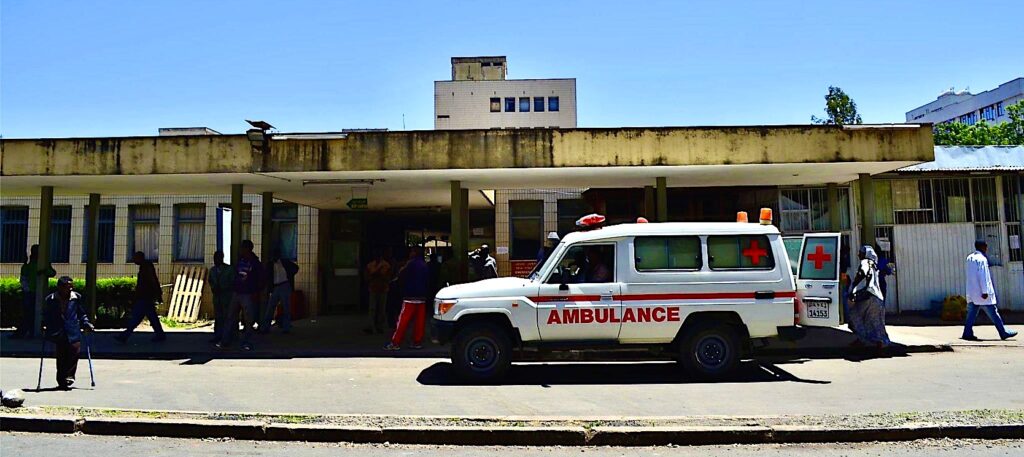

    Left-Right: Kim, Rio, me Kae and Rintaro

  • Folklife Fest

    Folklife Fest

    July 7, 2007

    I was running vigorously along a cinder path, flanked by the Smithsonian Castle and the Museum of Natural History, when I suddenly realized that running was my heaven on earth. It was also the optimal time to be in D.C. during the pomp-filled Smithsonian Folklife Festival, showcasing Northern Ireland and the Mekong Delta. The most northern country of the U.K. was experiencing a watershed moment following ten years of stability and peace. Over 100 participants from Ulster — performers, artists, storytellers, craftspeople, cooks, etc. — traveled to the Nation’s Capital for several months to teach, demonstrate and display their lifestyle in their Celtic homeland.

    Running and sweating profusely along my well-worn path, it’s very rare to have a chance to enjoy a cold one. 

    Noticing that the Northern Ireland display had an actual outdoor bar and dehydrated after an arduous run, it was hard to resist the cooldown. I ordered a creamy pint of Guinness that would surely quench my raging thirst.

    This is where I met Jamie, a cute, cheerful brunette who had an avid interest in anything Celtic. This was her second year volunteering for the Folklife Fest, and she enlisted so that others could enjoy her passion for folk.

    “Some people have volunteered for 30 years. Once you serve for 10, you get a pin. Some say that the pin’s diamond is a shaving from the Hope Diamond on display at the Natural History Museum.”

    The Irish love to drink, toast, and chat, and soon Mark Wilson and Lee Lawson, stylish musicians strutted out, showing off their remarkable set of drums. The two could twirl the drumsticks like a cheerleader’s baton and never miss a beat. There was a variety of other musicians and bagpipers at the festival, but Mark was one hell of a drummer who could put on a captivating show leaving the crowd in awe.

    Mark introduced me to Tommy Sands — a legendary Irish-ballad singer whose bariton Irish Gaelic voice could calm even my most excruciating painful runs. I could listen to him endlessly and grieved when the show concluded. I gave Tommy one of my signature military coins, and he presented me with one of his CDs that had not yet been released — I felt royally honored and overjoyed by such a heartfelt gesture from such an endearing musician.

    Mark and Lee, snare drummers, during the Smithsonian Folklife Festival

    Mark picked up a drum stick and gave it a twirl. “Why don’t you join us at the Key Bridge Marriott after the festival.” 

    “Yeah, it’s the after-hours entertainment in the ‘Olympic Village’ for all the performers,” Lee added.

    When I arrived in the drab brown ballroom I was immediately met by Scottish bagpipers and colorfully dressed people from the Bahnar tribe of central Vietnam. There was lots of music, dancing, multicultural harmony, and of course traditional ethnic food.

    Mark picked up a traditional French baguette with what looked like deli meat inside. “What kind of sandwich is this?” 

    Jamie picked up a slice of pate. “It’s a Banh Mi, a Vietnamese baguette.”

    “Wow, the crust is super thin and crispy. What’s inside?” Lee asked.

    “That’s precisely what makes a Banh Mi different than an American sub. It has pork belly, grilled pork, pate, cucumbers, cilantro, and jalapeños,” Mr. Nguyễn, who was responsible for narrating the tall tales of the Mekong Delta, replied.  

    Mark took a bite and chewed softly. “Geez, I’ve grown up loving corn beef and Ulster fry, but I appreciate the opportunity to try different cuisines.”

    We stayed up late meeting new people, dancing, and consuming Guinness and Harp. At 2 am, we hung out by the pool and went for a dip.

    “Have you visited Irish pubs in the area?” Jamie turned and asked.

    “Don’t believe I have, except maybe on St Patrick’s Day. Any recommendations to get a good pint of Guinness?”

    “In Virginia, there are Ireland’s Four Provinces, and in D.C., there’s the Irish Channel.

    “Super, word of mouth is the most reliable restaurant guide.”

    Tommy raised a pint of Guinness. “The mark of a true Irish pub is not the cottage pies or stouts, but real Irish drinking music.” 

    “And real football, not the fake one that goes spiral through the air,” Mark said. “There’s nothing like Ulster rugby — the Americans just copied us.”

    You guys should take a tour of the Pentagon tomorrow,” I suggested. “Would love to show you where I work.”

    “Really, didn’t know they were giving out tours now after 9/11.”

    “Well, we’ll visit the Sept 11 Memorial and chapel as well as the Hall of Heroes featuring the names of all the Medal of Honor recipients, but I’ll also give you a personal tour and show you the DOD (Department of Defense) press offices and briefing room.”

    “Would love that,” Mark replied. “And one day, I hope to show you my stomping grounds and spectacular countryside of Northern Ireland.”

  • O Canada!

    O Canada!

    I checked into the HI Vancouver Hostel and started searching for a Drupal developer who would be willing to take on my project at a reasonable cost.

    Then she walked in. I tried hard to keep my eyes on my screen and not at the soft, velvet flesh of her long, graceful legs.  As she crossed the lobby of the hostel, she paused briefly and turned slightly.  That’s when she caught me looking.

    She had sandy blonde hair, that fell to the middle of her back. Her eyes were green like emeralds that sparkled under the moonlight in the windswept Georgia Strait that separated Vancouver Island from British Columbia.

    I forced myself to focus on my work, but I just couldn’t keep my eyes off her luscious curves.  And I sat frozen as she gently approached, quickly trying to formulate a one-liner.

    “Love your feet,” she said softly.

    I didn’t bother to look down. I knew what my feet looked like.  They were dry, calloused, and much neglected.

    Hers were sleek and graceful and appeared to sparkle under her soft, Bohemian dress.

    “Your feet, the ones on your computer,” she explained.

    “Oh, those.” I blushed lightly, my eyes smiled back.  As she drew nearer, I could see her taut, smooth skin stretched tightly over her sculptured rouge cheeks.

    “Oh, they’re my Five Fingers,” as I explained that I am a huge fan of the Vibrams Five Fingers running shoes and being an avid brand promoter, I had stuck a pair of their running shoe decals on the top of my laptop.

    “Oh, are you a runner?” She already knew the answer to this question.

    “Yup, Luv it more than anything.”

    “I’m not much of a runner, but I do like biking.”

    “Me too, in fact, I bought my bike to Vancouver from Washington, DC.”

    “Well then, perhaps we can go biking sometime. I’m pretty familiar with all the bike trails in the area. Lived here nearly my entire life”

    “And I’m brand new to this city, so would love a personalized tour.”

    “Well, I’m not available tonight, but perhaps tomorrow night.  My name is Naomi, but friends call me Pony. Here’s my contact, in case you’re available.”   

    Wow, I knew Canadian women loved the outdoors, but are they always this aggressive?

    The next day, we met at the hostel and rode our bikes toward Stanley Park. We were first met by a statue of Lord Stanley, the former Governor-General of Canada, standing with open arms and decorated with a Vancouver Canucks sweater.  Then we proceeded towards the rainforest trails and marveled at the 100-year-old trees.  At the north side, we stopped to admire the Girl in a Wetsuit statue decked with a Canucks jersey.

    Girl in a Wetsuit statue

    Next, we cycled the seawall trail around the Lost Lagoon offering pristine views of the mountains juxtaposed with the downtown skyline. 

    Turtles were basking in the sun, Blue Herons standing motionless in the water, waiting for a fish or frog to emerge.  

    The trail was rather flat and we rested at Second Beach where we dipped our feet in the water while Naomi shared her passion for yachting and how Vancouver serves as a remarkable outdoor playground.

    “There’s a reason why they call Vancouver the Most Livable City,” I said.

    “But lately, our reputation has been tarnished by the riots.”

    “I heard that the city was stunned when the Canucks lost to the Boston Bruins in game 7 of the Stanley Cup.”

    “The Canucks had never won a Stanley Cup, they had already claimed it as theirs for the taking,” she said.

    “Yes, they had the league’s best record, scored more goals than any other team, and allowed the fewest,” 

    “No Canadian team has won the Stanley Cup in 18 years. We felt robbed since the US dominates in the mighty triad of football, basketball, and baseball, and Canadians love their ice hockey,” she said. 

    Fans set fire to vehicles, smashed windows, and looted stores – it was a big black eye to Vancouver’s moniker as the ‘Most Livable City.’

    “I joined the clean-up and food vibe movement. Real Canuck fans are not hooligans.”

    The next day, Naomi and I visited Gastown, the site of the previous riots in 1971. We attended the Fête de la Musique event filled with local musicians from baroque to rock.

    Naomi and friend dancing in Gastown

    We then visited the Cambie Pub, an unpretentious bar that’s been open since 1897. The place reeked of grunginess, but the vibe was amazing. The pub was a walk in time and there were many interesting characters there. Backpackers and tourists who were staying at the hostel upstairs walking through. No fancy cocktails here. Just shots, vodka sodas, gin and tonics and cheap pitchers of beer.

    The Pub was only a stone’s throw away from Blood Alley and Water Street passing trendy furniture and clothing shops next to chronic meth and crackheads hanging out by the street art.

    We stopped in front of the Steam Clock which was really half powered by electricity.  It was a great visit with a lot of sights, sounds and ambience.

    Naomi and I on Blood Alley, Gastown

    “You need to add Vancouver to your website,” Naomi stated.

    “If I can find someone to build it, I certainly will,” I responded.

    “Super, please keep me posted. I’ll walk you back to the hostel.”

    The following day, I set up a meeting with Gregg Coppen of North Studio at their downtown office.

    “I want customers in Vancouver to be able to tell us their favorite dishes so that when they travel to San Diego or Washington, DC, we can make customized recommendations.”

    “Food is a very appealing content. A content management system like Drupal should help you best store, organize and display it,” said Gregg.

    “How do we categorize each dish?”

    “By using the taxonomy module. You can define your vocabulary such as ‘pasta’ and then add terms to each vocabulary such as ‘fettuccine, spaghetti, penne, lasagna’.”

    “Can we break it down even further?”

    “Sure, for spaghetti we can create new terms ‘angel hair, bucatini, fusilli, etc. You can go as deep as you want.”

    “And we can do the same for restaurants and stores?”

    “Sure ‘fine dining, fast-casual, family-style, cafe, buffet, contemporary casual, bistro, etc.’”

    “And then break it down even further by cuisine, whether it’s romantic, is good for sports lovers, have a view, etc.”

    “Yes, and under sports pub, we can describe their favorite teams. You wouldn’t find a Canucks fan at Boston Bruins bar, or vice versa.”

    “How would customers be able to search and find the right content?”

    “By incorporating Apache Solr for the faceted search. Like when you’re shopping for a type of shoe on Zappos, you can narrow down by brand, size, color, the whole nine yards.”

    “Wow, this is a complex project, and I can’t wait to get started. I knew that coming to Vancouver was a great idea. But as a fledgling startup, I’m on a shoestring budget. What is the best price you can offer me?”

    “Lemme discuss with the office and get back to you soon.”

    The rest of the team from North Studio loved my idea but responded that the total cost would surpass $30,000.

    “That’s too much. I’m a struggling MBA student. Can we do it for 15K?” 

    When I was riding the Greyhound bus back to DC, I got a call from North Studio that they had accepted my offer.  They were impressed by my passion and wanted to build something of value that could be used coast-to-coast.  To offset the costs, we would work together in building the site, and I would be solely responsible for adding the content.  I definitely couldn’t find these rates in DC or any major metropolitan city.

    That’s why I had to travel 4,000 miles and back to find a well-rounded team who understood the intricacies of food, how to categorize it, and display this information on a mesmerizing, visually appealing site.