Category: Nature

  • A Home in Joplin

    A Home in Joplin

    Started like any other Sunday in Joplin, Missouri. People went to church and gathered with family and friends. The Joplin High School had just held its graduation, and families were returning home. But as dark clouds gathered above, a severe storm was brewing. At 5:41 PM, an EF-5 tornado touched down in the southern part of the city and tracked east, cutting a 13-mile swath through the heart of downtown.

    It struck the campus of the Missouri Southern State University, where the local high school was holding its graduation ceremony. One hundred fifty people were still in the arena and swiftly evacuated to the basement. But others were already returning home and in stark danger. Tragically, the storm claimed the lives of seven students (including one of the recent graduates). 1

    After weeks-on-end of studying and exams and tweaking my business plan, I was ready to head west on my cross-country bus trip, looking for that elusive web developer who would be my last cog in the wheel.

    The journey which would take me through the heartland of America would seem interminable — four gritty days and sleepless nights. Could I tolerate the middle-of-the-night disruptions, filthy bathrooms, the constant chit-chat from disheveled vagabonds? 

    On May 25, I boarded a Greyhound from Baltimore heading west. I would stop in San Diego to run a marathon with Janine and her hubby before I headed north to Vancouver to find a web developer for my site. 

    But at the last minute, I decided there was a more significant calling than just running a road race. The city of Joplin had taken a heavy toll, and they desperately needed help.

    A full-figured woman in her early 20’s sat a few rows behind me in a rowdy bus where a couple of boisterous fellows were cracking us up like a lobster claw. The jokes were coming at a feverish pace, exactly what we needed to establish the right mood for the long journey. One rugged hooligan was getting too fresh for comfort, causing the girl to pitch a fit. 

    “Young lady, please get up and sit somewhere else then. The rest of you brats – if I hear another peep from you, I’m gonna pull over and drop ya’ll off on the side of the highway where you’re gonna have to thumb your way home,” the bus driver announced indignantly.

    The commotion subsided, but, I still didn’t get a lick of sleep for the next few hours. At the transfer in St Louis, I joined the other backpackers lounging on the floor. I would be stopping in Joplin for tornado relief – my body and my mind yearned for respite.
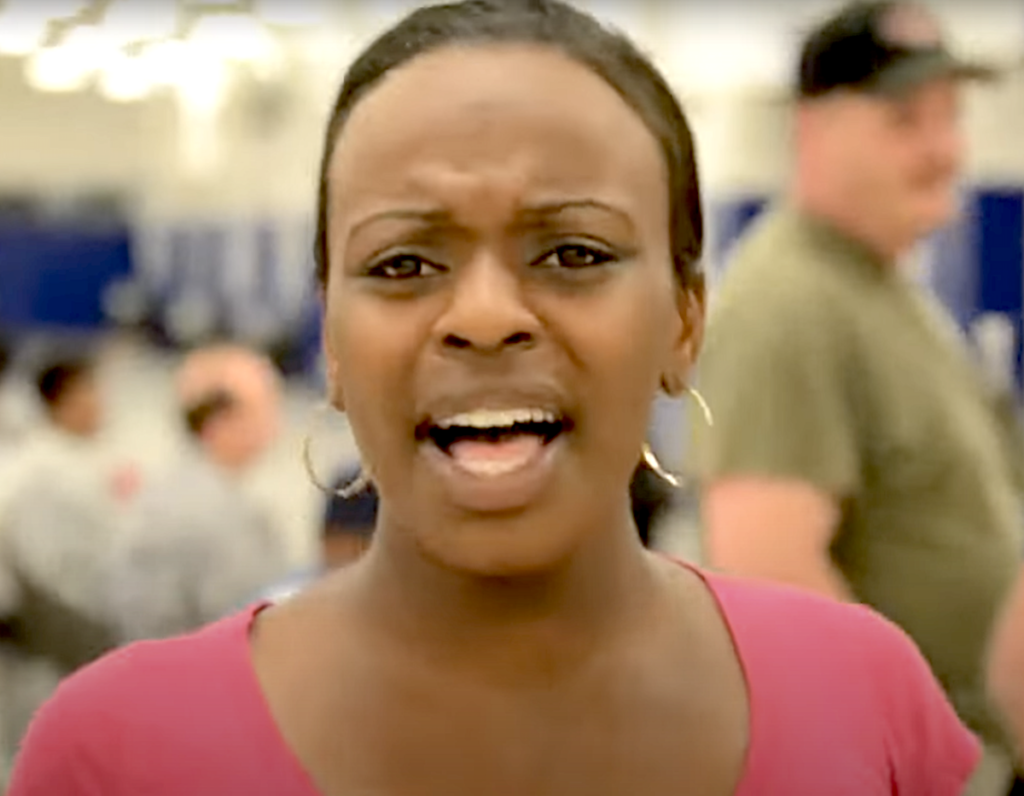

    Damaris singing @ the St Louis Greyhound station

    Suddenly my siesta was interrupted by a soft rendition of Keyshia Cole’s “Love”. She had a voice that could move mountains and a face that could launch a thousand trucks.

    “Wow, you sound just like Whitney Houston.” 

    “Thank you. Maybe my delightful croon will make me rich and famous one day.”

    “I certainly hope so. What’s your name and where you’re going?” 

    “You can call me Dee for Damaris. I’m heading to Ok. City to visit my aunt, Mimi.”

    “Right on my dear. You should be going to L.A. You have a face of a movie star. I hope you’ll remember me when you record your first album.”

    “How ’bout you — how far west are you going?”

    “All the way to California, but first, I’m making a stop in Joplin.”

    “Yeah, I heard about the tragedy – many precious lives were lost, thousands of homes destroyed.”

    Then as I boarded the bus in St Louis, the bus driver started to give me a hard time.

    “Are you sure you want to get off in Joplin — the entire town has been wiped off the map.”

    “Absolutely, tens of thousands of survivors desperately need our help.”

    “Ok, but your bags are going to San Diego.”

    “Can’t do that, Ma’am. I have a foldable bike in the baggage compartment, and I’ll need that to navigate my way around the disaster area.”

    “You’re outa your mind. That’s against Greyhound policy. Since the town is completely devastated, I’m sure they could use your help — what little support you can provide.”

    Thankfully, the driver relented, and as we entered the town, I felt road-weary but headstrong for whatever lay ahead. I hugged Damaris goodbye, hoping she would suddenly decide to come along.

    “Stay safe,” As she wiped a tear from her eye. “I hope we’ll meet again soon.”

    “Well, eventually, I’ll be heading to California to find someone who can help me create a restaurant search directory. Maybe something that you can find useful one day.”

    Damaris rolled her eyes, doubtful that would be in the cards.

    When I stepped off the bus, my sour, sweaty smell of three days of rolled-on antiperspirant evaporated like steam in the scorching Missouri sky. There was no one to greet me, not even a soul on the street. It was a lonely bus stop in a mid-sized municipality, some parts showing virtually no signs that a deadly EF-5 Twister had rolled through a few days ago.

    Despite lugging an extra bag around from bus to bus I was now deeply grateful that I had decided to bring my Dahon foldable 12-speed roadster along.

    President Obama and his entourage and Governor Nixon had just visited and showed compassion. “This is a national tragedy,” Obama said. “We’re not gonna stop until Joplin is back on their feet.”

    Flags were flying at half-mast. Emergency response vehicles and T.V. trucks filled up a parking lot at the downtown mall. A National Guard hummer drove through the desolate downtown like it was in Iraq after the Battle of Ramadi.

    The campus of the Missouri Southern State University, where the AmeriCorps had set up their task force, was four miles from downtown, and taxis weren’t readily available during a crisis. I loaded all my luggage on the bike (Macbook Pro, Nikon 5100, sleeping bag, and thankfully only a few pieces of clothing) and pedaled my way to the Volunteer Relief Center.

    By the time I arrived on campus, the volunteers had already departed for the day, scraping the thick crust of grime covering their arms and legs. The staff was putting things away, and in the cafeteria, a large throng of AmeriCorps members was busy debriefing the day’s events. 

    I was fortunate to catch the tail end when the staff decided to recognize each other for their hard work and dedication. I pulled out my camera and started filming, unbeknownst that I would witness something quite remarkable. This is where I met Quinn, Julie, Abby, and Will — incredible people who sacrificed tremendously to serve Americans in need. They called on each other and recognized their contributions. Then they presented a rose as a token of appreciation. I choked as I held back tears for people I didn’t even know. But after sharing with us something special from the inside, I felt that they would be dear friends for life.

    Just a month before the tornado, a Memorandum of Understanding was signed that established Missouri Southern as an approved American Red Cross Shelter. The timing was perfect, and the campus turned out to be an excellent resource and accommodation. I didn’t have a rack to sleep on, and hot foot was limited. But the building was new, and the couch that I slept on was firm and comfortable. I was blessed to have a roof over my head, considering the thousands of people who were left homeless. I made sure I got some rest because tomorrow would be a big day.

    Julie was one of the first team members that I met. Incidentally, she was from College Park, Maryland. I could tell that she had a lot on her plate, so I asked how I could be of help.

    The overflow of support from Americans everywhere had been enormous. Thousands of people called United Way and American Red Cross, offering their homes, vehicles, services, etc. AmeriCorps then posted this info on their Facebook page.

    “We’re getting dozens of calls a day from people offering to donate goods and services to survivors. People are offering their cars, computers, cell phones, tents, food, clothing,” said Julie. “We’re simply posting these offers on our Joplin Tornado Relief Services Facebook page, and it’s first come, first served.” 

    The issue with these postings was that there were not sortable or searchable nor user-friendly. There was not one clearinghouse that gathered all the information. As a result, many of these donations were not managed effectively or were simply wasted. So I took the initiative to create an online database where the AmeriCorps could easily track all donations and match them specifically with survivors depending on their exact needs.

    So I spent the first two days on campus creating an online database with Drupal (which I literally learned on the go). After a lot of painstaking research and trial and error, the database was created — a small but momentous cause for celebration.

    * * *

    My next goal was to document the heroic contributions of the AmeriCorps’ disaster relief teams. Spending the last three days working alongside them, I had nothing but wonderful things to say about this dedicated group of young men and women. They were bright, innovative, and selfless, never counting the costs of uprooting their lives to serve our country in need with very little pay. With people like Abby, Julie, Will, and Melissa, I was left impressed and thankful for their sacrifices.

    But there was only one problem: I didn’t have any closed-toe shoots. Traveling on Greyhound, I had to travel light. Thank goodness, Abby came to the rescue and lent me her boots for the day.

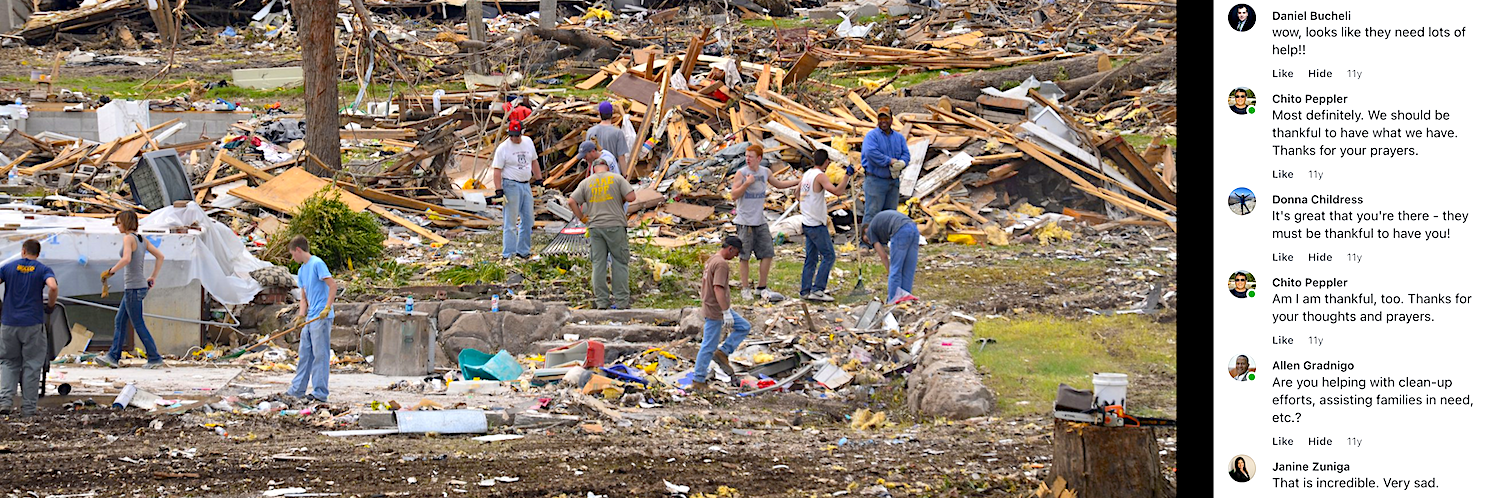
    The next day I visited the site ravaged by the tornado and met some of the victims. The first time I got to see the damage, I was shellshocked. Trees that were left standing were stripped bare by the intense winds. The images brought back forlorn memories from Haiti after the 2010 earthquake. It had already been an amazing whirlwind tour in what has already been a very long journey for disaster relief for one of the deadliest single tornadoes in America.

    I met Christina on the bus going out to the field. Originally from Georgia, her mother owned a house an hour from here. An outdoor person with a warm heart, she loved to snow ski, windsurf, sail and pitch a tent and enjoy nature at its finest. Christina would be spending the next month sleeping in tents and volunteering for both the AmeriCorps and the Ozark Food Harvest. After this stint, she would be heading north to Alaska to go glacier camping.

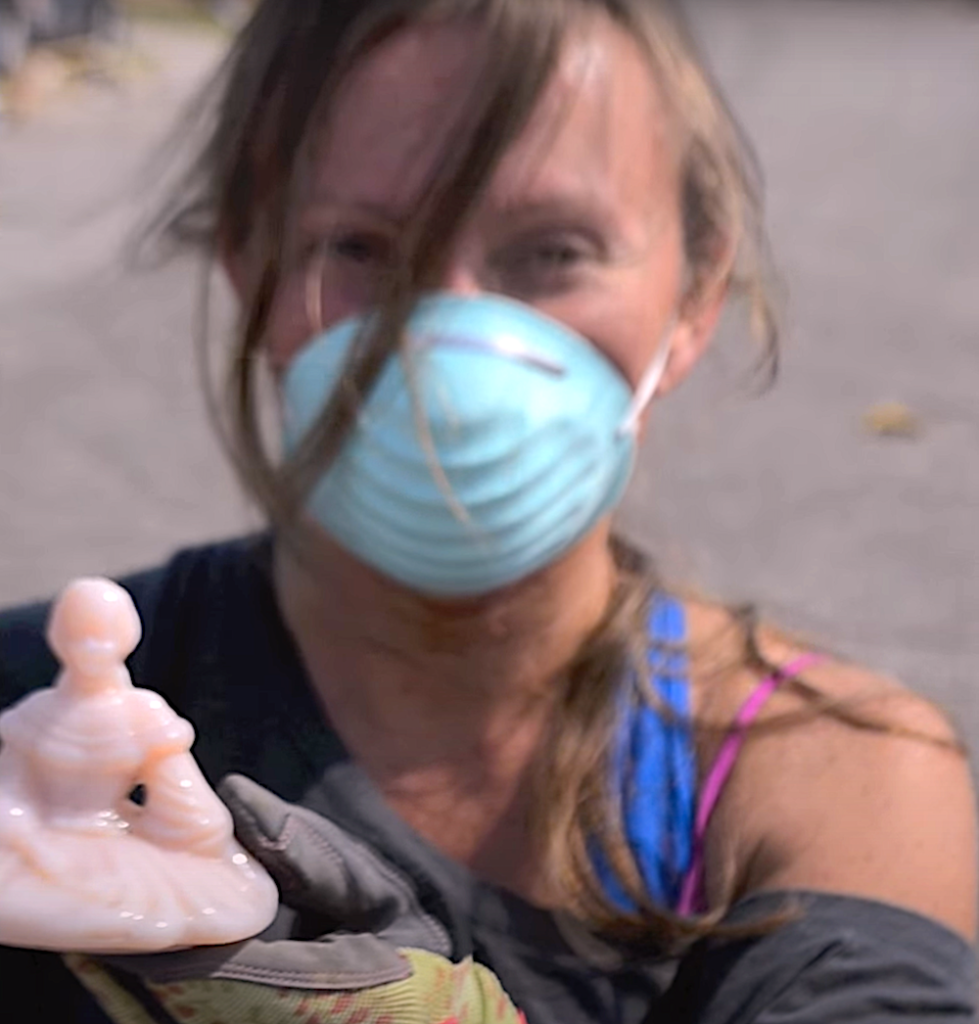
    I listened to Christina as she cleared debris and collected memorabilia. One of the hardest parts of the relief effort was recovering personal belongings.   Many of the pictures, some over a generation old, would be digitized and posted online in hopes that someone would claim them. Christina found some dental records, books, videos, and a porcelain figurine.
    Debris piled near the street would be picked up by the U.S. Army Corps of Engineers.

    I also spoke to Chelsea, another volunteer who lived in the area.

    “Many people think we’re a small town. The population in Joplin is 50,000, but actually, 300,000 people work and shop here,” she said. “Lots of folks commute from neighboring town — just like me.”

    I was humbled and honored to meet Jerry and Debby, one of the homeowners who lost two houses: theirs and their daughters. Jerry was actually in his truck when the deadly twister hit. He was lifted up and spun around before being dropped in front of his house. His house was pulled straight out of the foundation and blown to bits. House after house for miles in all directions was literally reduced to slab. Cars and trucks were crushed like soda cans. Jerry was fortunate to have made it out alright. His house was reduced to shreds, but he was blessed to have his life and that of his lovely family.

    “It’s slowly sinking in,” said Debby, as she looked through some old photos. “It’s taken a week for me.”

    “Yes, we really need to come here and experience it. Watching it on T.V. is not enough,” said Chelsea.

    Christina looked through some pictures she found. “And it’s important to look at your belongings as just items that come and go. They are not attached to you personally — it’s time to move on.” 

    I was deeply touched when I visited St. John’s Regional Medical Center. Every window in the hospital was blown out, and the top two floors were ripped away. The staff had only minutes to pull patients from their rooms and into hallways before the storm struck. The entire building had been moved four inches off its foundation and six people died. Because there were concerns that the structure might collapse, the building was evacuated.

    Soon, the relief effort would come to an end and the city would shift into a reconstruction phase that would last for many years.
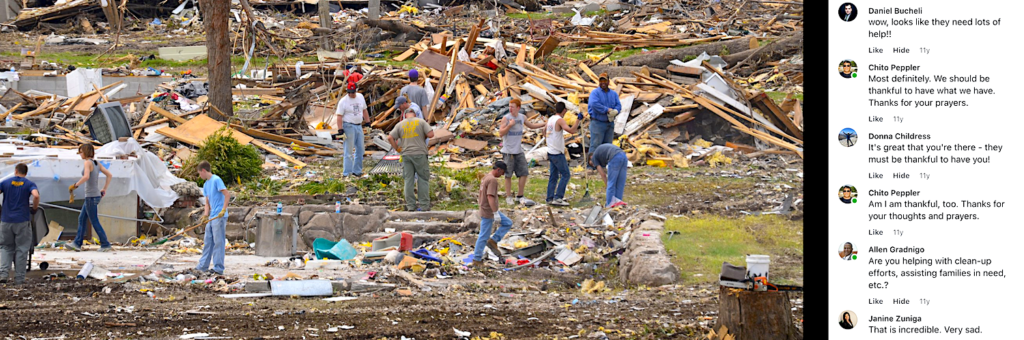
    I was proud and happy to see Sailors from the USS Missouri (SSN-780) clearing rubble and assisting homeowners with retrieving their belongings. Like the humanitarian assistance deployments to Haiti after the deadly earthquake last year, the U.S. military is always there to assist whenever disaster strikes. 

    Soon, the relief effort would come to an end, and the city would shift into a reconstruction phase that would last for many years.

    With damage estimated to be $3.18 billion, the Joplin tornado is the costliest single tornado in U.S. history (adjusted for inflation). 553 businesses and 7,411 homes were damaged or destroyed, affecting more than 17,000 people. The storm reached a maximum width of nearly one mile during its path through Joplin, killing 161 people (with an additional eight indirect deaths).
  • The Skies are Gray

    The Skies are Gray

    Donald “Clay” Clay, an Air Force veteran, was enjoying his stogie while chit chatting with friends, watching boats slipping by. On every weekday afternoon when the weather is fine, he and a half dozen of his perennial friends such as Robert “Bleu” Jones and Kimo Tavares gather at the Slip Inn to chill, booze up and snack on the crowd-favorite George wings. No one knows for sure why they call them George, but rumor is one of the cooks from the earliest days in the 80s came up with the secret breading.  
    The Tiki bar and restaurant wasn’t located in the Navy Yard, Old Town Alexandria or the National Harbor — places packed with tourists. Instead it was tucked away at the edge of Joint Base Anacostia Bolling, a well-kept secret amongst retirees.  That’s why Clay, Bleu and a handful of old timers made it a daily ritual when the clouds are clear and the skies are blue.

    And the weather forecast for the next three days was bright and promising. There was a ton of activity as military personnel and their families kicked off the glorious weekend with Country Western Night featuring a local, up-and-coming talent.

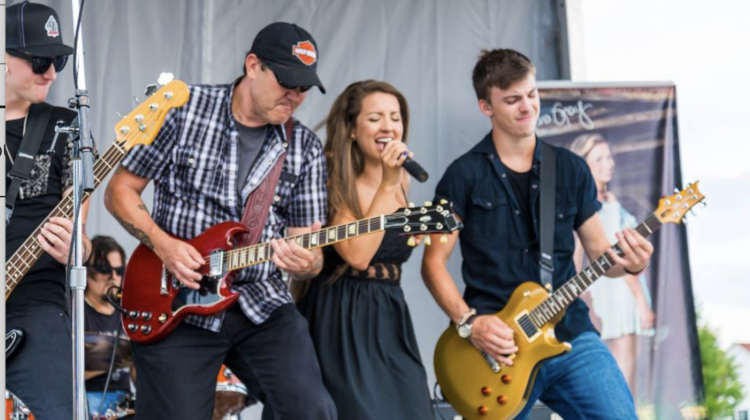
    Sara Gray is a singer, song-writer from Indian Head, MD., just down the beaten river in Southern Maryland.  The first time she sang in public was at the age of three on a cruise ship — from the soundtrack of the Teenage Mutant Ninja Turtles. She watched her father sing in his local band, then started performing at church and has rendered the National Anthem at various community events.  At 16, she wrote her first song and her budding repertoire focuses on country and classic rock.  For the last year, her schedule has been in high demand, opening for country stars such as Toby Keith, Dierks Bentley, the Zac Brown Band and Luke Bryan and performing all over the DMV.

    Sara Gray covering”Cowboy Take Me Away”

    Sara Gray loves audience participation

    “I’m so happy to be on the stage where I feel right at home. I love getting the crowd involved, clapping, dancing and singing along. They inspire me.”

    Justin Voskuil bartending at the Slip Inn Tiki Bar

    Sara Gray singing her original “One of A Kind”

    Photos by Skvora limited media

    Screen-Shot-2022-04-03-at-11.10.36-PM
    Screen-Shot-2022-04-03-at-11.10.51-PM
    Screen-Shot-2022-04-03-at-11.11.24-PM
    Screen-Shot-2022-04-03-at-11.11.43-PM
    Screen-Shot-2022-04-03-at-11.10.17-PM
    Screen-Shot-2022-04-03-at-11.09.46-PM
    Screen-Shot-2022-04-03-at-11.08.43-PM
    Screen-Shot-2022-04-03-at-11.08.59-PM
    Screen-Shot-2022-04-03-at-11.09.18-PM
    Screen-Shot-2022-04-03-at-11.08.25-PM
    Screen-Shot-2022-04-03-at-11.08.12-PM
    Screen-Shot-2022-04-03-at-11.09.33-PM
    Screen-Shot-2022-04-03-at-11.07.33-PM
    Screen-Shot-2022-04-03-at-11.07.59-PM
    Screen-Shot-2022-04-03-at-11.07.15-PM
    Screen-Shot-2022-04-03-at-11.05.40-PM
    Screen-Shot-2022-04-03-at-11.05.14-PM
    Screen-Shot-2022-04-03-at-11.12.11-PM
    Screen-Shot-2022-04-03-at-11.05.55-PM
    Screen-Shot-2022-04-03-at-11.32.51-PM
    Screen-Shot-2022-04-03-at-11.33.42-PM
    Screen-Shot-2022-04-03-at-11.26.06-PM
    Screen-Shot-2022-04-03-at-11.26.42-PM
  • The Tower

    The Tower

    In October 1984, I enlisted in the Navy straight out of high school in a small town in Southeast Georgia.  After serving aboard the USS Francis Hammond (FF-1067) in Yokosuka, Japan (the land of my mother), I applied for a commissioning program and the Navy awarded me a scholarship to the University of Florida where I earned my degree in Material Science and Engineering.  Upon my commissioning, I served as a Fire Control Officer and Navigator aboard USS O’Ban non (DD-987) in Charleston, South Carolina. and Mayport, Florida, and as Cruise Missile Training Officer in San Diego, California. After back-to-back sea tours, I wanted to broaden my horizons beyond Surface Warfare so I lateral transferred to the Public Affairs Community.  I served as the P.A.O. for the USS John C. Stennis (CVN-74), which deployed for Operation Enduring Freedom after 9/11, and as the Public Affairs Officer for Bethesda Naval Hospital (now Walter Reed) where a generation of warfighters healed and moved on.  After Bethesda, I was assigned to The Office of the Secretary of Defense where I served as a spokesman for detainee affairs in Guantánamo Bay, Cuba. There wasn’t a single day that I wasn’t answering a media query about the health and well-being of our Gitmo detainees, and after two years of shuffling back and forth from D.C. to Camp Delta, I was ready to return to military medicine. I served as the P.A.O. for the Surgeon General of the Navy, an assignment that required a lot of traveling to visit our medical forces in the U.S. and abroad. My final duty was as a P.A.O. for the U.S. European Command and NATO’s Supreme Allied Commander where I got to do a lot of traveling in Europe as well as visit our troops in Afghanistan. By then, I was both burned out and washed out and my marriage fell apart due to the stressors of the military, and in Nov. 2009, I retired with 20 years of combined service.  

    I was ready to reboot and start a brand new career in the private sector. Thankfully, the Veterans Affairs offered generous G.I. Bill education benefits, so I applied to the George Washington University School of Business hoping to incorporate my experience and appreciation with social media in my career. I enrolled in the Executive MBA program, a degree where I fit in because it was targeted to senior managers who were already in the workforce. The school was in high demand due to the great recession as many unemployed decided to return to school. Before the semester started, our cohort of 20 eager students embarked on a five-day retreat at the Homestead Resort in Hot Springs, VA.

    We were attending sessions that didn’t require powerpoint or pointers, but still had everything to do with leadership development. Because the truth is, you can’t learn management from just inside a classroom.

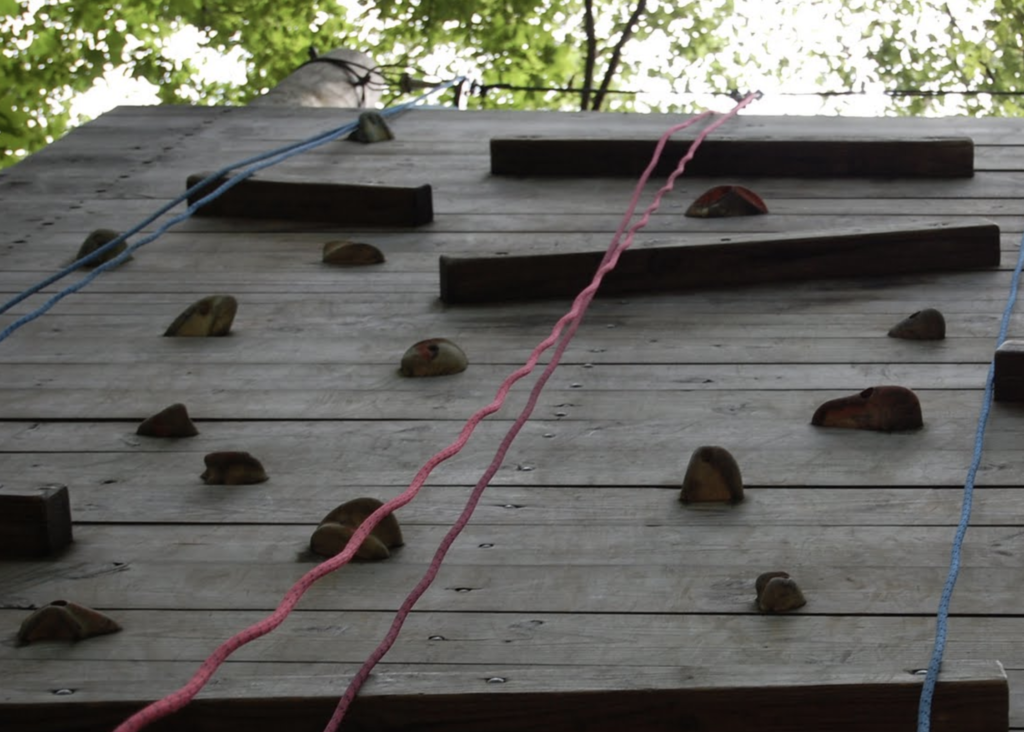
    After spending two days engaged in team-building exercises and thought-provoking discussions, we were ready to get some fresh air. The next morning, we hiked down the Allegheny Mountain gorge trail, through the thick forest, past the lovely cascade falls until we arrived in the middle of a grassy field with a gigantic wall affectionately known as the Tower. At first glance, the 40-foot Tower seemed daunting and insurmountable.

    Throughout life, we face many obstacles both personal and professional. The key to responding to these roadblocks is to face them head-on and to rely on the support from others around you. This is teamwork — being supported and supporting each other. To work as a team, it’s imperative to understand each other’s strengths and weaknesses, both physically and mentally. The better we know one another, the better we’re able to assist each other.

    The Ropes Course is a metaphor for problem-solving — it challenges us to face our fears and climb on. The higher you climb, the more you rely on your team for support.

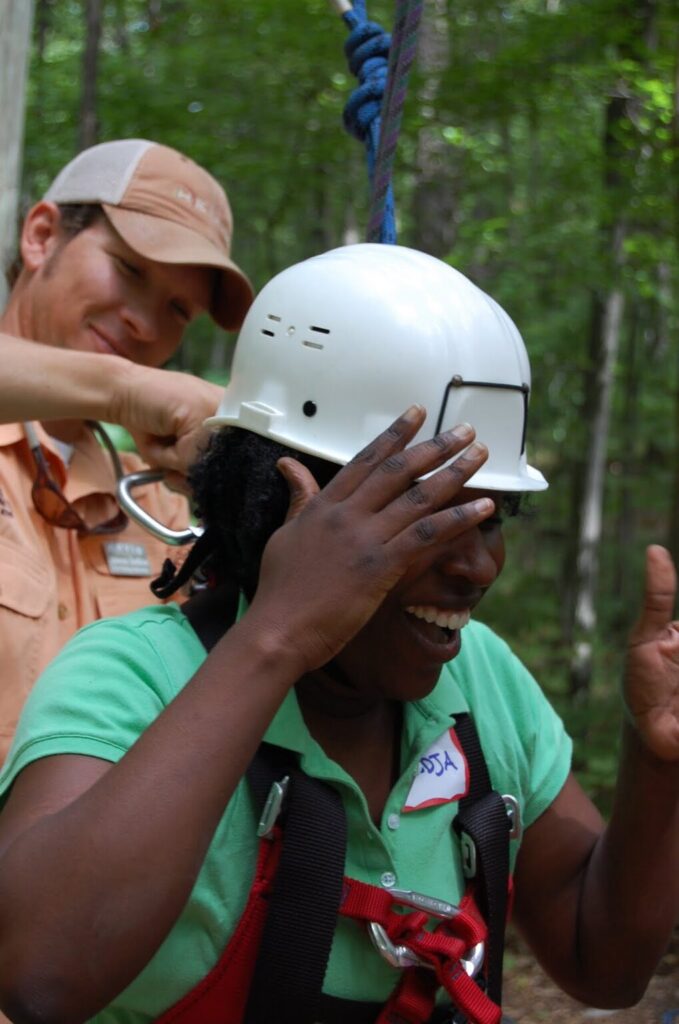
    The first task was to have each person assist their team members in donning their harnesses — the one crucial piece of equipment that would ensure our safety and protection.

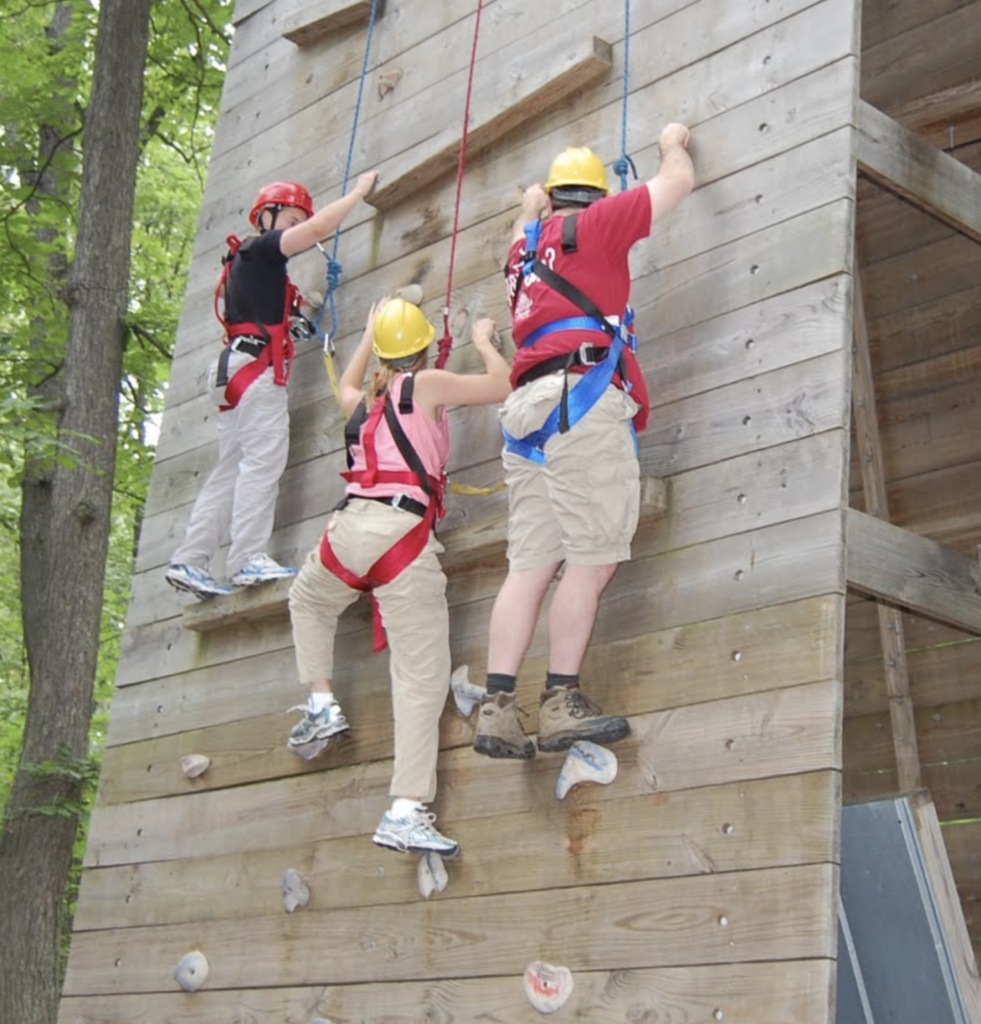
    Then each three-member team ascended in tandem facing the challenge of not having enough steps for all three to ascend at the same time.  Sometimes a climber would have to take a step down in order for another climber to proceed.  That was ok, as long as they all reached their final goal together.

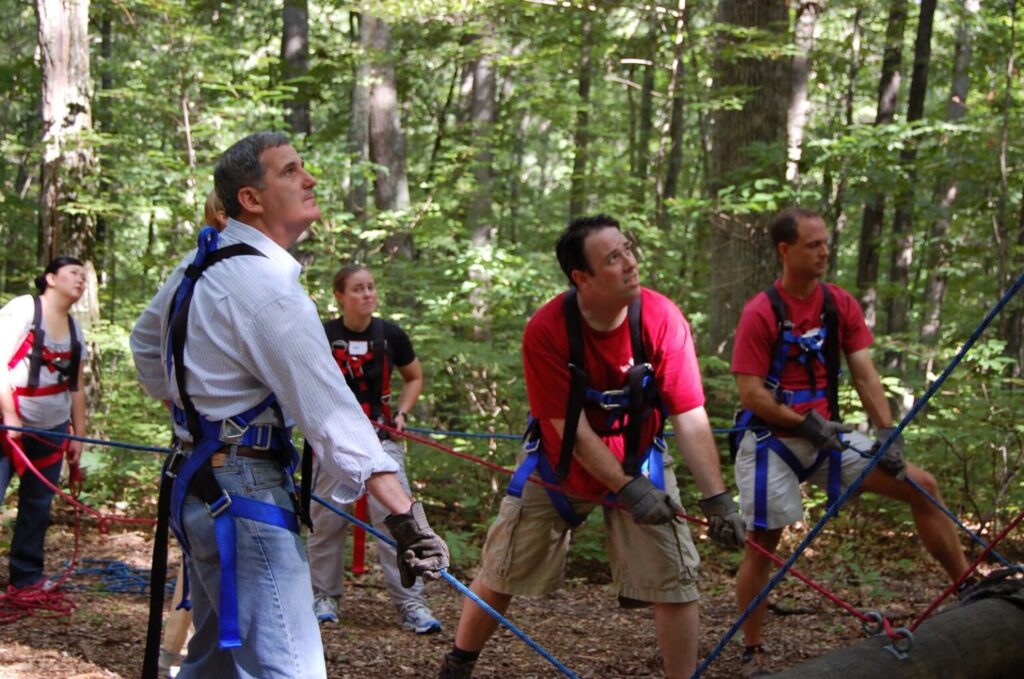
    Meanwhile, the rope handlers kept a close eye on the climbers, coaching them on where to place their hands and feet and providing support and encouragement so that the 3-member team could ascend up to the top together and then back down.

    When it was my turn to go, I knew I could rely on my teammates Senodja Walker and Amir Moore. 

    Rope team: 

    “Senodja, place the right hand on the block and your left foot on the step.”

    “Amir, move your right foot off the step and place it on the block so that Senodja can place her foot on it.”

    As the climbers moved up the wall and then back down, the Belay teams were tasked to remove the slack by paying out or pulling in the excess line. They kept a close eye and a taut line, but they were not allowed to pull the crew up the wall — the climbers had to figure this out on their own.

    Climbers: “Slack!” (pay out a little rope.)

    Belayers: pays out the rope and pauses to see if climbers ask again.

    Eventually, all of us made it over the wall and back down, taking one step at a time.  The journey in life is rarely simplistic and straightforward. If we keep striving, we will eventually reach our goals, even if we have to climb over life’s challenges, obstacles, and setbacks.

    Senodja completes her climb

    The EMBA class was broken down into five groups of four and we would remain in our group for the entire two years.  One of the first projects that we worked on was the Airline Pilots Association.  ALPA, with 53,000 members and 40 airlines in the U.S. and Canada, is the largest airline labor union in the world.

    We were having a conference call on Skype when I touted the fact that airlines such as Jet Blue and Delta have successfully used Twitter and Facebook to promote their services and to provide updates on weather and flight cancellations.

    “I’ve had it with you. Your solution to everything is always social media!” Eli my classmates exclaimed.

    This wasn’t the first time he had said that and we always seemed to butt heads over the value of social media for building brand awareness and winning new customers.

    I immediately slammed the phone down in disgust, ending the conference call.

    The next thing I did was call Senodja on the phone. “I can’t work with Eli any longer — he’s so unaccepting of social media. I’m here to learn and broaden my horizon, not to clash heads with idiots who are operating in the stone age.”

    “Wish you could join my team, but we’re already maxed out.”

    “Then maybe I should try to understand his point of view better and discuss our differences.”

    “Or perhaps you could transfer out of the EMBA and enroll in the Professional MBA program — it may take a little longer to complete but you’re offered a choice of a wide selection of classes and will be collaborating with a diverse myriad of people, many I’m sure value the virtues of social media.”

    October 1984

    I enlisted in the Navy, straight out of high school in a small town in Southeast Georgia., named Darien.  After serving aboard the USS Francis Hammond (FF-1067) in Yokosuka, Japan (the land of my mother), I applied for a commissioning program and the Navy awarded me a scholarship to the University of Florida where I earned my degree in Material Science and Engineering.  Upon my commissioning, I served as a Fire Control Officer and Navigator aboard USS O’Ban non (DD-987) in Charleston, South Carolina. and Mayport, Florida., and as Cruise Missile Training Officer in San Diego, California.  After back-to-back sea tours, I wanted to broaden my horizons beyond Surface Warfare so I lateral transferred to the Public Affairs Community.  

    I served as the Public Affairs Officer for the USS John C. Stennis (CVN-74), which deployed for Operation Enduring Freedom after 9/11, and as the P.A.O. for Bethesda Naval Hospital (now Walter Reed) where a generation of warfighters healed and moved on.  After Bethesda, I was assigned to The Office of the Secretary of Defense where I served as a spokesman for detainee affairs in Guantánamo Bay, Cuba. There wasn’t a single day that I wasn’t answering a media query about the health and well-being of our Gitmo detainees, and after two years of shuffling back and forth from D.C. to Camp Delta, I was ready to return to military medicine. I served as the Public Affairs Officer for the Surgeon General of the Navy, an assignment that required a lot of traveling to visit our medical forces in the U.S. and abroad. My final duty was as a P.A.O. for the U.S. European Command and NATO’s Supreme Allied Commander where I got to do a lot of traveling in Europe as well as visit our troops in Afghanistan. By then, I was both burned out and washed out and my marriage fell apart due to the stressors of the military, and in Nov. 2009, I retired with 20 years of combined service.  

    I was ready to reboot and start a brand new career in the private sector. Thankfully, the Veterans Affairs offered generous GI Bill education benefits, so I applied to the George Washington University School of Business hoping to incorporate my experience and appreciation with social media in my career. I enrolled in the Executive MBA program, a degree where I fit in because it was targeted to senior managers who were already in the workforce. The school was in high demand due to the great recession as many unemployed decided to return to school. Before the semester started, our cohort of 20 eager students embarked on a five-day retreat at the Homestead Resort in Hot Springs, VA.

    We were attending sessions that didn’t require powerpoint or pointers, but still had everything to do with leadership development. Because the truth is, you can’t learn management from just inside a classroom.

    After spending two days engaged in team-building exercises and thought-provoking discussions, we were ready to get some fresh air. The next morning, we hiked down the Allegheny Mountain gorge trail, through the thick forest, past the lovely cascade falls until we arrived in the middle of a grassy field with a gigantic wall affectionately known as the Tower. At first glance, the 40-foot Tower seemed daunting and insurmountable.

    Throughout life, we face many obstacles both personal and professional. The key to responding to these roadblocks is to face them head-on and to rely on the support from others around you. This is teamwork — being supported and supporting each other. To work as a team, it’s imperative to understand each other’s strengths and weaknesses, both physically and mentally. The better we know one another, the better we’re able to assist each other.

    The Ropes Course is a metaphor for problem-solving — it challenges us to face our fears and climb on. The higher you climb, the more you rely on your team for support.

    The first task was to have each person assist their team members in donning their harnesses — the one crucial piece of equipment that would ensure our safety and protection.

    Then each three-member team ascended in tandem facing the challenge of not having enough steps for all three to ascend at the same time.  Sometimes a climber would have to take a step down in order for another climber to proceed.  That was ok, as long as they all reached their final goal together.

    Meanwhile, the rope handlers kept a close eye on the climbers, coaching them on where to place their hands and feet and providing support and encouragement so that the 3-member team could ascend up to the top together and then back down.

    When it was my turn to go, I knew I could rely on my teammates Senodja Walker and Amir Moore. 

    Rope team: 

    “Senodja, place the right hand on the block and your left foot on the step.”

    “Amir, move your right foot off the step and place it on the block so that Senodja can place her foot on it.”

    As the climbers moved up the wall and then back down, the Belay teams were tasked to remove the slack by paying out or pulling in the excess line. They kept a close eye and a taut line, but they were not allowed to pull the crew up the wall — the climbers had to figure this out on their own.

    Climbers: “Slack!” (pay out a little rope.)

    Belayers: pays out the rope and pauses to see if climbers ask again.

    Eventually, all of us made it over the wall and back down, taking one step at a time.  The journey in life is rarely simplistic and straightforward. If we keep striving, we will eventually reach our goals, even if we have to climb over life’s challenges, obstacles, and setbacks.

    The EMBA class was broken down into five groups of four and we would remain in our group for the entire two years.  One of the first projects that we worked on was the Airline Pilots Association.  ALPA, with 53,000 members and 40 airlines in the U.S. and Canada, is the largest airline labor union in the world.

    We were having a conference call on Skype when I touted the fact that airlines such as Jet Blue and Delta have successfully used Twitter and Facebook to promote their services and to provide updates on weather and flight cancellations.

    “I’ve had it with you. Your solution to everything is always social media!” Eli my classmates exclaimed.

    This wasn’t the first time he had said that and we always seemed to butt heads over the value of social media for building brand awareness and winning new customers.

    I immediately slammed the phone down in disgust, ending the conference call.

    The next thing I did was call Senodja on the phone. “I can’t work with Eli any longer — he’s so unaccepting of social media. I’m here to learn and broaden my horizon, not to clash heads with idiots who are operating in the stone age.”

    “Wish you could join my team, but we’re already maxed out.”

    “Then maybe I should try to understand his point of view better and discuss our differences.”

    “Or perhaps you could transfer out of the EMBA and enroll in the Professional MBA program — it may take a little longer to complete but you’re offered a choice of a wide selection of classes and will be collaborating with a diverse myriad of people, many I’m sure value the virtues of social media.”

  • O Canada!

    O Canada!

    I checked into the HI Vancouver Hostel and started searching for a Drupal developer who would be willing to take on my project at a reasonable cost.

    Then she walked in. I tried hard to keep my eyes on my screen and not at the soft, velvet flesh of her long, graceful legs.  As she crossed the lobby of the hostel, she paused briefly and turned slightly.  That’s when she caught me looking.

    She had sandy blonde hair, that fell to the middle of her back. Her eyes were green like emeralds that sparkled under the moonlight in the windswept Georgia Strait that separated Vancouver Island from British Columbia.

    I forced myself to focus on my work, but I just couldn’t keep my eyes off her luscious curves.  And I sat frozen as she gently approached, quickly trying to formulate a one-liner.

    “Love your feet,” she said softly.

    I didn’t bother to look down. I knew what my feet looked like.  They were dry, calloused, and much neglected.

    Hers were sleek and graceful and appeared to sparkle under her soft, Bohemian dress.

    “Your feet, the ones on your computer,” she explained.

    “Oh, those.” I blushed lightly, my eyes smiled back.  As she drew nearer, I could see her taut, smooth skin stretched tightly over her sculptured rouge cheeks.

    “Oh, they’re my Five Fingers,” as I explained that I am a huge fan of the Vibrams Five Fingers running shoes and being an avid brand promoter, I had stuck a pair of their running shoe decals on the top of my laptop.

    “Oh, are you a runner?” She already knew the answer to this question.

    “Yup, Luv it more than anything.”

    “I’m not much of a runner, but I do like biking.”

    “Me too, in fact, I bought my bike to Vancouver from Washington, DC.”

    “Well then, perhaps we can go biking sometime. I’m pretty familiar with all the bike trails in the area. Lived here nearly my entire life”

    “And I’m brand new to this city, so would love a personalized tour.”

    “Well, I’m not available tonight, but perhaps tomorrow night.  My name is Naomi, but friends call me Pony. Here’s my contact, in case you’re available.”   

    Wow, I knew Canadian women loved the outdoors, but are they always this aggressive?

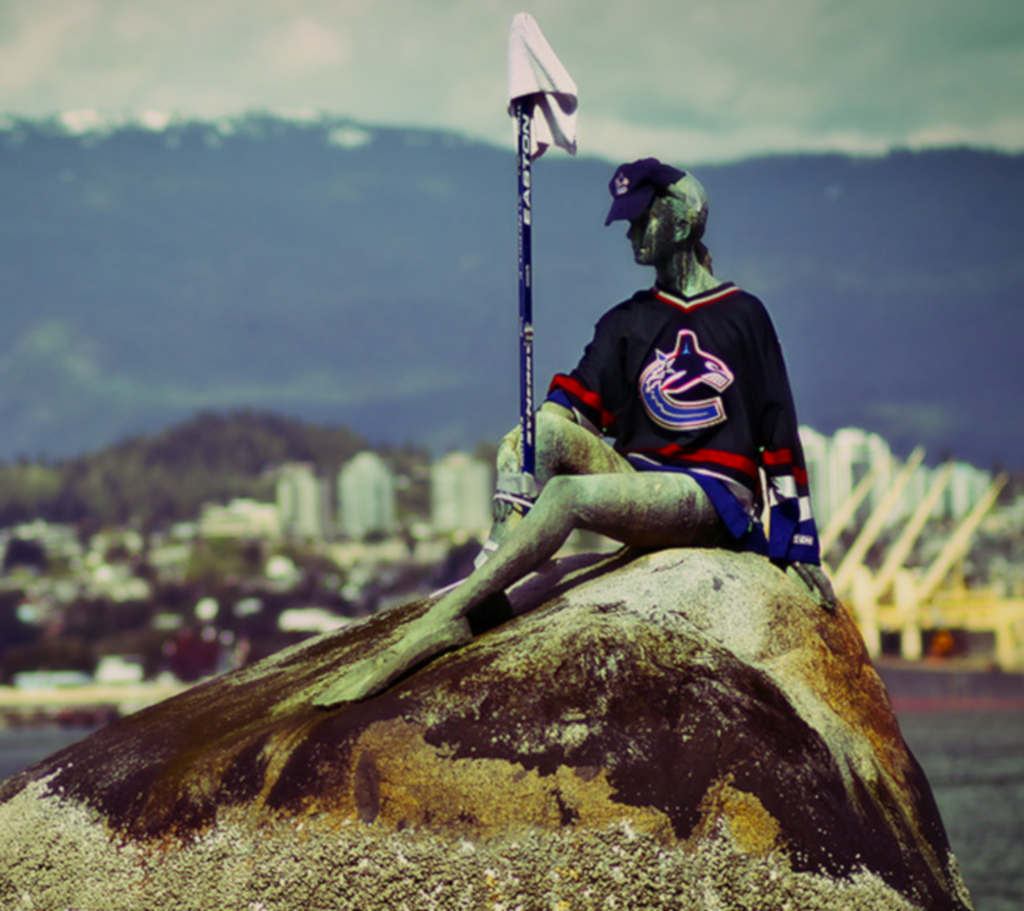
    The next day, we met at the hostel and rode our bikes toward Stanley Park. We were first met by a statue of Lord Stanley, the former Governor-General of Canada, standing with open arms and decorated with a Vancouver Canucks sweater.  Then we proceeded towards the rainforest trails and marveled at the 100-year-old trees.  At the north side, we stopped to admire the Girl in a Wetsuit statue decked with a Canucks jersey.

    Girl in a Wetsuit statue

    Next, we cycled the seawall trail around the Lost Lagoon offering pristine views of the mountains juxtaposed with the downtown skyline. 

    Turtles were basking in the sun, Blue Herons standing motionless in the water, waiting for a fish or frog to emerge.  

    The trail was rather flat and we rested at Second Beach where we dipped our feet in the water while Naomi shared her passion for yachting and how Vancouver serves as a remarkable outdoor playground.

    “There’s a reason why they call Vancouver the Most Livable City,” I said.

    “But lately, our reputation has been tarnished by the riots.”

    “I heard that the city was stunned when the Canucks lost to the Boston Bruins in game 7 of the Stanley Cup.”

    “The Canucks had never won a Stanley Cup, they had already claimed it as theirs for the taking,” she said.

    “Yes, they had the league’s best record, scored more goals than any other team, and allowed the fewest,” 

    “No Canadian team has won the Stanley Cup in 18 years. We felt robbed since the US dominates in the mighty triad of football, basketball, and baseball, and Canadians love their ice hockey,” she said. 

    Fans set fire to vehicles, smashed windows, and looted stores – it was a big black eye to Vancouver’s moniker as the ‘Most Livable City.’

    “I joined the clean-up and food vibe movement. Real Canuck fans are not hooligans.”

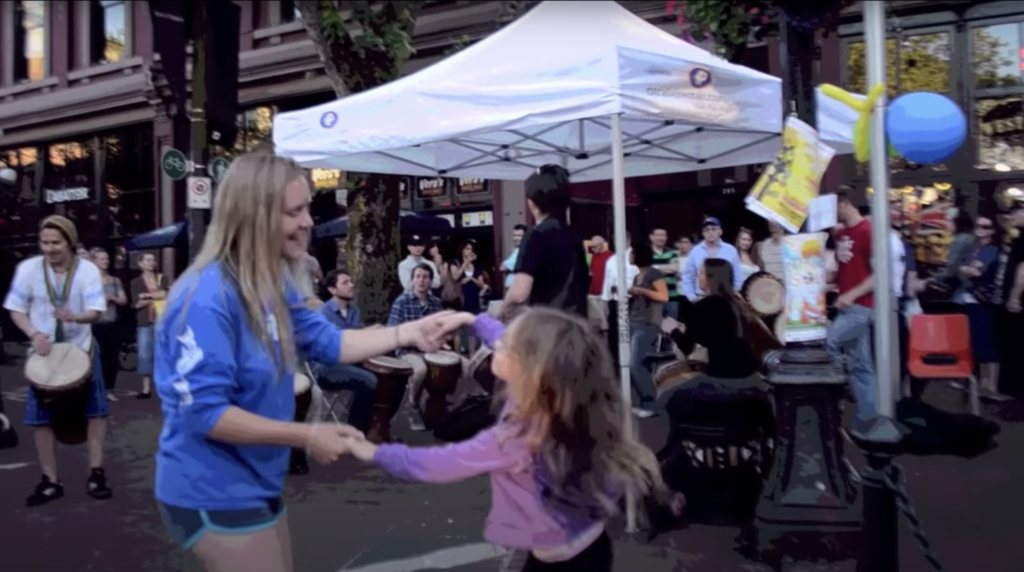
    The next day, Naomi and I visited Gastown, the site of the previous riots in 1971. We attended the Fête de la Musique event filled with local musicians from baroque to rock.

    Naomi and friend dancing in Gastown

    We then visited the Cambie Pub, an unpretentious bar that’s been open since 1897. The place reeked of grunginess, but the vibe was amazing. The pub was a walk in time and there were many interesting characters there. Backpackers and tourists who were staying at the hostel upstairs walking through. No fancy cocktails here. Just shots, vodka sodas, gin and tonics and cheap pitchers of beer.

    The Pub was only a stone’s throw away from Blood Alley and Water Street passing trendy furniture and clothing shops next to chronic meth and crackheads hanging out by the street art.

    We stopped in front of the Steam Clock which was really half powered by electricity.  It was a great visit with a lot of sights, sounds and ambience.

    Naomi and I on Blood Alley, Gastown

    “You need to add Vancouver to your website,” Naomi stated.

    “If I can find someone to build it, I certainly will,” I responded.

    “Super, please keep me posted. I’ll walk you back to the hostel.”

    The following day, I set up a meeting with Gregg Coppen of North Studio at their downtown office.

    “I want customers in Vancouver to be able to tell us their favorite dishes so that when they travel to San Diego or Washington, DC, we can make customized recommendations.”

    “Food is a very appealing content. A content management system like Drupal should help you best store, organize and display it,” said Gregg.

    “How do we categorize each dish?”

    “By using the taxonomy module. You can define your vocabulary such as ‘pasta’ and then add terms to each vocabulary such as ‘fettuccine, spaghetti, penne, lasagna’.”

    “Can we break it down even further?”

    “Sure, for spaghetti we can create new terms ‘angel hair, bucatini, fusilli, etc. You can go as deep as you want.”

    “And we can do the same for restaurants and stores?”

    “Sure ‘fine dining, fast-casual, family-style, cafe, buffet, contemporary casual, bistro, etc.’”

    “And then break it down even further by cuisine, whether it’s romantic, is good for sports lovers, have a view, etc.”

    “Yes, and under sports pub, we can describe their favorite teams. You wouldn’t find a Canucks fan at Boston Bruins bar, or vice versa.”

    “How would customers be able to search and find the right content?”

    “By incorporating Apache Solr for the faceted search. Like when you’re shopping for a type of shoe on Zappos, you can narrow down by brand, size, color, the whole nine yards.”

    “Wow, this is a complex project, and I can’t wait to get started. I knew that coming to Vancouver was a great idea. But as a fledgling startup, I’m on a shoestring budget. What is the best price you can offer me?”

    “Lemme discuss with the office and get back to you soon.”

    The rest of the team from North Studio loved my idea but responded that the total cost would surpass $30,000.

    “That’s too much. I’m a struggling MBA student. Can we do it for 15K?” 

    When I was riding the Greyhound bus back to DC, I got a call from North Studio that they had accepted my offer.  They were impressed by my passion and wanted to build something of value that could be used coast-to-coast.  To offset the costs, we would work together in building the site, and I would be solely responsible for adding the content.  I definitely couldn’t find these rates in DC or any major metropolitan city.

    That’s why I had to travel 4,000 miles and back to find a well-rounded team who understood the intricacies of food, how to categorize it, and display this information on a mesmerizing, visually appealing site.