Category: Uncategorized

  • BINT: How a Modern Pyramid Scheme Cost Thousands Their Savings

    BINT: How a Modern Pyramid Scheme Cost Thousands Their Savings

    For years, BINT, short for Blessings in No Time, spread rapidly through churches, social media, family circles, and community groups, promising participants an opportunity to turn a relatively small investment into life-changing money. Instead, it became one of the largest pyramid schemes in recent U.S. history, leaving thousands of victims with devastating financial losses.

    Unlike traditional investment scams that promise high returns from stocks or cryptocurrency, BINT relied almost entirely on recruiting new members. Participants were told that by contributing $1,400 to join a “blessing circle,” they would eventually receive $11,200 after moving through different levels of the program. The money, however, did not come from investments or business profits. It came solely from the payments of new recruits.

    How the Scheme Worked

    The BINT system was organized into four levels:

    • Earth – New members entered by paying $1,400.
    • Wind
    • Fire
    • Water – Members reaching the center were promised an $11,200 payout.

    Once someone at the center collected the money, the circle supposedly split into two new circles, requiring even more people to join. The process repeated endlessly.

    The fatal flaw was simple mathematics. Every person who received a payout required eight new participants beneath them. Those eight required sixty-four more. Then 512. Very quickly, the number of new recruits needed became impossible to sustain.

    As with every pyramid scheme, the vast majority of participants inevitably lost their money.

    The People Behind BINT

    Federal investigators identified LaShonda Moore and her husband, Marlon Moore, also known as DJ ASAP Dre, as the leaders of the nationwide operation.

    According to prosecutors, the couple aggressively promoted BINT across the United States, presenting it as a community-driven wealth-building opportunity rather than an illegal investment scheme. Promotional events, online meetings, and social media campaigns encouraged members to recruit friends and relatives, creating an atmosphere where skepticism was discouraged and urgency was emphasized.

    Authorities estimated that the operation collected between $25 million and $30 million from approximately 8,000 to 10,000 participants.

    Why It Was So Convincing

    Many victims did not view BINT as a scam.

    Instead, they believed they were participating in a financial empowerment movement built on trust and mutual support. Recruiters often targeted people they already knew—family members, church friends, coworkers, and neighbors.

    The scheme’s success depended on social pressure.

    Participants who had already invested their money had a powerful incentive to recruit others in hopes of recovering their own investment. This created a cycle where victims unknowingly became promoters.

    Federal Investigation

    As complaints increased, federal investigators began tracing the movement of funds through bank records, payment apps, and electronic communications.

    Prosecutors concluded that BINT was not a legitimate investment program but a classic pyramid scheme that relied entirely on constant recruitment.

    Participants near the top collected substantial payouts, while those entering later had little chance of recovering their money once recruitment slowed.

    Sentencing

    In June 2026, a federal judge in Texas sentenced LaShonda Moore and Marlon Moore to 40 years in federal prison after they were convicted of conspiracy to commit wire fraud, multiple counts of wire fraud, and money laundering.

    The sentences reflected both the scale of the fraud and the enormous financial harm inflicted on thousands of victims.

    Warning Signs of a Pyramid Scheme

    Consumers should be cautious of any opportunity that:

    • Requires an upfront payment to participate.
    • Pays members primarily for recruiting others.
    • Promises guaranteed or unusually high returns.
    • Has no legitimate product or service generating revenue.
    • Encourages participants to recruit family and friends.
    • Claims it is “not a pyramid scheme” while relying on endless recruitment.

    Lessons from BINT

    The BINT case demonstrates that financial fraud continues to evolve, often hiding behind messages of community, empowerment, or mutual assistance rather than traditional investment language.

    While technology made it easier for organizers to recruit thousands of participants nationwide, the underlying model remained the same one that has fueled pyramid schemes for decades: early participants profit only if enough new people continue joining.

    Eventually, recruitment slows, the money stops flowing, and the vast majority of participants are left holding the losses.

    The BINT investigation serves as a reminder that whenever profits depend primarily on recruiting new members instead of selling legitimate products or services, the business model is almost certainly unsustainable—and may be illegal.

  • Untitled post 1414

    The Pyramid Scheme That Changed MLM Law Forever: The BurnLounge Case Explained

    Most people have never heard of BurnLounge. Yet if you’ve ever wondered how regulators decide whether a multi-level marketing (MLM) company is legitimate or an illegal pyramid scheme, BurnLounge is the reason.

    The company’s collapse led to one of the most important court decisions in MLM history. More than a decade later, the case is still cited by attorneys, regulators, and even MLM companies defending themselves.

    What Was BurnLounge?

    Launched in 2004, BurnLounge marketed itself as an online music business. Members could buy digital music, create personalized music stores, and sell songs to customers.

    But there was another side to the business.

    Participants were encouraged to purchase expensive business packages costing hundreds of dollars and recruit others to do the same. Those who recruited new members earned commissions, creating a strong financial incentive to focus on recruitment instead of retail music sales.

    The Federal Trade Commission argued that the real product wasn’t music—it was the opportunity to recruit new participants.

    Why the FTC Took Action

    In 2007, the FTC sued BurnLounge, alleging it operated as an illegal pyramid scheme.

    The government argued that:

    • Most income came from recruiting new members rather than selling music to the public.
    • Participants purchased business packages primarily to qualify for commissions.
    • Retail music sales played only a minor role in the company’s revenue.

    BurnLounge countered that it sold legitimate products and that distributors simply had the option to build a sales organization.

    The courts ultimately disagreed.

    The Landmark Ruling

    In 2014, the U.S. Court of Appeals for the Ninth Circuit affirmed the lower court’s ruling.

    The court established an important principle that continues to shape MLM law today:

    A company cannot rely on the existence of a real product if participants are primarily paying for the right to recruit others.

    That distinction became the legal framework regulators continue to use when evaluating MLM businesses.

    Why This Case Matters Today

    Before BurnLounge, there was significant debate over where to draw the line between direct selling and pyramid schemes.

    The BurnLounge ruling clarified several key points:

    • Simply selling a legitimate product is not enough.
    • Compensation must be driven primarily by genuine retail sales.
    • Recruitment incentives cannot be the main source of earnings.
    • Courts will examine how the business actually operates—not just what its marketing materials claim.

    These principles continue to influence investigations into MLM companies across the United States.

    The Herbalife Connection

    Ironically, BurnLounge’s defeat later became a valuable legal precedent for another major MLM company.

    During the FTC’s investigation of Herbalife, legal analysts and attorneys repeatedly referenced the BurnLounge decision because it provided the clearest judicial explanation of what separates a lawful MLM from an illegal pyramid scheme.

    Rather than hurting Herbalife’s defense, the BurnLounge ruling gave both regulators and the company a common legal standard to analyze the business model.

    Whether one believes Herbalife passed that test remains a subject of debate, but there’s little disagreement about BurnLounge’s importance as a legal benchmark.

    Lessons for Consumers

    The BurnLounge case offers several warning signs consumers should consider before joining any business opportunity:

    • Are participants encouraged to recruit more than they are encouraged to sell products?
    • Are expensive starter packages required to earn meaningful commissions?
    • Is there strong retail demand from customers who are not participants?
    • Would the business survive if recruiting stopped tomorrow?

    If recruitment appears more important than serving customers, the business deserves closer scrutiny.

    Why BurnLounge Still Matters

    BurnLounge disappeared years ago, but its influence lives on.

    The case reshaped how courts evaluate MLM companies, influenced future FTC enforcement actions, and remains one of the most cited legal decisions involving pyramid schemes.

    For anyone researching direct selling, network marketing, or consumer protection, understanding BurnLounge isn’t just a history lesson—it’s the foundation of modern MLM law.

  • Atlas District

    Atlas District

    Suzannah was a godsend who turned out to be a perfect sales rep and event organizer for our fledgling startup. Originally from Charleston, she carried the charm of a refined Southern hostess and a transcending smile of an elegant beauty queen. She arranged a meetup with Biergarten Haus, a German beer garden on the newly revitalized H Street corridor known locally as the Atlas District. Suzannah reached out to Arturas “Jeepo” Vorobjovas who also co-owns the Russia House in Dupont Circle.  

    “Have you googled your restaurant lately?” Suzannah asked. “Your online reputation can either be an asset or a liability, and we’re here to help.”

    “Germans love their pilsners and already flock to our beer gardens. Our reputation is flawless.”

    “But there are so many beer aficionados, who are not familiar with the art of drinking Bavarian beer. We’re here to make the introductions.”

    Jeepo was easily persuaded by Suzannah’s charm and got her in touch with Ali Loo, the general manager who agreed to provide free food for our event. 

    Now the difficult chore of attracting people fell squarely on my shoulders. I immediately visited the Meetup website and noticed the D.C./Metro Area Reddit group was hosting an Oktoberfest event and searching for a venue. I contacted them, and they agreed to co-host the event with us as long as we would share with them our favorite Subreddit group.

    “Beer Drinkers!” I answered enthusiastically. “And German beers reign!”

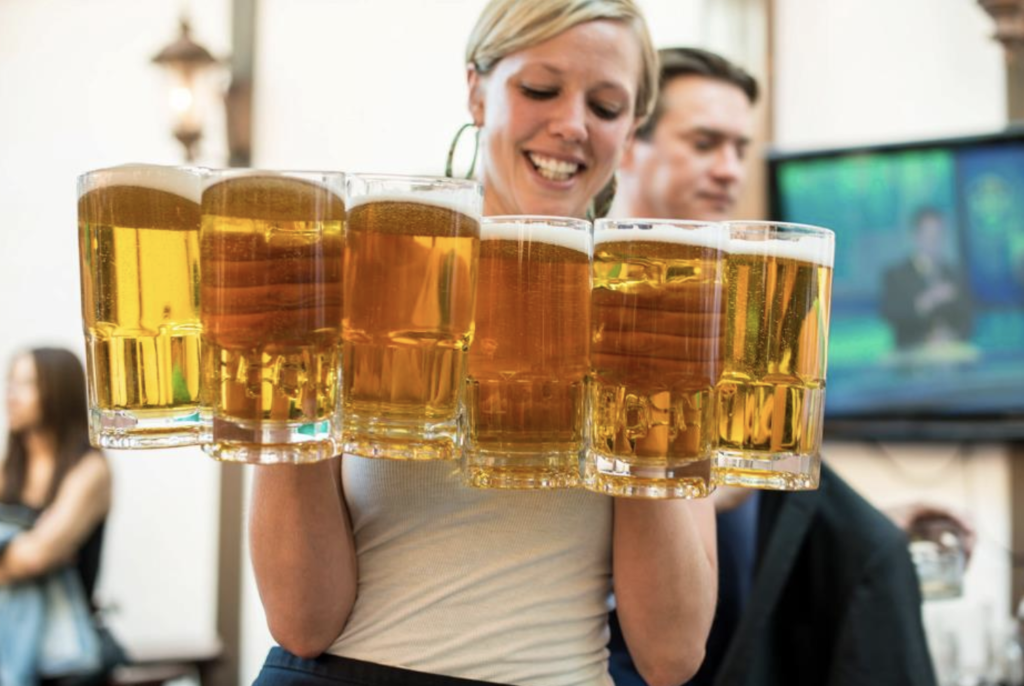
    The Biergarten prosts German brews by the stein.  And since the beer drinker’s paradise is home to over 200 yeast strains, 40 sorts of malt, and 100 different hops, there’s a different taste for every day for the rest of your life.

    The Biergarten is beyond spacious. There are three bars spread throughout the entire grounds: outdoor, indoor, and on the rooftop all with phenomenal views. There was floor-to-ceiling vintage art decor that brought back fond memories of fun times at a Stuttgart beer hall. German -enthusiasts sat beside long, rustic wood tables, while many held foot-tall beer steins congregating around repurposed bourbon barrels. Outside an oompah-pah band played traditional Oktoberfest music and women in blue polka-dotted dresses danced the Schuhplattler.  Ali brought out the pork knuckle served in a puddle of malty beer gravy. The lip-smacking rich meat wrapped in a golden sheath of crackling easily fell off the bone.  It was the perfect dish that served a large, rambunctious group of techies in a boisterous beer hall.

    Suzannah raised her stein to Ali and me. “What a lively event, kudos on our first one together.” 

    “Danke schön,” I replied. “I picked up a phrase here and there at my last duty station in Stuttgart.”

    “Well I know no Deutsch, but my Grandma was born and raised in France, and she made sure we spoke it fluently.”

    “Super, maybe you should visit Bistrot Du Coin in Kalorama for our next event. We can all mingle over Foie Gras.”

    “That’s quite a hike. There’s nothing French in the Atlas District?”

    “Unless you consider Louisiana French?”

    “Absolutely, Cajun is a combination of French and Southern cuisines, which is kind of like me, since I’m a Carolina girl with French descent.”

    “True dat. Well, there’s TruOrleans, the new Cajun restaurant on the west end.”

    The following week, I met with James “Tru” Redding who just opened his bi-level Cajun restaurant just over the H Street Bridge.  Redding is also a partner in Arlington’s Sushi Rock and Dupont Circle’s Public Bar and Lupe as well as Landover’s Stadium Club, a steakhouse and strip gentlemen’s club.

    The previous tenant was a run-down radio station where Petey Greene, the legendary ex-convict turned radio talk-show host, worked and was instrumental in calming the people of D.C. in the aftermath of Martin Luther King’s assassination. 

    Today, the building is beautifully renovated with exposed bricks and an airy New Orleans-style veranda giving it an authentic French Quarter vibe. A sign painted on the side of the building shows a retro-looking advertisement for ginger mint julep.

    Tru Redding met me at the patio and gave me a spirited tour of his new digs.  I admired all the wall art that Redding picked up from Bourbon Street, reflecting the character and soul of the Big Easy.

    We sat upstairs on the veranda enclosed by ornate wrought iron railings with a commanding view of the Capitol. Overhead, large fans rotated above us, ushering in a cool breeze.  He offered me an Abita Purple Haze, and we sat down by a stained-wood table with bottles of Tabasco sauce and “Slap Ya Mama” Cajun seasoning.

    “So what made you open up a Cajun restaurant in D.C.?”

    “During a local golf tournament, I met the East’s, a third-generation Louisiana family who invited me to a duck hunting trip in the Creole Nature Trail. After a long day, we would return to their family home where they would cook up a storm.  It was the best Cajun-Creole food I’ve ever tasted – not the fancy stuffy you find in the French Quarter. And after that, I was on a mission to bring back a slice of N’awlins to the Nation’s Capital.”

    “Has everything gone as planned?”

    “We made a lot of mistakes.  We opened up way too early and there were disruptions in service and food.  We need to reach out to folks who were not pleased with our services and give us a second try.”

    “Do ya’ll think H Street is ready for a block of the Big Easy?”

    “We certainly do. We want to be good neighbors, though, and we hope that we can bring the right balance of Mardi Gras festivities while being courteous and considerate of our neighbors.  Hopefully, they will see us as good citizens, and we need your help in spreading that message.”

    The following month we co-hosted “The Taste of TruOrleans” with Eventstir, a crowdfunding platform for events, and over a dozen people met up at the patio to devour D.C.’s best Cajun-style cooking.i

    We parked the pedicab outside and foodies piled in to devour pistolettes, andouille-studded gumbo and crawfish étouffée, jambalaya, and gator tenders, compliments of Chef Andre Miller, a Ruth’s Chris Steakhouse alumnus.

    Both Wayne Manigo, a local entrepreneur and comedian, and I were enjoying the Abita Purple Haze beer on tap.

    “I want to go back to the people of N’awlins and thank them for the birth of their food,” said Wayne 

    “And I want to them for their interesting cocktails and stiff drinks. The Sazeracs really pack a punch,” I said. “Wanna try the Hurricane next?”

    “How strong do you want it? They range from a mild level 1 to gale force 3 which is topped with Bacardi 151-proof rum,” the bartender said.

    I squinted back at him and made a confused face, and the bartender immediately knew which one to pour.

    “So what’s the next project Chef?” I asked.

    “We hope to be serving breakfast soon with beignets and jambalaya-stuffed biscuits.”

    “Laissez les bons temps rouler.”

    Suzannah was the perfect adventurer in discovering and enjoying new cuisines.  She was someone who could make something as benign as eating crepes look attractive.  And beyond the bountiful platters of beef bourguignon and chocolate soufflé, she maintained her stunning, hourglass figure like Raquel Welch.

    It definitely helped that she was an ardent fan of cardio, and she kept reminding me of the importance of cutting back on drinks and staying active.

    “C’mon Chito, you’ve been drinking too much Abita. It’s time to work it out.”

    If we weren’t walking to restaurants, we were sprinting to them and often joining other casual joggers around the expansive (National) Mall. D.C. happens to be one of the best cities for runners due to its walkability and abundant access to parkland. 

    In one of our weekly rituals, we crossed paths with the Marine Corps Marathon runners at the Rock Creek and Potomac Parkway by the glamorous Kennedy Center for the Performing Arts. We enjoyed making small talk with other runners and meeting new friends along the way just like we did at neighborhood restaurants.

    As we approached the scenic Hains Point peninsular, we saw hundreds of volunteers in blue, waving American flags with tribute posters commemorating the fallen.  What an inspiring and emotional way to honor and remember those who made their ultimate sacrifice.  I knew I would be sweating today, but no one told me that I would be weeping also. 

    I was honored to meet Monica Velez who lost two brothers—one in 2004 in Iraq and one in 2006 in Afghanistan. She was running her first marathon to raise money for TAPS, a non-profit organization that helps families nationwide cope with the deaths of their fallen soldiers. 

    Left-Right: Freddie, Monica, Andrew Velez

    Corporal José “Freddy” Velez was killed in action in Fallujah in 2004 and was posthumously awarded the Silver Star.

    “Oct 31st, 2004 was the last day we spoke to Freddie. His final words to us are, ‘Be Strong, Don’t Give Up.’ Still holding on to those words and that moment.”

    Specialist Andrew Velez had the difficult task of escorting his brother’s body back to the United States. Two years later, he committed suicide in Afghanistan.

    “Tell me more about TAPS.”

    TAPS helps brothers and sisters, fiancés, and battle buddies by providing counseling and grief support.  They get us all connected so we can talk about our grief and work through it together.”

    “Being a sibling is a lot more than being a spouse and parent.  I expected to have my brothers with me for the rest of my life. With TAPS, I’m able to share my stories and help other family members. I’m able to reach two different spectrums of grief and help them go through the coping skills to get through each day.”

    “Monica, your story really touches my heart. I want to thank both Freddy and Andrew who made their ultimate sacrifice You are a special angel – thank you for your service of gold.  Continue on your journey.”

    “I remember our long runs together. I can hear my brothers cheering for me now.”

    I stopped to give Monica a long embrace.

    As we said our goodbyes, I promised myself to return next year.  If not to run, then to cheer runners along the course. I was deeply moved and inspired by their spirit and drive.  And for those who gave their lives, their sacrifices will never go in vain.

  • Manuel’s Mio

    Manuel’s Mio

    If you crave Arroz con gandules and other Puerto Rican street food, the options are limited in this city. It is the cuisine of Cuba, Spain, and parts of the African continent, and many of the ones that serve authentic dishes leave ambience and decor much to be desired.

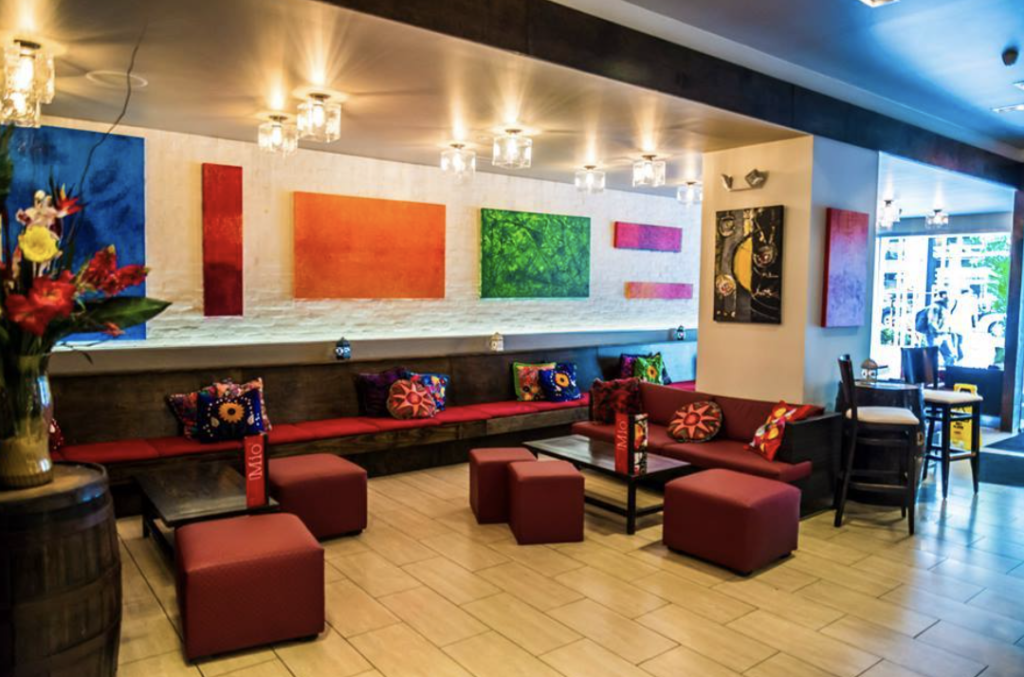
    As I walked into the establishment on 1110 Vermont Ave, NW, I was ushered into a modern, chic environment with a lush, zen feel. The decor was elegant and warm emblazoning the vibrant colors of the Caribbean. Latino bureaucrats were hobnobbing it up, imbibing on Piña Colada during a festive happy hour.

    From the dining room, guests were provided with a stunning view of the kitchen. There was a plethora of dark wood on tables, chairs, walls, and even the ceiling. I sat at the bar and was greeted by a chatty bartender named Sofia. She recommended the mofongo con camarones which I washed down with a Spicy Pisco. The mashed plantains were creamy and sweet and the grilled shrimp was quite succulent. Closing my eyes, I gently dropped the last morsel in my mouth and mused over the spicy infusion. At that moment, a gentleman with curly hair and a short, neatly trimmed beard with flecks of gray came over and sat down.

    “Hi, I’m Manuel,” he said warmly. “Welcome to the Embassy of Latin America.”

    Manuel Iguina first came to D.C. as a medical student at George Washington University. He worked as a waiter at several restaurants in Georgetown, where he learned to love food and switched paths from medicine to cuisine. He helped open several restaurants such as Cafe Atlantico downtown and Ceviche in Silver Spring, MD.

    Mio was a place where deals were transacted and connections made. You never knew which celebrity, official, or dignitary would walk through the doors. Justice Sotomayor has been known to enjoy the Tres Leches, and it wasn’t rare to see a Congressional staffer knocking back a Barcardi and coke.

    Manuel worked the house deftly, bear-hugging regulars, cheek-pecking amigas, getting to know newcomers while keeping an eye on the busy open kitchen.

    “We just hired a new Executive Chef, Roberto Hernandez from Metro Miami, who’s launched a new menu. We need new photos and a sleek website to showcase our dishes.”

    “Would be honored to build Mio a snazzy website to complement your trendy decor and authentic cuisine.”

    “That’s super. BTW, we’ve retained Heather Freeman to do our PR. I’ll get you in touch with her.”

    “I worked with her for the opening of the Italian restaurant, Noellia. She’s passionate about her work and fun to work with. Our M.O. is to host a big event where Chef Hernandez can prepare all his favorite dishes. Then we’ll employ all the photos we take of the cuisine and customers enjoying them and feature them on your new site,” I stated enthusiastically.

    I got on the phone and contacted Jason “Foodgeek” of DCFüd. “Let’s host the next Food Bloggers Happy Hour at Mio,” I suggested.

    “Super, I love traditional Puerto Rican cooking and Mio’s ethnic cuisine is quite genuine.”


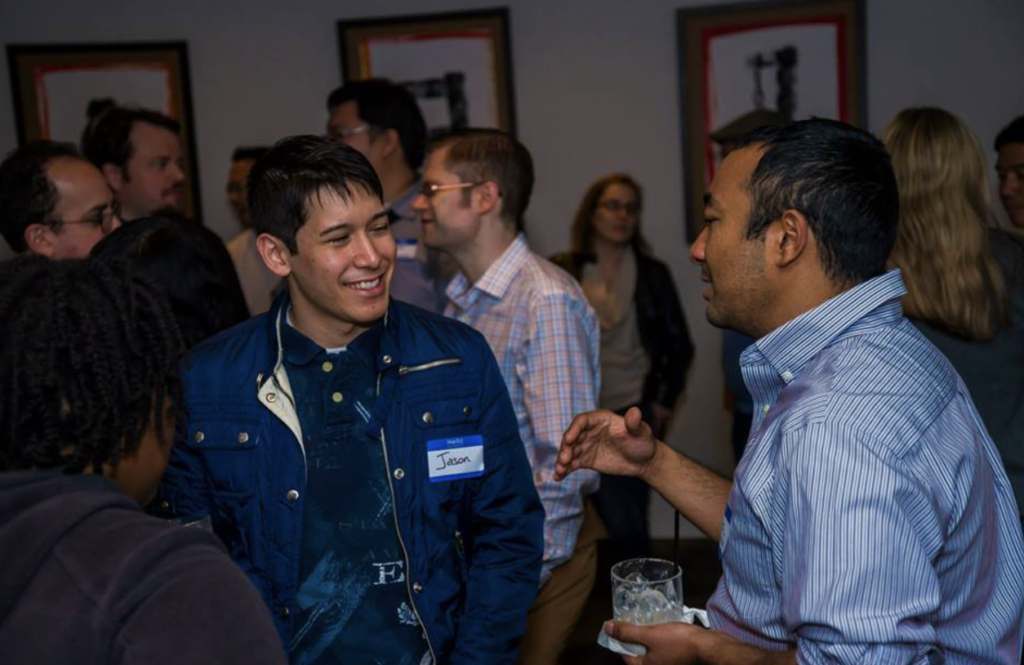
    Jason Shriner & Bindesh Shrestha

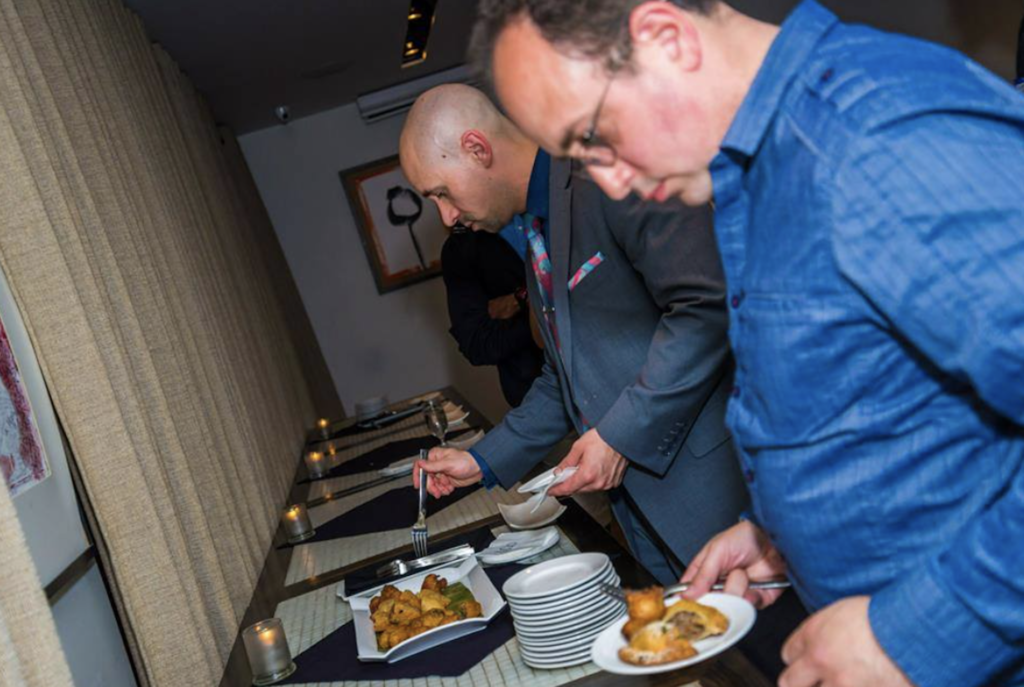
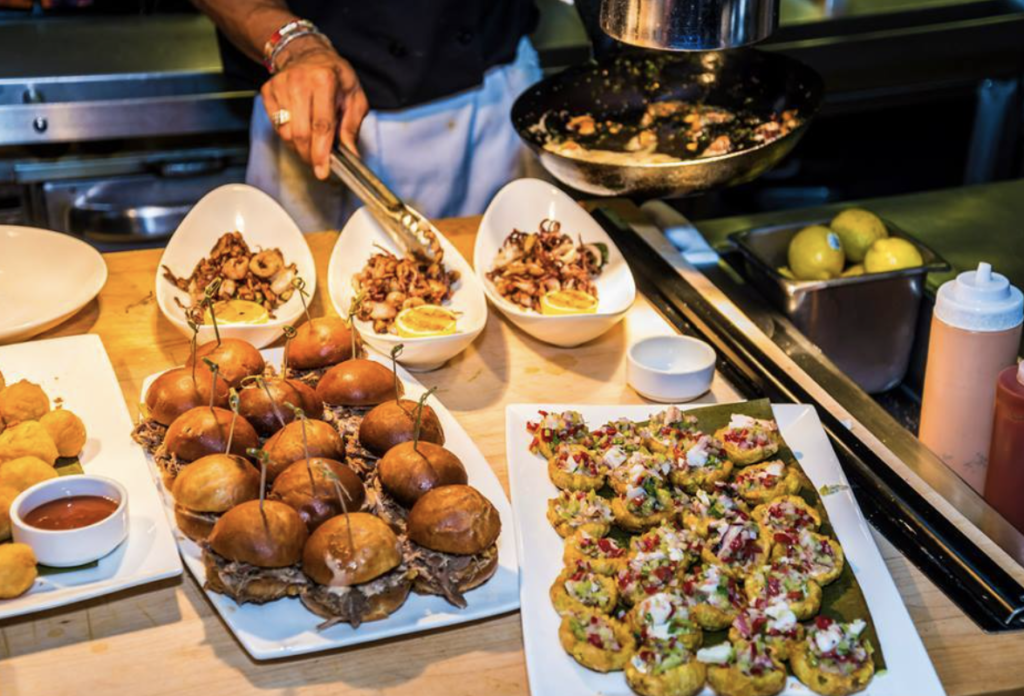
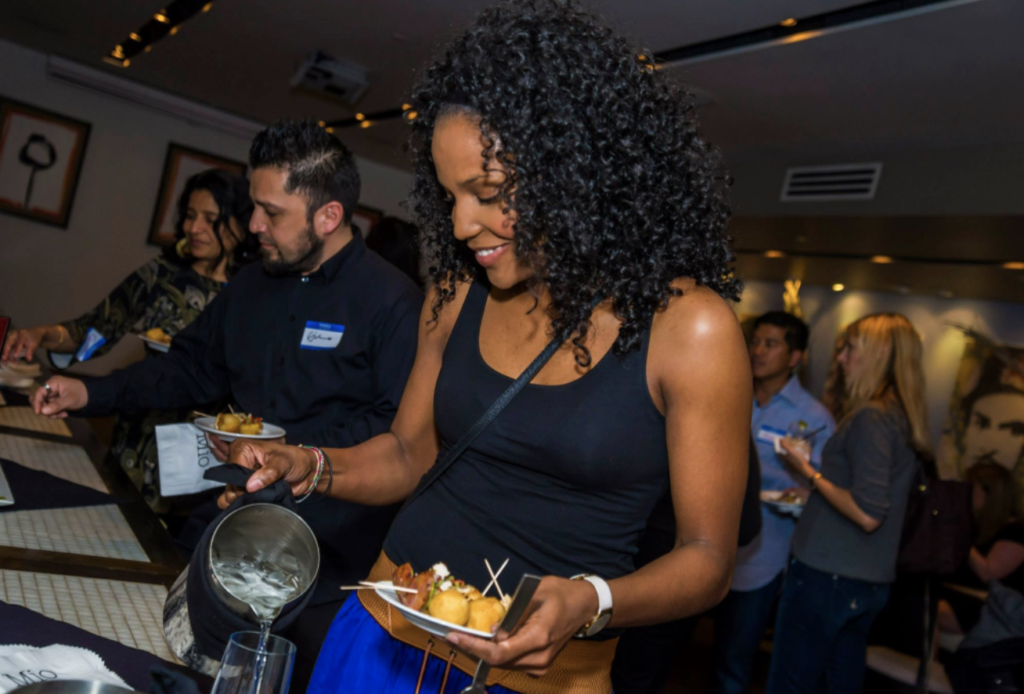
    On the day of the event, May 8, 2014, over 30 food bloggers and foodies showed up to sample and devour calamari, ceviche and risotto with roast pig. 

    “When we first opened, we were serving a lot of pan-Latin cuisine. But our customers preferred Puerto Rican cuisine, and that has been our main focus,” Manuel explained. 

    Jessica Van Drop DeJesus of the Dining Traveler was in attendance. She was raised in Guayama, Puerto Rico, spending her elementary and middle school years on the island and still has many friends and family on the island.

    As a Marine Corps officer, Jessica has traveled all over the world — visited more than fifty countries and lived in six. But she still considers Puerto Rico her favorite place on earth. 

    D’Angela “Dee” Moore from BonAppéDee

    I was happy to see D’Angela “Dee” Moore from BonAppéDee. Dee is a city gal who is utterly in love with food — cooking, tasting and eating all kinds of food, from all over the world. The only thing she loves more than eating food is talking about food.

    The other Jason (Shriner) from the Aubergine Chef was there to sample the cuisine. He has great cooking videos on YouTube and teaches a food writing workshop at George Mason University.

    “Love the open kitchen concept,” said Jason Shriner. “I learned how to cook several cuisines at my Mom’s side so I just love watching Chef Hernandez create the meals.”

    “Grateful to hear. We call it ‘La Cocina Abierta’. We hope to introduce diners to a variety of flavors from the islands.”

    From Shriner, my attention turned to the “Foodgeek.”

    “So how long have you been writing for DCFüd?” I asked.

    “Since 2004, I started out as a writer and now I run and manage the site. We specialize in ethnic food, so I’m ecstatic to be here.”

    “Super, we definitely welcome your honest opinion and publicity,” said Manuel.

    “Absolutely, but didn’t Tom Sietsema award you 2.5 stars and a glowing review?” I asked.

    “Yes, that was eons ago and two chefs back.”

    “Does anyone even know what that sneaky WAPO food critic looks like?” 

    “I would recognize him in a crowded restaurant, but many restauranteurs couldn’t tell Tom Sietsema from Tom senator.”


    Plethora of PR food for the Food Bloggers

    Suddenly I saw her, getting some food and pouring a glass of water —  a lovely caramel-skinned girl, young and fresh with long legs and a sweet face.

    “Hi there, are you new? Who do you write for?”

    “Yes, I’m Audrey. I’m not a real food blogger but I love to eat out and make new friends.”

    “Well you’re saying the right things, and I sense a slight accent — are you French?”

    “Well, I was born in the French West Indies and lived in Paris for a few years. You sure have a good ear for tone.”

    “Well, a voice like yours stands out from all the rest.”

    “Are you flirting with me?”

    “Only if you promise to come to more of our events. So what do you do for fun?”

    “I love art, Karaoke, dance, travel, hanging out with friends, and obviously sample great food.”

    “Well, you’ve come to the right place then. And since you’re a Caribbean girl, can I get you a piña colada maybe?”

    “I never turn down an adult beverage. I’m beginning to like your events.”

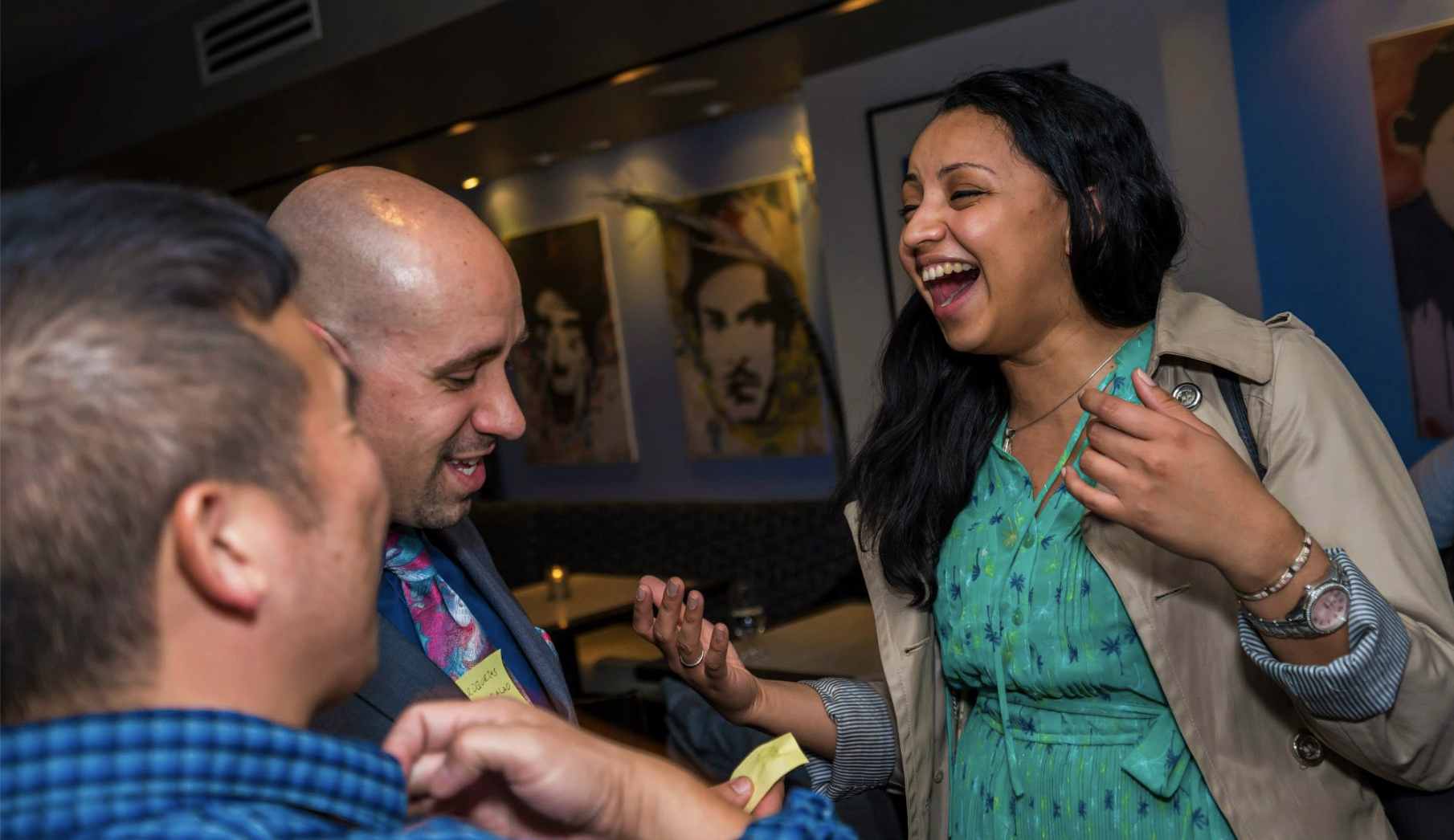
    Audrey Pichmimi @ Mio

    The empanadas, bolitas, and cured salmon were cooked to perfection; the tostones were amazing, and the Don Q Rum, mind-blowing.

    The event overall was a smashing success and we were able to garner lots of positive publicity. Shortly after, the website launched and Mio was my first Latin cuisine restaurant in my portfolio. This would be followed by The Cuban Corner in Rockville and soon we would be working with a wide variety of ethnic cuisines.

    Mio became my favorite place to hang out, not just to eat but to meet expats, Latinos, Latinas, and locals. And Manuel was always good for a toast and a chat. 

    December 2015

    Several months later, Manuel gave me a call. I usually spoke to him several times a week, but lately, the calls became few and far between.

    “I’m sad to announce that Mio is closing.”

    “Whoa, you gotta be kidding Manuel. You have established a loyal customer base and all the Puerto Rican expats, lobbyists and policymakers call Mio ‘Little San Juan’.”

    “Unfortunately, my landlord is doubling our rent and we’ll no longer be able to make ends meet.”

    “I’m devastated, Manuel. You are my favorite client.”

    “And I hope we’ll continue to stay that way. We have exciting plans for our next restaurant project to introduce the taste of Puerto Rico to the D.C. Metro area.”

    “Super, can’t wait. Will you bring back Lechon Fridays?”

    “Absolutamente, amigo mio y muchas caipirinhas tambien. We may be closing one door, but an exciting one will be opening soon. Stay tuned.”

  • Pedicabber

    Pedicabber

    The following weekend, Zach and I were in my Subaru Baja, driving at full speed on the N.J. Turnpike to NYC.  

    “Why are we driving up to the Big Apple just to pick up a damn rickshaw?” Zach asked incredulously. “Segways are all the rage on the Mall.”

    “So we can hang signage promoting our brand and ride it all over town like a taxi cab.”

    “Can’t you just buy one in D.C.?”

    “There’s a premium for these three-wheeled wonders in the metro area. But in NYC, where their popularity was spurred, there’s a superabundance.”

    Many tourists choose to ride the pedicabs instead of taking a bus or taxi because it allows them to observe the surroundings better and because the bikes can squeeze through heavy traffic. And sure enough, as soon as we crossed the Lincoln Tunnel, the busy streets of Manhattan were congested with taxis, bikes, scooters, and pedestrians. One pedicab driver just purchased a medallion to own a taxi and was selling his weaning out of the travel destination business. He was happy to let it go for $1800, and I was delighted to take it off his hands. We deftly squeezed the pedaled contraption on the bed of my Baja and with the handlebars hanging over carried it home to greener pastures. When we landed at the Mall and took her on a spin-down Constitution, she looked like a Lamborghini basked in sunshine.  

    “I will dub her Lil Yellow.”

    “Yes, she looks sleek and shiny and will definitely turn some heads.”

    “She’s not just for advertising. She’s to make a few bucks, and you’re welcome to ride Lil so you can earn extra beer money. How else is a scavenging Colonial supposed to survive? I know it sucks to be a non-paid intern.”

    “Yes getting paid with cheeseburgers and subs gets old after a while. Yes, I’ll love to take her on a spin after class and see if I can coerce some stray tourists to pile on.”

    “Sounds like a plan. And don’t forget we’re not licensed to charge a fare but can easily take donations.”

    “Super, I’ll bring along my school work which I can tackle when there’s a lull.”

    “Yes, please use your time wisely, and take the opportunity to learn more about the history and landmarks so you can better inform and entertain your guests.”

    When Zach was parked at the green zone in front of the American History Museum, he spotted a pretty Persian girl with long brown hair and knee-high socks. Tall and tanned, she looked like a supermodel on wheels, and it was evident that she was passionate about her mission.

    Her name is Shaadi, and she was a former elementary school teacher turned into an enterprising rockstar.

    “How did you get into this business dominated by jocks, vets, and hippies?”

    “Well, I got into an accident, and doctors found a tumor in my left leg. They removed it, and the tumor returned. When I was rehabbing on a stationary bike, it was challenging to have my right leg get my other leg to go around. So I made a pact with myself. ‘The day I can ride my bike again, I’m gonna ride for 50 miles, and I’m not gonna stop.’”

    Shaady took Zach under her wings and got him up to speed on the history and background of this fledgling business.

    Last summer, the Park Police started cracking down on pedicabbers on the Mall. They claimed we were cutting into the Tourmobile monopoly that the National Park Service had a long-term contract with. An operator was attempting to pick up customers in front of the Smithsonian Air and Space Museum when he was tased, tackled, and arrested.

    “Damn, that’s harsh. So the Park Police Gestapo felt threatened, so they started suppressing our Eco-Friendly business model.” 

    “Yes, we’ve come to a truce now. I love your silly monkey logo, by the way. I’ve got six pedicabs and would love to advertise your brand on our backs.”

    “Love how environmentally friendly this is,” stated a tourist from Maine. “Summer days are just roasting, and we’re too exhausted to walk up and down the Mall. Take your time and tell us all you know about the spots.”

    When Zach wasn’t using the cab to shuttle tourists, Lil Yellow was employed during multiple events such as Taste of D.C., where we interacted with various vendors such as the Cupcakes Lounge. The multi-day culinary event along Pennsylvania Ave attracted some of the region’s best restaurants and lively entertainment.

    People loved the thrill of the ride and they loved posing and shooting selfies. Even met a young, newlywed couple who deemed it quite romantic and were found smooching in the back.

    “Are we allowed to drink inside the cab?” a passenger asked meekly.

    “I don’t see why not. The only stipulation is that the driver can’t drink. But please buckle up.”

    During our reconnaissance and cold calls with Suzannah, I would drive the pedicab and she would sit in the back waving at dumbfounded passersby. From time to time, we would pick up a sightseer or a tipsy passenger bar crawling along H Street.  Lil Yellow was our lucky charm. We were able to negotiate business with Biergarten Haus on H St., Ulah on U St., and Jake’s American Grille in Chevy Chase.

    Our pedicab and signage got a lot of attention, and we were invited to provide complimentary rides during the H Street Festival, the quintessential 10-block street party featuring live music, karaoke stages, live music, and yes, even belly dancing.  

    It was a sweltering, hot day, and many people were tired of having to walk from 3rd to 14th street. My illustrious intern agreed to provide rides as long as I provided refreshments and he kept all the tips.

    When we weren’t providing rides, guests enjoyed using our cab as a photo op, and we were happy to oblige. 

    Every year, the British-themed double-decker bus would be parked in front of The Queen Vic where Newcastle Brown Ale flowed like the River Thames.

    There was a half-pipe for local skateboarders. Dangerously Delicious Pies sponsored a hands-free pie-eating contest and the grungy ex-funeral parlor turned lounge, Rock and Roll Hotel, pumped music all day.

    Zach and I got to meet so many people — tourists, locals, business owners, and artists. One gifted performer specialized in Egyptian belly dance, and she was quite a ravishing entertainer. Dressed in a red chiffon hip scarf, the Arabian beauty swayed her hips and shimmied her body rhythmically to the cheering audience’s delight. I didn’t catch her name, but I promised to introduce myself the next time I see on stage.

    There were also tons of local artists such as Pete Baker, and Flo Anito was strumming her guitar, singing her tongue-in-cheek ballad to the vacuum “No Dustbunnies.”

    Flo is a classically trained vocalist and pianist and sang like a blue jay on a hot summer day.

    The H St Fest was the best block party in town. There were tons of people and lots of random conversations. It was the best marketing event we could dream of and the word was definitely getting out that RUNINOut was about rides.

    In the Fall, we provided support at the Marine Corps Marathon cheering runners and even offering free rides to spectators or exhausted runners who wanted to beat the  (14th street) bridge. Runners had to maintain a 14 min/mile pace until mile 22 or else they would be taken off the course and bussed back.

    The ending was great with Marines in their BDUs shouting “Oorah” and handing out the coveted Eagle, Globe and Anchor finisher medals. There were tons of photo-op moments, and we all had a blast, especially Kanita, who lost her voice screaming and cheering. 

    “The pedicab is great for marketing. You should take her on a spin on Halloween night and get more people to come aboard,” she suggested.

    One thing about the intelligent mind of a great attorney — she was always a source of great ideas. And so was my reliable sidekick, Suzannah.

    “I have an idea for an event.” Suzannah said. “Hold a reelection night party for Obama at the Rocket Bar in Chinatown.”

    And November 6, 2012, President Obama and his running mate Joe Biden had easily gotten reelected and the GOP, it seemed, had become the grand old party of the past.

  • Taste of Ireland

    After the summer doldrums and fall foliage blanketed the National Mall, things began to pick up at the old neighborhood pub that flew Irish colors near the Chinatown arch.

    The Oregon Ducks were ranked in the Top 10 in the AP Poll and District Karaoke debuted with weekly sing-a-longs every Monday night (that was until guests at the adjoining Fairfield Inn complained about all the racket).  All of this hubbub plus the viewing of each NFL game every Sunday resulted in a lot of commotion at the Irish Channel.

    In Sept, we organized a food tasting event where we invited friends to meet up and sample delicious Irish cuisine. 

    Top foodspotter, Dan Rosenstein, photographed the dishes for RUNINOut and was happy to shoot for some grub and a pint. “I love Irish food, and I love photographing people enjoying a pint of Guinness.”


    Dan Rosenstein (right)

    The event was arranged by General Manager, Colin Laverty who has lived in D.C. for 13 years.  He grew up in West Belfast during the 80s and remembers distinctly the car bombings and revenge killings. 

    “I’ve enjoyed my time in D.C. tremendously. Belfast was also a great life experience and my memories of my time with my family and friends will always remain close to my heart.”

    “How is Belfast similar or different from the Beltway?”

    “Some people tell me parts of D.C. is tough. They don’t realize that for 30 years, Northern Ireland was scarred by sectarian violence — a period of time we dismally refer to as ‘the Troubles.’”

    “Yes, that was a very troubling time. I had the pleasure to visit Northern Ireland in 2011 to see two musician friends who I met at the Folklife Fest in D.C. I also met an inspirational tour guide named Arthur McGee.”

    “Really, why was he so great?”

    “Because he told me that Belfast isn’t a byword for intolerance, but a beacon for hope. The Irish are no different from any other place on earth. They’re the products of circumstances and history, and the same problems that existed in Belfast apply everywhere.”

    “You’re right about that.  Police brutality, such as the RUC (Royal Ulster Constabulary) supported by British troops, happens today in the US and around the world. There’s still a lot of hatred and racism that we need to get rid of.”

    “Glad to hear that the future looks rosy for Northern Ireland.”

    “The violence has gone away, but the rates of youth suicides in Belfast are high and rising every year.”

    Dan took a bite of the bangers and mash. “I’m not a big sausage person, but the black pudding made my mouth water.”

    Behind the bar was Cormac McGrady, a tall, gregarious man from County Down.  He had a great sense of humor and always had time for a joke, even at his own expense.  He was a big Boston Red Sox fan and never missed a game if they were playing the Nats in D.C. or the Orioles in Baltimore.

    Tom and Colin were delighted with the large turnout, and they were inclined to dole out free food and specials for future events.  I wasn’t paid in dollars, euros, or pounds, but compensated with a generous bar tab which even made me feel more part of the family.  

    “You guys did a great job,” said Tom. “Would like for you to visit our other Irish Channel location in Crofton, Maryland.”

    Colin Laverty (right) checking on the food

    “You should support our next fundraiser,” said Colin.

    “Another food tasting or karaoke?”

    “No the Belfast-Beltway Boxing Project — it’s an annual, amateur boxing competition for at-risk youth in D.C. and Belfast. The youth train at area boxing facilities under the direction of the local coaching staff, tour the region, and spend time with the host families.”

  • RUNIN – the Theme

    If you’ve read this far, you’ll know that RUNIN is not exactly about the joys (or pain) of running.  It’s not about running out of food either. Did you realize that RUNIN is actually a back acronym. Huh? Let’s use the example of the qualities of the Ethiopian Diaspora.

    They all were Resourceful in surviving tough living conditions growing up and gaining success in the U.S. They Understood the local environment and target market audience to start their businessess in Ethiopia. They had to Negotiate with business owners, investors and the local governments who at first did not believe in them. They had to be Innovative to start the right business that would fill a void. And they all made bold decisions and were nimble when they Navigated toward their goals.

    Resourcefulness:

    Resourcefulness is about using the full resource of tools and other people to solve problems and reach goals. When the devastating EF-5 tornado ripped through downtown Joplin, Americans from near and far rushed to lend a helping hand. Thankfully, there was no shortage of compassion and generosity. The AmeriCorps displayed resourcefulness by allowing me to build an online database that tracked donations and matched them with survivors and their specific needs.

    When our team didn’t place during Startup Weekend,

    When we reached out to restaurants, many were willing to have us photograph their dishes, but didn’t want the food to go to waste.  So we decided to photograph the food in conjunction with events and allow our guests to enjoy it.  The events also served to promote the restaurants and we were able to capture amazing photography of attendees enjoying the ambiance and cuisine.

    Understanding:

    The Irish Republican Army who sought a united Ireland clashed with the British forces resulting in massive death and destruction. When I visited Belfast, I met a tour guide named Arthur Magee who talked about building bridges.  For peace to start and the troubles to end, both sides had to build bridges.

    “If you come nigh you will see a city where on a micro level, people are building bridges.  The most important bridge that is been built is in each and every single person here. That bridge is between who you actually are and how you see yourself. Whether you’re part of the problem, looking back and blaming other people, or whether you’re part of the solution and reaching out and seeing other human beings, as exactly that, human beings.”

    From a business standpoint, one must fully understand the environment, the target market, and the competition in order to build a successful business. The diaspora community had done their research — that’s why they were able to build a leading PR firm, a luxury day spa chain, and a rose farm despite facing steep odds and many doubters that were skeptical that such business ideas could flourish in Ethiopia.

    I applied these lessons when I worked with restaurants and bars. When I tried to sell our services to the Irish Channel, they were also receiving bids from other providers.  In order to stand out from the competition, I studied the pub’s clientele and target market to determine which sports teams they could affiliate with and which social events we could host.

    When the Lebanese Taverna requested to host a belly dancing event with Arabian folk music, I immediately did my research to familiarize myself with the art of belly dancing — I would then need to be resourceful to find the right talent and audience that would attract a strong turnout so we could host many more events and raise money for charity.

    Over the years, we ended up working with several different groups and hosted a wide variety of events: running, comedy, political, food blogging — spanning a diverse group of bars and restaurants.

    In the end, hosting tons of events took its toll, and I had to honestly look in the mirror and realize that the boozing had gone to extremes and I needed to start tapering off. 

    Negotiating:

    Many restaurants were receptive to our services but did not have the resources or the inclination to pay for them. So we found a clever way to negotiate by having them host our events and provide free food and other amenities. We often got paid, but we were willing to barter web and social media assistance for food, eatups, and fundraisers.

    Negotiating is something that I’ve always done my entire adult life.  Throughout my entire Navy career, I never seemed to get what I wanted so I had to negotiate for just about everything of value. Successful negotiating requires understanding the other side’s priorities, open communication, and settling differences.

    Innovating:

    My search for a technical solution led me to take a Greyhound to Vancouver to find a web developer who could create our site in Drupal.  And once the framework was built, I had to stay current in both Drupal and WordPress by regularly attending tech meetups.

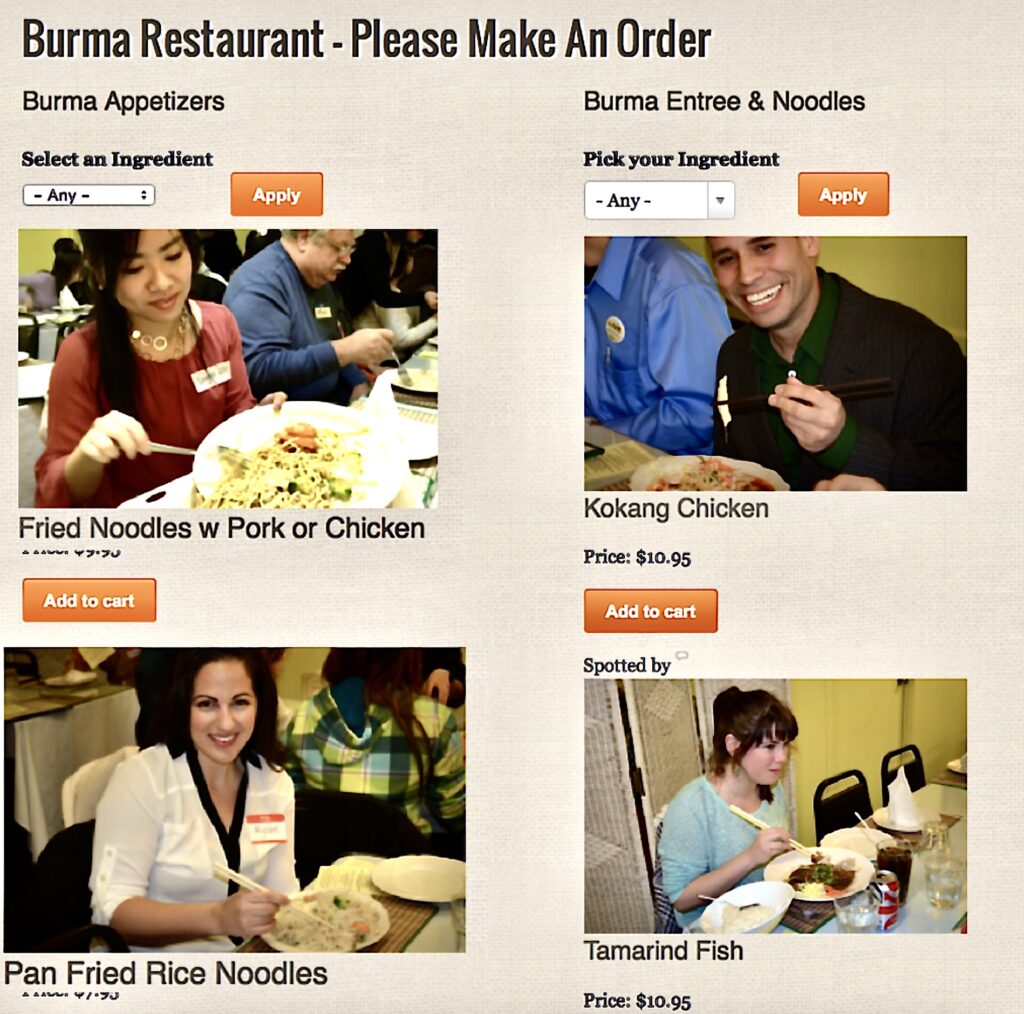
    Innovating meant building a menu prototype for Burma Restaurant and Vapiano’s so customers can decide on their orders while waiting in line.

    When RUNINOut got rejected by the GW Business Plan Competition, I had to find ways to gain traction with users.  It was imperative that we were able to expand our reach throughout the entire city with innovative methods. That meant deploying a used pedicab to market our brand and acquiring loyal followers who would vote for us for Best of D.C. We won the “Best Restaurant App” award in 2012 and 2013, and my alma mater agreed to let us present in the Business Plan Competition after all.

    Navigating:

    Navigating means making a decision to go one way and to stay on course. It also means making course changes if the path is not right for you.

    I wouldn’t be where we are today if I never transferred out of the EMBA program to the PMBA at GWU. I was able to enroll in a New Ventures class where the idea of RUNINOut was born.

    After working tirelessly for over five years, It was clear that it was time to change course.  Hosting events was time-consuming and tiring, and working with pubs resulted in excessive drinking.

    It also became clear that we needed to branch out further from the DMV (D.C. – MD – VA).

    How we would achieve that and what would the next step would be was still undecided.  But it was clear that it was time to make a major course change to a new direction.

    * * *

  • O Canada!

    O Canada!

    I checked into the HI Vancouver Hostel and started searching for a Drupal developer who would be willing to take on my project at a reasonable cost.

    Then she walked in. I tried hard to keep my eyes on my screen and not at the soft, velvet flesh of her long, graceful legs.  As she crossed the lobby of the hostel, she paused briefly and turned slightly.  That’s when she caught me looking.

    She had sandy blonde hair, that fell to the middle of her back. Her eyes were green like emeralds that sparkled under the moonlight in the windswept Georgia Strait that separated Vancouver Island from British Columbia.

    I forced myself to focus on my work, but I just couldn’t keep my eyes off her luscious curves.  And I sat frozen as she gently approached, quickly trying to formulate a one-liner.

    “Love your feet,” she said softly.

    I didn’t bother to look down. I knew what my feet looked like.  They were dry, calloused, and much neglected.

    Hers were sleek and graceful and appeared to sparkle under her soft, Bohemian dress.

    “Your feet, the ones on your computer,” she explained.

    “Oh, those.” I blushed lightly, my eyes smiled back.  As she drew nearer, I could see her taut, smooth skin stretched tightly over her sculptured rouge cheeks.

    “Oh, they’re my Five Fingers,” as I explained that I am a huge fan of the Vibrams Five Fingers running shoes and being an avid brand promoter, I had stuck a pair of their running shoe decals on the top of my laptop.

    “Oh, are you a runner?” She already knew the answer to this question.

    “Yup, Luv it more than anything.”

    “I’m not much of a runner, but I do like biking.”

    “Me too, in fact, I bought my bike to Vancouver from Washington, DC.”

    “Well then, perhaps we can go biking sometime. I’m pretty familiar with all the bike trails in the area. Lived here nearly my entire life”

    “And I’m brand new to this city, so would love a personalized tour.”

    “Well, I’m not available tonight, but perhaps tomorrow night.  My name is Naomi, but friends call me Pony. Here’s my contact, in case you’re available.”   

    Wow, I knew Canadian women loved the outdoors, but are they always this aggressive?

    The next day, we met at the hostel and rode our bikes toward Stanley Park. We were first met by a statue of Lord Stanley, the former Governor-General of Canada, standing with open arms and decorated with a Vancouver Canucks sweater.  Then we proceeded towards the rainforest trails and marveled at the 100-year-old trees.  At the north side, we stopped to admire the Girl in a Wetsuit statue decked with a Canucks jersey.

    Girl in a Wetsuit statue

    Next, we cycled the seawall trail around the Lost Lagoon offering pristine views of the mountains juxtaposed with the downtown skyline. 

    Turtles were basking in the sun, Blue Herons standing motionless in the water, waiting for a fish or frog to emerge.  

    The trail was rather flat and we rested at Second Beach where we dipped our feet in the water while Naomi shared her passion for yachting and how Vancouver serves as a remarkable outdoor playground.

    “There’s a reason why they call Vancouver the Most Livable City,” I said.

    “But lately, our reputation has been tarnished by the riots.”

    “I heard that the city was stunned when the Canucks lost to the Boston Bruins in game 7 of the Stanley Cup.”

    “The Canucks had never won a Stanley Cup, they had already claimed it as theirs for the taking,” she said.

    “Yes, they had the league’s best record, scored more goals than any other team, and allowed the fewest,” 

    “No Canadian team has won the Stanley Cup in 18 years. We felt robbed since the US dominates in the mighty triad of football, basketball, and baseball, and Canadians love their ice hockey,” she said. 

    Fans set fire to vehicles, smashed windows, and looted stores – it was a big black eye to Vancouver’s moniker as the ‘Most Livable City.’

    “I joined the clean-up and food vibe movement. Real Canuck fans are not hooligans.”

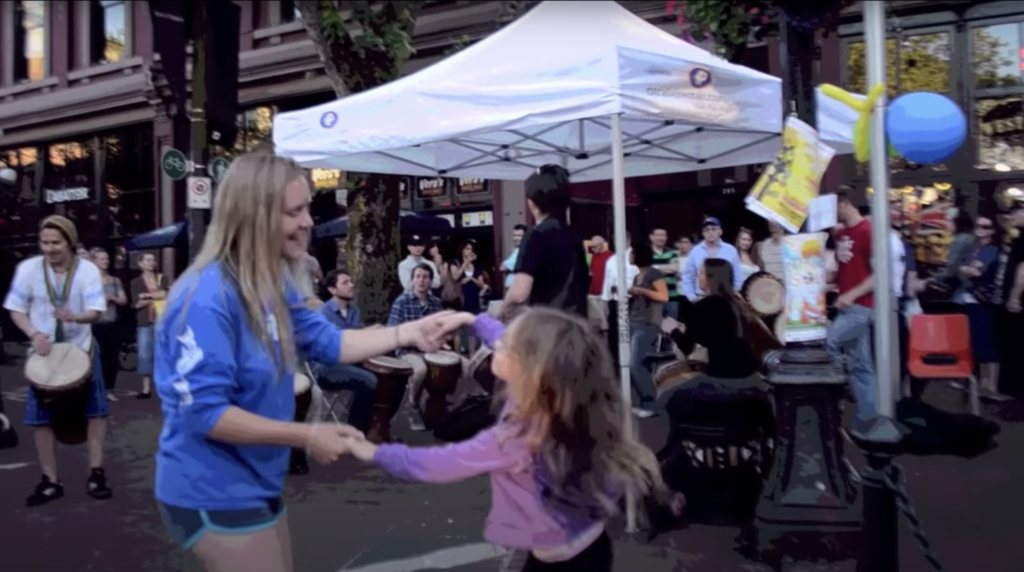
    The next day, Naomi and I visited Gastown, the site of the previous riots in 1971. We attended the Fête de la Musique event filled with local musicians from baroque to rock.

    Naomi and friend dancing in Gastown

    We then visited the Cambie Pub, an unpretentious bar that’s been open since 1897. The place reeked of grunginess, but the vibe was amazing. The pub was a walk in time and there were many interesting characters there. Backpackers and tourists who were staying at the hostel upstairs walking through. No fancy cocktails here. Just shots, vodka sodas, gin and tonics and cheap pitchers of beer.

    The Pub was only a stone’s throw away from Blood Alley and Water Street passing trendy furniture and clothing shops next to chronic meth and crackheads hanging out by the street art.

    We stopped in front of the Steam Clock which was really half powered by electricity.  It was a great visit with a lot of sights, sounds and ambience.

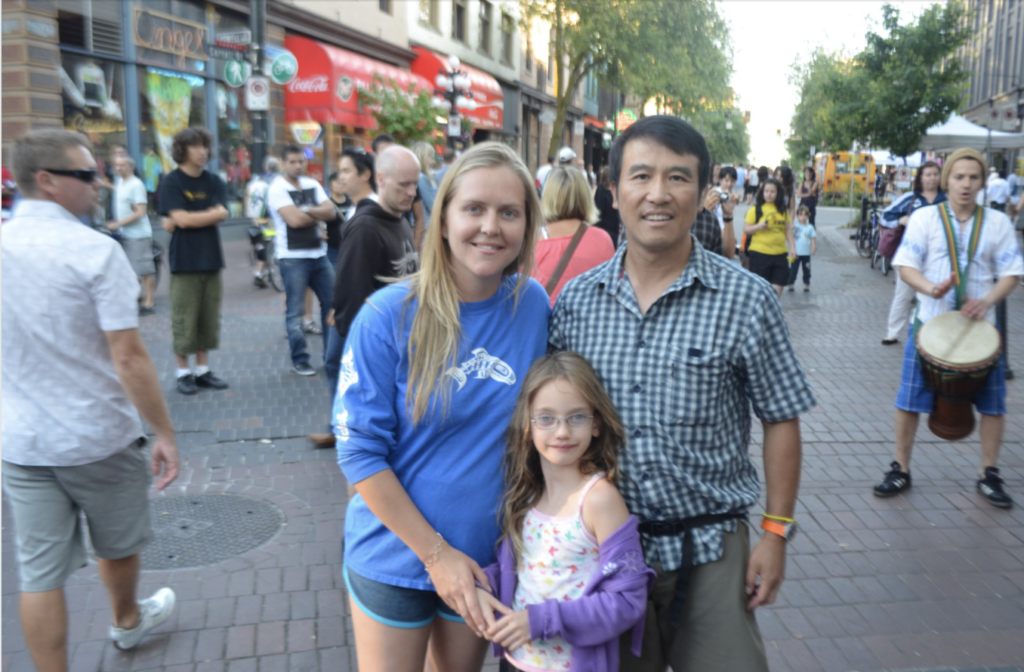
    Naomi and I on Blood Alley, Gastown

    “You need to add Vancouver to your website,” Naomi stated.

    “If I can find someone to build it, I certainly will,” I responded.

    “Super, please keep me posted. I’ll walk you back to the hostel.”

    The following day, I set up a meeting with Gregg Coppen of North Studio at their downtown office.

    “I want customers in Vancouver to be able to tell us their favorite dishes so that when they travel to San Diego or Washington, DC, we can make customized recommendations.”

    “Food is a very appealing content. A content management system like Drupal should help you best store, organize and display it,” said Gregg.

    “How do we categorize each dish?”

    “By using the taxonomy module. You can define your vocabulary such as ‘pasta’ and then add terms to each vocabulary such as ‘fettuccine, spaghetti, penne, lasagna’.”

    “Can we break it down even further?”

    “Sure, for spaghetti we can create new terms ‘angel hair, bucatini, fusilli, etc. You can go as deep as you want.”

    “And we can do the same for restaurants and stores?”

    “Sure ‘fine dining, fast-casual, family-style, cafe, buffet, contemporary casual, bistro, etc.’”

    “And then break it down even further by cuisine, whether it’s romantic, is good for sports lovers, have a view, etc.”

    “Yes, and under sports pub, we can describe their favorite teams. You wouldn’t find a Canucks fan at Boston Bruins bar, or vice versa.”

    “How would customers be able to search and find the right content?”

    “By incorporating Apache Solr for the faceted search. Like when you’re shopping for a type of shoe on Zappos, you can narrow down by brand, size, color, the whole nine yards.”

    “Wow, this is a complex project, and I can’t wait to get started. I knew that coming to Vancouver was a great idea. But as a fledgling startup, I’m on a shoestring budget. What is the best price you can offer me?”

    “Lemme discuss with the office and get back to you soon.”

    The rest of the team from North Studio loved my idea but responded that the total cost would surpass $30,000.

    “That’s too much. I’m a struggling MBA student. Can we do it for 15K?” 

    When I was riding the Greyhound bus back to DC, I got a call from North Studio that they had accepted my offer.  They were impressed by my passion and wanted to build something of value that could be used coast-to-coast.  To offset the costs, we would work together in building the site, and I would be solely responsible for adding the content.  I definitely couldn’t find these rates in DC or any major metropolitan city.

    That’s why I had to travel 4,000 miles and back to find a well-rounded team who understood the intricacies of food, how to categorize it, and display this information on a mesmerizing, visually appealing site.

  • Burma

    I was attending the monthly Freelancers, 3rd Sunday meetup in Burma Restaurant in Chinatown on a chili, late February day in 2011. Located on 6th Street near the Friendship Archway, the second-floor restaurant is popular with local politicos such as Mayor Adrian Fenty and Attorney General Eric Holder, as well as artists and activists and fans of Nobel Peace Price laureate Suu Kyi.

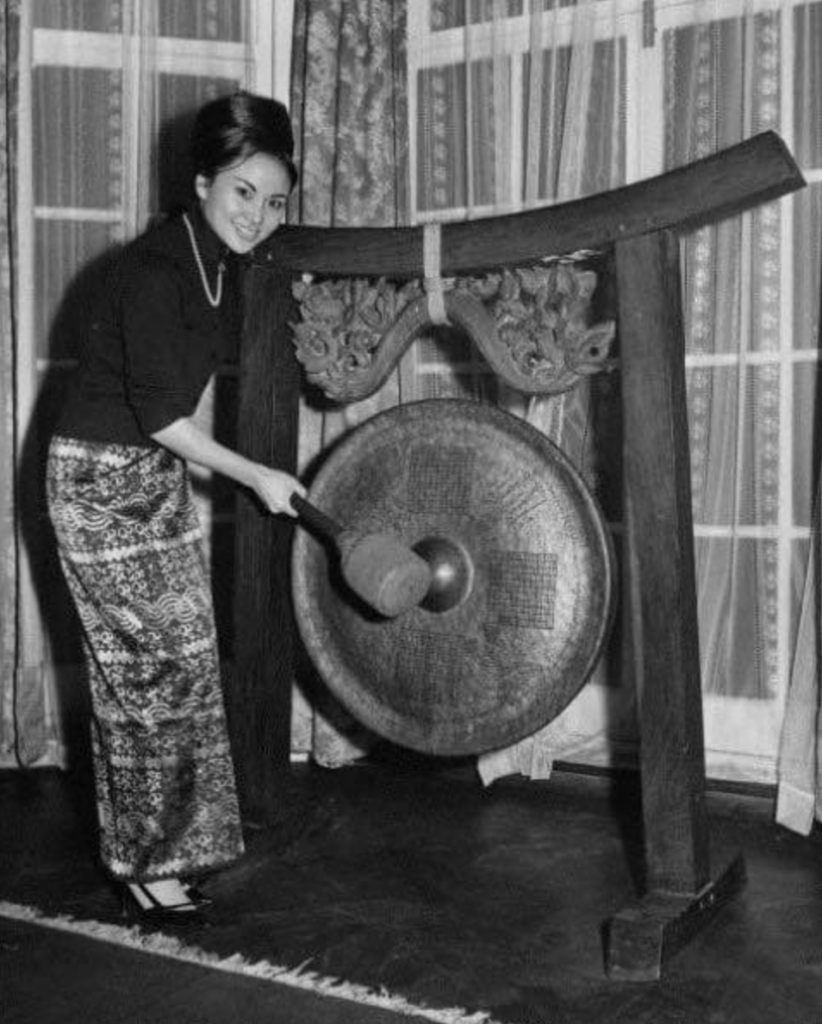
    Many also came to greet the Sao (princess). Jane Nuwadee Tinpe’s husband served as a diplomat in Britain, India and in DC.  The princess and her husband, a diplomat, lived in big houses that her family ruled for generations. She never had to cook because maids took care of their daily chores.  But in 1989, they fled Burma after a coup and the military regime rebranded the country Myanmar.  The Sao and her husband then opened this restaurant on New Year’s Day 1990, and they have been serving mohinga and curry ever since.


    Sao Jane Tinpe with gong at British Embassy, 1962

    John Tinpe, the youthful 40-something son of the Sao, is a globetrotter and public servant who has been recognized by the Mayor for his community service.  In his free time, he worked as a supernumerary or extra at Washington ballet and opera performances. 

    One particular patron was having difficulty deciding. He constantly ordered the Burmese mango pork, with the delectable pieces of pork braised with pickled mango; it simmered a lasting impression which he often savored during long days in the office.  With the advent of the new year, he wanted to branch out and broaden his culinary horizon.  But indecisiveness gripped him, and John Tinpe was getting a tad bit impatient since he had a whole dining room of guests.

    John Tinpe serving guests at Burma Restaurant in Chinatown

    “I can’t decide between the fish curry and tamarind fish. Why don’t you just choose for me?” he asked. “I make enough decisions at work.”

    “Wow, you make huge decisions for the government daily that affect millions, and you can’t choose a damn spice?” I asked.

    “Wouldn’t it be great if all 30 of us attendees could order from the phones,” JR, the event organizer, stated. “Too many people, too many choices, too little time.”

    “And wouldn’t it be wonderful if we could discover who ordered what dishes in the past,” his son David added. “If I knew that a particular friend that I respected enjoyed a certain dish, that would provide instant validation.”

    So when the last dish was served, and all the attendees were satiated, I gingerly approached John with these seemingly trivial issues.

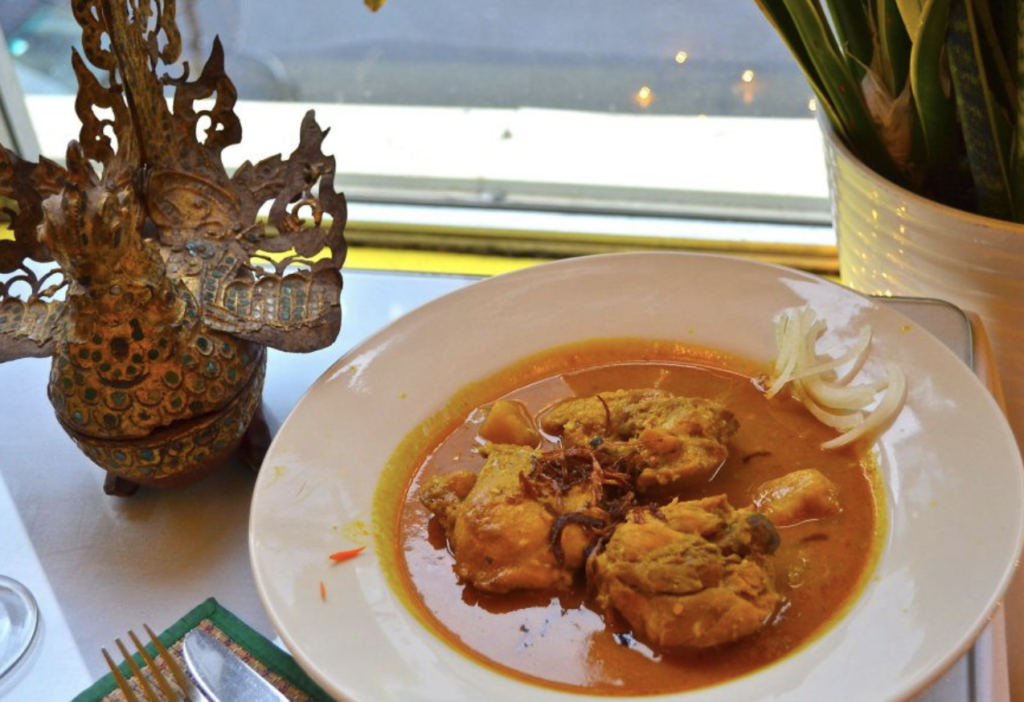
    Coconut Chicken Curry at Burma Restaurant

    He was beyond receptive. “Hey why don’t you build a site where people can order dishes from their phones, then select and save their favorite ingredients and spices in their own foodie profile?”

    “One customer always orders the mango pork, the other prefers coconut chicken curry,” JR chimed in. “Maybe they should be a little adventurous and switch orders next time.”

    He was beyond receptive. “Hey why don’t you build a site where people can order dishes from their phones, then select and save their favorite ingredients and spices in their own foodie profile?”

    “One customer always orders the mango pork, the other prefers coconut chicken curry,” JR chimed in. “Maybe they should be a little adventurous and switch orders next time.”

    “I’m sure if they did that, neither one would complain, or notice for that matter,” John added with a healthy grin.

    After working arduously for a week, I was ready to demo the prototype.  It was unrefined and barely working, but the only goal was to prove John’s idea was viable.

    Last December, I attended an eatup event in DC hosted by Foodspotting.  The site was launched in 2009 as a way to discover and rate specific dishes. While Yelp was focused on reviewing restaurants, Foodspotting would only feature the dish, and didn’t accept negative comments.  The Silicon Valley startup could not have come at a better time.  With the advent of the smart phone and social media, food photography sharing became a popular, ritualistic behavior and Foodspotting was like the Pandora for food.

    Lisa Mathias who was the local ambassador for the group was also a writer for Citysearch, an online guide to find local businesses.  Over the year, she had compiled an extensive list of her favorite restaurants from different cuisines, so she was always open to new suggestions. 

    So I contacted Lisa with a suggestion for a new event.

    “Perfect. I’m half Indian and half Filipino, so Burmese is right in the middle.”

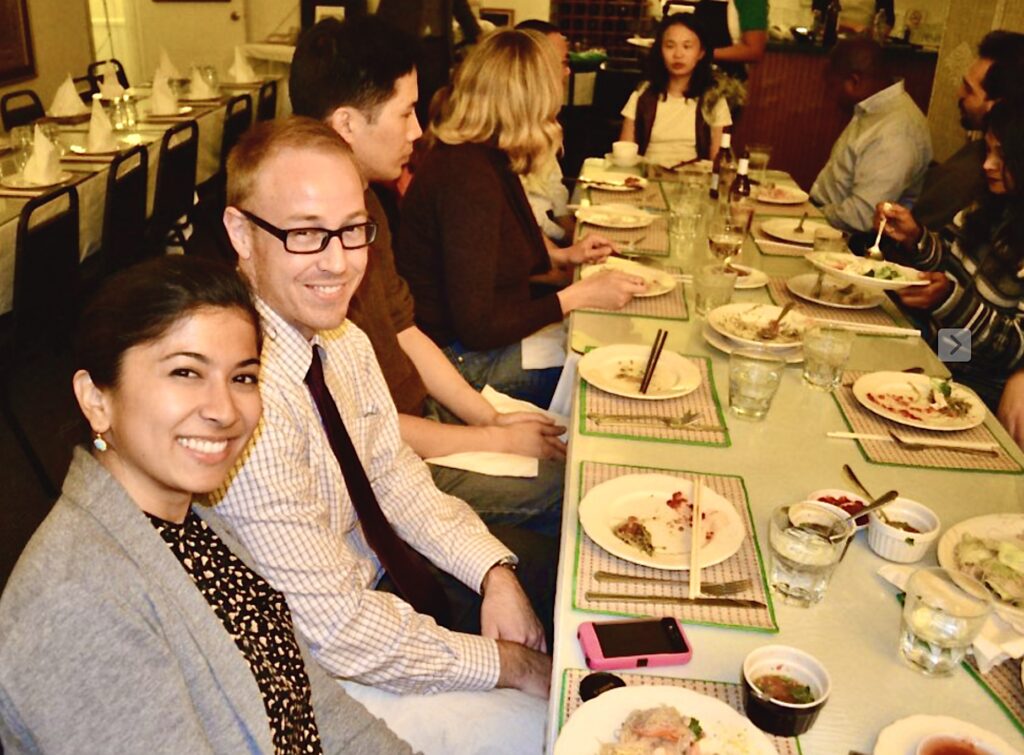
    During the eatup, the dozen or so foodspotters scanned a QR code that showed pictures of each dish listing their ingredients and flavors. The page also provided examples of people’s food profiles, so you could see what a particular person liked or disliked. Each person would then would make their own selection and provide a brief critique.

    What helped was that foodspotters not only enjoyed sharing food, but they had an inclination to  discuss intricate details about which particular dish or ingredient they relished.  I was in good cheer, as I  collected this feedback which would assuredly enhance our growing trove of information.

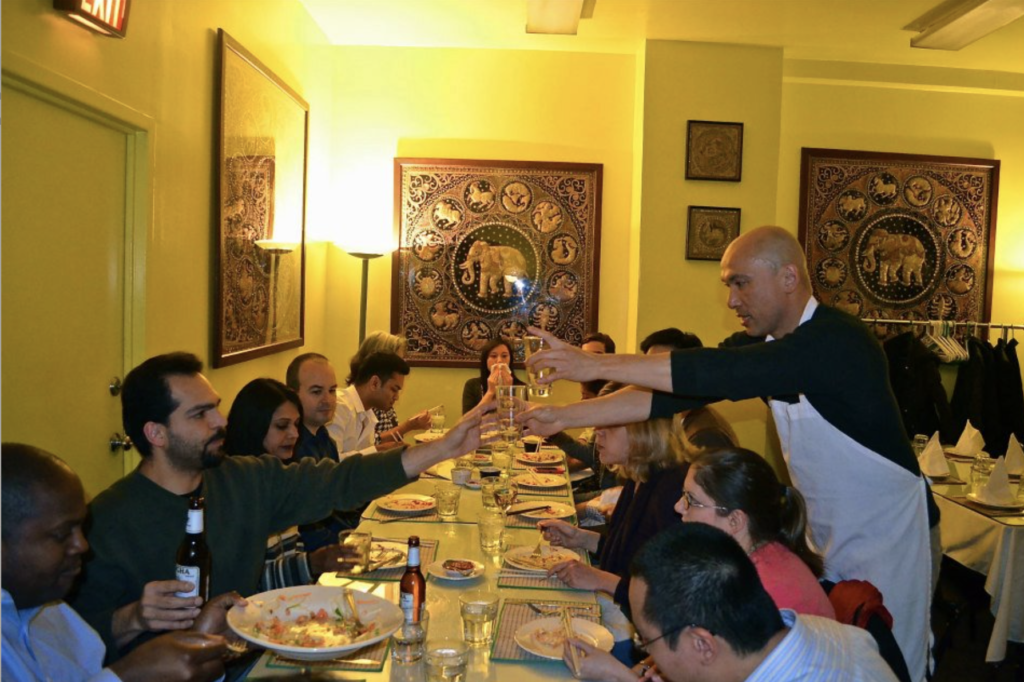
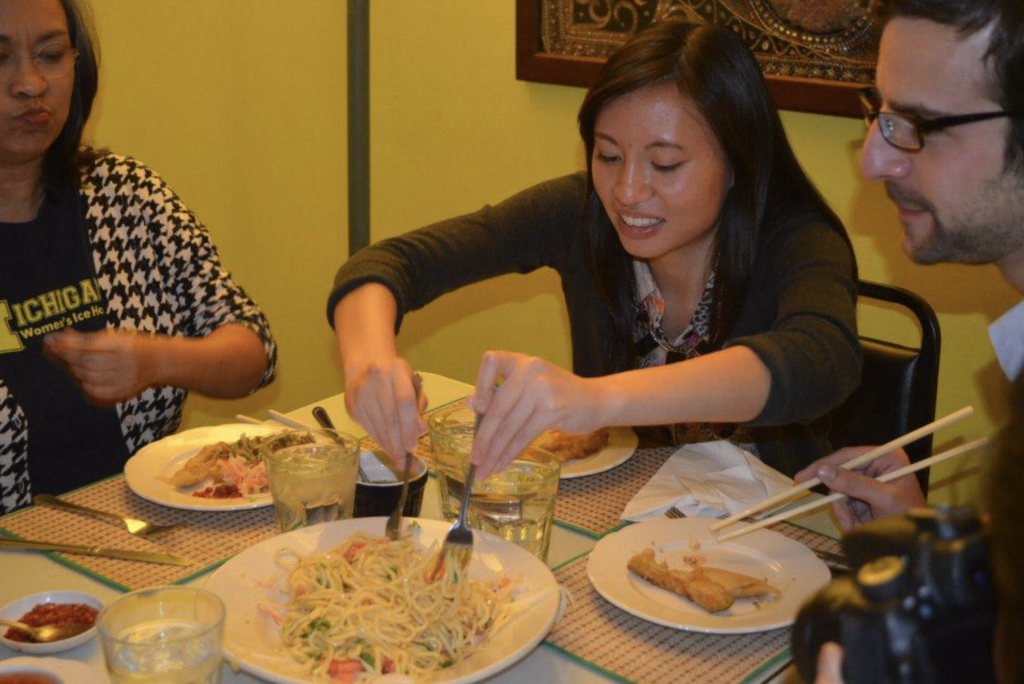
    Guests sharing plates @ Burma

    This was a fun event, and I’m glad you guys were able to test out our model,” I said. “John will be thrilled to see the results.”

    “You have an interesting idea,” said Lisa. “Are you trying to build a competitor to Foodspotting?” 

    “Absolutely not.  We’re here to complement. While you deploy your army of foodspotters to try out and capture each dish, we’ll collate your content, so customers can better make smarter, more informed decisions.”

    Lisa Mathias and Blake Johnson at Burma
  • senodja

    The following month, Senodja Walker and I were brainstorming during Professor Donnelly’s New Ventures Class at the George Washington University. 

    Senodja Walker

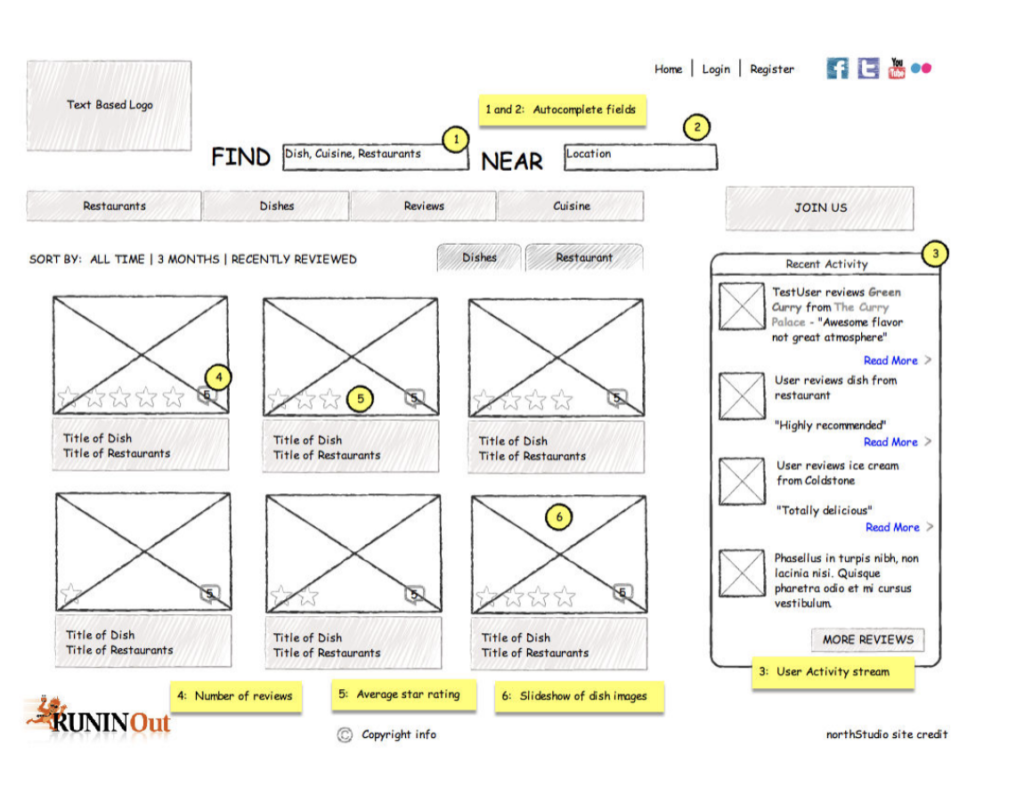
    “So the site will provide faceted search where you can choose your cuisine, type of dish, ingredients and taste preferences,” I stated.

    “Not only that, but you can choose your mood and ambience,” Senodja added. “Last weekend, i was going on a date night with hubby and the babysitter watching the kids.  So we wanted something romantic with a nice view and no distractions.”

    “Perfect, and if you like sports like me, you can select the team that you like to watch, and it’ll tell you which pubs to visit.  If you’re a Falcons fan, you definitely don’t want to stumble blindly into a Saints bar.”

    First wireframe for RUNINOut

    “Perfect, what shall we call it?”

    We brainstormed for a few, then I reflected back to my visit to Haiti and remembered the sage words from Pastor Luc.

    “How ‘bout RUNINOut.”

    “Like running out of food, groceries, things to do?”

    “That’s an accurate expression. But RUNINOut is also a back acronym.”

    “Huh?”

    “Researching, Understanding, Negotiating, Innovating, Navigating.”

    “How did you come up with such a catchy slogan?”

    “I visited Haiti in March to assist with the earthquake recovery. There I learned a lot from folk heroes like Veniel and Pastor Luc — Before launching any endeavor, it’s imperative to do your research, to understand all the players in the current environment.  Then make sure you communicate your desires while hearing out the other party, get buy-in from stakeholders, and leverage technology before steaming ahead.”

    “Works for me, sounds like Pastor Luc is a wise man.”

    “He’s a miracle worker and an inspiration to us all.”

    “So are you going to hire someone local to develop the site?” 

    “Heck, the prices in this town are way too high due to demand from huge government contracts.”

    “Then why don’t you outsource the work to India, Philippines, Africa?”

    “We can outsource the content management once the structure is in place. But to build the foundation, I want to find a team from North America who understands our culture, our food, our history, and most importantly someone we can afford.”

    “Where can you find such gifted and cheap talent?”

    “Dunno, but this summer, I’m hitting the road and hope to find someone who can serve as the final piece to our jigsaw puzzle.”

    “Are you heading west to Silicon Valley?”

    “West for sure, then traveling through California and as far north as the road takes me.”