Category: Restaurant

  • Five Qualities of the Diaspora

    Five Qualities of the Diaspora

    There were two milestones I needed to achieve in order to complete my MBA — a new venture capstone project and a study abroad trip to compare and contrast cultures, business practices, and management styles.

    In the spring semester of 2012, I enrolled in a six-week course entitled Engaging Diaspora Communities for International Business and Development. It was taught by Dr. Liesl Riddle, the associate dean of GW’s School of Business who has written extensively about diasporas and international entrepreneurship. 

    The course studied the diaspora communities in the US and abroad and their motivations for sending remittances to their home countries to spur growth and prosperity. A vast majority of the diaspora who return to Ethiopia are starting businesses and creating jobs. The class culminated with a week-long trip to Ethiopia to take what we learned and apply it firsthand.

    There are an estimated 2.5 million Ethiopians living outside of Ethiopia. Many of them live in Washington, DC, so this particular diaspora was the perfect one to focus on.

    “I want you all to contemplate what you expect Ethiopia to be like, compared to what we observed once we are actually in the country,” said Dean Riddle.

    The GWU MBA class departed from Dulles excited about the adventures ahead. When they arrived at Addis Ababa 14 hours later, they were sleep-deprived and jet-lagged but enlivened nonetheless. Situated in the Horn of Africa, Ethiopia is a rugged, landlocked country and the cradle of humanity where Homo Sapiens first walked on two legs.  It is the “Land of Origins”…of humanity, language, and of course one of life’s greatest pleasures – coffee arabica.

    Since it was too early to check into our suites, Dean Riddle arranged for us to do some sightseeing. Our first stop was the Holy Trinity Cathedral, a product of the colonial period imbued with rich history and majestic architecture. 

    Many tourists who visit Washington, DC yearn to visit the Smithsonian Natural History Museum to ogle at the Hope Diamond. Likewise, an obligatory stop in Addis Ababa is the National Museum of Ethiopia to admire the Lucy fossil.  She is 3.2 million years old, and the most famous early human ancestor because she walked upright. Unfortunately, the bones we saw were not the real Lucy, but plaster replicas. The original skeleton is displayed at the Cleveland Museum of Natural History. Ironically, it was offered to the Smithsonian in D.C., but turned down due to a resolution that early human fossils should be stored in the country of origin and to make displays in other countries with fossil replicas. It’s like traveling 7,000 miles to meet a fairy tale luminary, only to find out she’s half the world away on a sabbatical. But real Lucy or not, we were ready to do some slumbering as we finally headed to the hotel.

    On the way to the Ramada we were greeted by the impressive stone monument of the Lion of Judah roaring over the city, a crown jewel of the infamous Haile Selassie. 

    Finally, at the lodge, I took a long shower and squeezed in a power nap, but by nightfall, we had to gather up for our first guest speaker – Addis Alemayehou, a serial entrepreneur who returned to his roots and has become a household name in Addis. He founded 251 Communications which has grown into one of the leading PR and communication firms in the country.  

    “I started my entrepreneurship endeavor here when the war between Ethiopia and Eritrea was just coming to an end and the economy at the time was in shambles,” Addis said. “I lost my iPod and missed having my playlist with all my favorite songs, and realized that there were many people who also enjoyed Western music. So I started the first English Speaking FM Radio station in Addis. A good business is always one that finds a need in society and fills that void.”

    “Are there lots of opportunities here for startups?” my classmate, Marilu Ortega asked.

    “Business in Ethiopia flourishes out of sheer need. If you were to spend a week in this country, carrying a notepad and writing down everything you wished you had but didn’t, you would finish the week with at least 35 promising ideas.

    “How is the labor market here?” Erin Dahan asked.

    “Steadily improving every year. Wages are low and there’s lots of talent here.  Foreigners are investing and diasporans are returning and creating millions of jobs every year.”

    The next day, we met one of those diasporans who had contributed enormously to the job market. Daniel Gad immigrated to the US after school in search of better career opportunities.  After serving as an executive for AT&T for 20 years and building a nest egg, he decided to return home. When he met with the Chamber of Commerce to see where he should invest, they steered him to the field of agriculture.  Daniel deep-dived in the industry and discovered that flowers are a multi-billion dollar export business. He then created a 28-hectare rose farm called Metrolux Flowers which he successfully exited.  He now manages and operates Omega Farms, a leading vegetable production farm that produces and sells high-value vegetables to the EU.  He is currently collaborating with PepsiCo on a partnership called EthioPEA aimed at chickpea production which would hire over 10,000 farmers. Daniel Gad is undoubted “mining gold from the dirt.”

    * * *

    One industry that is facing a difficult time getting diasporans to return is the medical field.

    “There are more Ethiopian doctors working in Washington, DC than in Ethiopia,” said Dr. Asfaw Atnafu, a professor of radiology at Addis Ababa University and the Head of Telemedicine at the Black Lion Hospital

    One issue that Dean Riddle taught us in class is the concept of “brain drain”. In Ethiopia, many students leave the country to study medicine, but the vast majority do not return. Dr. Atnafu who studied medicine abroad was given a very lucrative offer to practice medicine in the UK. It seemed obvious for him to accept it. But one day, his mentor saved a very well-known British official who was suffering from a severe brain injury. The surgery was such a success that he was interviewed by the BBC. They asked him why he was returning to his homeland. The doctor said that Ethiopia would be safer now because they would now have one neurosurgeon. That one sentence changed Dr. Atnafu’s perspective, so he decided also to return.

    Ethiopia is one of the fastest-growing countries in Africa with more than 104 million people. The country has made significant health care gains lately, such as lowering infant mortality, but more work needs to be done — particularly in rural areas. Healthcare, something that many Americans take for granted is a precious resource in many Third World countries and needs to be drastically improved and will be key to boosting economic growth.

    Black Lion Hospital

    Dr. Atnafu was not focused as much on remittances as he was on the social and educational aspects that diasporans can have on Ethiopia. That was why he’s big on telemedicine. Much of the engagement he facilitated was through knowledge sharing and training conducted virtually. In addition to receiving input from diasporans abroad, the medical community in Ethiopia can contribute to the medical dialogue by sharing their own experiences.

    I wish my former boss, Admiral Robinson had an opportunity to meet with Dr. Atnafu. As the Surgeon General, responsible for seeing healthcare for the Navy and Marine Corps throughout the world, he was a big proponent of telemedicine and would have loved sharing information with Ethiopia on how to make healthcare available to everyone.

    * * *

    We also met with Dan Rosenthal, the Commercial Officer at the U.S. Embassy. Ethiopia is a state-run economy and with the government overseeing the development, there is a lot of red tape.  Thankfully, the country is starting to privatize and is looking for foreign investors to improve the quality of life for Ethiopians.

    “The five sectors that are the most important for the future are Telecommunication, Agriculture, Manufacturing, and Power.  These industries will create the maximum number of jobs leading the country to a dynamic future.”

    “What are some of the major draws for international investors?” I asked.

    “Duty-free imports of capital equipment, tax exemptions, cheap electricity, a thriving local airline with a large international footprint, and duty-free access to the US market through the African Growth and Opportunity Act. But probably the most attractive is low wages — the country wants to keep its wages low to attract investment for its manufacturing industry.”

    “But low wages will barely lift workers out of poverty, and once workers gain skills, they will leave their jobs to seek higher-paying jobs, resulting in high attrition and higher training costs.”

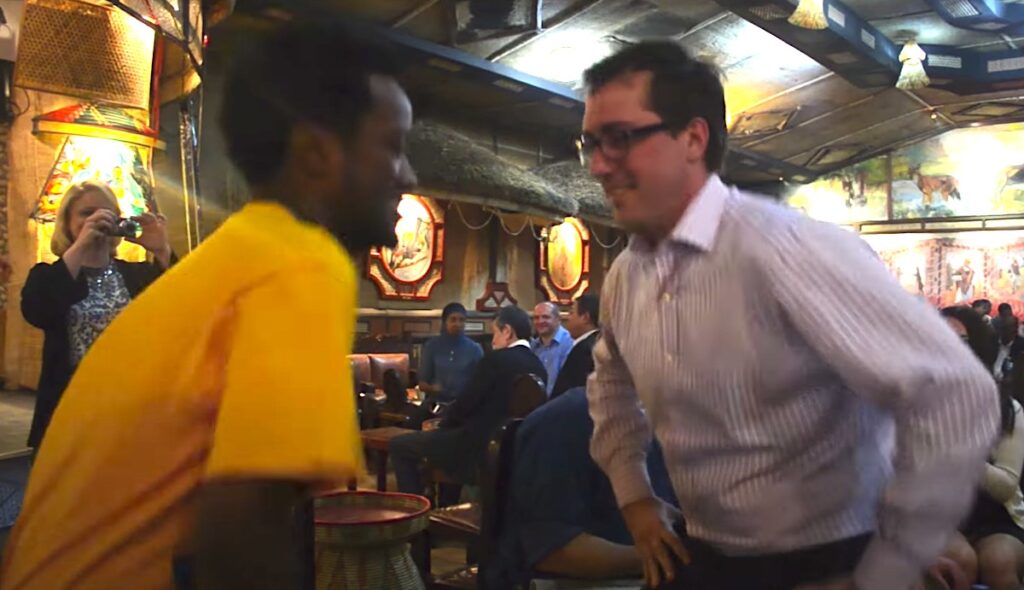
    The field trip wasn’t all meetings and business attire. We also went to enjoy the food and culture. And Dean Riddle recommended we visit the 2000 Habesha Cultural Restaurant. At first glance, the restaurant offering a buffet of traditional food and a stage show of dancing and singing looked like another tourist trap. But you cannot judge a venue by its clientele.
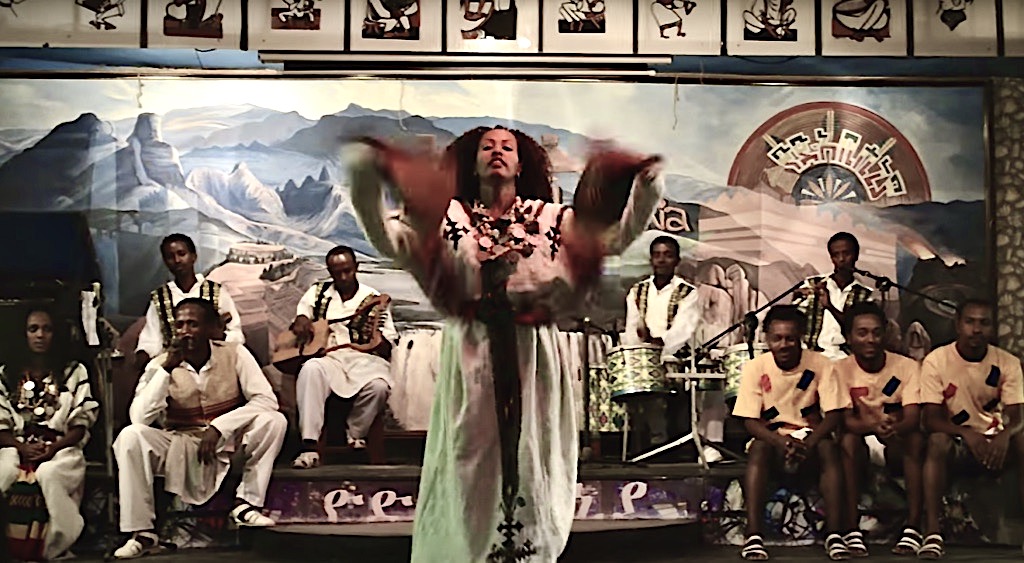
    2000 Habesha Cultural Restaurant

    We loaded up with large platters of injera and wot and sat up front to enjoy the festive performances.  The veggie-friendly dishes were anything but boring. The healthy portions included ruby beets, lentils, salad, carrots, green beans, and chickpeas and were flavored with garlic, paprika, and rosemary. After a few glasses of honey wine and bottles of St George beer, a couple of brave souls sauntered on stage and performed the Eskita (traditional dance moving the shoulders).

    The next day, Dean Riddle and several of my classmates visited the Boston Day Spa nearby. They had a relaxing time to refresh and detox until one or two of them accidentally imbibed on the tap water that was served to them and immediately realized they weren’t in Boston USA. Ethiopia has made impressive progress over the past 10 years on improving water quality, but the water supply is still very contaminated and should not be drunk. Needless to say, a couple of them caught gastroenteritis and had to rest at the hotel to recuperate. 

    At this trailblazing spa, we got to meet with Tadiwos Belete, a diasporan who trained as a hairstylist and attended cosmetology school in Boston. When the Derg regime overthrew the Ethiopian monarchy in 1974 and established a brutal dictatorship, Tadiwos, at the age of 15 decided to flee on his own to Sudan. There he was even paid by farmers to scare off birds feeding on crops. After a few years of roaming about, he applied for refugee status in the U.S. and moved to Boston where he worked odd jobs until he decided to become a hairstylist.
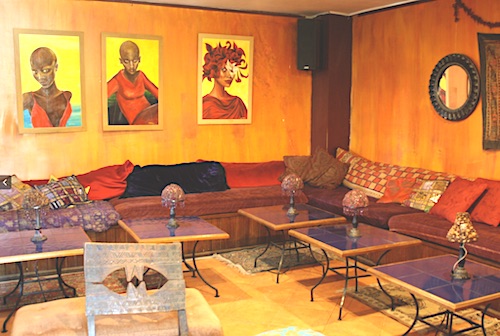
    Boston Day Spa

    After saving money, Tadiwos wanted to open up a salon in the city’s poshest neighborhood, but nobody wanted to rent to an unestablished immigrant.  He decided to reach out to the owner of a building on Newbury St by inviting him for dinner at a nearby Ethiopian restaurant to get acquainted. The owner was sold by his negotiating skills, and in 1998, Tadiwos opened up his first hair salon called Konjo (beautiful in Amharic).  

    It wasn’t long before Tadiwos started to feel a longing to return to his homeland. He developed the idea of starting a luxury spa, hair salon, and hairdresser training school in Addis Ababa.  But he didn’t have the funding.  He asked nearly every customer who got a haircut from him to partner with him and invest in his country.  After asking nearly a thousand people, one Taiwanese woman reluctantly agreed to come in as a silent investor. Tadiwos built an office block on crumbling, dilapidated Africa St, where many had not dared to set foot. His relatives thought he was crazy, but he wouldn’t be deterred. 

    Nine years later, business is through the roof, and his brilliant idea has spurred dozens of other spas to sprout all over the city. Tadiwos has also embarked on a development boom, opening up a restaurant and a wine bar downtown along with two luxury resorts a couple of hours from the hub. In all, he employs over 1,500 people spurring the economy. We had the opportunity to visit Tadiowos’ Kuriftu Resort, a 28-room tourist retreat in Bahir Dar, at the source of the Blue Nile river.  It’s an amazing place with great food, hookah, and a splendid lake where you can go on a relaxing boat ride. And like Boston Spa, they have a massage, steam, and sauna to top off a very relaxing retreat from the city. Just remember not to drink the water.

    On the way back to the city, we stopped at the legendary Tiya Stelae, an archaeological site containing 36 enigmatic monuments. Each obelisk-shaped stone is engraved with primitive, clear images of swords, shapes, and figurines. To date, no one has been able to determine the age or the purpose of these carvings. One reason why they call Ethiopia a “Land of Mystery.”
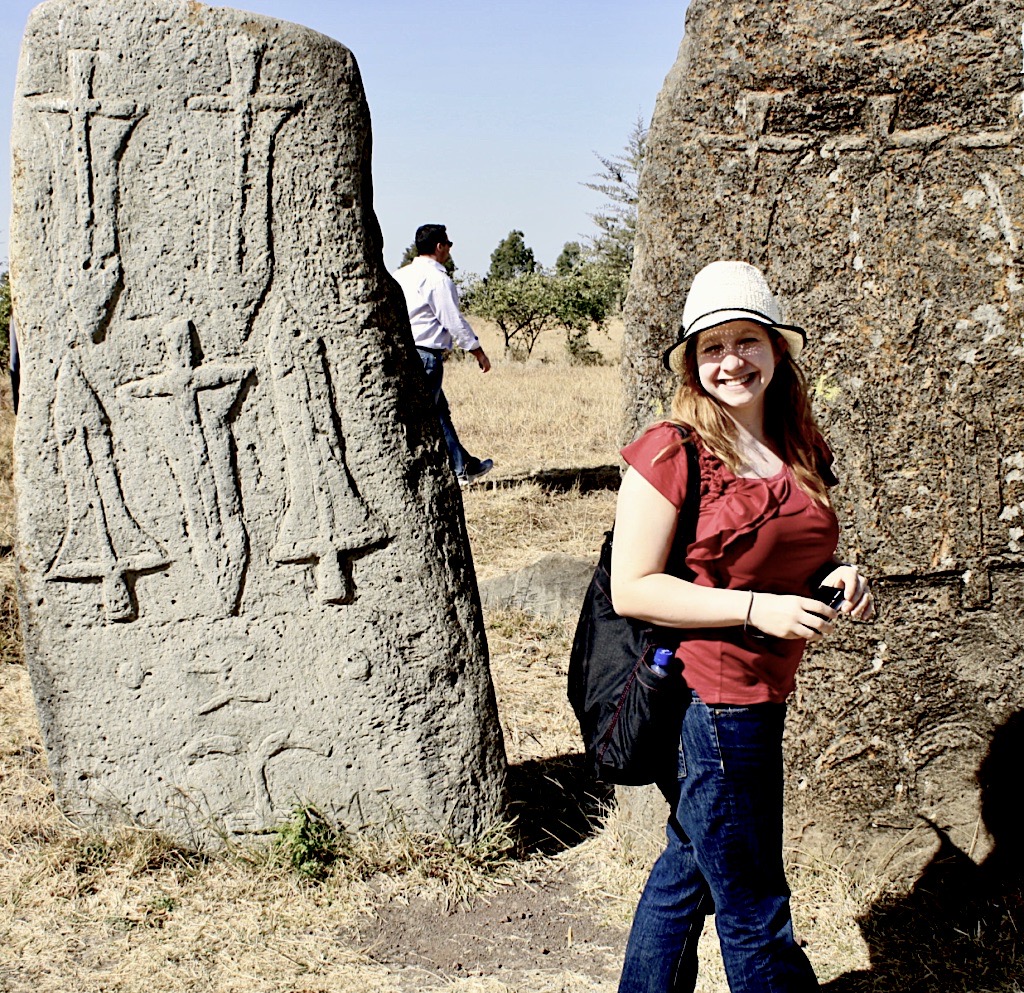
    legendary Tiya Stelae

    Finally, we got to visit the Commodities Exchange, established just four years prior. The country’s two major goods exports are not surprisingly coffee (29%) and cut flowers (14%).

    Ethiopia is also a land of rich opportunities for investors, from all over the world. That is why it is projected to be Africa’s fastest-growing economy, and perhaps one of the fastest globally. Labor is fairly inexpensive and highly skilled and the country has made huge investments in infrastructure and manufacturing. The government is making reforms to unleash the private sector and has wholeheartedly embraced the diaspora for impactful development projects. Returning diaspora also share invaluable skills, education, and experiences they acquired from the West. In order for the motherland to optimize development and job growth, she must continue to forge lasting, meaningful ties with this salient community, translating into sustained, measured growth in the years ahead.

    But the road to investment is a rocky one. Diasporans are facing a huge information gap in the current market and steep odds that they will reach their lofty goals. That’s why it’s highly imperative that they conduct proper research and fully understand the industry and the market in which they are operating in.  They need to be savvy innovators and shrewd negotiators in a volatile and intransigent market.  What I found noteworthy was the resourcefulness and resilience of the diaspora community. Through grit and resilience, many persevered and ultimately made a significant difference for their country and citizens.

    On the final day of our journey, I sat down with my friends to discuss what we learned. 

    Rasheida Knight was really smitten with Addis Alemayehou. Addis has been able to achieve massive success because he was innovative.  Most people who lose an item of value like an iPod would regard it as a setback. Addis viewed it as an opportunity to fill a void. He reflected on how important his playlist of Western music was to him and realized that there were many Ethiopians that felt the same way. He conducted a target market analysis to understand the size and scope of the audience and researched what was needed to launch the first private English-speaking radio station, Afro-FM. He not only tried to understand how people work, but he also wanted to understand how things work. And in so doing, he documented everything. 

    “If you were to spend a week in Ethiopia and write down everything you wished you had but didn’t, you would come up with tons of innovative ideas.”

    Marilu Ortega enjoyed her time at the spa and was thus impressed with the innovativeness of Tadiwos Belete who thoroughly researched the local market and felt that a day spa business could thrive there. People thought he was crazy, but he understood the potential customer base and was confident that the salon would be a huge success.

    But Tadiwos didn’t have the funds or resources to make all this happen. He was an effective negotiator beginning in his Boston, MA. days when he skillfully convinced a building owner to lease him space to open his first hair salon to when he convinced one of his customers to invest in his business venture abroad. Without his ability to listen, communicate and persuade, Boston Day Spa would never have been built. 
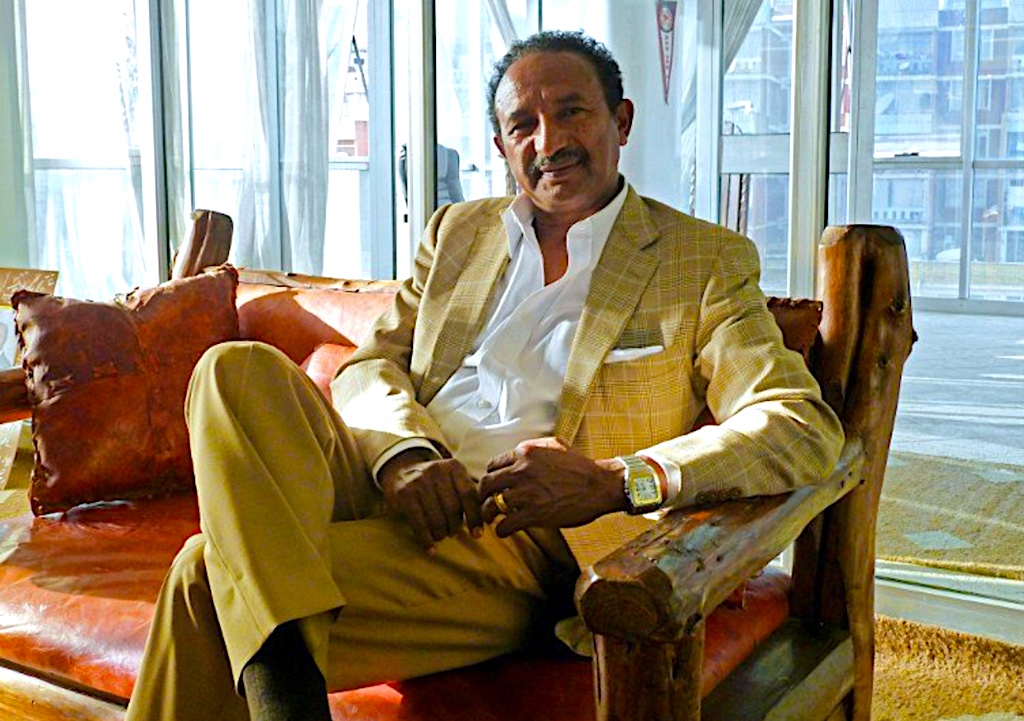
    Tadiwos Belete

    Erin Dahan was impressed with Tadiwos’ resourcefulness. At the age of 15 and living in a Sudanese refugee camp, he was able to survive and find a way to show his usefulness to farmers and work with the Catholic Church to immigrate to the U.S. He lived in Boston for 20 years and through resourcefulness and grit, managed to save money and learn an important skill that led him to build his luxury spa business franchise.

    Brady Shannon also enjoyed hearing about the resourcefulness of Daniel Gad. After living in the U.S. for 20 years, he was shocked when the Chamber of Commerce recommended that he invest in flowers. To be successful in agriculture one has to be highly resourceful. For one, the country did not have access to modern farming equipment. They still used pitchforks and plowed with donkeys. Daniel eventually sold MetroLux Flowers and started a new business in horticulture called Omega Farms. He did a lot of research and observed how his farmers harvested chickpeas. He then realized that by being more resourceful and making small improvements in their handling processes, his farmers would be able to increase production by 30%.

    “I like to use the analogy of gold in the dirt,” said Daniel Gad. Ethiopia has a lot of dirt. The key is to find out how to get gold out of it.”
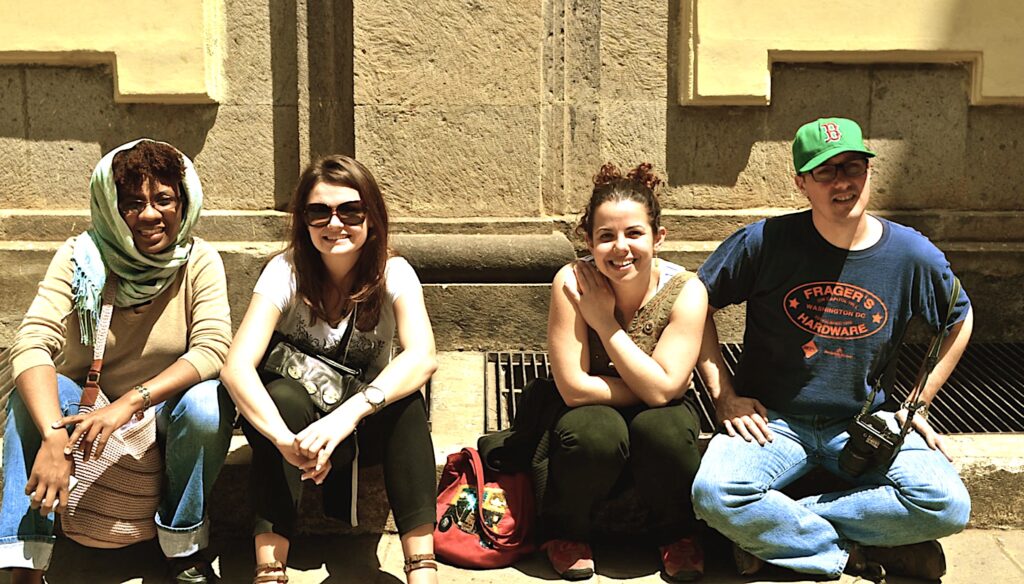
    Rashida, Marilu, Erin & Brady

    Marilu sympathized with the huge healthcare challenges the country faces. “Their resourcefulness in utilizing telemedicine is both novel and remarkable,” she said. “Dr. Atnafu has made huge sacrifices and has done a remarkable job.”

    All the entrepreneurs we met, made bold decisions and took huge steps to start their businesses in a very risky and volatile environment. There was a huge information gap, and they faced steep odds against reaching their lofty goals. When faced with challenges, some of them had to take a step back or make a drastic course change, but they always kept their eyes focused on their goal and navigated towards it.

    Even 10 years later, I remain inspired by the group’s resourcefulness, their deep understanding of the current market, their ability to broker and negotiate, their willingness to adopt innovation, and their courage to take the next step.
  • Thai Landing

    Thai Landing

    Since I spent a few days in Baltimore for the Drupal Camp, I used my free time to tour and explore restaurants nearby. Long before Baltimore was known as Mob Town, she was named the “Monument City.” 70 years before the iconic Washington Monument was dedicated at the National Mall in D.C., Baltimore’s own monument was erected to become the first landmark dedicated to President George Washington. The 178-foot white marble colossal column with GW standing on the top overlooks historic Mount Vernon, Johns Hopkins University, and various museums and galleries. Mounted on his horse, directly south of Washington, is the Marquis de La Fayette, a general from France whose contributions were instrumental during the American Revolution. 

    Despite the ornate memorials and classic architecture, Mount Vernon, once a haven for millennials and college students had recently turned into a ruinous corridor for crime. Lately, there have been many incidents where law-abiding citizens have been mugged or gunned down leaving many Baltimoreans feeling vulnerable and subjugated.

    And this was during a time when many retail businesses were still on a rebound after being roiled by weeks of tense protests after the April 19th death of Freddie Gray, a 25-year-old black man who was tossed around the back of a police van while he was shackled by his hands and feet. He died a few days later from a severe injury to his spine.

    The protests began on April 25th, 2015 as a peaceful demonstration outside the Camden Yards baseball park but eventually turned violent when demonstrators clashed with fans. Over the weekend, a plan at circulated on social media

    The following Monday, April 27th, a plan had circulated on social media for a purge event — a reference to the 2013 dystopian film in which all crime is made legal for one night — to start at Mondawmin Mall in NW Baltimore and to proceed down Pennsylvania Ave towards downtown. The police got wind of this plan and stopped all buses and forced all riders to disembark. The students then gathered together and started pelting bottles and bricks at the police. Violence escalated and rioters started looting the Mondawmin Mall.  The violence continued for the next few days, resulting in 144 vehicles and 15 buildings being burned. Even after the curfew was lifted a week later, it took weeks before customers found it safe to return. 

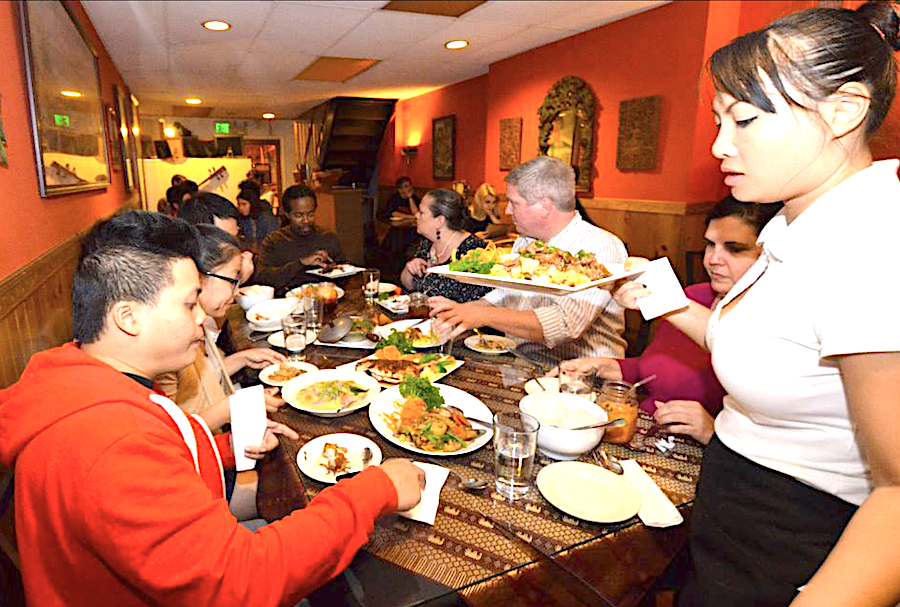
    Sirenat, the owner of Thai Landing on N Charles St. was a 30-something, slim woman with a bright smile and positive attitude. She agreed to hire me to design their website. Many people were still scared to come out, but they were keen on online ordering. She also needed help in drumming up her business and attracting positive publicity.

    I didn’t know too many people from Baltimore, but I did know someone from D.C. who had spent a lot of time there. His family was in the restaurant business, and as a realtor, he was familiar with the lay of the land up north. As president of D.C. Asian Professionals and the founder of the Charm City Eats meetup group, Joe Nam Do is very well connected.  Just like John Tinpe from Burma, he was well regarded by the D.C. Mayor’s Office on Asian and Pacific Islander Affairs. 

    Joe wholeheartedly agreed it was time to patronize local businesses and host events that showed our true support.

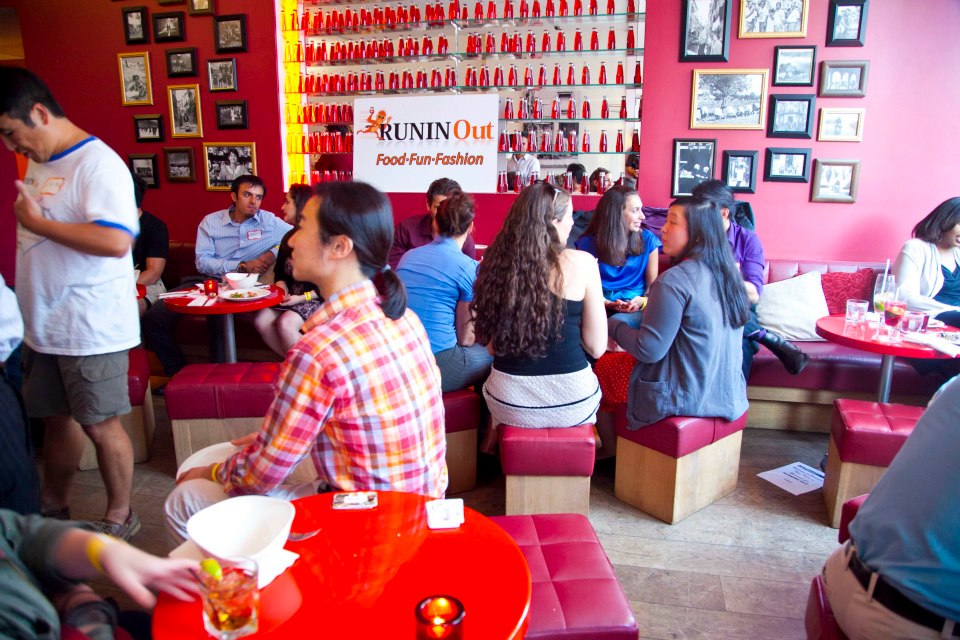
    “It is a Prix fixed menu of their top Thai dishes for $25 per person,” I said. “The owner wants good reviews on Google and Yelp and wants the dishes featured on RUNINOut.”

    “As long as she’s serving my favorites: pad thai, drunken noodles, and massaman curry, I’m down,” he said.

    “That’s just the tip of the iceberg. Sirenat will be serving Tom Yum Goong, pineapple fried rice, grilled fish with lemongrass, and papaya salad.”

    “But we have a couple of vegetarians in our group.”

    “No worries, they have veggie chicken and duck and it’s hard to tell the difference.”

    “That sounds amazing – I love Thai food, and I have lots of faith in our community. Let’s support Thai Landing and Go Charm City!”

    October 29, 2015

    Over two dozen Thai food enthusiasts showed up that crisp fall night for good food and to bring good tidings.

    We tasted several dishes on the menu, all large portions and all Thai sizzling hot.

    “This is as hot as the real estate market in Baltimore right now,” Joe said.

    I was devouring my honey duck curry. “There are some nice neighborhoods like Mount Vernon, but much of the city is run down.”

    “Even homes in war-zone areas are selling like hot cakes. Yeah, you might have to invest $30K to rehab, but you’ll be getting a steal and there’s plenty of room for appreciation.”

    “Well, I’m already invested in a low-income neighborhood — Anacostia in D.C., and I’ve lived there for 12 years.”

    “I had a dream this morning that woke me up a bit early. I bought goldfish in N.Y. and had to bring them back to Baltimore. Unfortunately, the bag was too small and it was crammed with goldfish. I separated the fish into several bags and changed the water frequently to keep the oxygen fresh. Still, some fish died and a few jumped from the bags into the sink I was getting the water from. There was a sense of loss, but most of the fish did make it home. I woke up immediately and realized what the goldfish represented. Dreams and the subconscious are honest with us even when we don’t want to admit the truth.”

    “Wow, Joe, you actually remember your dreams?” 

    “The ones that matter — these I write down so I don’t forget.”

  • Prayers for Nepal

    Prayers for Nepal

    May 12, 2015

    The views at the Georgetown waterfront were busy with paddle boarders launching from the Key Bridge Boathouse and lunchers enjoying the open patio seating at Sequoia and Tony & Joe’s Seafood Place. Bikers were crisscrossing the Capital Crescent trail on their way to Bethesda or Cabin John. Runners and strollers were enjoying the historic C&O Canal stopping at the numerous bakeries and coffee shops to grab a bite or to enjoy the rich, sweet aroma.

    While kids were splish-splashing in the fountain and grown-ups were getting their feet wet, Sunita Amatya was sitting on the side of the river, praying for the thousands of lives lost thousands of miles away.

    On April 25, 2015, a 7.6 magnitude earthquake struck the city of Kathmandu in central Nepal killing 9,000 people, affecting millions of lives, and causing $10 billion in damage.

    “May the tragic and devastating situation get better with Divine grace. May all five elements of the creation (earth, water, fire, space, and air) be balanced forever and will there be no more natural disasters,” she chanted towards her Supreme Deity.

    The common belief is that to experience enlightenment one must be quiet and sit motionlessly. But that couldn’t be further from the truth. Then as her prayers to Dharma were received, her devotion transformed to dance as hundreds of sightseers and gawkers were entranced by her majestic movements. But this was not a performance. Sunita was touching her dimension beyond her limited mind and body. It was an inner engineering language to express life energy while using the body as an instrument. 

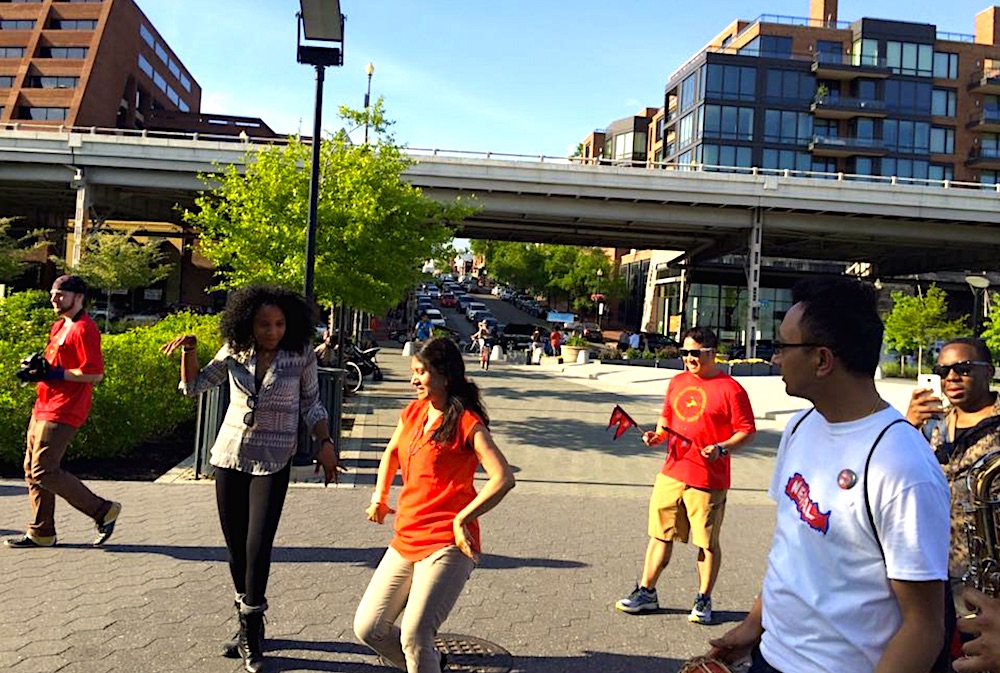
    Suddenly out of the corner of her eye, she saw a spirited straggle of runners. Not just any runners that you would see spurting all over the pristine paths of D.C. But these exuberant runners were adorned in bright red Embassy Run shirts, matching their crimson red Nepali flags they were waving. The color symbolizes the brave spirits of the Nepalese people and the two triangular pennants represent the Himalaya Mountains and the two major religions: Hinduism and Buddhism.

    The astounding sight was too coincidental to be a coincidence. She quickly rose and with the enlightened spirit of Buddha followed the throng to a neighborhood saloon on Water Street called Mr. Smith’s.

    For a second, she wondered whether she belonged here. The pub was unassuming and low-key, and there she saw what seemed like a hundred road-weary warriors all dressed in crimson red, nursing a cold Dos Equis.

    “Saw you guys running by the waterfront. Are you running for Nepal?” she asked gingerly.

    “Absolutely, we’ve been running 13 miles and raising awareness for survivors of the earthquake,” I answered. “Are you from Nepal?”

    “Why yes, I was just at the park praying and dancing for the plight of our people. And Prince Shiva led me down this path to join your gathering.”

    “That’s quite poignant. We were devastated when we heard about the earthquake, and we wanted to use our run as a vehicle to raise awareness and funds.”

    “Then Prince Siddhartha answered my prayers. My son, Sudin, and I are also raising money for recovery and relief, but our efforts to date have fallen short.”

    “I think there are ways that we can collaborate. But first, tell me why dancing is so transformative.”

    “Dancing helps us purify our thoughts and heart and heals us from physical and mental pain. It’s to let God in and to let go of any negativity — to attain bliss.”

    “Wonderful, Audrey Pichmimi said. “Can you show us outside how you perform your dance?”

    [ Image: Sunita-dancing-in-Georgetown-1024×689.png ]

    Sunita showed us how to dance for enlightenment on the Georgetown Waterfront

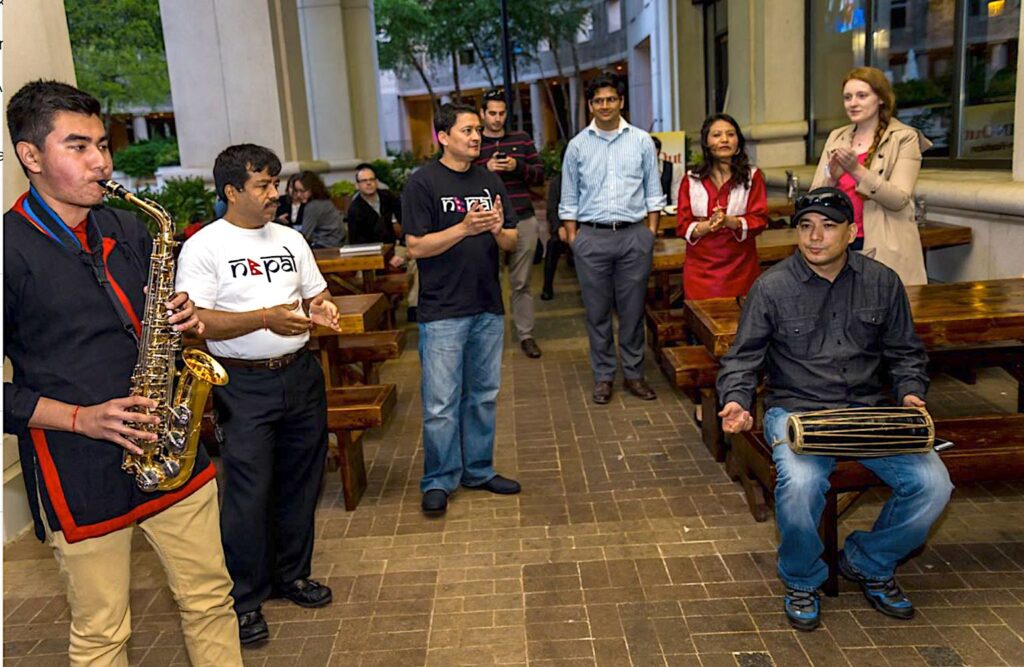
    The following Thursday evening, a couple of dozen revelers, runners, and members of the Newah Organization of America (NOA) amassed at Courthaus Social in Arlington to honor the people of Nepal, discuss earthquake relief opportunities, and enjoy music and dance. 


    Sudin plays Sax @ Courthaus Social

    Sunita brought her talented son 16-year-old, Sudin who played the sax and sang traditional folk music. The music carried powerfully through the outdoor patio on a warm spring night, and many onlookers inquired about the cause — NOA was able to also receive generous donations from those who were deeply touched and wanted to show their support.

    We charged $20 for entry which included a wide selection of appetizers. Jackie was instrumental again, spreading the word and getting people to book the event through her site, Bookalokal

    Audrey, who was enamored with Sunita’s faith, returned to help raise money and to enjoy Nepali music.

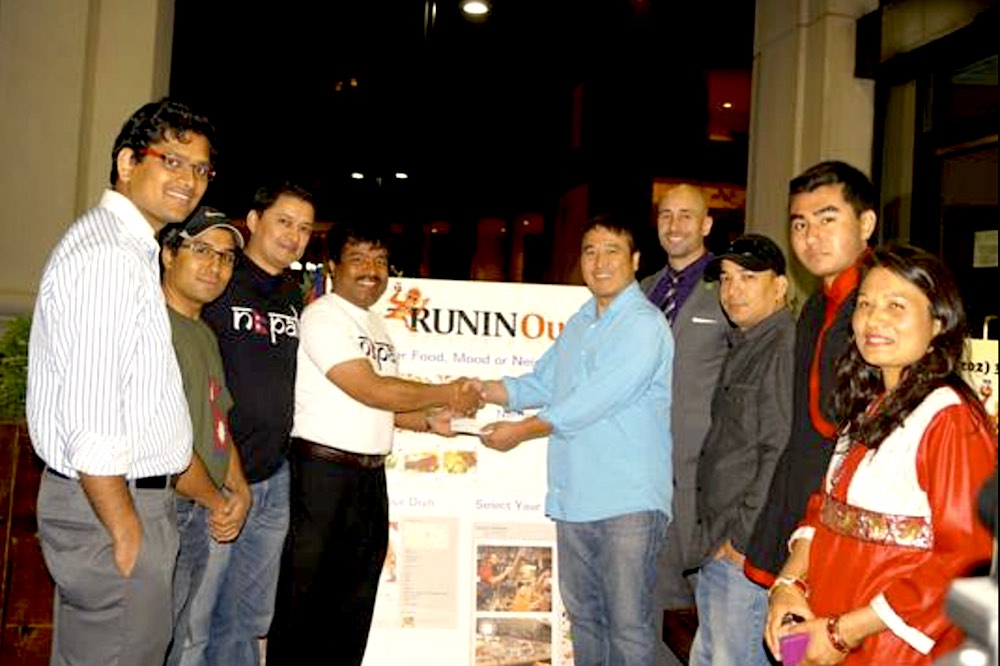
    By the end of the night, we were able to present NOA with a check for $1,000

    Members of NOA receiving a donation from the Nepal Relief Fundraiser

    “We are extremely grateful for your spirit of generosity,” said Ram Shrestha, president of NOA. “We will be able to provide medical supplies and build temporary shelters with these funds.” 

    “Thank you very much,” Sunita said. “This divine circumstance proves that praying and dancing is indeed transformative.”

    “It’s our great pleasure, to serve a small part in this. I’m now a true believer in the power of spiritual dancing. My thoughts and prayers to the courageous people of Nepal.”

  • Postmates

    Postmates

    Winter 2015

    In the winter of 2014, Postmates roared into town with the promise of being able to deliver virtually anything to anyone in the District within an hour. They charged a 10% purchase fee and a nominal delivery fee based on the distance of which 80% went to the couriers.

    The app is commonly used for restaurant food but people have been known to purchase computers, groceries, you name it. The app works fairly well and the startup had received a hefty amount of funding to hire staff and rent office space.

    But the idea of on-demand delivery is neither new nor novel. Both Seamless and GrubHub were already dominating the industry in D.C. Most people who pay the price of a good meal prefer to enjoy the atmosphere that comes with it. A $50 Prime Rib from Del Frisco’s Steakhouse somehow doesn’t taste the same on foam and plastic as it does on china and silverware.

    So many of the food purchases are for franchises and fast food restaurants like Shake Shack, Chipotle, Potbelly, and McDonald’s — those with low prices and even smaller margins.

    The app is popular with college students who may not have the best spending habits. But college students don’t tip and couriers could make as little as $5 an hour especially if they have to wait in line and make an order — like Vapiano during rush hour. And how long will college students continue to use the app, when their parents find out that their spending habits and cut back on allowances.

    Jason Morenz had been delivering for Postmates since they arrived in D.C., and recommended I give it a try. Since I’m in the Restaurant food and customer relations business, I had to see it for myself. I signed up and attended the onboarding session. And just like that, I was hired — it was fast and easy. They didn’t even check to see if I knew the city, was in shape or I was really up to this task. As long as I didn’t have a criminal record, I was hired. 

    At first, it was fun. I got to see the city and visit new restaurants while getting a workout. The customers were nice but stingy on the tip, and there was definitely a lack of transparency on how much they tipped (since it was not readily known how much their tip was)

    After completing 10 orders successfully, the company started sending me two orders at a time and that’s when it started becoming a burden. And even if you want to do one order at a time, Postmates will keep pushing it, along with the most deafening beep requiring you to accept or reject.

    You almost want to accept a second order just to keep your phone from beeping. And you can’t turn the app off since you need to keep it on for directions to your customer.

    And since Postmates have invested a lot of resources in marketing, they have way more orders than they have couriers. So if you are scheduled or if you check in for duty — you will be bombarded with orders — some of them very challenging to complete within an hour.

    The orders that I regretted taking were for made-to-order restaurants like Vapiano that would not take orders over the phone. I had to travel to the location, wait in line for 30 minutes, order, pay, pick up the food, then travel to the customer. The entire job took over an hour but my fees plus tips amounted to less than the minimum wage of $10.50/hr.

    The obvious goal was to avoid taking orders that were time-consuming, had low margins, or would take me away from the city hub. Orders for deliveries to the northern corner of D.C. such as Friendship Heights also meant not finding another order for miles. I could cancel the order. But this would come with a penalty and a negative rating.

    Knowing which orders were attractive and which were the low-hanging fruit came with experience. Usually, the newer couriers were tricked into taking them. But eventually, word spread like wildfire. To incentivize couriers to accept unpopular orders, Postmates would offer a $50 bonus if you were able to complete 20 orders in a 48-hour period. The catch was that you would have to accept every order that was assigned. You no longer could swipe left on an order that you didn’t like.

    If you experienced any issues such as the order not being ready, or the customer not answering the phone, you could call customer service to iron things out. But after a while, the company outsourced their help desk and we would generally get a canned answer that didn’t seem to solve my problem.

    To take a break from taking orders, I would often check out of duty to pick up passengers. Very rarely did I do both at the same time, though it was entirely possible unless it was pizza in which my passenger would enjoy the smell of spicy pepperoni with melted cheese on hot pizza dough.

    Because the orders took us all over D.C., MD and VA, I would rotate my mode of transportation from my Subaru, bike, and pedicab. Unlike their competitors, Postmates would deliver virtually anything: clothing from Walmart, electronics, groceries, even pharmacy prescriptions. 

    At one time, I accepted an order to carry $20,000 worth of laptops, ten miles to Bethesda. Postmates knew I was driving my car, so they assigned me the order. The customer was shocked when I arrived since they had made the purchase from Apple and not Postmates. Apple just subcontracted the order to Postmates. Needless to say, I didn’t receive a tip.

    Many restaurants are not happy with Postmates doing their delivery since Postmates does not ask the restaurant for permission. They just link the restaurants’ menus to their site and charge the customer a steep delivery fee. Some restauranteurs are not happy because they don’t trust the couriers to handle their food properly, and if there is a complaint, it most likely will be directed to the restaurant.

    On April 4, 2015, I was riding my pedicab on M St NW transporting burgers from Thunder Burger, when I was struck from behind and suffered damage to my right rear wheel. The driver stopped and was apologetic, but did not have any insurance. My bike was out of order and I wasn’t able to deliver the meal. My rating score would take a hit, but at least I got a free burger.

    I got the wheel fixed and sent a copy of my bill to Postmates for compensation. I was surprised to hear from Stephan the local area manager that they would not cover my expenses.

    “What if I got hurt and needed medical care?” I asked.

    “You’re a 1099 independent contractor, not an employee,” Stephen replied harshly. “You’re on your own.”

    “If you enjoy delivery and want all the benefits of an employee, you should consider venturing into trucking,” Jason said. 

    “That’s absurd. Trucking is a hard life and if you think the streets of D.C. are busy on a pedicab, I can’t imagine what it’s like in an 18-wheeler.” 

    The following week, I got a call from Stephen. With my recent slew of late deliveries from my pedicab, my rating had dropped below 4.6 (out of 5) and I would be terminated effective immediately.

    “Is there an appeal process?”

    “We decided in this case, you didn’t merit one.”

    It didn’t matter that I had connections to hundreds of restaurants in the area. It didn’t matter that I had received dozens of 5-star reviews. That couldn’t be fair. The way Postmates treated their couriers was a violation of labor law. The following week, I called Jason Rathod a Labor Attorney from Migliaccio & Rathod Limited Liability Partnership to see what could be done.  They agreed to file a claim, and I joined Sherry Singer et al v Postmates in the class action lawsuit.

    “If the courts rule in our favor, Postmates would have to treat its couriers as employees and pay them accordingly,” said Jason Rathod. “ A victory will have implications for other delivery companies like GrubHub as well as Uber and Lyft drivers and GrubHub food carriers.“

    Labels don’t really matter; it’s the economic realities,”co-counsel, Nicholas Migliaccio said. “Giving workers labels to deny them protections is an injustice worth fighting against.”

    * * *

  • Ben’s Upstairs

    Ben’s Upstairs

    August, 2016.

    I was driving back from Front Royal, VA, the gateway to the Shenandoah National Park, when I got an unexpected call from a long-time restaurateur friend.

    “Manuel, it’s great to hear from you. How’s the Iguina family?”

    “Wife and kids are fine. We’re launching a new restaurant theme on H Street.”

    “Really, Latin, Puerto Rican?”

    “Neither one, I just got hired as the Director of Operations by Ben’s Chili Bowl.”

    “Wow, chili and half-smokes – a local legacy. Congrats!”

    “Yes, it’s a true iconic symbol, but we’ll be focusing on a totally different cuisine – Southern with a twist of Caribbean.”

    “Sweet my friend, on U Street?”

    “No, above the new location on 1001 H Street – we’ll be changing its name from Ten 01 to Ben’s Upstairs in “a few weeks.”

    That makes a helluva lot of sense. The Ben’s name holds a massive amount of clout. What worked on U Street with Ben’s and Ben’s Next Door should work on H.”

    “Yes, we’re thrilled beyond belief, and I would love for you to join our team.”

    The following week, I met with Nizam Ali, owner and Vice Chair of the Ben’s Chili Bowl Foundation; Manuel and his Chef who hails from North Carolina, Quinton Mitchell. We formulated a plan to photograph their space and savory dishes, develop a website theme that captures their unique character and aggressively market the space to locals and tourists.

    “H Street Fest is the biggest block party in D.C.,” Nizam asserted. “We want to launch Upstairs in conjunction with the Festival and hope that people from all over come in and sample our cuisine and experience our renowned, timeless brand.”

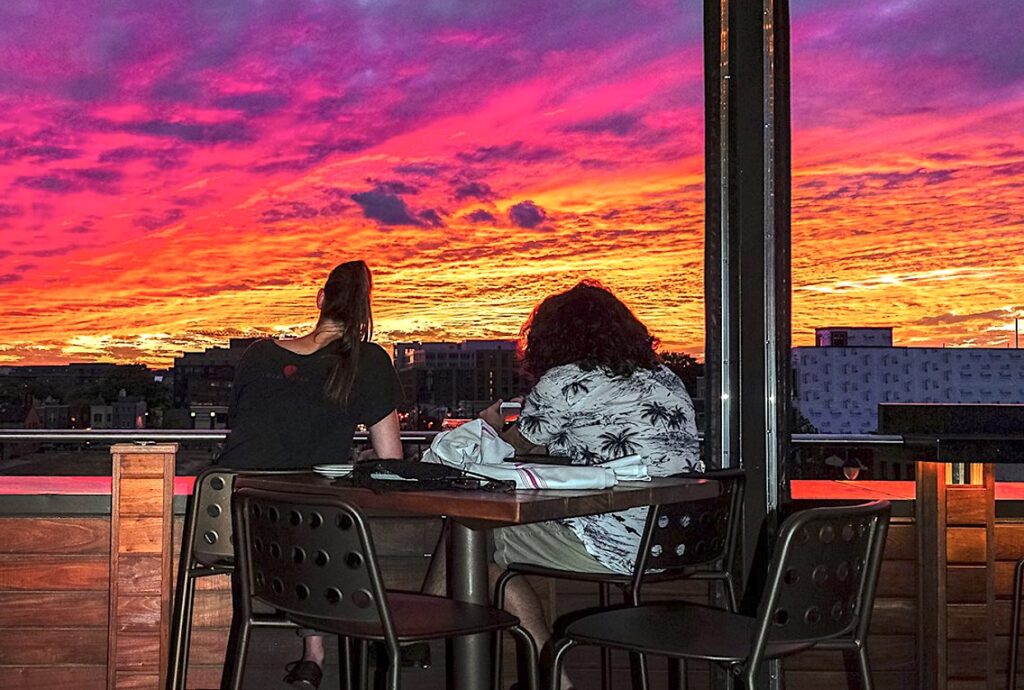
    Similar to the iconic lunch counter on U Street with Ben’s Next Door, a historical American restaurant, Ben’s Upstairs featured a full service bar as well as a covered rooftop space offering stunning sunset views.

    H Street was once a thriving economic corridor. But after the ’68 riots, the area was devastated. Similarly, U Street was ravaged to ruins after the riots. Businesses were damaged and smoldered, but Ben’s Chili Bowl stayed opened even through the many nights of curfew. Ben’s fed first responders and black activists, and served as a peaceful gathering place and safe haven for all.

    Kay’s Jewelers and Morton’s Department Store burned down during April 1968 riots. Overall, more than 1,100 buildings in D.C. were damaged and the middle-class fled to the suburbs to seek safety and open space. People did not return for 20 years, and it wasn’t until the start of the 21st century that people began to invest in their community and redevelop the battered corridor.

    That’s why Ben’s Chili Bowl is such a revered landmark. President Obama and national celebrities frequently dropped by to grab a bite, and for many world leaders, it’s a rite of passage after visiting the White House.

    “Our slogan is Southern-influenced cuisine food with a hint of Caribbean flavors,” Nizam announced.

    “Fried oysters Po-Boy with citrus aioli, fried green tomato BLT with ancho chile lime mayo, jerked salmon and lobster roll with arugula and roasted peppers, whole fried snapper served with coconut mojo are our featured dishes,” Quinton revealed. “And Manuel also assists since he’s from the enchanting island of PR.”

    “Also love the stuffed yucca and green plantains as well as the mac ‘n’ cheese studded with crawfish,” Manuel shared.

    “My father Ben was born in Trinidad and my mother Virginia is from Southern Virginia. We want our new menu to reflect the Ben’s family roots,” Nizam remarked.

    “And the drinks are very much Latin/Caribbean featuring Bacardi mint Mojitos, Mezcal Margaritas, and Stoli Raspberry Sangrias,” Manuel informed. “Very comparable to my Little San Juan.”

    “Thanks for all this timely information. I need to ask for a favor. “I have a friend who just arrived from Jamaica. Can you get her a job?”

    “If she has a green card, she’ll fit right in,” Manuel replied. “And BTW, will you be inviting food bloggers like you did at Mio?”

    “Super idea — food bloggers and social media influencers.”

    [ Image: Orlando Darden.png ]

    Orlando Darden Jr.  @Ben’s Upstairs

    Who me also a food model? Well when my good friend Chito invites me to join him as he samples a new restaurant’s menu, what else can I say but YES! At the two weeks old new #benschillibowl on H St. As I sample the variety of dishes, all I can think is that this restaurant has transcended it’s legendary staple of #chillihotdogs and fries! Very satisfied with the experience.

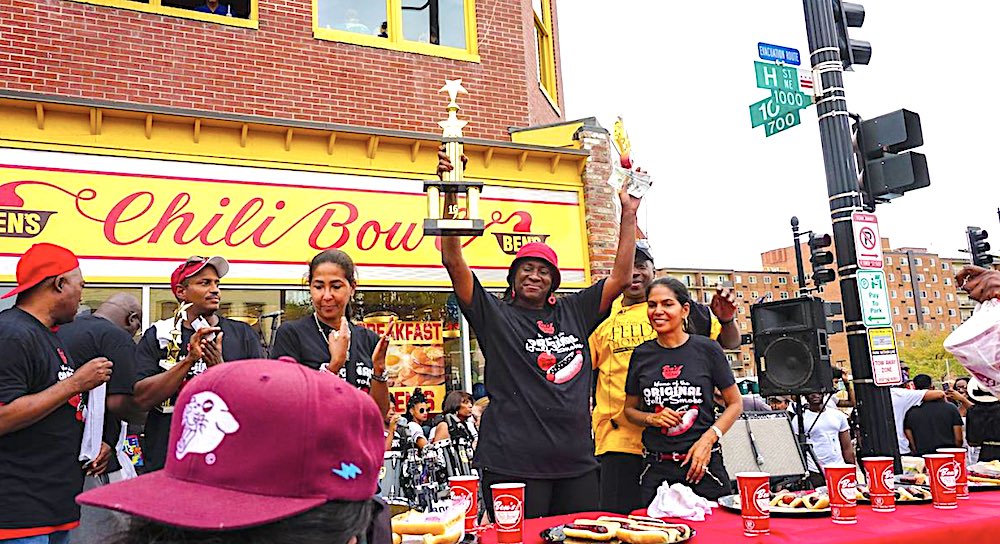
    On Saturday, Sept 17, during the H Street Festival, Ben’s Chili Bowl welcomed eaters and spectators to the 4th Annual Half Smoke Eating Contest.

    Tens of thousands streamed along the 11-block corridor looking to taste wholesome food and experience diverse culture and fun.


    Half Smoke Eating Contest

    What is unique about the D.C. half smoke?  Is it because it’s half pork and half beef?  Or is it Ben’s original spice mix that is a well-kept family secret. Or maybe because it’s grilled on both sides on a hot griddle until perfectly charred. Whatever the reason, the sausage placed on a lightly steamed bun, dowsed with yellow mustard, sprinkled with chopped white onions and smothered with the famous, generation-old chili sauce has become D.C.’s signature dish.

    As usual, Virginia Ali, the Matriarch of the D.C. restaurant world, was busy running the restaurant, cooking half smokes and cleaning tables.

    Eight lucky participants got to enjoy the sweet, smoky half smokes, grilled to perfection, to see who could consume them the fastest.

    Mary Jones set a local record by devouring eight half-smokes in eight minutes — a feat that could put Joey Chestnut to shame.

    [ Image: Screen-Shot-2022-02-21-at-8.56.57-PM-1024×557.png ]

    Vida Ali congratulates Mary Jones for winning the Half Smoke Eating Contest.

    Ben’s stage also showcased some of D.C.’s hottest local artists such as Rare Essence, Ozone, Renee and Wooty 95

    After the contest and concert, fans filed into Ben’s to grab a chili dog with chili cheese fries or Upstairs to grab a Southern Caribbean sandwich paired with a Mojito. 

    A beautiful, full-figured woman with long, black hair and a thick, rich accent served me a Caribe cupcake with a Red Stripe.

    [ Image: Kiomey Ben’s Upstairs.png ]

    Kamara @ Ben’s Upstairs

    “Thank you kindly Kimara. What a great time for you to start working here.”

    “I’ll swing by shortly to see if you want another one.”

    “Thanks, but one beer is all I’m gonna have today.”

    “What are you on a diet?”

    “I’m trying to taper off, and attending these events and festivals ain’t making it any easier.”

    The festival was amazing and the launch was a smashing success. Now it was time to stroll down the avenue to watch other local talents and dancers perform. Cheers to H Street!  This community has become a veritable playground for foodies and art and music aficionados alike.

    I wanted to remain in this vibrant city and enjoy all the perks she had to offer — her culture, the restaurant scenes, the melting pot — but part of me told me it was time to move on..to head west towards the mountains and valleys, where I would find respite and healing.


    Ben’s Upstairs looking out at the western sky
  • Tara Temple

    Tara Temple

    June 24, 2014

    It used to be part of the Tara Thai chain. But with a new owner, new renovations and Buddhist sculptures flanking the entrance, the name morphed to Tara Temple. If D.C. was the banquet hall, Arlington was the backyard. It was a town where I had the least amount of clients and the fewest number of events. So when manager Shine Chuenyam invited me to host an event at the Temple, I was more than happy to oblige.

    When I approached, I was met by two mythical stone lions standing guard at an ironclad double door. As I walked in, I could see that the foyer was shaped like the entrance of a Thai temple with shiny red columns and a sweeping temple roof. 

    I was greeted by stone statues of Buddhist deities praying. And also familiar faces — Wayne Manigo my favorite local stand-up comic, and Orlando Darden, my favorite trainer were already seated at the bar. 

    The Temple was spacious with a large oval-shaped bar, plenty of comfy couches and semi-circular booths for those who yearn for a private conversation. The decor was sleek and modern and it definitely set the tone for the entire evening. 

    As I made my way around the bar, I noticed two lovely women with bronze skin tones and golden brown hair.

    Deb Santos & Roxana Johnson

    “Are you two sisters?”

    “Close, we’re best of friends.”

    “From around here?”

    A petite girl with a toothy smile donned in a yellow floral print dress pointed to her friend. “Roxy is — born and raised. I’m Deb from Chicago.”

    “Great sports city. So you must love Mike Ditka and Michael Jordan?”

    “Absolutely, and Roxy is a huge Redskins fan, so she loves RG3 and Joe Theismann. I’m a huge Blackhawks fan.”

    “And home of the deep dish pizza — what your favorite type of food when you’re really hungry and you care who you’re eating out with?”

    Deb nursed her martini with extra vermouth. “Hands down, Sheecago is the best. Love the wood-fired pizzas from Matchbox to go with the milkshakes from Ted’s Bulletin.”

    Roxy took a gulp of her Singha.”The birria tacos from El Rey and the soy garlic wings and kimchi from Bonchon.”

    “Sounds perfect. And I just love the 1920’s art deco setup at Ted’s and the shipping container design at El Rey.”

    It was at that time that Wayne came by to steal the show.

    “And for laughs, you should check out the Bier Baron Tavern and Comedy Loft.”

    “Girls, this is Wayne our resident comic. He’s also my top promoter who will attest to the fact that on RUNINOut you can search for your favorite type of food, events, ambience, or even team sports, and the site will provide personalized recommendations in the local area.”

    Roxy’s eyes lit up. “Really, can you search who is serving the wheat beer, Hell or High Watermelon?”

    “The Cantina Marina at the Wharf,” I replied in an instant.

    “Can you search for places that are pet friendly?” Deb requested.

    I quickly tapped into my phone. “Wonderland Ballroom — do you own a rescue?”

    “Don’t have one yet, but I really want a Dalmation — heard they are beautiful and brainy.”

    “Sweet. I have a pit bull named Georgia and a sun conure called Apollo — my parrot who likes to drink Guinness at the Irish Channel.”

    Next, I strolled over to greet Christine who was sipping on a Singha Mojito while waiting for her lobster sushi roll.

    Shortly after, Khoi Tran showed up. An Air Force officer stationed in the Pentagon, he is also a food connoisseur and loves to blog about his experiences. 

    “I love a Thai restaurant that serves good sushi,” he said. “Sushi that’s creative with a fine presentation.”

    Shine Chuenyam brought out the next delicacy — the Sunomono Salad consisting of octopus, cuttlefish, cucumber, and seaweed over a bed of shredded white radish with sweet rice vinegar and sprinkled with sesame seeds. 

    For two hours, Shine kept putting out phenomenal appetizers like we were Thai royalty, and we were ordering $2.50 draft Kirin and Singhas like they were Poland Springs. 

    Orlando quickly showed off his chopstick precision skills by extracting a red cuttlefish out of the medley.

    “Mmm, juicy and rich – it’s a cross between a squid and an octopus.”

    “Nah, I’m good,” said Wayne. “I prefer to get my ink from Staples.”

    Christine giggled then decided to bust out a one-liner herself. “So what did Sushi A say to Sushi B?” 

    “C’mon Wasabi,” Wayne replied cracking up together with Christine.

    “That’s right, I forgot to tell you that’s not avocado that you’re eating,” Shine smiled as he poured another round of tequila.  

    All the guys partook, sprinkling salt all over the counter and sucking lemon wedges as if they were adult pacifiers. 

    “Wow that Don Julio really packs a punch,” said Orlando. “Now I’m ready to go in the ring.”

    Wayne grabbed a tuna nigiri with precision and held it next to his mouth. “As for me, my lane is in the kitchen. Being a chef is hard work. But a sushi chef, all you gotta do is resist the temptation to not cook the food – how hard is that?” 

    Shine served an enticing plate of dragon roll. “Alright smart aleck, no more caviar for you.” 

    Wayne devoured the entire roll. “All joking aside, this sushi is out of this world. And the rice, you nailed it. It’s even better than my favorite spot on H Street, Sticky Rice.”

    Since Khoi arrived a bit late, Christine was happy to feed him. Khoi was reluctant at first since as a military officer, he was used to fending for himself, but Christine wouldn’t take no for an answer.

    “I’m a cook and feeding my friends is an act of love.”

    “C’mon now, this isn’t omakase. Khoi can get his own damn unagi,” The Mezcal was making Wayne funnier by the minute. 

    I waited till Khoi finished chewing his nigiri. “So what do you do on your free time? Are you visiting a lot of different restaurants?” 

    “I wish I had time to do more. A lot of life doesn’t happen because I’m attending graduate school in International Relations — a lot of writing, poring over textbook chapters, and reflecting on feedback from professors and peers.”

    Christine pulled the lobster tail out of the shell. “Yes, education is important, but so is making new friends.”

    I turned to her and said, “You need to come to our events more often. No one will ever complain that they didn’t get enough to eat.”

    “And you two bozos,” as I looked over at Wayne and Orlando. “You guys can take it easy on the booze and sushi. Sometimes, they just don’t go together.”

    Orlando took another bite of his sashimi. “Talk about hypocrisy — I haven’t seen you stop drinking except when you were chatting up with the chics. When are we going running again?”

    “Yes, I really need to seriously cut back in my drinking. Both my physical and mental health has taken a back seat.”

  • Bookalokal

    Bookalokal

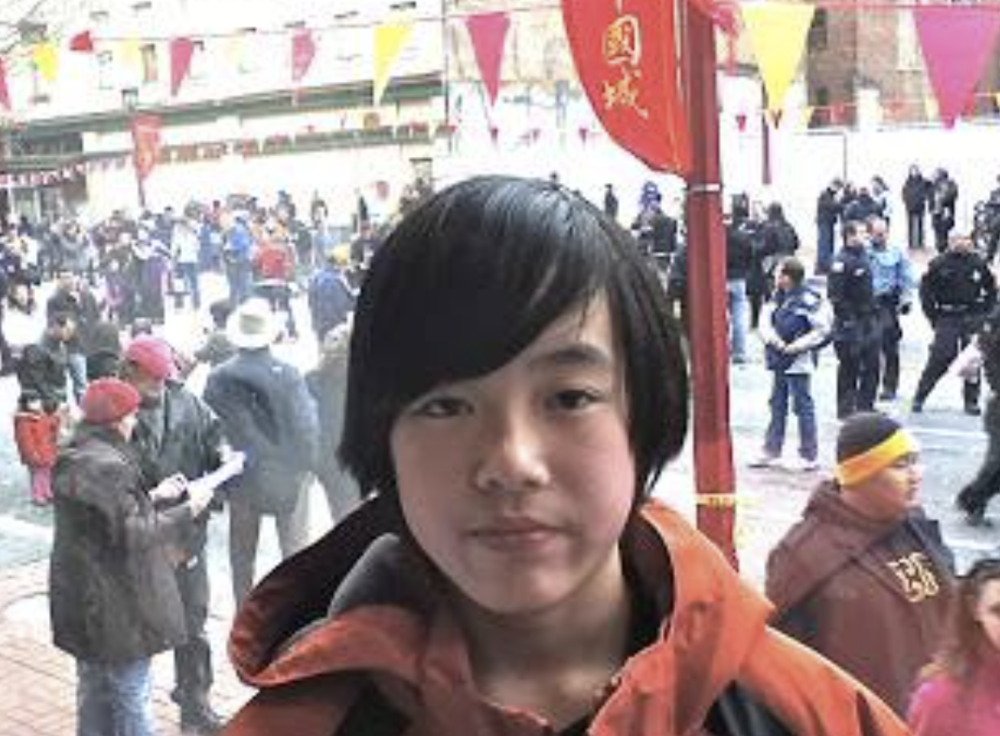
    It was time to celebrate the Lunar New Year, and 2014 was the Year of the Rat.  I picked up my 15-year-old son Colin from Herndon, VA, and drove him straight to Chinatown. Parking was a premium, but we were lucky to find a spot in front of the St Patrick’s Catholic Church, the giant bell announcing the hour of noon.  A stone’s throw away, the red lantern fireworks dazzled on H Street along with confetti canons and poppers.

    On this special holiday, we could stroll directly under the Friendship Archway and admire the golden color of the tile roof and the golden dragons prancing. Completed on November 20th, 1986, the monument is meant to celebrate the friendship between D.C. and Beijing, as well as reinforce the neighborhood’s Chinese character

    There were no street vendors hawking steamed buns or peddling knock-off Gucci bags.  On the corner of H and 6th, a front window is lined with light bulbs like a Hollywood vanity mirror. Passerby gawk while an esteemed noodle master stuffed dumplings and hand pulled noodles from scratch just like they did centuries ago.

    Colin @ Chinatown

    Having skipped breakfast, my stomach rumbled with hunger pangs, so Colin suggested we visit Ming’s next to Tony Cheng’s, the mainstay of Chinatown.  Tony Cheng has ties to local officials and has served as an ambassador between the government and the city’s Asian American community.  He once was invited to prepare a Chinese banquet for President Jimmy Carter in the White House and is a longtime booster of the neighborhood. 

    Ming’s which opened a couple of years back has co-existed under the shadows of Tony Cheng. While Cheng offers a wide selection of AYCE Mongolian BBQ, Ming’s has focused on smaller, exotic dishes focusing on Szechaun sauces and sauté.

    As we entered the ornate restaurant with traditional wood carvings, we were lucky to secure a seat by the window as thousands of people were crammed tightly along the sidewalk. 

    We watched in awe as the parade of floats came to life along with high school bands, dancing dragons, and of course, the omnipresent politicians waving election signs and Taiwanese flags.

    “Yeah, this is a political event thinly veiled as a festive parade,” said a patron who was seated at a table across from us. “There’s not much of Chinese culture in Chinatown anymore. Our beloved village has turned into a lifeless tourist trap.”

    “Chinese businesses are closing up shop, and we’re left with a bunch of chain restaurants and Irish pubs that have meaningless signs written in Chinese,” his wife added. “There’s no authenticity — it’s like Chinatown in Disneyland.”

    “Good point,” I added. “Every Chinese restaurant here is something to appreciate and treasure before they slowly die off.

    “We love Chinese food, but It’s challenging to order here sometimes, the husband said. “There’s no pictures in the menu and no website to guide us.”

    “No worries,” their server Emily reassured. “If you have any questions, I’ll be happy to answer them.”  But on this hectic holiday, Emily was busier than a cocktail waitress at Mardi Gras and had no time to explain each fancy dish in excruciating detail. 

    The proprietor, Michelle Tam then swung by our table. “We have a lot of regular customers who order the same thing every time, which makes it easy for us.  And then we have the late night crowd who can get rowdy and are happy to order drinks when most bars have closed their doors.”

    “I guess when they’re liquored up, they aren’t too picky,” I said.

    Colin and I ordered the chicken Lo Mein, scallop fried rice, and the congee with minced pork and century-old egg.  Well, the hatching is not exactly as old as the hills.  It’s actually a duck egg that has been submerged in a mixture of water, salt, coal, and calcium oxide for 100 days.  The yolk turns dark green to gray and tastes rich like mature cheese. The combination provides it with a strong, flavorful, silky taste.

    After our meal, I asked Michelle if we could chat for a few minutes.  

    “Yes, after the parade and festivities are over. Right now I’m swamped.”

    I knew Colin was eager to get home and cheer for the Seahawks over the Broncos in the Super Bowl, so I drove him home and handed him his traditional red Ang-Pau envelope with a crisp $100 bill inside. 

    “Kung Hei Fat Choy. Hope the Year of the Dragon will bring you success in your studies.”

    When I returned to Chinatown, I glanced over at the ubiquitous shops that attracted tourists but still catered to the ethnic Chinese enclave.  I couldn’t help but think about the old men sitting in Full Kee Restaurant, drinking hot tea and playing mahjong as if this was just another day in Chinatown.

    I arrived at Ming’s just in time to see Nian, the Dragon, and drummers dancing and sparring, wishing the proprietor, peace, a good harvest, and bountiful prosperity.

    I was glad that the crowds had finally departed, and Michelle was able to take time to chat.

    “Michelle, I just adore your cooking, but I heard that customers are confused by the names.”

    “Really, gimme an example.”

    “Well, what in the world is sea cucumber intestine with XO sauce, pork intestine w/ sour cabbage or braised pork balls in gravy?”

    “Yeah Chinese dish names can be quite mysterious sometimes. But you know, I’ve got over 50 entree dishes and a ton of appetizers.”

    “What do you say, I photograph all your major dishes and post them on our site, so people can choose their favorite ingredients, spices and taste preferences and save them on their food profile?”

    “You’re welcome to take pictures, but it’s too expensive for us to prepare the dishes just so you can photograph them.  You would have to eat it — all of it.”

    The following week, I contacted my event wrangler friend, Jackie Woodbury. 

    “Bookalokal will be launching in D.C. this spring, and I’ll be the D.C. Coordinator. Let’s wait until then and host an event together,” she said.

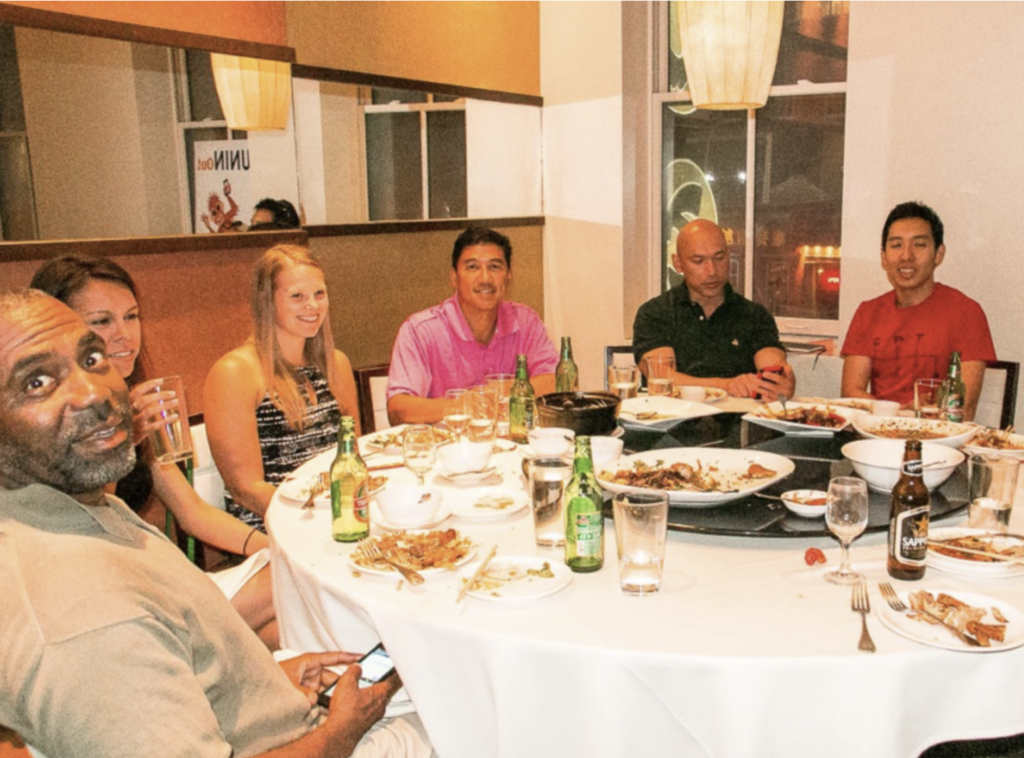
    So in May 2014, we planned a dinner party for the following week and invited a dozen of our friends. Each person would pay $25, and Michelle would serve all her favorite dishes for us to photograph before we served them to the party. Michelle also allowed us to purchase two cases of Tsing Tao beer at wholesale as long as we promised to not leave any remaining.

    The guest list included Evelyn White, the CEO and founder of Bookalokal, Kanita Williams, my attorney roommate, John Tinpe restauranteur and activist who spurred the whole idea at Burma, Jason Morenz, the roving photographer, Orlando, my running buddy, and trainer, Jeff Tong who coached me at Startup Weekend Baltimore, Sarah Berghoff, an ER physician, Joey Garcia, a critical care physician, Khoi Tran an Air Force officer and food connoisseur, Rim Rivera, a defense contractor, and Kim “dancing queen”, an artist and marketing consultant.

    “Chito, love how you turned this marketing event into a personal night out with friends, just like we did with Burma,” John said.

    “Well, thanks for sparking the idea. How are things with Asian and Pacific Islander Affairs?”

    “Everything is going well. Marion Barry (former Mayor and current Councilmember) hasn’t embarrassed himself lately, knock on wood.”

    “Perfect, so what do you think of the cuisine here?” I asked

    “Wonderful. Burmese food has deep roots in Chinese cooking, ” John replied.

    “Delicious Szechuan cooking. Great presentation. Too bad more Chinese restaurants don’t get Michelin stars,” Khoi added.

    By day, Khoi Tran works for the government, but by night and on weekends, he is either eating food, thinking about it, or planning his next culinary trip, even if he has to cross state lines (or international borders). From roadside stalls to fine dining, Khoi is open to trying new things as long as there are people to meet and share a meal with.

    “The Foodie Docs approve – compliments to the chef,” Joey added as Sarah nodded in affirmation.

    “Filipinos have always had a preference for Chinese cuisine,” Rim Rivera said. “It’s been part of our culture for hundreds of years.”

    “Dunno about you, but mine is full and there’s no more room inside,” Kanita added. “Plus I have to file a motion first thing in the morning.”

    “Yes, you guys have been a delight and have been overfilling with fabulous ideas. It was no coincidence that you all were personally invited. Here’s another wonderful idea — after we polish off this delicious feast, let’s roll across the street for some pints. The roasted malts at the Irish pub will help digest all this chow fun.”

  • Vapiano

    Vapiano

    I applied for the GWU Business Plan competition in 2011 and 12 with high hopes that perseverance would pay off. After all, I had a couple of notches such as Startup Weekend in my belt, and unlike the vast majority of applicants, I actually had a real business that was gaining traction.

    April 1 2012

    Dear Chito,

     I was personally very impressed with your business plan.  Therefore, I was pleased that even though it was not included in the top 8, it was selected to serve as the “backup” in case one of the 8 teams selected chosen to advance to the finals cannot present on April 13. 

     My advice is to begin planning your oral presentation now and I will let you know as soon as we know for sure whether you will or won’t be presenting on the 13th. 

    I will be in touch as soon as I know more about whether the top 8 teams will all be able to present on April 13.  Congratulations on being one of the “top 9” teams out of the 144 that entered this year’s competition!

    John Rollins

    Director, GW Business Plan Competition

    Professor of Entrepreneurship

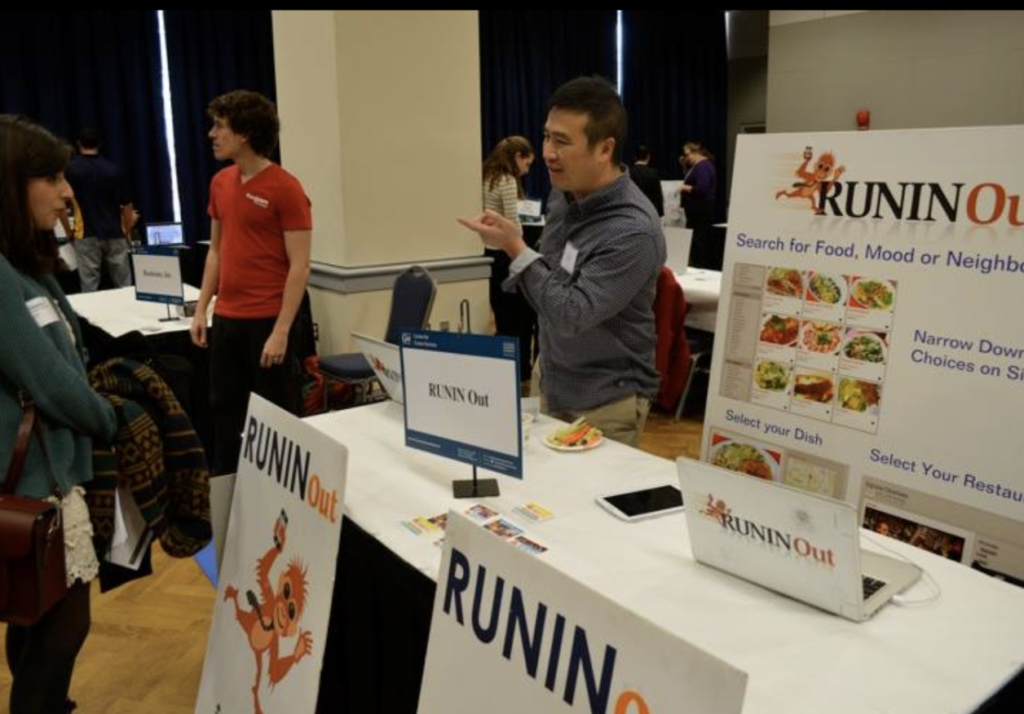
    I took Professor Rollins advice and accepted the invitation to attend the April 2012 GW Startup & Internship Fair.  The halls of the Marvin Center were filled with students some with blank stares mindlessly flipping pages, others on their laptops with Netflix streaming in the background. Despite their best attempts, they yearned for the lazy days of summer, but could not ignore the fact that midterms were just around the corner. Meanwhile, upstairs in the Grand Ballroom, there was lots of buzz for the next big thing.  I arrived at the career fair with huge aspirations but tempered expectations.  A flock of fellow co-founders from the D.C. meetup group as well as George Washington University classmates were also participating, and those adventurous self-starters were eager to explain their big ideas.  There were many thoughtful conversations and face-to-face interactions with the rising talent pool from all over the metro area.

    GW Startup & Internship Fair

    One particular enterprising young man meandered through the crowd and over to my table. He was a cheerful happy-go-lucky sophomore who looked every bit a techie, but also a guy with a playful smile. “Hello, I’m Zach,” he introduced himself gleefully.

    “Nice to meet you. Are you from here?”

    “Originally from California, but went to high school in the South. I’m passionate, over-caffeinated and goofy, some say.”

    Zach Peirce

    Zach geeked over the pictures of food and wanted to hear more about our dish repository.

    “I love discovering new places and tasting different types of food, and I’m a technical product guy, so this could be the right fit.”

    “Are you sure the startup world is the right move for you as opposed to interning for Uncle Sam down the road?”

    “I’m more enamored by the startup life than working for the government.”

    “How ‘bout environmental activism – there are tons of opportunities in town.”

    “I’m a business student, so I’m all about process improvement.  I have lots of innovative ideas that I would like to see put to work and don’t have the patience for the government to implement them. Again, I’m here so I can effect immediate change.”

    I described to Zach the whole concept of the Vapiano ordering system. “You get a store charge card as you enter, and then you walk up to different stations to order pasta, pizza, antipasto, salad and drinks, scanning your card at each station.  Often you have to have to queue up for 15-20 minutes before you even get to order from the line cooks, so it’s important to have your selection ready. If you’re not a regular customer, it can be difficult to know what type of dish to order and what toppings and ingredients you want.

    “So we should feature each dish online and break it down by specific type and category and then list all their ingredients.  Then customers can preselect their preferences and taste and the site will show them the name and picture of the dish which they can show to the cooks.”

    “How will customers access the site?”

    “We can provide the QR code to customers when they queue up, and they can use their phones to make their seamless selections.”

    The following week, Zach and I spent an afternoon at Vapiano like food nerds, snapping pictures of dishes as they were prepared.  Lunchtime was crush time from a rush of mindless govies, so major kudos to the white coats who let us photograph the dishes while juggling orders from impatient customers. The work was exhausting but stimulating, and the best part, the starving sophomore and I were able to sample several dishes that are renowned across Italy.

    “What’s next? I’ve eaten my share of fettuccine to last the whole school year.”

    “I’m afraid there’s plenty more pasta on the horizon. Now we gotta do all the grunt work.”

    We headed to the Gelman Library on campus to post the dishes and categories on our site. There we met up with my friend and fellow entrepreneur JD Pagano. A software developer by trade, JD recently returned from a two-year stint in the Peace Corp.

    “This country is very grateful to its veterans. But we need to appreciate the service of the Peace Corps, also. How did you enjoy your tour?” I asked.

    “Very meaningful and impactful service. The experience was life-changing.”

    “That’s awesome. Anywhere exotic?”

    “The beautiful country of Kyrgyzstan in Central Asia.”

    “Was there lots to see and do?”

    “Absolutely. Great place to hike and ski. Loved the traditional Kyrgyz dancing and amazing folklife.”

    After the three of us got done adding the content to RUNINOut, we planned the next step.
    “Let’s organize a food tasting event at Vapiano’s for later this month,” I suggested. “We want people to test out our platform.”

    “Great idea,” Zach said. “Just advertise on campus that they’ll be free pizza, and you’ll get a ton of students there.”

    “College students are not the right audience for our survey. We’re looking for young professionals in their 20s and 30s with more refined taste,” I replied.

    JD started creating an event on Facebook. “I can ask my friend Misha to help promote it. Between the two of us, we know a ton of people in that demographic.”

    Together we sent out a boatload of invitations to our friends from that category, and we were delighted to see a few dozen foodies and govies show up with curious minds and ravenous appetites.

    In the beginning, the three of us stayed busy doling out dishes of Carbonara and Margherita. But once everyone was served, we were able to mingle and obtain feedback.

    I approached a cute girl with long black hair. “So you must be Misha, JD’s friend who you met in Kazakhstan.”

    Misha chuckled. “You got the right girl, but the wrong stan. It’s Kyrgyzstan not Kazakhstan.”

    “Oh so sorry, Kazakhstan was the country portrayed in the movie ‘Borat’ — a lot different than Kyrgyzstan where you served.”

    “No worries, almost everyone gets the names mixed up. The Peace Corp recently left Kazakhstan and hopefully, there’ll be no more mockumentaries.”

    JD Pagano & Misha Davies

    Kanita Williams left her job early from the D.C. Superior Court and made the 10 minutes walk over.

    “The pizza is awesome, but not great for someone on a minimal-carb diet.”

    “You should meet Orlando. He’s a personal trainer and runs a company called Bodyfit D.C.”

    Orlando walked over to introduce himself. “Nice to meet you. Where do you currently work out?”

    “LA Fitness but with work requirements, I find it challenging meeting my fitness goals.”

    “Skip the gym and get an awesome workout outdoors. Come join me for a boot camp workout three times a week. We do high intensity interval training.”

    “But my schedule at the court is so unpredictable. Can you be flexible?”

    Kanita and Orlando

    “Absolutely. Daily exercise is a gift that enables us to experience the gift of life more abundantly. I would be happy to get you started.”


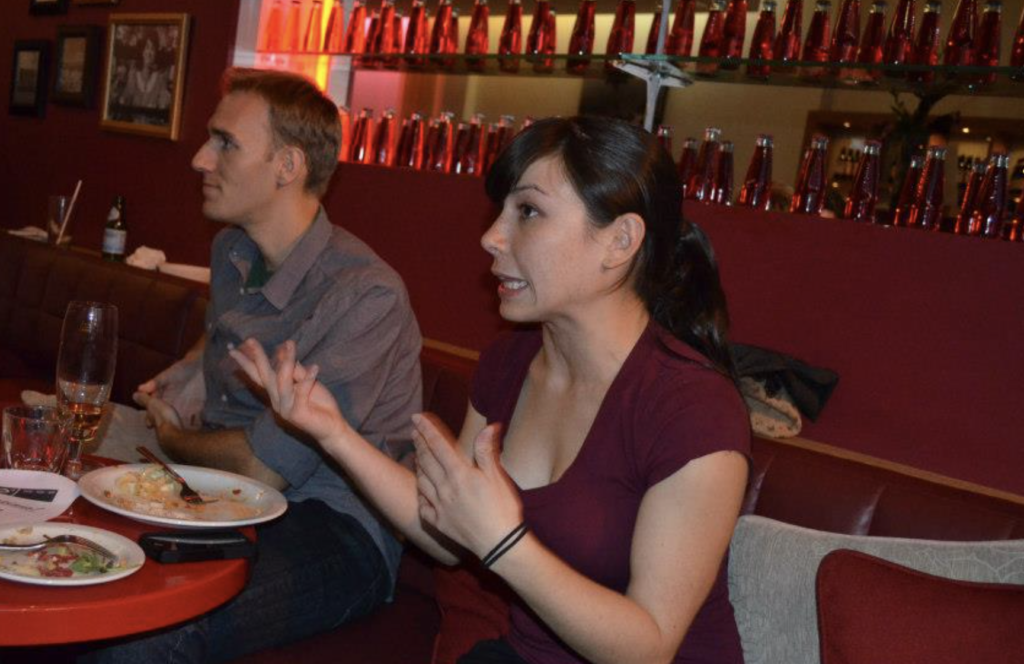
    Vapiano’s Meetup

    A woman in her early 30’s with dirty blonde hair and a beaming smile took a bite of her pasta. “Mmm, the Pasta Basilico is cooked perfectly, al dente.”

    “Tender but firm is how I like it, too. So what do you think of this crazy concept?”

    “Not a fan of having to wait in line and returning to my table, only to find out that my friends have already started digging into their Greek salads. But I like how your site helps customers choose their orders while they wait.”

    “Super to hear. Zach and I spent last week, photographing each dish and then painstakingly adding them to the site.”

    “Wow, just the two of you? There’s a ton of different dishes here.”

    “Yes, my co-founder, Senodja, is deployed to Camp Arifjan, Kuwait, and Kanita is busy clerking in the D.C. Superior Court. So we have room for one more.”

    “I think this would be fun. My name is Suzannah by the way.  I’m a foodie just like you, and also an entrepreneur, specializing in marketing and business development.”

    “Super Suzannah, maybe we can help each other. We could use help reaching out to restaurants, and you can gain priceless experience working with a budding startup.”

    PHOTO GALLERY

  • The Owl Bar

    The Owl Bar

    When a devastating EF-5 tornado struck Joplin, Mo. on May 22, 2011, I had the honor to volunteer with the AmeriCorps. I picked up a lot of debris and pulled a lot of broken branches, and I was amazed at the outpouring of support from Americans all over the country. People were offering services and supplies, and this information was posted on the Joplin Disaster Relief Facebook page. But the information was disorderly and scattered and the donations were not managed effectively. So, I took the initiative to create an online database where volunteers could more easily track all donations and match them specifically with survivors depending on their specific needs.

    Although I had no experience creating a content management system (CMS), I quickly learned on the go and became a huge proponent of Drupal, WordPress, and other open-source platforms. Necessity is indeed the mother of invention. Too bad it took a natural disaster for me to learn it.

    Drupal shines as a technological marvel with speed and scalability. That’s why I chose Drupal to be the CMS for RUNINOut and traveled all the way to Vancouver to find a developer with a personable demeanor, who I could work with. 

    And when I returned to the DMV, I dove head first into the D.C. Drupal community and became a frequent attendee of their monthly meetups at the Stetson’s Bar on U Street. 


    Drupal meetup @ Stetson’s (Courtesy of Phase 2)

    What a peculiar place to have a tech discussion. It’s a cowboy bar without much paraphernalia or pretension. There’s pool, darts, and a lasso when you walk in, but no mechanical bull. And the crowd is far from country. It’s mostly filled with yuppies and techies and a splattering of politicos. Rumor is that the Bush twins (Jenna and Barbara) would frequent with their security detail and imbibe on alcohol before they were of age. Also during the Clinton years, Monica Lewinsky would patronize while she was interning at the White House.

    The monthly discourses were a great way to sharpen my skills, collaborate, and network. There were always people hiring Drupal developers and if I had a question or issue, Drupalers were always willing to help. It was amazing how in-depth some of the topics were covered and how engrossed we were for a noisy dive bar known for cheap drinks.

    Drupal4Gov hosts the annual GovCon held at the National Institutes of Health in Bethesda, MD each July. This was always a good opportunity to get the latest state of Drupal, learn new features, tricks of the trade, and of course network. There was always something new and exciting on the horizon, but undeniably the most useful sessions were Birds of a Feather — informal gatherings to discuss a certain topic with no pre-planned agenda. And the topics were not limited to Drupal — coding, design, accessibility, DevOps, etc were all broached.

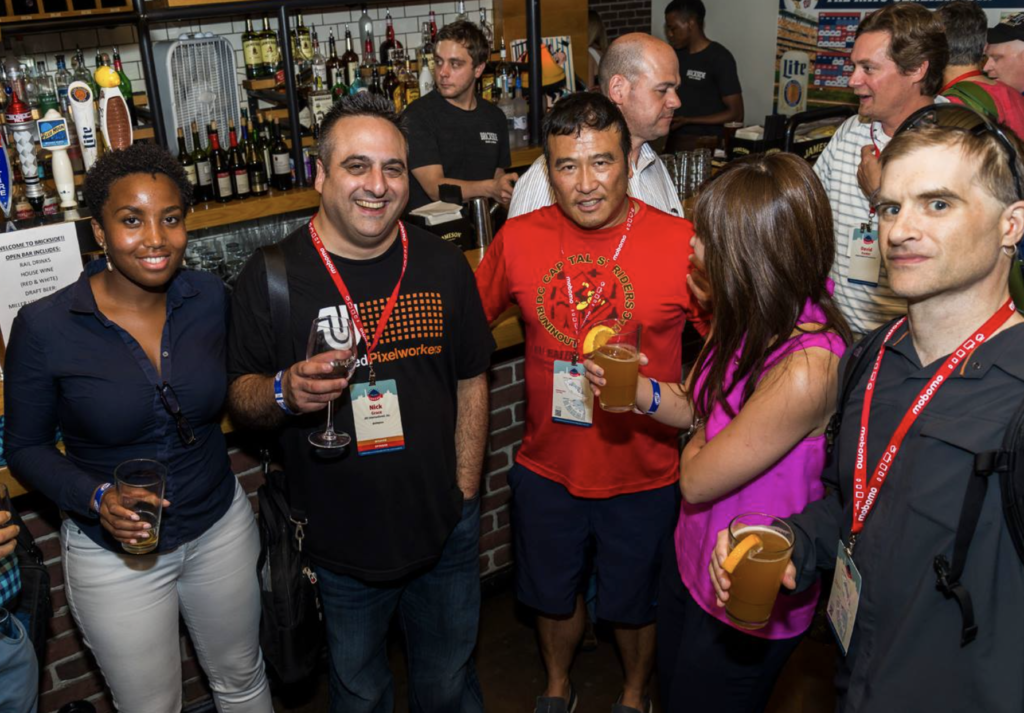
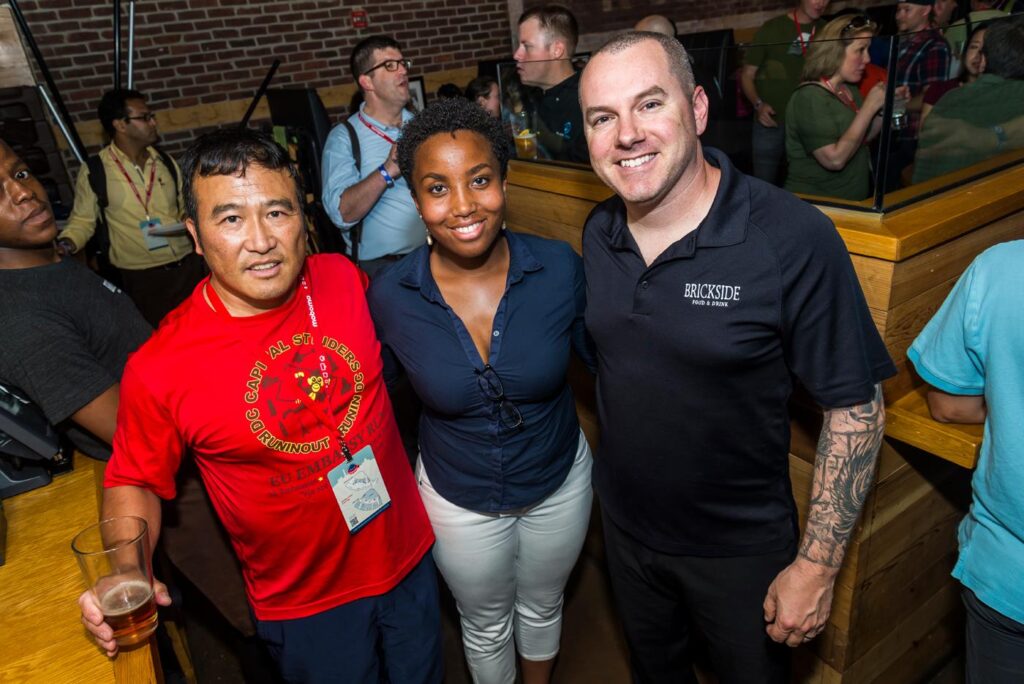
    And after a long day of discussions, developers and technologists were eager to get together and socialize at the annual happy hour down the road at Bricksides on Cordelle Ave.

    Drupalers strived to arrive during the open bar from 5-7 where any beer on tap was included: from Blue Moon with a juicy orange slice to a malty Guinness in a 20-ounce tulip pint. Thankfully our donor Mobomo had deep pockets and was extremely gracious. There was also plenty of finger foods such as phyllo-wrapped shrimp and chicken drumsticks.

    The decor is modern and clean with an expansive exposed brick wall. There is a long wooden bar with plenty of seating and just a fun atmosphere. Brian Vasile, who also owns Grand Central in Adams Morgan designed the bar to hearken back to the Prohibition era. Distillery pipes make up the shelves behind the bar. and Baltimore’s street corner’s famous “Vote against Prohibition” written in faint white on the dining room wall.

    “Hey did you hear that Stetson’s is closing?” I asked my friend Nick Grace.


    me, Kelly and Brian Vasile

    “Oh no, she will be sorely missed..”

    After serving as a fixture on U Street for 35 years, Stetson’s would finally be serving it’s last call on Halloween night. Real estate prices downtown were going through the roof and the property was sold to Douglas Development for a couple of million.

    “But Bricksides is relatively new and the appetizers are quite a mouth watering,” I replied.

    “Yeah, but nobody goes to Stetson’s for the food. It was bland and dry there, but the atmosphere was legendary. The place is full of memories. A lot of great discussions was had there, and a lot of code was debugged over Bud Lite and Blue Moon.”

    “That’s right beer and programming go hand-in-hand.”

    * * *

    Every October, Baltimore would host a camp and in that same year, it was held at the Baltimore University near the Penn Station. The events were organized by Daniel Schiavone of Snake Hill (not the tavern but the web agency).

    Just like in D.C., after a full day of sessions, we would mosey over to a nearby pub which happened to be the world-famous Owl Bar in the grandiose Belvedere Hotel.

    The Owl Bar was built in 1903 and became an instant hit with locals. But when prohibition started, the owners improvised. They installed plastic owls on top of the cash registers. If the owls eyes were blinking, the taps were free to flow. This meant that the shipment had been received, and the police were nowhere to be found. If the eyes were fixed, then the taps were secured and you shouldn’t mention alcohol. 

    The Owl Bar is floor to ceiling brick with mule deer head trophies and stained glass panels with wise lyrics

    A wise old owl lived in an oak.

    The more he saw the less he spoke.

    The less he spoke the more he heard.

    Why can’t we all be like that wise old bird?. 

    I ordered a Sidecar (brandy, lemon juice, and Cointreau with a sugar rim) and duck tacos. The food was quite bland and the cocktail was nothing to wrong home about, but I came for the nostalgia, not for the nourishment.

    The pub is teeming with history. Some folks spoke lots, and some just heard. It’s a great place for friends to get together and strangers to become friends. And once again, there were a lot of side topics discussed, and coding debugged over a pint of Natty Boh.

    “So how did you learn Drupal,” Daniel asked.

    “I have no programming experience. Everything I know, I learned from Google and YouTube,” I responded.

    “Yes, the value of degrees and experience erodes when you can watch a YouTube video and ‘voila’, you’re now an expert.”

    “I’m still very much a newbie. That’s why we need experts like you Daniel to make our sites smart, sleek, and professional.”

    “I’ll drink to that.”

    * * *

  • Carlos’ Coppi’s

    Carlos’ Coppi’s

    Down the road from Ben‘s Chili Bowl on 12th and U, tall cranes dot the skyline along the 14th St corridor. The young, vibrant masses are moving in, and shopping and dining out have become more fashionable.

    After months of construction, the massive Louis at 14th was finally taking shape. As 270 apartments were getting built, D.C. small businesses were once again the victims of rapid gentrification.

    Such as Carlos Amaya’s Coppi’s Organic which was renowned for its rich, authentic cuisine inspired by the seaside Ligurian Riviera in Northern Italy. The landmark eatery was forced to shut down for over a year due to the heavy construction. After completion, the street scene would surely look better and brighter, but Carlos couldn’t wait. It was time to move Coppi’s, the brick oven with the tricolors of the Italian flag, and all the Fausto Coppi’s biking decor back to the block where it all started 20 plus years ago.

    “We’re in Cleveland Park now,” Carlos announced. “We’re not too far from the rest of civilization.”

    “I’ll definitely ride my pedicab there the next time I visit the zoo or the Lebanese Taverna for belly dancing.”

    The lions roared and the crickets chirped when I passed by the National Zoological Park on the way to Cleveland Park. I parked by Medium Rare, the local-favorite steakhouse known for its steak frites prix fixe menu, then ambled over to Coppi’s. When I entered, I noticed that the front windows could be opened to let in sunlight and there were several rows of church pew benches for booth seating. And just like the previous, iconic location on U, hundreds of vintage pictures hung on the wall, unapologetically old-school with a nice touch of evocation.

    “Fausto Coppi was a great all-round racing cyclist,” Carlos said. “You don’t have to be a biker to appreciate his achievements.”

    “He was a true legend. He won the Giro d’Italia and the Tour de France in the same year. He is truly missed,” I added.

    The next month, on December 4, 2014, the D.C. Food Bloggers flocked to Coppi’s to enjoy authentic wood-fired pizza, and fine wine and to catch up with old friends and make new ones. 

    The wine list was very impressive and if anyone had any questions, their trusty manager Tom Bindley could make a recommendation. 

    Anita Hattiangadi from Greg’s List and several food bloggers such as Jennifer Matta, Jason Shriner and Wendy Brannen were in attendance.  You can always rely on these reputable influencers to visit their favorite restaurants and then feature the cuisine and ambience in their lifestyle blogs and social media campaigns.

    Restaurateurs loved to welcome them because their patronage implied their stamp of approval, even if they did more drinking than blogging. 

    The Peroni was light and bubbly, and the wine list was something to write home about. If anyone had any questions, their manager Tom Bindley could steer you in the right direction.

    Coppi’s Organic has two ways of cooking their food: The pastas are boiled, but everything else is cooked in the wood-burning brick oven.

    To create the masterpiece, the pizza chef spinned the dough then tossed it in the air to ensure it stayed consistent and flat. A wide array of ingredients — fresh and organic —  were sprinkled on the pre-baked dough then returned to the Forno Bravo to give it the authentic wood-fired oven taste.  

    There were more than a dozen inventive pizzas to choose from and choosing my favorite was a tough decision. 

    The Prosciutto e Funghi (prosciutto and mushroom), Pancetta (Italian bacon, mushroom, onion, mozzarella), were two that I still daydream about.

    “The smoked salmon charcuterie board is quite impressive. Artfully arranged and delicious,” said Jennifer.

    Wendy is quite adept in the kitchen. She makes a killer pepperoni pie with sweet Vidalia Onions from Georgia and Jason Shriner’s homegrown oregano.

    “The food is always fantastic. Love the shrimp and mozzarella in the Genovese,” Wendy said. “Simply delectable. I would travel from Georgia and back just for this pasta.”

    [ Image: Screen-Shot-2022-02-24-at-9.31.38-PM-880×1024.png ]

    Serving to eager guests

    “Thanks, we work with organic farmers and food cooperatives throughout the region to bring the freshest ingredients to your table,” Carlos said.

    “Great, I’d be happy to source you some of my oregano,” Jason Shriner added.

    “I’m still celebrating National Pizza Month. I’m so addicted to crack pizza, I need to go to Rehab,” Wayne Manigo added. 

    “Yeah, and take Orlando with you,” I added. “He’s eaten his fair share.”

    “Well this isn’t New Haven style pizza from Pete’s,” Orlando replied. “The pies are baked authentic Italian with a perfect crust and nonna’s fresh tomato sauce. I need to take a box or two home.”

    “Good idea. You ought to start delivering pizza for Postmates,” Jason turned to me and suggested. “You can easily make one grand a week.”

    “The secret is to deliver fast while still hot, and my pedicab is as slow as a sloth,” I responded.

    “Yes, we only want our customers to enjoy their pizzas while it’s still piping hot,” Carlos stated. “That’s why we prefer to serve them here.”

    “Then I’ll just pick them up and let them hop in the back. It can be a romantic night out and they can even pop a bottle of wine and smooch while passers-by stare.”

    [ Image: Coppi’s GANG.png ]

    Me, Wayne, Wendy, Orlando and many others

    This was followed by a burst of laughter.  Everyone knew each other and were having an amazing time.

    The dessert was well presented and absolutely irresistible, and would even make nonna proud.

    “Please come back on Sept 9th,” Carlos said. “Every year on my sister’s birthday, we celebrate her life. And on Halloween nights, we host a salsa vigil. Nori was an amazing person with a great heart and a wonderful soul.”

    * * *

    On Halloween night 2009, Nori Amaya worked the early shift at Coppi’s on U Street before slipping out for the evening for salsa dancing. 

    She visited the Rumba Cafe in Adams Morgan where she had been dating the owner, before heading to the Russia House and then to Bravo Bravo where she met up with her Salsa dance partner.  She took a cab home to her apartment and by Monday afternoon, Carlos knew something was wrong. When he got security to open the door to her apartment, he found Nori’s body, wrapped up in a comforter, dressed in her underwear.  When investigators arrived to examine the body, they found something chilling — all of her fingernails had been removed, in an attempt to remove traces of any DNA.

    “Absolutely, we will find Nori’s killer and bring him to justice.”

    “I will never rest until we do. We owned and managed the restaurant together. She will always be a huge part of Coppi’s and precious lives. She had many loving friends who want to know what happened that night.”