Author: chito

  • Building Bridges

    Building Bridges

    The next day, I hopped on a train to Northern Ireland to see Mark and Lee, my folklife fest friends who I had not seen since 2007. They took the entire day off from work to give me a grand tour of the Antrim Coast showcasing the scenic, untouched Northern Ireland coastline —  one of the most beautiful in the world, and the Giant’s Causeway, a World Heritage Site, declared by the Irish as the 8th Wonder of the World.
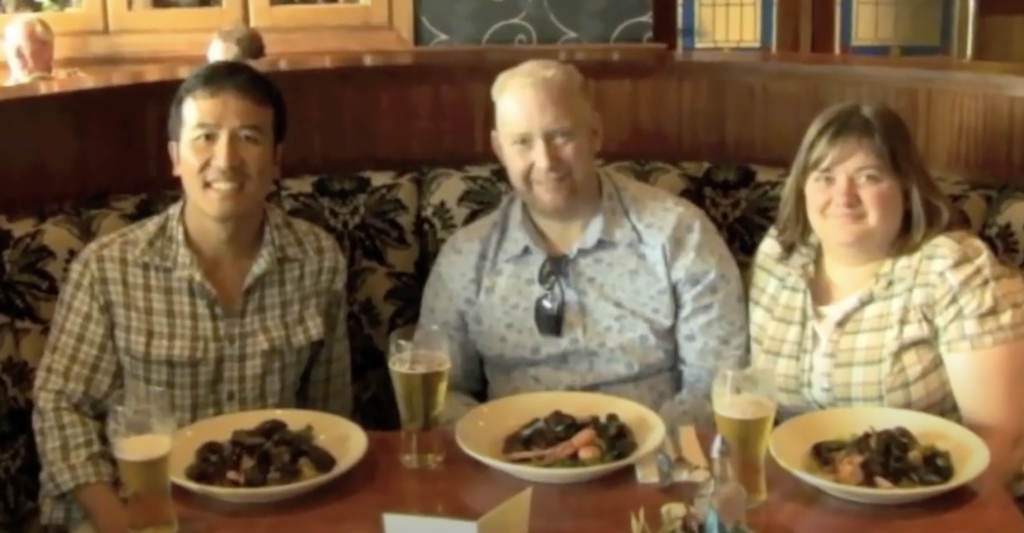

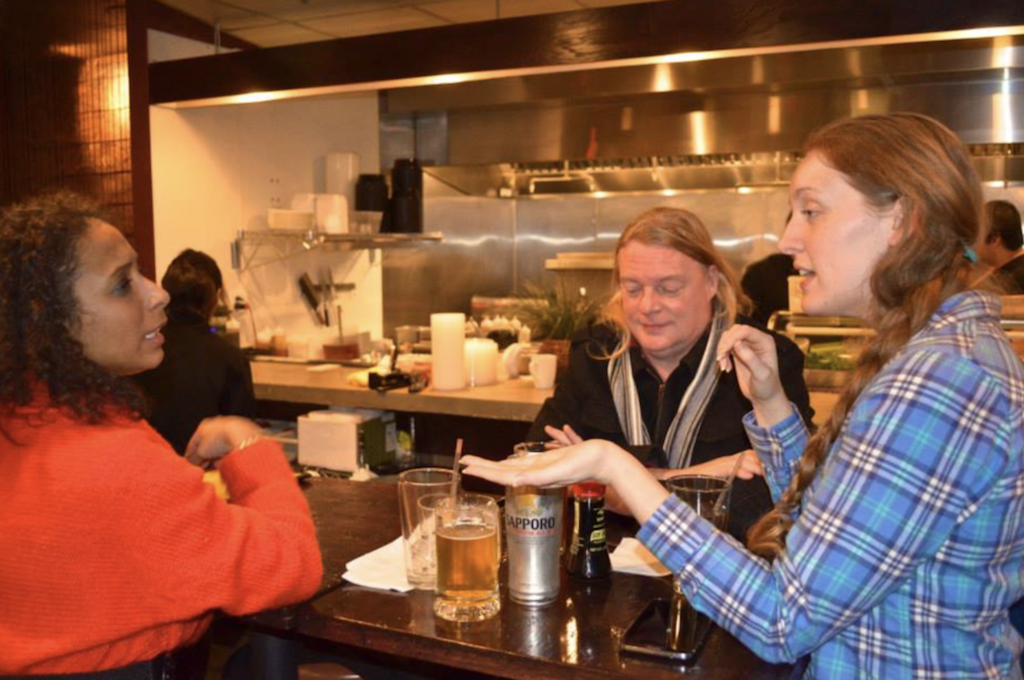
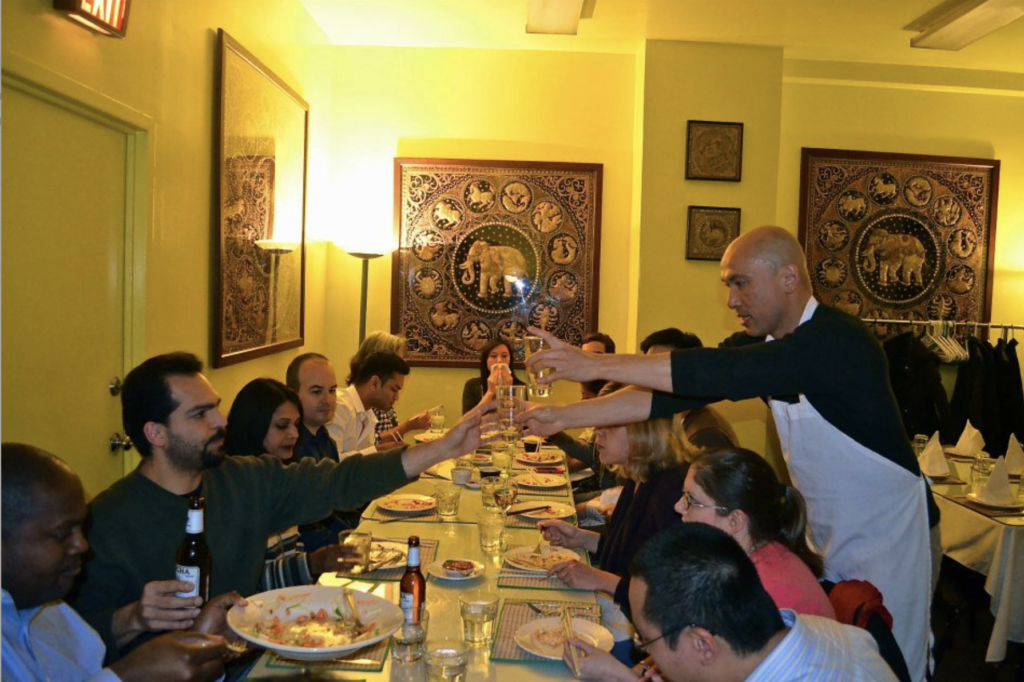
    Enjoying a meal with Mark and Lee in Northern Ireland

    Mark and I created an impromptu limerick which we posted on Youtube

    Here we are in Giant’s Causeway

    Where 40,000 columns of basalt rock stand today

    The volcano erupted

    The larva cooled

    But before there was science

    There was the Legend of Finn McCool

    It is called the Giant’s Causeway

    It was made by Finn McCool

    It’s really just the start of a stepping stone tool

    To get across to Scotland

    To fight with Bennadonner

    Through many disagreements

    They pulled each other asunder 

    He took the cloth much 

    And try and try as he may

    He never hit his target

    But he made us our Loch Neagh

    The mud landed in the water

    And with all the might he can

    He only then succeeded

    In making the Isle of Man

    So he took to playing the organ

    And over here were his pipes

    He played the Sash, Derry’s Walls, and Billyboys

    But started loads of fights

    Cuz’ the Scottish Giant thought they were his tunes

    But little did he know

    That the music for Highland bagpipes

    Came from across there near Dunloe

    We then visited Balintoy Harbour on the Antrim Coast, 13 kms away. 

    “Haven’t been back in 28 years.  When I was nine years old, my family would come here for the summer holidays, and I would dive off these rocks, swim across this pool of water, climb up the natural stairway and dive again. Would do this all day long,” Mark reflected.
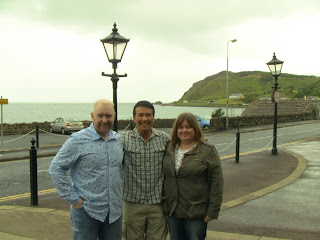
    “When you return to the Capital City, please let all your friends and runners know how beautiful the Emerald Isle truly is,” Mark said.  Then I gave him and Lee a big hug and wondered where in the world we would meet again.

    I got to do a lot of quality sightseeing and made new friends who taught me a lot about the precious value of life and respecting other people.  I learned about the sectarian conflict and how it is important to learn and understand each other.

    Belfast is known for its troubles and religious conflict.  For over 25 years, the IRA (Irish Republican Army) clashed with the Irish National Liberation Army. The Republicans carried out a guerrilla campaign against the British forces as well as bombing infrastructure and killing innocent civilians. 

    On Bloody Friday 1972, the IRA set off 22 bombs killing 9 people and injuring 120.  When the bombs dropped, people did not know what to do.  There were no bomb shelters.  They did not know whether to run, hide or stay sheltered at home. The IRA hoped they would be just as successful in catching the government and the people unprepared in hopes of getting Northern Ireland out of the UK.

    Truly, there was only one main pursuit: The Irish Republicans wanted a united Ireland. More than 3,500 people were killed of whom over half were civilians.

    However, there was never such a state as a united Ireland.  As an outsider looking in, I didn’t truly understand what the big deal was, other than the name and the unity.  Just ten years ago the border was filled with concrete barriers, barbed wires and bombs. Today Northern Ireland and Ireland enjoy an open border where citizens could cross either side freely without having to produce a passport. 

     “I’m glad you took some time to research our history,” Mark said.  “It was very important for the parties to understand our differences so that the IRA and the British government could properly negotiate.” 

    The last place I visited was the First Presbyterian Church where I met tour guide Arthur Magee.
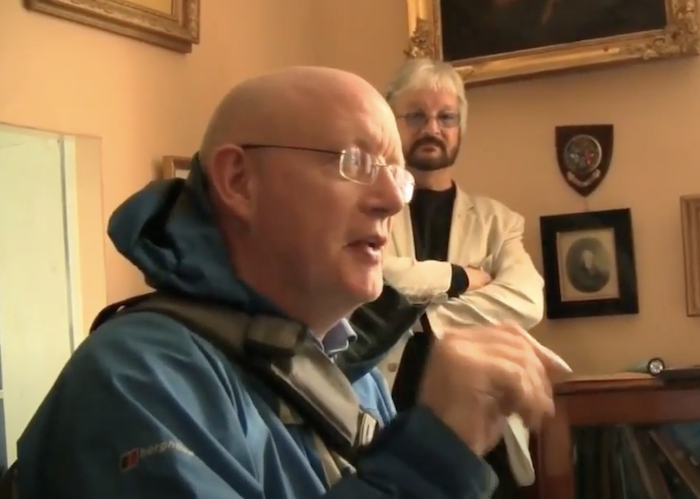
    Arthur Magee

    “Belfast has been a by-word for the troubles, sectarian strife, and intolerance. If you come nigh you will see a city where on a micro level, people are building bridges.  The most important bridge that is been built is in each and every single person here. That bridge is between who you actually are and how you see yourself. Whether you’re part of the problem, looking back and blaming other people, or whether you’re part of the solution and reaching out and seeing other human beings, as exactly that, human beings. We’re no different from any other place in this planet. We’re products of circumstances and history. And the same problems that exist in Belfast apply everywhere.  Belfast isn’t a byword for intolerance, it’s a beacon for hope. It’s a place where people are reaching out and it shows the possibility of change. And it also shows the importance of each and single person to reach out, to build bridges and to see other people as exactly that, other people.”

    This whole trip was more eye-opening than attending class at GWU, and definitely a lot more fun. No encyclopedia, no ebook reader, no youtube video could teach me life’s social skills better than what I learned in Barcelona, Normandy, or Belfast.

    I only had one final day in London when I returned from Belfast. In life, nothing rarely happens the way you intended it to.  It’s important to be flexible, fluid and understanding.  Sometimes life brings you pleasant surprises — it’s not scripted or orchestrated, but just right.  Life can be charming, like that, if you let it. In the long run, we will appreciate the fact that we were flexible and cherish the tender times that we were able to spend together.

    The dinner with Kim and my nieces was wholesome and filling.  I did not know it was even possible to make spaghetti so delicious.  The meal, in fact, was just as good as Rio’s Japanese Tonkatsu curry she cooked for us the night I left for Northern Ireland. This is also the very first time I’ve spent time with Kim, Kae, Rio, and Rintaro all at the same time, under one roof.  So it’s a very special moment to be thankful and cherish especially when we let life’s circumstances take the lead.

    We had a wonderful time, talking, laughing, and just enjoying a simple and pleasant meal with friends and loved ones. Nothing special, though it meant the entire world to me.

    After dinner, we all went to Notting Hill to visit Rio as she was painting her clothing store.  Notting Hill is a fabulous, affluent, fashionable community with beautiful Victorian homes and attractive storefronts.  It is a very artsy place that reminds me of Chelsea, NYC, and Georgetown, D.C.

    The last 12 months have been momentous for Kim since this is the first time that she has seen Mom, my older sister, Pearl, and me, within the same calendar year, since we immigrated to the US in ’79  (Mom in Japan at my grandmother’s funeral, Pearl in Hong Kong and now home in London). This was no coincidence, and it was a precious moment to forever embrace.

    Luck was recurrent through the course of the trip since the idea was born during a routine run on the Mall.  I boarded a Space-A flight from Joint Base Andrews at the very last minute and every moment after that was entirely spontaneous.

    It was serendipitous that I met Marcy and fortuitous to reunite with my folklife friends Mark and Lee.  And I wanted nothing more than to re-create this experience for Americans back home.  And on the MAC (Military Airlift Command) flight from Ramstein AFB back to Andrews, I had plenty of time to contemplate and plan my next big project.  I was looking forward to coming home and reuniting with my pet parrot, Apollo and my pit bull, Georgia. Both were in good hands with my housemate, Kanita Williams.  I knew that fate would lead her to become a lot more than just a typical roommate.

  • The Block

    The Block

    The Channel was a great place to relax, enjoy a pint, catch up with ole friends, and watch an English Premier League game or two. My favorite high round table and wood stool served as my personal office space, one with a full-service bar. Needless to say, I didn’t get much work done.

    There wasn’t a single day, that I wouldn’t meet someone new, and often the bartenders Oscar or Cormac would introduce me to people sitting at the bar. And sometimes I brought Apollo with me to the sidewalk patio. Friends tolerated him as long as he didn’t squawk too loud or poop in their drinks.

    Part of the benefits of working for the Channel was the 10% employee discount.  So when I wanted to take a break from beef chow fun at Chinatown Express or fettuccine alfredo at Vapiano’s, I could choose corned beef and Reuben sandwiches, with a frosty pint of Guinness.

    It also helped that adjacent to the Channel was Absolute Noodle and Sushi, and a block away, its sister eatery, Absolute Thai. Camping out at the Channel and working within the three square block Chinatown neighborhood, I was able to build on our burgeoning list of clientele for both site-building and event hosting.

    Jackie Woodbury (right)

    All the restaurants that I worked with within the Chinatown hub were Asian with the exception of my Celtic cousins.

    Paschal brought over a pint of Smithwicks “So did you hear about the new deli opening down the road in NOMA (North of Massachusetts Ave)?”

    I took a long sip of the malty sweetness. “Yeah, I think I read about it on D.C. Eater.”

    “I noticed the ‘Opening Soon’ signs on my way home while I’m waiting for my commuter bus to Bowie.”

    “Not only are you a great ‘office’ manager, but you’re also a great source of information.”

    “Yeah, let me know about their pastrami vis-a-vis our corned beef. Want to know if they can complement or if they’re our competition.”

    Just down the road from the Channel on Mass Ave, past the lifeless concrete island known as the US Government Accountability Office, and next to Wise Guy Pizza was the sparkling new Carving Room, a Moroccan-Jewish deli replete with a full bar.

    Owner Oded Weizmann, with support from co-founder Rachel Steiman, runs the kitchen and insists you don’t call him a chef.

    “Our motto is house-cured and hand-carved,” said Oded. “Our corned beef is wet-cured for 21 days, and our pastrami dry-cured for 9 days.”

    “So I work for the Irish Channel, and we’re really proud of our corned beef,” I mentioned.

    “Well I was born in Israel, and I can tell you that corned beef is more Jewish than Irish.”

    “Right on Oded. So what’s in the cigar?” I asked.

    “They’re fried spring rolls with Moroccan spiced house-ground brisket. They are to die for?”

    “Wow, pretty unique. What do you have featured at the bar?”

    “Well our slogan is ‘Meat, Knifes, Beer’, so we have quite an extensive beer list from small-batch brewers. Beer is served by the pint or in a growler which is a bit larger than a pitcher.”

    “What’s above the growlers?”

    “Oh, those are our jars of pickled vegetables — every entree comes with pickled veggies on the side.”

    I noticed that the Carving Room was using a rudimentary Wix site, so I readily segued into our M.O.  Oded appeared interested and was impressed by the fact that we were working with a half dozen restaurants in the area.

    “Yes, you have quite an extensive list of clients that I’m quite familiar with.  The partnerships can be very complementary.”

    “I totally agree, and we should inform the Irish Channel not to brood over the hot, new restaurant in town. So can I setup a time where I can photograph your dishes and sample your cuisine?”

    Wayne Manigo and I had often knocked back a few pints and devoured the corned beef sandwiches at the Channel, and today he was in the mood for something rich and smoky.

    “I’m a lover of food period. Don’t matter where it comes from or who cooked it,” Wayne once said. “Food is a love language of it’s own.”


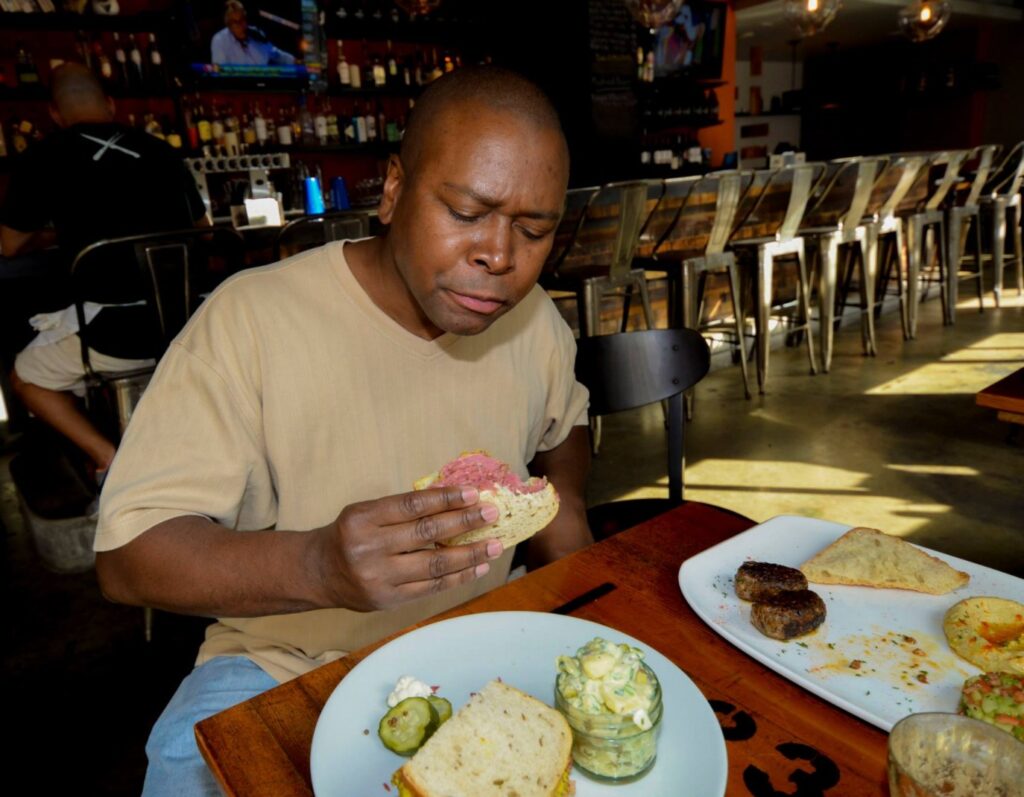
    Wayne enjoying the pastrami

    The first meal served was the homemade pastrami and fresh potato salad with a zing of mustard and horseradish

    “The pastrami sandwich is really kicking,” Wayne said. “Every succulent bite is a symphony of richness and flavor.”

    Next Oded brought out the CR burger made with house-ground brisket, bacon with an over-easy egg on a toasted brioche bun.

    Wayne loved the creamy potato salad, but he also adored the fries with cumin garlic salt seasoning. 

    “And the sauces,” he commented. “It just brought everything up to the next level.”

    “I definitely know what it’s like to work in the kitchen,” Wayne said.

    “Yes, it’s all about the knife skills isn’t it,” Oded added.

    “So where did you learn how to cook?” I asked.

    “In 2013, I was living out of my car after I quit my IT job at the SEC. I decided to take culinary classes offered by the Department of Veterans Affairs.”

    “How did you do?” Oded asked.

    “I know it’s tough to stay focused.  One day I was working in the kitchen without my usual energy and my instructor, Chef Jared said ‘I hope you’re not wasting my time by daydreaming.’  From that moment on, I remembered my problems are not bigger than me!”

    “Wow, Chef Jared is one hell of a role model,” I added.

    “Yup, and I really appreciate you Oded for showing us some of your stellar cooking skills. Can I work here and steal your recipes?”


    Oded Weizmann

    “Appreciate you coming over and tasting our cuisine. Please let everyone know we got the best pastrami and corned beef in town.”

    “I can’t agree with you more. We’ll guzzle Guinness at the Channel, and stroll over for the pastrami,” I said.

    “Wait till Guy Fieri finds out about this joint. It’s just a matter of time before it’s featured on Diners, Drive-ins and Dives,” Wayne added.

    After bagging Burma, Ming’s, the Irish Channel, Absolute Noodle, Absolute Thai and now the Carving Room,  it was time to branch out further than the Chinatown enclave. But parking was expensive and D.C. loved to issue parking tickets like it was candy.

    “I told you to purchase a pedicab,” Jason Morenz suggested. “When the weather is nice, you can sit in the back and whistle at the ladies.”

    “Why would I want to do that? So I can visit other restaurants in the area without having to drive?”

    “Yes and you can hustle some money on the side. This could be a whole new vertical.”

    * * *

  • Taste of Ireland

    After the summer doldrums and fall foliage blanketed the National Mall, things began to pick up at the old neighborhood pub that flew Irish colors near the Chinatown arch.

    The Oregon Ducks were ranked in the Top 10 in the AP Poll and District Karaoke debuted with weekly sing-a-longs every Monday night (that was until guests at the adjoining Fairfield Inn complained about all the racket).  All of this hubbub plus the viewing of each NFL game every Sunday resulted in a lot of commotion at the Irish Channel.

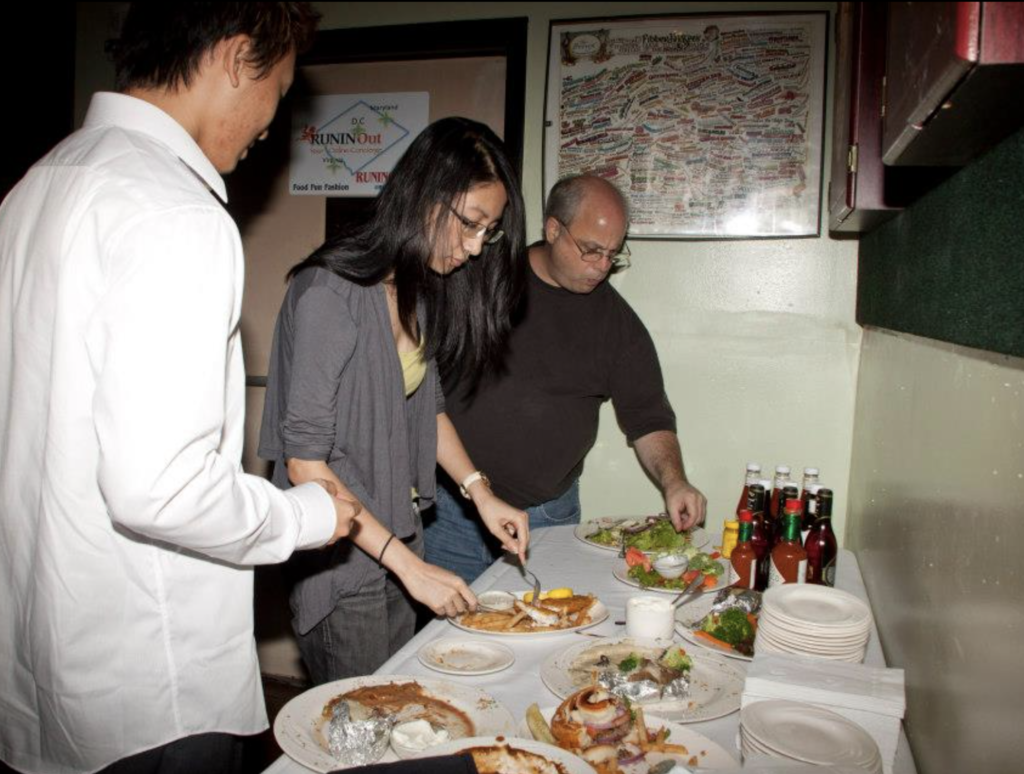
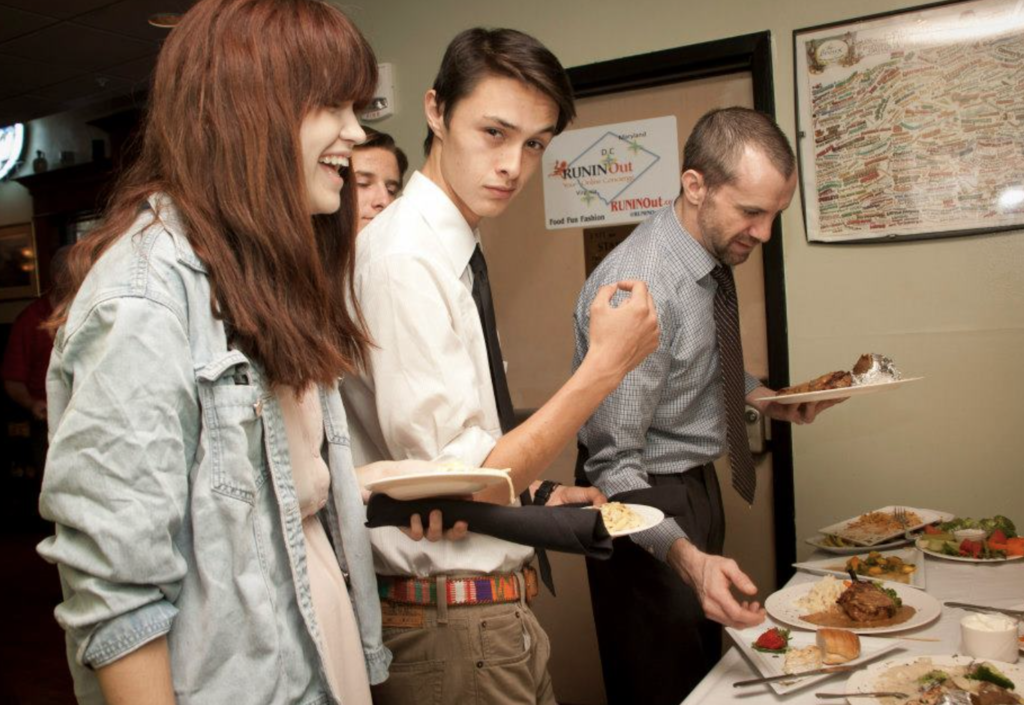
    In Sept, we organized a food tasting event where we invited friends to meet up and sample delicious Irish cuisine. 

    Top foodspotter, Dan Rosenstein, photographed the dishes for RUNINOut and was happy to shoot for some grub and a pint. “I love Irish food, and I love photographing people enjoying a pint of Guinness.”


    Dan Rosenstein (right)

    The event was arranged by General Manager, Colin Laverty who has lived in D.C. for 13 years.  He grew up in West Belfast during the 80s and remembers distinctly the car bombings and revenge killings. 

    “I’ve enjoyed my time in D.C. tremendously. Belfast was also a great life experience and my memories of my time with my family and friends will always remain close to my heart.”

    “How is Belfast similar or different from the Beltway?”

    “Some people tell me parts of D.C. is tough. They don’t realize that for 30 years, Northern Ireland was scarred by sectarian violence — a period of time we dismally refer to as ‘the Troubles.’”

    “Yes, that was a very troubling time. I had the pleasure to visit Northern Ireland in 2011 to see two musician friends who I met at the Folklife Fest in D.C. I also met an inspirational tour guide named Arthur McGee.”

    “Really, why was he so great?”

    “Because he told me that Belfast isn’t a byword for intolerance, but a beacon for hope. The Irish are no different from any other place on earth. They’re the products of circumstances and history, and the same problems that existed in Belfast apply everywhere.”

    “You’re right about that.  Police brutality, such as the RUC (Royal Ulster Constabulary) supported by British troops, happens today in the US and around the world. There’s still a lot of hatred and racism that we need to get rid of.”

    “Glad to hear that the future looks rosy for Northern Ireland.”

    “The violence has gone away, but the rates of youth suicides in Belfast are high and rising every year.”

    Dan took a bite of the bangers and mash. “I’m not a big sausage person, but the black pudding made my mouth water.”

    Behind the bar was Cormac McGrady, a tall, gregarious man from County Down.  He had a great sense of humor and always had time for a joke, even at his own expense.  He was a big Boston Red Sox fan and never missed a game if they were playing the Nats in D.C. or the Orioles in Baltimore.

    Tom and Colin were delighted with the large turnout, and they were inclined to dole out free food and specials for future events.  I wasn’t paid in dollars, euros, or pounds, but compensated with a generous bar tab which even made me feel more part of the family.  

    “You guys did a great job,” said Tom. “Would like for you to visit our other Irish Channel location in Crofton, Maryland.”

    Colin Laverty (right) checking on the food

    “You should support our next fundraiser,” said Colin.

    “Another food tasting or karaoke?”

    “No the Belfast-Beltway Boxing Project — it’s an annual, amateur boxing competition for at-risk youth in D.C. and Belfast. The youth train at area boxing facilities under the direction of the local coaching staff, tour the region, and spend time with the host families.”

  • Apollo’s Flight

    Apollo’s Flight

    DC is a town full of festivals, and there’s no better time to celebrate festivals than in the summer. I had the perfect companion to attend my annual Folklife Festival, Capital Pride and Fiesta Asia. Apollo loved everyone and sang in front of Embassies and he was the character. I should have put Apollo as the star.

    On May 20, 2013, I took Apollo on a run again at the National Mall.  Apollo took flight as he often does, but this time, he went higher and further than ever before. Oh my goodness, I conveyed an expression of blunder. I had gotten so careless that I had forgotten to trim his wings, and suddenly high above the Mulberry trees along the scenic mall, Apollo found freedom.

    I looked everywhere for Apollo, even bringing along his cage, his Bonka Bird toy, rattling in the wind.  I scattered sunflower seeds and peanuts everywhere and had to fight off the squirrels who had a field day. Sadly, he was nowhere to be found.  Like a menacing tween, he had skipped school, and he was not yet ready to reunite with his distressed patriarch. The massive magnolias along the miles-long cinder path served as an ideal refuge for him and the Capitol dome and the Monument obelisk served as his landmarks.

    “Apollo, Come home to Papa!” I screamed at the top of my lungs. As sunset beckoned, I came to the sad conclusion that my wails were been drowned by the hustle and bustle of the young people and tourists mingling on the grassy fields. 

    Soon the sun was shadowed by the majestic, iron dome of the Capitol, and I would have to return the next day to make my unwavering attempt.  At daybreak, when the sun’s rays bathed the Lincoln Memorial in golden sunlight, I was roving up and down the grassy turf searching for my wanderlust feathered friend.  I played a scratchy recording of his chirping. It sounded promising, but after a while the raspy screams only commingled with the purrs from the cormorants and the buzz from the sparrows.

    GW University just so happened to be hosting their commencement ceremony at noon, so soon there would be several hundred black robes and caps with excited families scurrying all over the mall.

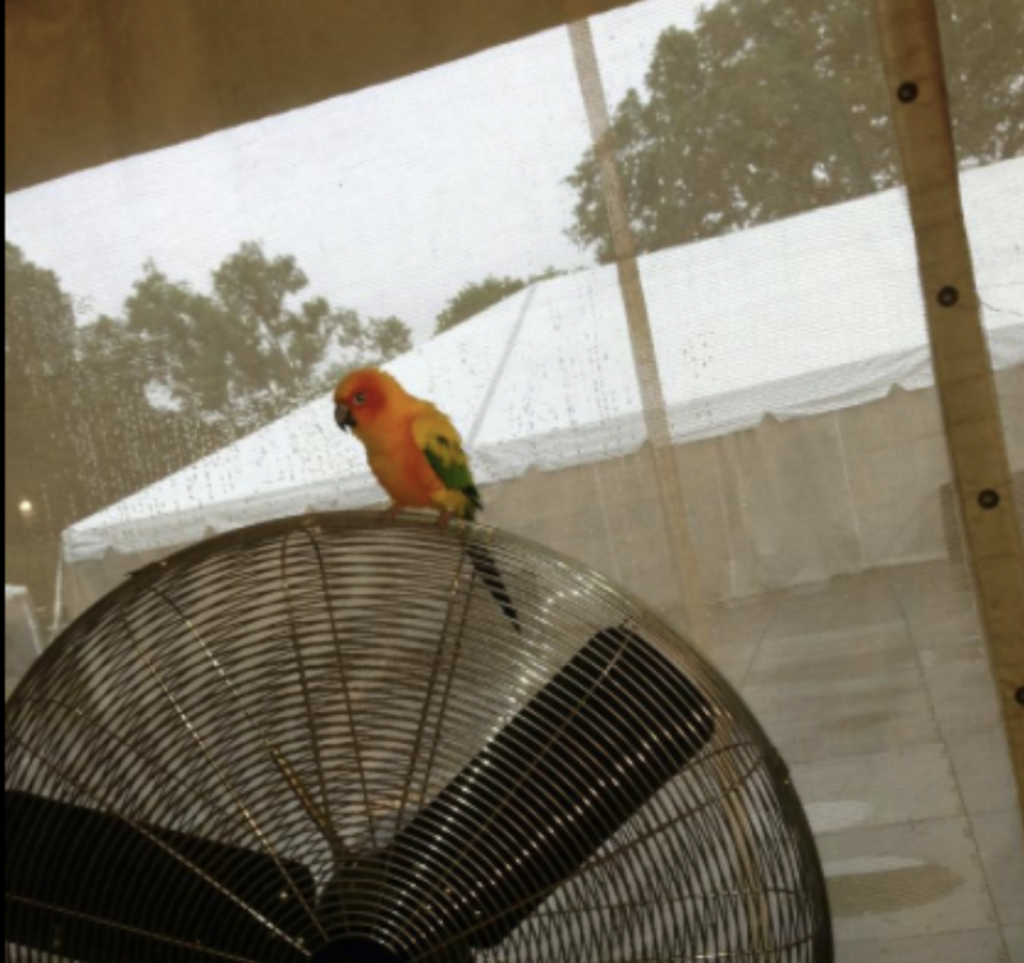
    If I couldn’t physically search, I would leverage social media. My Facebook posting gained some traction and a friend of mine mentioned that a student graduating from GWU saw Apollo hanging out on top of a standing fan, just screaming away. So she called the Washington Humane Society who readily captured him.

    Picture taken by GWU student of Apollo at the graduation.

    I immediately called them and was overjoyed when I found out that they had poor Apollo in safe keeping. 

    Apollo was home now, and he would join me on more runs and escapades throughout D.C..  But this time, I would make sure his flight feathers are well manicured and his favorite Bonga Bird toy is within arm’s reach.

    * * *

  • Best of DC

    We applied for the GWU Business Plan competition three times, hoping that indeed the third and last time was the charm.  Unfortunately, all the leprechauns in the world could not help us. Each time, we advanced to the semifinals, but the finals turned out to be our tough mudder. 

    The second time, was the most promising, where we came in 9th, so we served as a back-up just in case one of the top eight teams couldn’t present.  Unfortunately, we weren’t asked to pinch-hit and we went back to the drawing board for the following year. 

    Then, on April 2, 2013, I got the dreaded news that once again we didn’t make the cut.

    * * *

    April 2, 2013

    Chito,

    I was shocked that RUNINOut did not advance to the finals, since you were ranked #9 last year!  I didn’t read your 20-page business plan this time, but the feedback from the judges this year will give you more insights into why this happened, and you will receive it much sooner than before.  That’s all because I put an emphasis on upgrading this year to an online scoring/commenting system which means no re-keying of the judges’ comments.

    Please let me know if there’s anything I can do to help RUNINOut continue to grow and thrive.

    John Rollins 

    * * *

    Professor Rollins explained to me that the independent group of judges (mostly non-faculty business leaders) may not have had the insight to select the top teams. The business school was pulling for me, but since they had to keep the competition objective, they had no say in the matter.

    Not only did the rejection sting, but the elimination kept us from securing funding. That’s because the university published the results online so venture capitalists (VC) were privy to this info.

    My alma mater wasn’t the only one that rejected us.  We were also spurned by D.C.’s VC firm and accelerator Fortify as well as Baltimore’s Emerging Technology Center.  An accelerator takes an early-stage startup that has already developed a minimum viable product and helps them secure resources and capital funding. They also provide a nominal amount of funding in return for a small equity stake, normally 5-10%.

    So was acceptance to an accelerator the right path for RUNINOut? Without mentorship and funding, our chances of reaching rapid growth were slim to none. It didn’t mean that our business model wasn’t sound or that we would never be profitable. But it likely meant our company would focus on lifestyle instead of growth, on income rather than revenue, on bootstrapping instead of venture capital, and instead of advertising, we would rely on face-to-face guerrilla marketing.

    This new path was right up our alley.  Since we hosted several events a month, we had developed a knack for gaining traction and creating a buzz.  We provided value, engagement, and fun, and in return, our attendees spread the word virally and gave us raving reviews online.

    A week after receiving the bad news from GWU, Suzannah woke me up with some glad tidings.   We were selected as the “Best Restaurant App” in the Washington City Paper Readers’ Choice poll.

    After dozens and dozens of events, miles, and miles of pedicab rides, and tons of food blogs, the hard work seemed to have paid off. 

    I called Gregg Coppen, the web developer from Vancouver, and he almost fell off his chair.  “I’m so glad we decided to add the faceted search at the last minute — this feature must have been popular with restaurant-goers.”

    He was so proud to add the new “Best App” tag to his portfolio and exuberant that he could make a tremendous impact thousands of miles away.

    “When you approached us two years ago, we were hesitant to take on this project on a shoestring budget. But looking back, I’m damn glad we trusted our intuition.”

    “Yes, it’s amazing what we can accomplish if we all work together, communicate and innovate.”

    Soon, I shared the news with Professor Rollins. 

    “What, you beat Yelp, Foodspotting and Urban Table?”

    “It’s hard to believe — it was really the matter of getting name recognition and we did that by gaining traction.”

    “I tell you what. You guys didn’t advance, but your company has shown user-acceptance and income – that’s really what matters, not a trophy.”

    “But we still will not get a chance to present at the coveted New Venture Competition.”

    “Not if I have any say in it.”

    On April 22, 2013, I got the chance to do just that. I was delighted to have the opportunity to present my business and demo my site to the University where the idea was born. And that was really the most important thing — acceptance and validation from an academic institution. The consumers, we already had them in the bag.

  • Iron Chef

    Iron Chef

    One sunny weekend during the fall of 2013. The restaurant scene in G-Town was abuzz with tourist activity. I passed Georgetown Piano Bar and then Jinx Tattoo parlor, soothing sounds of reggae music emanated from the brown brick establishment. Bandolero was next and this is where I hoped I would cut my first big deal.

    I was taken aback by the “Day of the Dead” atmosphere complete with metal cemetery gates and faux animal skulls hanging eerily on the walls. The interior was dark, the music deafening, the entire ambience spooky and western-chic.

    I sat at the bar and ordered suckling pig tacos and grilled corn on the cob. The bartender poured me “El Bandolero”, their house Margarita on tap. He garnished it with lime and it was delectably rimmed with citrus salt. 

    After my meal, I waited anxiously, wondering whether I should order another cocktail. 

    Luckily, when I turned around, I came face to face with the Top Chef, himself, Mike Isabella. He wore his usual gray short sleeve chef coat, his right arm adorning a brass-knuckled pizza cuter tattoo, and on his left a brand new Mexican Cowboy. He was clean-shaven and wore a big smile. But his voice was gruff and he seemed dismissive.

    “Thank you for showing me your website, but we’re not interested in your service. We have our own publicist and graphic designer. Our business is doing just fine.”

    “How ’bout hosting an event here, say 20-30 people, select appetizers, social media coverage, you name it?”

    “You’re welcome to speak to our manager to arrange an event. But we’re quite busy as it is, and we won’t be comping any meals.”

    Shortly, after Isabella went back to the open kitchen, I returned to my pedicab and quietly rode to my next stop. As I steered down L St towards the GWU campus, I passed Bar McFadden’s to my left and 51st State Bar to my right, both great establishments to catch a game after work. But for now, I had seen my share of D.C. eateries. Tomorrow, I would venture into the Commonwealth to engage with other Top Chefs.

    Crystal City, VA. has for many years been the home of military contractors and govies. During lunch and happy hour, they perennially congregate on restaurant row or at José Andrés’ Jaleo enjoying traditional as well as cutting-edge flavors.

    Adjacent to Jaleo on Crystal Drive was Chef Morou’s Kora, a trattoria-style Italian restaurant that opened a couple of years ago. 

    As I approached the street-side glass doors, fondant blue jays chirped from olive trees that billowed over the sidewalk.

    When I entered, I was greeted with dangling tree branches. Glowing tree canopies created a sense of intimacy. On the wall behind the kiln-fired pizza oven, decal tree branch silhouettes conferred a feeling of calm and relaxation. 

    I sat at the bar and ordered a Dark & Stormy. Then devoured a slice of the chicken pesto pizza.

    Minutes later, Chef Morou entered with his crisp, white chef coat.

    I sat at the bar and ordered a Dark & Stormy. Then devoured a slice of the chicken pesto pizza.

    Minutes later, Chef Morou entered with his crisp, white chef coat.

    I immediately recognized him. Slim and handsome with a pencil-thin mustache and goatee. The winner of an Iron Chef America competition in D.C., Chef Morou challenged Bobby Flay in Season 3.

    “Love the ambience. It’s so sophisticated and chic.”

    “Thank you, I got your email and looked over your site.”

    Chef Morou who grew up on the Ivory Coast cooks like he talks “American with an accent.”

    “So would love to build a new website for you to go with your contemporary design.”

    “Well, I know a thing or two about tech, I studied computer science in college. But lately I’ve been quite busy scouting a location for another restaurant in D.C. and launching my African spice lines.”

    “I understand that you’re very busy. That’s why you should hire us to promote your restaurant and feature your dishes.”

    “Yes, I have a big event tonight in Farrah Olivia that I have to plan.”

    “Super, Bien, et toi.”

    Although Morou was still contemplating, his response was more favorable and warm. I returned to my batmobile and rode through restaurant row

    The following week, I got a text message from Morou.

    “Thanks for visiting. My wife, Heather, says your service is nice but not needed.”

    “I know that marketing and social media is considered the low-hanging fruit, but it’s extremely valuable to increase sales.”

    “We have a lot of overhead. Our restaurant is gigantic and our ceilings are 24 feet high – you can fit a church in here. Our utility bill alone is sky high.”

    “I totally understand Chef, but what if we hosted an event. We would invite 20-30 people, you comp the meals and we in return will feature your cuisine all over social media.”

    The next day, I contacted Michael Galang, founder of Thursday Connect to see if he would help promote the event. Each person would pay $20 and we would split the proceeds. 

    Morou was born and raised on the Ivory Coast in West Africa and learned how to cook by watching his mother prepare feasts for their large family of 33 children. When he immigrated to America in 1988, he was hired as a dishwasher at Ristorante I Ricchi and was eventually promoted when a co-worker quit an hour before opening. Eventually, Morou was hired as the executive chef for Signature. Lobbyist Abramoff, who owned the restaurant, frequently provided free meals to sway lawmakers. Tom DeLay, Bob Ney and John Doolittle were his favorite guests

    But after the scandal hit the news, politicos no longer wanted to be seen at the restaurant, and the restaurant was doomed to join D.C. Eater’s list of Closures.

    On the morning of the event, there were only 10 RSVPs and a few more that indicated interest. But we had room at our table for 20, and we needed butts in every seat.

    It was then, that I gave my good friend Jackie a call. 

    “Hey Hon, we need a big favor. How quickly can you contact your friends to come to an Italian dinner at 7?”

    “I’ll go through our listserv with BookaLokal (marketplace for group dining experiences) and see what I can arrange.”

    “You helped me tremendously with the Chinese feast at Ming’s, if you could pull a monkey out of the hat, I would be indebted to you for life.”

    Two hours prior to the event, Michael and I waited anxiously hoping for a decent turnout. We paced up and down the restaurant along the purple walls, passing the colorful Andy Warhol-like portrait of his three-year-old daughter, Farrah.

    We nibbled on calamari and sipped on Heavy Sea Lager. Little by little people started to trickle in. By dinner time, over 25 guests had shown up. We had met and exceeded all expectations.

    We were able to photograph all the dishes and were able to garner all the content necessary to feature them on RUNINOut.

    Unfortunately, Suzannah couldn’t make it. She birthed the idea of visiting celebrity Chefs but she was now working on her own startup idea. I didn’t expect to keep someone that talented for very long.

    And Jackie, who came through in the clutch, did not have to pay a dime. All her food and beverages were comped by me. She had become my go-to miracle worker, and someone I would rely on whenever I got in a jam.  There would be many more jams and like a 9th inning relief pitcher, we hoped to escape them all.

    “What a smashing event. What’s next on your plate?” Michael asked.

    “Haven’t given it much thought. It’s football season, so perhaps a Florida Gators watch party?”

    “Yeah, sports is nice, but you can’t always rely on me to help out,” Jackie commented.

    “I could use ten of you, frankly.”

    “Then you should interact with the D.C. food bloggers. Chef Morou and other restauranteurs like him needs lots of coverage and publicity.”

    After dinner, there wasn’t much nightlife activity on Crystal Drive, so Jackie and I and a few others crossed Route 1 to 23rd St where there is a small, bustling enclave with a bundle of hookah shops and international eateries

    Right in the center stands Freddie’s Beach Bar, Northern Virginia’s longest-running gay bar.  The beach-themed, purple-lavish bar is adorned with rainbow flags and pink flamingos.  Freddie Lutz, who grew up down the hill, has owned the business for over 12 years. He is an affable man, a respected community leader, and has been working in the industry for over 35 years.

    He opened Café Italia 20 years ago and then decided to open up a Gay bar up the road.

    Before the repeal of “Don’t Ask, Don’t Tell” many gay service members were in the closet. All it took was someone to even think you were gay to report you.  That’s why Freddie’s served as a safe refuge because it was advertised as a “straight-friendly” bar.  This gave everyone protection – they won’t have to worry about being seen because straight people went there too.

    When we walked in, we knew right away we were going to have fun.  The bar was filled with patrons knocking back pints of Devil’s Backbone. A Ballard from Doris Day was belting in the background.

    We found Freddie himself going table to table, mingling with customers like he was a council member.

    “Freddie’s is the most diverse bar that I know of. It bridges the gap between the straight and gay communities – that’s one of the most magical things about us,” he said.

    After chatting with Freddie and ordering our cocktails, I came upon two of my friends who had actually been my tenants for eight years.

    Dywayne and Ty were enjoying the music, ambience, and cuisine.  

    “We just came from dinner at Kora across the street. You guys need to come to one of our events,” I suggested. “How’s Wade Road?”

    “Everything in the apartment is fine. Will pencil that in on our calendar. By the way, you can come by Home Depot sometime and pick up your rent,” Ty said. “Unless you just want me to mail it to you.”

    “Home Depot is fine. I gotta buy some supplies anyway. Can I find you at the Customer Service Desk?”

    “Absolutely. You know which days I’m off. I can’t hide from you.”

    “Freddie’s is such a great place to get together. We need one of these in every city,” Dywayne said.

    “Couldn’t agree with you more. It’s such a great atmosphere.”

    Despite Freddie’s popularity, gay bars today are dwindling since many bars have accepted the LGBTQ culture and have adopted drag shows to their regular performances.  Freddie’s has been a huge building block for the community and fortunately will be here to stay.

    “Next time, you have a craving for pasta, visit Café Italia down the road. They’ve been a fixture here since 1976.”

    “Will do. And thanks for bridging the gap in our community.”

    “Thanks for coming over,” Freddie said. “See you at Freddie’s Follies on Saturdays.”

    Back then, Freddie’s and the D.C. sports bar Nellie’s were one of the few venues that featured drag brunch. Now it’s so popular that mainstream venues are serving up drag with their eggs benedict like it was just a cover band.

  • Patriots’ Day

    Patriots’ Day

    We were conducting routine flight operations off the balmy coast of Southern California — in the distance stood the coastal mountain range of Santa Ana where the blistery, dry winds blew from deep within.

    On that gray September day, I woke up like any other, and switched on the remote to see whether the Atlanta Braves still remained on top of the National League and whether the Chargers would start Drew Brees or Doug Flutie as quarterback during the regular season.

    Strange, I thought, as I started my morning ritual of shaving, brushing, and dressing.  One of the twin towers was hit by an errant airplane. What kind of idiot would do that?

    In the wardroom, I polished up my continental breakfast while participating in the obligatory morning gossip with friends.

    “What’s up PAO (Public Affairs Officer)?”  The yellow-shirted flight deck officer chuckled as we bumped fists.

    “Not a thing, Shooter.  Hoping for a slow day and a nice weekend in port. Got lots of tours, but also time with my four-year-old son. How are your catapults doing?”

    “Well, we’re flying, aren’t we? We got lots of steam enough to launch a MAC truck a million miles.”

    “Super, save some steam for my DVs.  So, I hear the Chargers are finalizing on a starting quarterback. Do you think Brees will fly or go down the Ryan Leaf road?”

    [DVs or Distinguished Visitors is the Navy program to expose community members to the role of an aircraft carrier.  The DVs are flown aboard the plane and spend a night on board before taking off again the next day]

    “Nah, Brees is quality stuff man. Still can’t get over the Bolts picking Leaf over Hasselbeck. I’ve got a lot of hope pegged on this year, though.”

    “Aha, gotta run. Got a big tour to plan this weekend — Navy Leaguers and VFW.”

    A small cadre of junior officers from both the ship’s company and air wing created a weekly “fantasy football wing” aboard the carrier.  It took a lot of work sometimes following the performance of each player, but it built camaraderie, and these were the same officers that I worked with regularly when hosting distinguished visitors for a 24-hour visit to watch carrier flight operations out at sea.

    I grabbed a mug of java and then made my leisurely stroll across the hangar bay to my office on the second level of the ship’s island to start the day’s work of planning media visits and shipboard tours.  As the newest aircraft carrier in the west coast, we had a plethora of inport tour requests from veterans groups to students, some requesting specific things to see.  But every tour, no matter what the scope or size stopped in the Stennis Room to honor the living legacy of Senator John C. Stennis, the Statesman who served in the US Senate for 41 years and coined the ship’s mantra: “Look Ahead.”

    By this time, I had almost forgotten all about the World Trade Center.  When I arrived at the office, my entire division of three journalists and a Senior Chief Petty Officer were already there, but instead of reading email or editing the ship’s paper, their eyes were glued to the TV. The second tower was now ablaze and the sky all around southern Manhattan was filled with a huge plume of smoke.  

    From that day on, our lives were instantly shattered and perpetually changed. On November 12, 2001, the USS John C. Stennis (CVN 74) deployed to the coast of Afghanistan in support of Operation Enduring Freedom.

    As we left the San Diego harbor, Janine Zúñiga from the SD Union-Tribune along with a cadre of reporters stayed onboard to capture last words before we headed to harm’s way.

    “Stay safe Chito. Hope you guys hunt down Bin Laden,” Janine said giving me a warm embrace. Hope to see you back soon.”

    And before the Santa Ana disappeared on the horizon, Janine and the rest of the team boarded a C2 Greyhound and strapped in backward while the COD (Carrier Onboard Delivery) launched into the SOCAL sunny sky.

    * * *

    It was May 2, 2011. When I returned home late after studying for my Entrepreneurship and Innovation class finals with my industrious GWU classmates, I was shocked beyond comprehension. I flicked on the news to see jubilant university students and a throng of mostly young people celebrating in front of the White House. They popped champagne corks, climbed trees, and swung from lampposts.  Whoa, what happened? Did D.C. finally get the monkey off their backs and win a playoff series?  Many were still in sports jerseys embracing perfect strangers regardless of team loyalty. They had stepped out of a Washington Capitals playoff game and would be out here celebrating till the wee hours of the night.  Revelers waved American flags and chanted “USA, USA!”, celebrating the heartwarming news from President Obama that Bin Laden was killed in a firefight.   

    Ecstatic Americans had stormed Lafayette Square as if it was V-J day all over again. I was overjoyed to witness an outpouring of patriotism and devotion for our country displayed by the college-aged crowd—the generation that was just kids when 9/11 struck.  These Millennials will be around—raising our flag—a lot longer than the Boomers for the rest of this eventful tumultuous, 21st century.

    Despite it being finals week, no exam was more significant or impactful.  I felt that it was imperative that I had to be physically in front of the White House to witness history being made.  Everything else played second fiddle. This was our version of the falling of the Berlin Wall.  Would it mark a pivotal moment in history during the Global War on Terror?

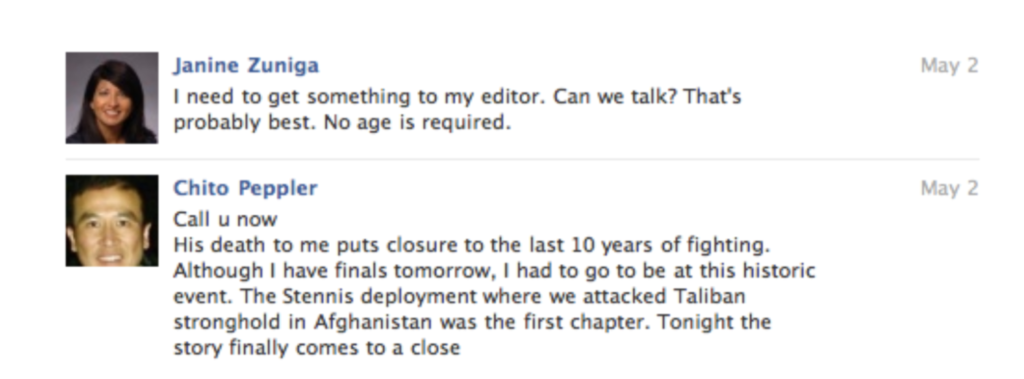
    As I snapped pictures on my phone, I noticed a DM from Janine Zúñiga, who was still working at the Union-Tribune. She was reporting on the event and searching for a quote.

    Naturally, I was happy to go on record and it was a big closure to the tragic events ten years prior. 

    I also knew that I was way overdue for a reunion.  Back in December, I made a pact with Janine and her husband, Jari, that I would visit them to run the San Diego marathon and they would do the same in D.C.   So I purchased a one-way bus ticket west, hoping to make it a multi-trip excursion — I had a lot on my plate, a lot of goals to accomplish, and I kept my eyes steady on the prize.

  • A Site is Born

    During the spring of 2010, I enrolled in Professor Richard Donnelly’s New Ventures Class at the George Washington University (GWU) School of Business.  Students had to create ideas for a new venture, form groups of four and present the idea to the entire class at the end of the semester.

    My teammates were Daniel Lonnerdal, Jing Xe, and Mustafa Onerci.

    “What I learned from the Foodspotting eatup at Burma Restaurant was the need to provide faceted search where users can choose their cuisine, type of dish, ingredients, and taste preferences,” I said.

    “Not only that, but you can choose your mood and ambiance,” Jing added. “Last weekend, I went on a date with my boyfriend. I tasked him to find something romantic with a pleasant view and no distractions, and thank goodness he didn’t disappoint.”

    “Lucky for him, he came through. And if you’re a fan of sports like me, you can select the team that you like to watch, and the site will tell you which pubs to visit.  A Falcons fan definitely doesn’t want to stumble blindly into a Saints bar.  Unless you’re game for an ass whooping contest.”

    “Perfect example — what shall we name it?” Daniel asked

    We brainstormed for a few..”How ‘bout Food Runner?” Mustafa suggested.

    “Nah, some people drive or catch a cab.”

    “How ‘bout Run this Town?” Jing asked.

    “Nah, not a big fan of Jay-Z.”

    “How ‘bout Dining Out?” Daniel asked.

    “Meh, how ‘bout RUNINOut?” I suggested.

    “That’s a weird name. Like running out of food, groceries, things to do?” Mustafa asked.

    “Umm, yeah that’s an accurate expression.” I began to write the name on the notepad.

    “Strange…Looks too much like RUIN tho. And isn’t running spelled with two N’s and one G?” Jing asked.

    “Yeah, but that’s just too long to fit in an address bar. I like the shortened version even if we’re ruining the spelling.”

    “It’s kinda catchy, but I think people will get confused and misspell it. Then they won’t be able to find it on Google,” Jing replied.

    “Well tell that to Larry Page and Sergey Brin when they came up with Google or Jerry Chang with Yahoo.”

    “Too bad we’re not in Silicon Valley. So are you going to hire someone local to develop the site?” Daniel asked.

    “Would love to, but the prices in this town are up in the stratosphere due to high demand from government contracts.”

    “Then why don’t you outsource the work to India, the Philippines, or Africa?” Mustafa suggested.

    “We can outsource the content management once the structure is in place. But to build the foundation, I want to find a team from North America who understands our culture, our cuisine, our history, our beliefs, and attitudes. Someone who I can physically reach out and touch if I need to and someone that won’t break our piggy bank.”

    “Where can you find such gifted talent whose willing to work below market price?” Daniel asked.

    “Dunno, but maybe we can find a technical co-founder at the next tech meetup.

    “That’s possible. And I hope we get good feedback from Professor Donnelly and the class during our capstone presentation next month.”


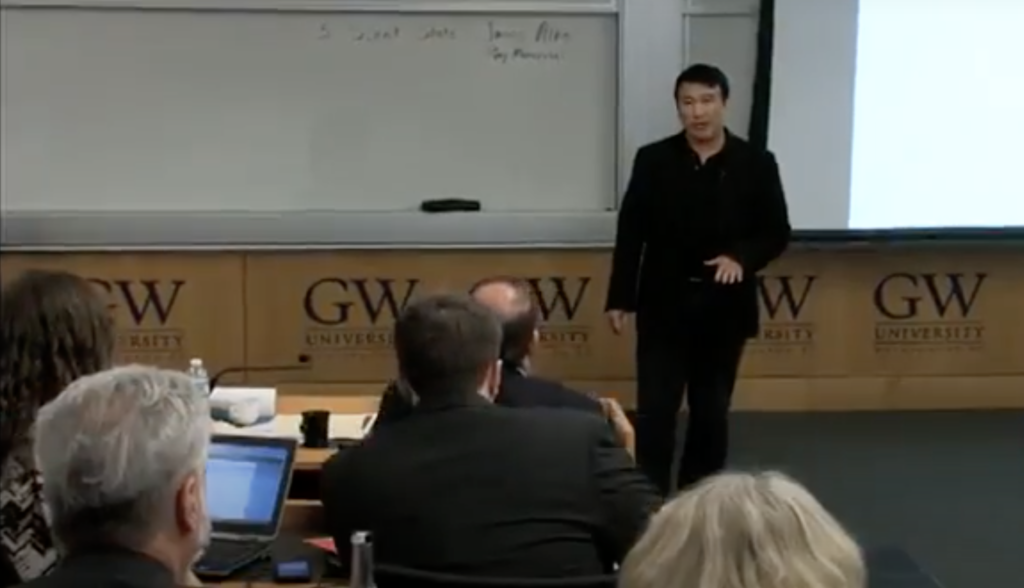
    Presenting RUNINOut at the New Ventures Class at The GWU University
  • Burma

    Burma

    I was attending the monthly Freelancers, 3rd Sunday meetup in Burma Restaurant in Chinatown on a chili March day in 2011. Located on 6th Street near the Friendship Archway, the second-floor restaurant is popular with local politicos such as Mayor Adrian Fenty and Attorney General Eric Holder, as well as artists and activists, and fans of Nobel Peace Price laureate Suu Kyi.

    Many also came to greet the Sao (princess). Jane Nuwadee Tinpe’s husband served as a diplomat in Britain, India, and in D.C. The princess and her husband, a diplomat, lived in big houses that her family ruled for generations. She never had to cook because maids took care of their daily chores.  But in 1989, they fled Burma after a coup and the military regime rebranded the country Myanmar.  The Sao and her husband then opened this restaurant on New Year’s Day in 1990, and they have been serving mohinga and curry ever since.

    John Tinpe, the youthful 40-something son of the Sao, is a globetrotter and public servant who has been recognized by the Mayor for his community service.  For several years, he served as the Chair of the Commission on Asian and Pacific Islanders in the District.  In 2010, he was instrumental in saving the Mayor’s Office of Asian and Pacific Islander Affairs (MOAPIA) when a budget proposal to demote the office and cut its staff was proposed.

    In his free time, he works as a supernumerary or extra in the Washington National Opera and Kennedy Center Ballets at the John F. Kennedy Center for the Performing Arts.

    One particular patron was having difficulty deciding. He constantly ordered the Burmese mango pork, with the delectable pieces of pork braised with pickled mango; it simmered a lasting impression that he often savored during long days in the office.  With the advent of the new year, he wanted to branch out and broaden his culinary horizon.  But indecisiveness gripped him, and John Tinpe was getting a tad bit impatient since he had a whole dining room of guests.

    “I can’t decide between the fish curry and tamarind fish. Why don’t you just choose for me?” he asked. “I make enough decisions at work.”

    I looked at him in disbelief. “Wow, you make huge decisions for the government daily that affect millions, and you can’t choose a damn spice?”

    JR, the event organizer, looked at his watch. “Wouldn’t it be great if all 30 of us attendees could order from the phones. Too many people, too many choices, too little time.”

    “And wouldn’t it be wonderful if we could discover who ordered what dishes in the past,” his son David added. “If I knew that a particular friend that I respected enjoyed a certain dish, that would provide instant validation.”

    So when the last dish was served, and all the attendees were satiated, I gingerly approached John with these seemingly trivial issues.

    He was beyond receptive. “Hey, why don’t you build a site where people can order dishes from their phones, then select and save their favorite ingredients and spices in their own foodie profile?”

    “One customer always orders the mango pork, the other prefers coconut chicken curry,” JR chimed in. “Maybe they should be a little adventurous and switch orders next time.”

    “I’m sure if they did that, neither one would complain, or notice for that matter,” John added with a healthy grin.

    After working arduously for a week, I was ready to demo the prototype.  It was unrefined and barely working, but the only goal was to prove John’s idea was viable.  Now I just needed to find participants. 

    Last month, I attended an eatup hosted by Foodspotting.  The site was launched in 2009 as a way to discover and rate specific dishes. While Yelp was focused on reviewing restaurants, Foodspotting would only feature the dish and didn’t accept negative comments.  The Silicon Valley startup could not have emerged at a better time.  With the advent of the smartphone and social media, food photography became a popular, ritualistic behavior and Foodspotting became the Pandora for food.  

    The eatup at People’s Ramen in Columbia Heights D.C. was attended by Nom Nom Boris, a food blogger “who is eating the world one dish at a time” and Dan Rosenstein, a professional food photographer.  Dan was using a Nikon D500 DLSR, with a 24mm wide-angle lens.  He covers all types of food and also shoots sports, concerts, corporate events, and parties.

    Lisa Mathias, who was the local ambassador for the group, was also a writer for Citysearch, an online guide to finding local businesses.  Over the year, she had compiled an extensive list of her favorite restaurants from different cuisines, so she was always open to new suggestions. 

    So I contacted Lisa with a suggestion for a new event.

    “Perfect. I’m half Indian and half Filipino, so Burmese is right in the middle.”

    During the eatup, the dozen or so foodspotters scanned a QR code that showed pictures of each dish listing their ingredients and flavors. The page also provided examples of people’s food profiles, so you could see what a particular person liked or disliked. Each person would then make their own selection and provide a brief critique.

    What helped was that foodspotters not only enjoyed sharing food, but they had an inclination to discuss intricate details about which particular dish or ingredient they relished.  

    “Mmm the golden fingers — calabash sticks served with tamarind sauce and deep-fried to crispy perfection,” Lisa said.

    I was in good cheer, as I collected lots of feedback which would assuredly enhance our growing trove of information.


    Guests sharing plates @ Burma

    “This was a fun event, and I’m glad you guys were able to test out our model,” I said. “John will be thrilled to see the results.”

    “You have an interesting idea,” said Lisa. “Are you trying to build a competitor to Foodspotting?” 

    “Absolutely not.  We’re here to complement not compete. While you deploy your army of foodspotters to taste and capture each dish, we’ll collate your content, so customers can make better, more informed decisions.”

  • The Tower

    The Tower

    I enrolled in the Executive MBA program, and before the semester started, our cohort of 20 eager students embarked on a five-day retreat at the Homestead Resort in Hot Springs, VA.

    Our team coaching sessions led by Professor James Bailey didn’t require PowerPoint or pointers but still had everything to do with leadership development — You can’t create a leader in a classroom.

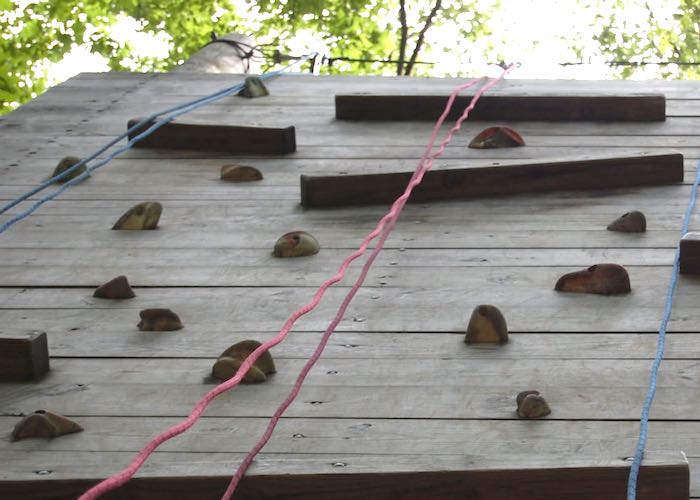
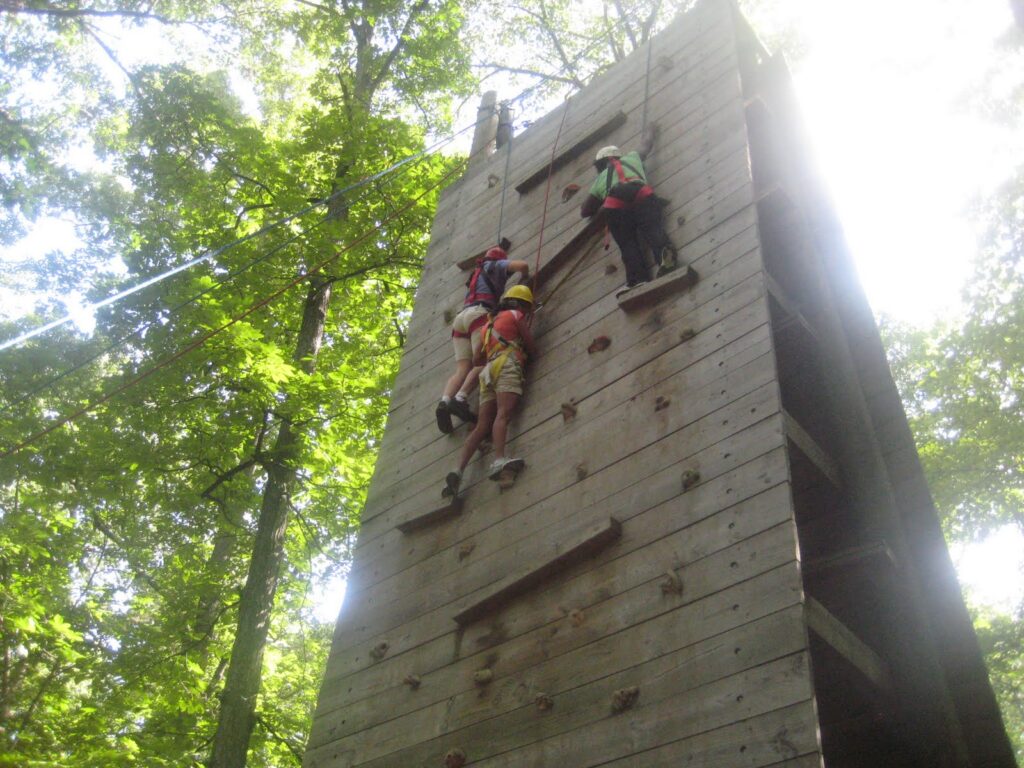
    After spending two days engaged in team-building exercises and thought-provoking discussions, we were ready to get some fresh air. The next morning, we hiked down the Allegheny Mountain gorge trail, through the thick forest, past the lovely cascade falls until we arrived in the middle of a grassy field with a gigantic wall affectionately known as the Tower. At first glance, the 40-foot Tower seemed daunting and insurmountable. 

    Throughout life, we face many obstacles both personal and professional. The key to responding to these roadblocks is to face them head-on and to rely on the support from others around you. This is teamwork — being supported and supporting each other. To work as a team, it’s imperative to understand each other’s strengths and weaknesses, both physically and mentally. The better we know one another, the better we’re able to assist each other.

    The Ropes Course is a metaphor for problem-solving — it challenges us to face our fears and climb on. The higher you climb, the more you rely on your team for support.

    The first task was to have each person assist their team members in donning their harnesses — the one crucial piece of equipment for our safety and protection.

    Then each team ascended in tandem facing the challenge of not having enough steps for all three to ascend at the same time.  Sometimes a climber would have to take a step down in order for another climber to proceed.  That was ok, as long as they all reached their final destination together.

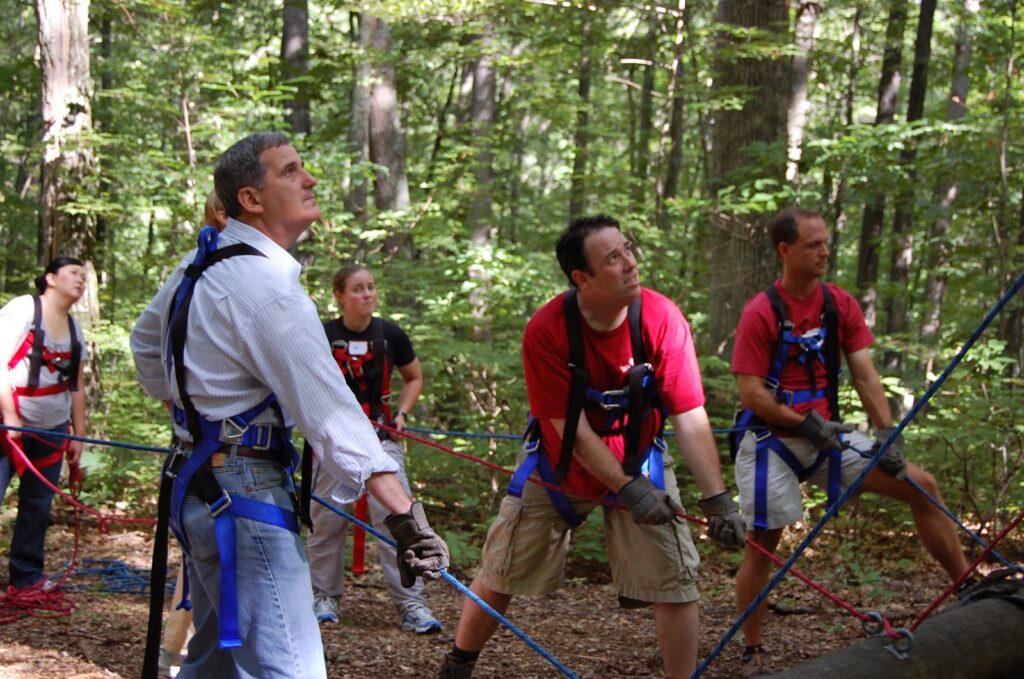
    Meanwhile, the rope handlers kept a close eye on the climbers, coaching them on where to place their hands and feet and providing support and encouragement so that the 3-member team could ascend up to the top together and then back down.

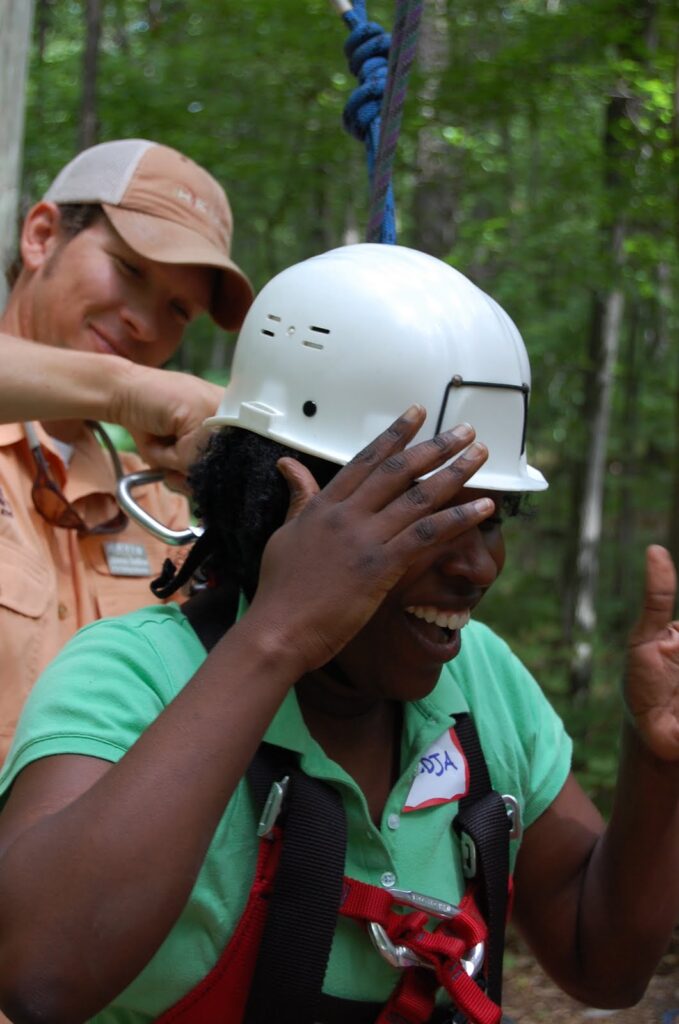
    When it was my turn to go, I knew I could rely on my teammates Senodja Walker and Amir Moore. 

    Rope team:

    “Senodja, place the right hand on the block and your left foot on the step.”

    “Amir, move your right foot off the step and place it on the block so that Senodja can place her foot on it.”

    As the climbers moved up the wall and then back down, the Belay teams were tasked to remove the slack by paying out or pulling in the excess line. They kept a close eye and a taut line, but they were not allowed to pull the crew up the wall — the climbers had to figure this out on their own.

    Climbers: “Slack!” (pay out a little rope.)

    Belayers: pays out the rope and pauses to see if climbers ask again.

    Climbers: “Up rope.” (pull in rope slack.)

    Belayers: pulls in rope and pause to see if climbers ask again.

    Senodja Walker

    Eventually, all of us made it over the wall and back down, taking one step at a time.  The journey in life is rarely simplistic and straightforward. If we keep striving, we will eventually reach our goals, even if we have to climb over life’s challenges, obstacles, and setbacks.

    The EMBA class was broken down into five groups of four and we would remain in our group for the entire two years.  One of the first projects that we worked on was the Airline Pilots Association.  ALPA, with 53,000 members and 40 airlines in the U.S. and Canada, is the largest airline labor union in the world.

    We were having a conference call on skype when I touted the fact that airlines such as Jet Blue and Delta have successfully used Twitter and Facebook to promote their products and to provide updates on weather and flight cancellations.

    “I’ve had it with you. Your solution to everything is always social media!” Eli my classmates exclaimed.

    This wasn’t the first time he had said that and we always seemed to butt heads over the value of social media for building brand awareness and winning new customers.

    I immediately slammed the phone down and ended the conference call.

    The next thing I did was call Senodja on the phone. “I can’t work with Eli any longer — he’s so unaccepting of social media. I’m here to learn and broaden my horizon, not to clash heads.”

    “Wish you could join my team, but we’re already maxed out.”

    “Then maybe I should try to understand his point of view better and discuss our differences.”

    “Or perhaps you could transfer out of the EMBA and enroll in the Professional MBA program — it may take a little longer to complete but you have a choice of a wide selection of classes and work with a diverse myriad of people.”